Details
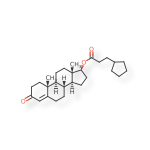
| Stereochemistry | ABSOLUTE |
| Molecular Formula | C27H40O3 |
| Molecular Weight | 412.6047 |
| Optical Activity | UNSPECIFIED |
| Defined Stereocenters | 6 / 6 |
| E/Z Centers | 0 |
| Charge | 0 |
SHOW SMILES / InChI
SMILES
C[C@]12CC[C@H]3[C@@H](CCC4=CC(=O)CC[C@]34C)[C@@H]1CC[C@@H]2OC(=O)CCC5CCCC5
InChI
InChIKey=HPFVBGJFAYZEBE-ZLQWOROUSA-N
InChI=1S/C27H40O3/c1-26-15-13-20(28)17-19(26)8-9-21-22-10-11-24(27(22,2)16-14-23(21)26)30-25(29)12-7-18-5-3-4-6-18/h17-18,21-24H,3-16H2,1-2H3/t21-,22-,23-,24-,26-,27-/m0/s1
DescriptionSources: http://www.drugbank.ca/drugs/DB00624Curator's Comment: Description was created based on several sources, including
Sources: http://www.drugbank.ca/drugs/DB00624
Curator's Comment: Description was created based on several sources, including
Testosterone is a steroid sex hormone found in both men and women. In men, testosterone is produced primarily by the Leydig (interstitial) cells of the testes when stimulated by luteinizing hormone (LH). It functions to stimulate spermatogenesis, promote physical and functional maturation of spermatozoa, maintain accessory organs of the male reproductive tract, support development of secondary sexual characteristics, stimulate growth and metabolism throughout the body and influence brain development by stimulating sexual behaviors and sexual drive. In women, testosterone is produced by the ovaries (25%), adrenals (25%) and via peripheral conversion from androstenedione (50%). Testerone in women functions to maintain libido and general wellbeing. Testosterone exerts a negative feedback mechanism on pituitary release of LH and follicle-stimulating hormone (FSH). Testosterone may be further converted to dihydrotestosterone or estradiol depending on the tissue. The effects of testosterone in humans and other vertebrates occur by way of two main mechanisms: by activation of the androgen receptor (directly or as DHT), and by conversion to estradiol and activation of certain estrogen receptors. Free testosterone (T) is transported into the cytoplasm of target tissue cells, where it can bind to the androgen receptor, or can be reduced to 5α-dihydrotestosterone (DHT) by the cytoplasmic enzyme 5α-reductase. DHT binds to the same androgen receptor even more strongly than T, so that its androgenic potency is about 2.5 times that of T. The T-receptor or DHT-receptor complex undergoes a structural change that allows it to move into the cell nucleus and bind directly to specific nucleotide sequences of the chromosomal DNA. The areas of binding are called hormone response elements (HREs), and influence transcriptional activity of certain genes, producing the androgen effects. Testosterone is used as hormone replacement or substitution of diminished or absent endogenous testosterone. Use in males: For management of congenital or acquired hypogonadism, hypogonadism associated with HIV infection, and male climacteric (andopause). Use in females: For palliative treatment of androgen-responsive, advanced, inoperable, metastatis (skeletal) carcinoma of the breast in women who are 1-5 years postmenopausal; testosterone esters may be used in combination with estrogens in the management of moderate to severe vasomotor symptoms associated with menopause in women who do not respond to adequately to estrogen therapy alone.
CNS Activity
Approval Year
Targets
| Primary Target | Pharmacology | Condition | Potency |
|---|---|---|---|
Target ID: P10275 Gene ID: 367.0 Gene Symbol: AR Target Organism: Homo sapiens (Human) |
|||
Target ID: CHEMBL1871 |
3.16 nM [EC50] |
Conditions
| Condition | Modality | Targets | Highest Phase | Product |
|---|---|---|---|---|
| Primary | TESTOSTERONE Approved UseTestosterone is an androgen indicated for replacement therapy in males for
conditions associated with a deficiency or absence of endogenous
testosterone:
• Primary Hypogonadism (Congenital or Acquired) (1)
• Hypogonadotropic Hypogonadism (Congenital or Acquired) Launch Date2013 |
Cmax
| Value | Dose | Co-administered | Analyte | Population |
|---|---|---|---|---|
930.1 ng/dL Clinical Trial https://clinicaltrials.gov/ct2/show/NCT01386606 |
5 g 1 times / day multiple, topical dose: 5 g route of administration: topical experiment type: multiple co-administered: |
TESTOSTERONE plasma | Homo sapiens |
|
231 ng/dL Clinical Trial https://clinicaltrials.gov/ct2/show/NCT01725451 |
30 mg single, topical dose: 30 mg route of administration: topical experiment type: single co-administered: |
TESTOSTERONE serum | Homo sapiens population: healthy age: sex: food status: |
|
214 ng/dL Clinical Trial https://clinicaltrials.gov/ct2/show/NCT01725451 |
30 mg single, topical dose: 30 mg route of administration: topical experiment type: single co-administered: |
TESTOSTERONE serum | Homo sapiens population: healthy age: sex: food status: |
|
13.1 pg/mL EXPERIMENT https://pubmed.ncbi.nlm.nih.gov/10902784/ |
8.2 mg single, topical dose: 8.2 mg route of administration: Topical experiment type: SINGLE co-administered: |
TESTOSTERONE plasma | Homo sapiens population: UNHEALTHY age: ADULT sex: FEMALE food status: UNKNOWN |
AUC
| Value | Dose | Co-administered | Analyte | Population |
|---|---|---|---|---|
3110 ng*h/dL Clinical Trial https://clinicaltrials.gov/ct2/show/NCT01725451 |
30 mg single, topical dose: 30 mg route of administration: topical experiment type: single co-administered: |
TESTOSTERONE serum | Homo sapiens population: healthy age: sex: food status: |
|
2120 ng*h/dL Clinical Trial https://clinicaltrials.gov/ct2/show/NCT01725451 |
30 mg single, topical dose: 30 mg route of administration: topical experiment type: single co-administered: |
TESTOSTERONE serum | Homo sapiens population: healthy age: sex: food status: |
|
948 pg × h/mL EXPERIMENT https://pubmed.ncbi.nlm.nih.gov/10902784/ |
8.2 mg single, topical dose: 8.2 mg route of administration: Topical experiment type: SINGLE co-administered: |
TESTOSTERONE plasma | Homo sapiens population: UNHEALTHY age: ADULT sex: FEMALE food status: UNKNOWN |
T1/2
| Value | Dose | Co-administered | Analyte | Population |
|---|---|---|---|---|
7 h EXPERIMENT https://pubmed.ncbi.nlm.nih.gov/10902784/ |
8.2 mg single, topical dose: 8.2 mg route of administration: Topical experiment type: SINGLE co-administered: |
TESTOSTERONE plasma | Homo sapiens population: UNHEALTHY age: ADULT sex: FEMALE food status: UNKNOWN |
Funbound
| Value | Dose | Co-administered | Analyte | Population |
|---|---|---|---|---|
13% EXPERIMENT https://pubmed.ncbi.nlm.nih.gov/10902784/ |
8.2 mg single, topical dose: 8.2 mg route of administration: Topical experiment type: SINGLE co-administered: |
TESTOSTERONE plasma | Homo sapiens population: UNHEALTHY age: ADULT sex: FEMALE food status: UNKNOWN |
Overview
| CYP3A4 | CYP2C9 | CYP2D6 | hERG |
|---|---|---|---|
Drug as perpetrator
| Target | Modality | Activity | Metabolite | Clinical evidence |
|---|---|---|---|---|
| no | ||||
| no | ||||
| no | ||||
| yes | ||||
| yes |
Drug as victim
| Target | Modality | Activity | Metabolite | Clinical evidence |
|---|---|---|---|---|
| major [Km 10 uM] | ||||
| major [Km 38.7 uM] | ||||
| minor | ||||
| minor | ||||
| minor | ||||
| minor | ||||
| minor | ||||
| minor | ||||
| minor | ||||
| minor | ||||
| no | ||||
| no | ||||
| no | ||||
| no | ||||
| no | ||||
| no | ||||
| no | ||||
| no | ||||
| yes | ||||
| yes | ||||
| yes | ||||
| yes |
PubMed
| Title | Date | PubMed |
|---|---|---|
| Effects of estrogenic (o,p'-DDT; octylphenol) and anti-androgenic (p,p'-DDE) chemicals on indicators of endocrine status in juvenile male summer flounder (Paralichthys dentatus). | 2001-04 |
|
| Changes in androgenic steroid profile due to urine contamination by microorganisms: a prospective study in the context of doping control. | 2001-02-15 |
|
| Luteinizing hormone-dependent activity and luteinizing hormone-independent differentiation of rat fetal Leydig cells. | 2001-02-14 |
|
| Porcine gonadal and placental isozymes of aromatase cytochrome P450: sub-cellular distribution and support by NADPH-cytochrome P450 reductase. | 2001-02-14 |
|
| Testosterone concentrations in women aged 25-50 years: associations with lifestyle, body composition, and ovarian status. | 2001-02-01 |
|
| Neuronal size in the spinal nucleus of the bulbocavernosus: direct modulation by androgen in rats with mosaic androgen insensitivity. | 2001-02-01 |
|
| Psychophysiological responses to the Stroop Task after a maximal cycle ergometry in elite sportsmen and physically active subjects. | 2001-02 |
|
| Spz1, a novel bHLH-Zip protein, is specifically expressed in testis. | 2001-02 |
|
| Effects of the anti-androgen finasteride on the modulatory actions of oestradiol on androgen metabolism by human gingival fibroblasts. | 2001-02 |
|
| Androgens and the role of female "hyperaggressiveness" in spotted hyenas (Crocuta crocuta). | 2001-02 |
|
| Interactions among paternal behavior, steroid hormones, and parental experience in male marmosets (Callithrix kuhlii). | 2001-02 |
|
| Castration in Gambel's and Scaled Quail: ornate plumage and dominance persist, but courtship and threat behaviors do not. | 2001-02 |
|
| cDNA cloning and initial characterization of CYP3A43, a novel human cytochrome P450. | 2001-02 |
|
| Modulation of P450 CYP3A4-dependent metabolism by P-glycoprotein: implications for P450 phenotyping. | 2001-02 |
|
| Claudin-1 is not restricted to tight junctions in the rat epididymis. | 2001-02 |
|
| Relative enzymatic activity, protein stability, and tissue distribution of human steroid-metabolizing UGT2B subfamily members. | 2001-02 |
|
| Effects of organic solvents on the activities of cytochrome P450 isoforms, UDP-dependent glucuronyl transferase, and phenol sulfotransferase in human hepatocytes. | 2001-02 |
|
| Performance characteristics of a carbon isotope ratio method for detecting doping with testosterone based on urine diols: controls and athletes with elevated testosterone/epitestosterone ratios. | 2001-02 |
|
| Photoperiod-induced testicular apoptosis in European starlings (Sturnus vulgaris). | 2001-02 |
|
| Neuroendocrine regulation of sexually dimorphic brain structure and associated sexual behavior in male rats is genetically controlled. | 2001-02 |
|
| Influence of the degree of stimulation of the pituitary by gonadotropin-releasing hormone on the action of inhibin and testosterone to suppress the secretion of the gonadotropins in rams. | 2001-02 |
|
| Follicular-fluid factors and granulosa-cell gene expression associated with follicle deviation in cattle. | 2001-02 |
|
| Substitution mutation C268Y causes 17 beta-hydroxysteroid dehydrogenase 3 deficiency. | 2001-02 |
|
| Sex differences in androgen receptors of the human mamillary bodies are related to endocrine status rather than to sexual orientation or transsexuality. | 2001-02 |
|
| Plasma melatonin concentration before and during testosterone replacement in Klinefelter's syndrome: relation to hepatic indolamine metabolism and sympathoadrenal activity. | 2001-02 |
|
| Longitudinal effects of aging on serum total and free testosterone levels in healthy men. Baltimore Longitudinal Study of Aging. | 2001-02 |
|
| Evidence that cyproterone acetate improves psychological symptoms and enhances the activity of the dopaminergic system in postmenopause. | 2001-02 |
|
| Androgen deficiency in women with hypopituitarism. | 2001-02 |
|
| Muting of androgen negative feedback unveils impoverished gonadotropin-releasing hormone/luteinizing hormone secretory reactivity in healthy older men. | 2001-02 |
|
| Polycystic ovary syndrome is associated with obstructive sleep apnea and daytime sleepiness: role of insulin resistance. | 2001-02 |
|
| Disparate response of wild-type and variant forms of LH to GnRH stimulation in individuals heterozygous for the LHbeta variant allele. | 2001-02 |
|
| Estrogen and androgen elicit growth hormone release via dissimilar patterns of hypothalamic neuropeptide secretion. | 2001-02 |
|
| Sex difference in the phosphorylation of cAMP response element binding protein (CREB) in neonatal rat brain. | 2001-01-26 |
|
| Testosterone modulates the dendritic architecture of arcuate neuroendocrine neurons in adult male rats. | 2001-01-26 |
|
| Expression of the 17beta-hydroxysteroid dehydrogenase type 5 mRNA in the human brain. | 2001-01-22 |
|
| Distribution of 17beta-hydroxysteroid dehydrogenases in human osteoblast-like cells. | 2001-01-22 |
|
| Phytoestrogens inhibit human 17beta-hydroxysteroid dehydrogenase type 5. | 2001-01-22 |
|
| Structure-function aspects and inhibitor design of type 5 17beta-hydroxysteroid dehydrogenase (AKR1C3). | 2001-01-22 |
|
| Inhibitors of type II 17beta-hydroxysteroid dehydrogenase. | 2001-01-22 |
|
| Pan1b (17betaHSD11)-enzymatic activity and distribution in the lung. | 2001-01-22 |
|
| 17beta-Hydroxysteroid dehydrogenase type 9 and other short-chain dehydrogenases/reductases that catalyze retinoid, 17beta- and 3alpha-hydroxysteroid metabolism. | 2001-01-22 |
|
| Type 5 17beta-hydroxysteroid dehydrogenase: its role in the formation of androgens in women. | 2001-01-22 |
|
| Induction of nuclear transcription factors, cytochrome P450 monooxygenases, and glutathione S-transferase alpha gene expression in Aroclor 1254-treated rat hepatocyte cultures. | 2001-01-15 |
|
| Reproductive effects of valproate, carbamazepine, and oxcarbazepine in men with epilepsy. | 2001-01-09 |
|
| Progressive decrease in bone density over 10 years of androgen deprivation therapy in patients with prostate cancer. | 2001-01 |
|
| Long-term remission of ovarian hyperandrogenism after short-term treatment with a gonadotropin-releasing hormone agonist. | 2001-01 |
|
| Prevalence of polycystic ovary syndrome (PCOS) in first-degree relatives of patients with PCOS. | 2001-01 |
|
| Concentrations of steroid hormones in layers and biopsies of chelonian egg yolks. | 2001-01 |
|
| Insulin action and insulin secretion in polycystic ovary syndrome treated with ethinyl oestradiol/cyproterone acetate. | 2001-01 |
|
| Androgenic anabolic steroids and arterial structure and function in male bodybuilders. | 2001-01 |
Sample Use Guides
In Vivo Use Guide
Curator's Comment: can also be injected https://www.drugs.com/pro/testosterone.html
Starting dose of testosterone gel is 50 mg of testosterone (4 pump
actuations, two 25 mg packets, or one 50 mg packet), applied once
daily in the morning.
Route of Administration:
Topical
| Name | Type | Language | ||
|---|---|---|---|---|
|
Preferred Name | English | ||
|
Common Name | English | ||
|
Brand Name | English | ||
|
Common Name | English | ||
|
Common Name | English | ||
|
Common Name | English | ||
|
Code | English | ||
|
Common Name | English | ||
|
Common Name | English | ||
|
Common Name | English | ||
|
Systematic Name | English | ||
|
Common Name | English | ||
|
Common Name | English | ||
|
Common Name | English | ||
|
Common Name | English | ||
|
Common Name | English |
| Classification Tree | Code System | Code | ||
|---|---|---|---|---|
|
NCI_THESAURUS |
C862
Created by
admin on Mon Mar 31 17:52:49 GMT 2025 , Edited by admin on Mon Mar 31 17:52:49 GMT 2025
|
| Code System | Code | Type | Description | ||
|---|---|---|---|---|---|
|
441404
Created by
admin on Mon Mar 31 17:52:49 GMT 2025 , Edited by admin on Mon Mar 31 17:52:49 GMT 2025
|
PRIMARY | |||
|
100000085234
Created by
admin on Mon Mar 31 17:52:49 GMT 2025 , Edited by admin on Mon Mar 31 17:52:49 GMT 2025
|
PRIMARY | |||
|
DB13943
Created by
admin on Mon Mar 31 17:52:49 GMT 2025 , Edited by admin on Mon Mar 31 17:52:49 GMT 2025
|
PRIMARY | |||
|
M0XW1UBI14
Created by
admin on Mon Mar 31 17:52:49 GMT 2025 , Edited by admin on Mon Mar 31 17:52:49 GMT 2025
|
PRIMARY | |||
|
4454
Created by
admin on Mon Mar 31 17:52:49 GMT 2025 , Edited by admin on Mon Mar 31 17:52:49 GMT 2025
|
PRIMARY | |||
|
9157
Created by
admin on Mon Mar 31 17:52:49 GMT 2025 , Edited by admin on Mon Mar 31 17:52:49 GMT 2025
|
PRIMARY | |||
|
200-368-4
Created by
admin on Mon Mar 31 17:52:49 GMT 2025 , Edited by admin on Mon Mar 31 17:52:49 GMT 2025
|
PRIMARY | |||
|
SUB04734MIG
Created by
admin on Mon Mar 31 17:52:49 GMT 2025 , Edited by admin on Mon Mar 31 17:52:49 GMT 2025
|
PRIMARY | |||
|
M0XW1UBI14
Created by
admin on Mon Mar 31 17:52:49 GMT 2025 , Edited by admin on Mon Mar 31 17:52:49 GMT 2025
|
PRIMARY | |||
|
Testosterone cypionate
Created by
admin on Mon Mar 31 17:52:49 GMT 2025 , Edited by admin on Mon Mar 31 17:52:49 GMT 2025
|
PRIMARY | |||
|
CHEMBL1201101
Created by
admin on Mon Mar 31 17:52:49 GMT 2025 , Edited by admin on Mon Mar 31 17:52:49 GMT 2025
|
PRIMARY | |||
|
DTXSID901015617
Created by
admin on Mon Mar 31 17:52:49 GMT 2025 , Edited by admin on Mon Mar 31 17:52:49 GMT 2025
|
PRIMARY | |||
|
9463
Created by
admin on Mon Mar 31 17:52:49 GMT 2025 , Edited by admin on Mon Mar 31 17:52:49 GMT 2025
|
PRIMARY | |||
|
58-20-8
Created by
admin on Mon Mar 31 17:52:49 GMT 2025 , Edited by admin on Mon Mar 31 17:52:49 GMT 2025
|
PRIMARY | |||
|
835827
Created by
admin on Mon Mar 31 17:52:49 GMT 2025 , Edited by admin on Mon Mar 31 17:52:49 GMT 2025
|
PRIMARY | RxNorm | ||
|
1647001
Created by
admin on Mon Mar 31 17:52:49 GMT 2025 , Edited by admin on Mon Mar 31 17:52:49 GMT 2025
|
PRIMARY | |||
|
C1246
Created by
admin on Mon Mar 31 17:52:49 GMT 2025 , Edited by admin on Mon Mar 31 17:52:49 GMT 2025
|
PRIMARY | |||
|
m10594
Created by
admin on Mon Mar 31 17:52:49 GMT 2025 , Edited by admin on Mon Mar 31 17:52:49 GMT 2025
|
PRIMARY | Merck Index |
ACTIVE MOIETY
SUBSTANCE RECORD