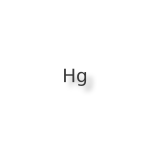
Details
| Stereochemistry | ACHIRAL |
| Molecular Formula | Hg |
| Molecular Weight | 200.59 |
| Optical Activity | NONE |
| Defined Stereocenters | 0 / 0 |
| E/Z Centers | 0 |
| Charge | 0 |
SHOW SMILES / InChI
SMILES
[Hg]
InChI
InChIKey=QSHDDOUJBYECFT-UHFFFAOYSA-N
InChI=1S/Hg
| Molecular Formula | Hg |
| Molecular Weight | 200.59 |
| Charge | 0 |
| Count |
|
| Stereochemistry | ACHIRAL |
| Additional Stereochemistry | No |
| Defined Stereocenters | 0 / 0 |
| E/Z Centers | 0 |
| Optical Activity | NONE |
Mercury, with the chemical symbol Hg (from Greek "Hydrargyros"), is the only metal adopting liquid form in room temperature. Mercury appears in seven natural isotopic forms. The metal is extracted from the mineral cinnabar, mercuric sulfide, in former times used also for paint. Mercury has fascinated people for millennia, as a heavy liquid metal. However, because of its toxicity, many uses of mercury are being phased out or are under review. It is now mainly used in the chemical industry as catalysts. It is also used in some electrical switches and rectifiers. Previously its major use was in the manufacture of sodium hydroxide and chlorine by electrolysis of brine. These plants will all be phased out by 2020. Elemental mercury is used in thermometers, blood pressure devices, and thermostats because its ability to expand and contract uniformly makes it useful for measuring changes in temperature and pressure. Mercury is also used in dental fillings, paints, soaps, batteries, and fluorescent lighting. Mercury will dissolve numerous metals to form amalgams and is used to extract gold dust from rocks by dissolving the gold and then boiling off the mercury. The amalgam used in dental fillings contains tin and silver alloyed with mercury. Because it works as a biocide, mercury has been used as a fungicide in paint, though this kind of paint is no longer sold. Mercury and its compounds used in dental practice may be responsible for release of mercury into the oral cavity. Compounds of mercury tend to be much more toxic than the element itself, and organic compounds of mercury (e.g., dimethyl-mercury) are often extremely toxic and may be responsible in causing brain and liver damage. Human exposure to mercury has increased through anthropogenic mercury emissions from fuel combustion, municipal incinerators, and chemical industries. Mercury is considered a major environmental toxicant throughout the world. Mercury is harmless in insoluble form, but vapor or soluble forms such as inorganic mercury or methylmercury can be extremely toxic to humans. Most human mercury exposure occurs through inhalation of elemental mercury vapor released from dental amalgam and through the consumption of fish contaminated with methylmercury.
Approval Year
PubMed
| Title | Date | PubMed |
|---|---|---|
| Mercury, lead, and zinc in baby teeth of children with autism versus controls. | 2007-06 |
|
| Environmental monitoring by gene expression biomarkers in Barbus graellsii: laboratory and field studies. | 2007-04 |
|
| Cadmium-responsive element of the human heme oxygenase-1 gene mediates heat shock factor 1-dependent transcriptional activation. | 2007-03-23 |
|
| Copper homeostasis in Drosophila by complex interplay of import, storage and behavioral avoidance. | 2007-02-21 |
|
| [Genetic effects of workers occupationally exposed to mercury using three genetic end-points]. | 2007-02 |
|
| Cadmium and mercury cause an oxidative stress-induced endothelial dysfunction. | 2007-02 |
|
| Effect of mercury on selenium utilization and selenoperoxidase activity in LNCaP cells. | 2007-01-01 |
|
| Kidney disease mortality and environmental exposure to mercury. | 2007-01-01 |
|
| Cytogenetic effects of a mixture of selected metals following subchronic exposure through drinking water in male rats. | 2006-12 |
|
| Metallothioneins: mercury species-specific induction and their potential role in attenuating neurotoxicity. | 2006-10 |
|
| Genetic influences on the retention of inorganic mercury. | 2006-09-12 |
|
| Mercury toxicity presenting as chronic fatigue, memory impairment and depression: diagnosis, treatment, susceptibility, and outcomes in a New Zealand general practice setting (1994-2006). | 2006-08 |
|
| [The most frequent allergens in allergic contact dermatitis]. | 2006-07-14 |
|
| Involvement of ERK/MAPK in regulation of diapause intensity in the false melon beetle, Atrachya menetriesi. | 2006-07-03 |
|
| Metallothionein gene expression in zebrafish embryo-larvae and ZFL cell-line exposed to heavy metal ions. | 2006-07 |
|
| ZIP8, member of the solute-carrier-39 (SLC39) metal-transporter family: characterization of transporter properties. | 2006-07 |
|
| Microarray analysis of mercury-induced changes in gene expression in human liver carcinoma (HepG2) cells: importance in immune responses. | 2006-06 |
|
| Cadmium induces the expression of Grp78, an endoplasmic reticulum molecular chaperone, in LLC-PK1 renal epithelial cells. | 2006-06 |
|
| The role of Fc-receptors in murine mercury-induced systemic autoimmunity. | 2006-05 |
|
| Inorganic mercury and methylmercury inhibit the Cav3.1 channel expressed in human embryonic kidney 293 cells by different mechanisms. | 2006-04 |
|
| Mercury toxicity in the shark (Squalus acanthias) rectal gland: apical CFTR chloride channels are inhibited by mercuric chloride. | 2006-03-01 |
|
| Mercury-induced externalization of phosphatidylserine and caspase 3 activation in human liver carcinoma (HepG2) cells. | 2006-03 |
|
| In vitro and in vivo effects of mercuric chloride on thymic endocrine activity, NK and NKT cell cytotoxicity, cytokine profiles (IL-2, IFN-gamma, IL-6): role of the nitric oxide-L-arginine pathway. | 2006-03 |
|
| Mercury and zinc differentially inhibit shark and human CFTR orthologues: involvement of shark cysteine 102. | 2006-03 |
|
| A cascade analysis of the interaction of mercury and coproporphyrinogen oxidase (CPOX) polymorphism on the heme biosynthetic pathway and porphyrin production. | 2006-02-20 |
|
| The roles of serum selenium and selenoproteins on mercury toxicity in environmental and occupational exposure. | 2006-02 |
|
| Transcriptional regulation of the NAD(P)H:quinone oxidoreductase 1 and glutathione S-transferase ya genes by mercury, lead, and copper. | 2006-01 |
|
| Elevated reactive oxygen species but not glutathione regulate mercury resistance to AML-2/DX100 cells. | 2006 |
|
| Mercury influences rat liver tyrosine aminotransferase activity and induction by dexamethasone. | 2005-11-25 |
|
| Regulatory mechanisms modulating the expression of cytochrome P450 1A1 gene by heavy metals. | 2005-11 |
|
| Handling of the homocysteine S-conjugate of methylmercury by renal epithelial cells: role of organic anion transporter 1 and amino acid transporters. | 2005-11 |
|
| Handling of cysteine S-conjugates of methylmercury in MDCK cells expressing human OAT1. | 2005-10 |
|
| Site-directed mutagenesis of cysteine residues of large neutral amino acid transporter LAT1. | 2005-09-15 |
|
| Interleukin-10 in murine metal-induced systemic autoimmunity. | 2005-09 |
|
| Transport of N-acetylcysteine s-conjugates of methylmercury in Madin-Darby canine kidney cells stably transfected with human isoform of organic anion transporter 1. | 2005-09 |
|
| Inorganic mercury dissociates preassembled Fas/CD95 receptor oligomers in T lymphocytes. | 2005-08-15 |
|
| The association between genetic polymorphisms of coproporphyrinogen oxidase and an atypical porphyrinogenic response to mercury exposure in humans. | 2005-08-07 |
|
| Sensitization to inorganic mercury could be a risk factor for infertility. | 2005-08 |
|
| Human erythrocyte delta-aminolevulinate dehydratase inhibition by monosaccharides is not mediated by oxidation of enzyme sulfhydryl groups. | 2005-08 |
|
| The association between a genetic polymorphism of coproporphyrinogen oxidase, dental mercury exposure and neurobehavioral response in humans. | 2005-07-09 |
|
| In vitro HgCl2 exposure of immune cells at different stages of maturation: effects on phenotype and function. | 2005-07 |
|
| Toxicity induced by Hg2+ on choline acetyltransferase activity from E. electricus (L.) electrocytes: the protective effect of 2,3 dimercapto-propanol (BAL). | 2005-04 |
|
| Metal components analysis of metallothionein-III in the brain sections of metallothionein-I and metallothionein-II null mice exposed to mercury vapor with HPLC/ICP-MS. | 2005-04 |
|
| Differential induction of podocyte heat shock proteins by prolonged single and combination toxic metal exposure. | 2005-03 |
|
| Heavy metals modulate the activity of the purinergic P2X4 receptor. | 2005-01-15 |
|
| Endogenous thiols and MRP transporters contribute to Hg2+ efflux in HgCl2-treated tubular MDCK cells. | 2005-01-05 |
|
| Ultrastructural demonstration of mercury granules in the placenta of metallothionein-null pregnant mice after exposure to mercury vapor. | 2004-12-18 |
|
| Does mercury promote lipid peroxidation? An in vitro study concerning mercury, copper, and iron in peroxidation of low-density lipoprotein. | 2004-11 |
|
| Variation of crustacean hyperglycemic hormone (cHH) level in the eyestalk and haemolymph of the shrimp Palaemon elegans following stress. | 2004-11 |
|
| Chronic low-level mercury exposure, BDNF polymorphism, and associations with cognitive and motor function. | 2004-10-06 |
Sample Use Guides
Rats were injected intravenously with HgCl2 (bolus, 1.0 and 2.5 mg/kg/0.3 mL) into a left femoral vein
Route of Administration:
Intravenous
| Substance Class |
Chemical
Created
by
admin
on
Edited
Mon Mar 31 18:13:06 GMT 2025
by
admin
on
Mon Mar 31 18:13:06 GMT 2025
|
| Record UNII |
FXS1BY2PGL
|
| Record Status |
Validated (UNII)
|
| Record Version |
|
-
Download
| Name | Type | Language | ||
|---|---|---|---|---|
|
Systematic Name | English | ||
|
Preferred Name | English | ||
|
Common Name | English | ||
|
Common Name | English | ||
|
Common Name | English | ||
|
Common Name | English | ||
|
Common Name | English | ||
|
Common Name | English | ||
|
Systematic Name | English | ||
|
Common Name | English | ||
|
Common Name | English | ||
|
Common Name | English | ||
|
Common Name | English | ||
|
Common Name | English |
| Classification Tree | Code System | Code | ||
|---|---|---|---|---|
|
WHO-ATC |
D08AK05
Created by
admin on Mon Mar 31 18:13:06 GMT 2025 , Edited by admin on Mon Mar 31 18:13:06 GMT 2025
|
||
|
NCI_THESAURUS |
C637
Created by
admin on Mon Mar 31 18:13:06 GMT 2025 , Edited by admin on Mon Mar 31 18:13:06 GMT 2025
|
||
|
EPA PESTICIDE CODE |
52301
Created by
admin on Mon Mar 31 18:13:06 GMT 2025 , Edited by admin on Mon Mar 31 18:13:06 GMT 2025
|
||
|
WHO-VATC |
QD08AK05
Created by
admin on Mon Mar 31 18:13:06 GMT 2025 , Edited by admin on Mon Mar 31 18:13:06 GMT 2025
|
||
|
CFR |
21 CFR 862.3600
Created by
admin on Mon Mar 31 18:13:06 GMT 2025 , Edited by admin on Mon Mar 31 18:13:06 GMT 2025
|
||
|
DSLD |
3002 (Number of products:2)
Created by
admin on Mon Mar 31 18:13:06 GMT 2025 , Edited by admin on Mon Mar 31 18:13:06 GMT 2025
|
| Code System | Code | Type | Description | ||
|---|---|---|---|---|---|
|
100000088313
Created by
admin on Mon Mar 31 18:13:06 GMT 2025 , Edited by admin on Mon Mar 31 18:13:06 GMT 2025
|
PRIMARY | |||
|
231-106-7
Created by
admin on Mon Mar 31 18:13:06 GMT 2025 , Edited by admin on Mon Mar 31 18:13:06 GMT 2025
|
PRIMARY | |||
|
Mercury (element)
Created by
admin on Mon Mar 31 18:13:06 GMT 2025 , Edited by admin on Mon Mar 31 18:13:06 GMT 2025
|
PRIMARY | |||
|
16170
Created by
admin on Mon Mar 31 18:13:06 GMT 2025 , Edited by admin on Mon Mar 31 18:13:06 GMT 2025
|
PRIMARY | |||
|
DTXSID1024172
Created by
admin on Mon Mar 31 18:13:06 GMT 2025 , Edited by admin on Mon Mar 31 18:13:06 GMT 2025
|
PRIMARY | |||
|
23931
Created by
admin on Mon Mar 31 18:13:06 GMT 2025 , Edited by admin on Mon Mar 31 18:13:06 GMT 2025
|
PRIMARY | |||
|
FXS1BY2PGL
Created by
admin on Mon Mar 31 18:13:06 GMT 2025 , Edited by admin on Mon Mar 31 18:13:06 GMT 2025
|
PRIMARY | |||
|
1208
Created by
admin on Mon Mar 31 18:13:06 GMT 2025 , Edited by admin on Mon Mar 31 18:13:06 GMT 2025
|
PRIMARY | |||
|
D008628
Created by
admin on Mon Mar 31 18:13:06 GMT 2025 , Edited by admin on Mon Mar 31 18:13:06 GMT 2025
|
PRIMARY | |||
|
6769
Created by
admin on Mon Mar 31 18:13:06 GMT 2025 , Edited by admin on Mon Mar 31 18:13:06 GMT 2025
|
PRIMARY | RxNorm | ||
|
FXS1BY2PGL
Created by
admin on Mon Mar 31 18:13:06 GMT 2025 , Edited by admin on Mon Mar 31 18:13:06 GMT 2025
|
PRIMARY | |||
|
7439-97-6
Created by
admin on Mon Mar 31 18:13:06 GMT 2025 , Edited by admin on Mon Mar 31 18:13:06 GMT 2025
|
PRIMARY | |||
|
m7236
Created by
admin on Mon Mar 31 18:13:06 GMT 2025 , Edited by admin on Mon Mar 31 18:13:06 GMT 2025
|
PRIMARY | Merck Index | ||
|
25195
Created by
admin on Mon Mar 31 18:13:06 GMT 2025 , Edited by admin on Mon Mar 31 18:13:06 GMT 2025
|
PRIMARY | |||
|
SUB14527MIG
Created by
admin on Mon Mar 31 18:13:06 GMT 2025 , Edited by admin on Mon Mar 31 18:13:06 GMT 2025
|
PRIMARY | |||
|
C66842
Created by
admin on Mon Mar 31 18:13:06 GMT 2025 , Edited by admin on Mon Mar 31 18:13:06 GMT 2025
|
PRIMARY |
| Related Record | Type | Details | ||
|---|---|---|---|---|
|
PARENT -> CONSTITUENT ALWAYS PRESENT |
MERCURY (ng/cigarette)
Canadian = 26.8 SD(4.6)
|

| Related Record | Type | Details | ||
|---|---|---|---|---|
|
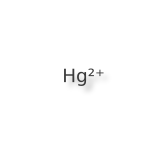
METABOLITE TOXIC -> PARENT |
| Related Record | Type | Details | ||
|---|---|---|---|---|
|
|
ACTIVE MOIETY |