


Details
| Stereochemistry | ACHIRAL |
| Molecular Formula | 2C10H9N4O2S.Zn |
| Molecular Weight | 563.947 |
| Optical Activity | NONE |
| Defined Stereocenters | 0 / 0 |
| E/Z Centers | 0 |
| Charge | 0 |
SHOW SMILES / InChI
SMILES
[Zn++].NC1=CC=C(C=C1)S(=O)(=O)[N-]C2=NC=CC=N2.NC3=CC=C(C=C3)S(=O)(=O)[N-]C4=NC=CC=N4
InChI
InChIKey=RXXROIWDLGTUIN-UHFFFAOYSA-N
InChI=1S/2C10H9N4O2S.Zn/c2*11-8-2-4-9(5-3-8)17(15,16)14-10-12-6-1-7-13-10;/h2*1-7H,11H2;/q2*-1;+2
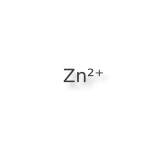
| Molecular Formula | Zn |
| Molecular Weight | 65.409 |
| Charge | 2 |
| Count |
|
| Stereochemistry | ACHIRAL |
| Additional Stereochemistry | No |
| Defined Stereocenters | 0 / 0 |
| E/Z Centers | 0 |
| Optical Activity | NONE |
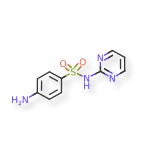
| Molecular Formula | C10H10N4O2S |
| Molecular Weight | 250.277 |
| Charge | 0 |
| Count |
|
| Stereochemistry | ACHIRAL |
| Additional Stereochemistry | No |
| Defined Stereocenters | 0 / 0 |
| E/Z Centers | 0 |
| Optical Activity | NONE |
DescriptionSources: http://www.drugbank.ca/drugs/DB00359Curator's Comment: Description was created based on several sources, including https://www.drugs.com/dosage/sulfadiazine.html
Sources: http://www.drugbank.ca/drugs/DB00359
Curator's Comment: Description was created based on several sources, including https://www.drugs.com/dosage/sulfadiazine.html
Sulfadiazine is a sulfonamide antibiotic. The sulfonamides are synthetic bacteriostatic antibiotics with a wide spectrum against most gram-positive and many gram-negative organisms. However, many strains of an individual species may be resistant. Sulfonamides inhibit multiplication of bacteria by acting as competitive inhibitors of p-aminobenzoic acid in the folic acid metabolism cycle. Bacterial sensitivity is the same for the various sulfonamides, and resistance to one sulfonamide indicates resistance to all. Most sulfonamides are readily absorbed orally. However, parenteral administration is difficult, since the soluble sulfonamide salts are highly alkaline and irritating to the tissues. The sulfonamides are widely distributed throughout all tissues. High levels are achieved in pleural, peritoneal, synovial, and ocular fluids. Although these drugs are no longer used to treat meningitis, CSF levels are high in meningeal infections. Their antibacterial action is inhibited by pus. Sulfadiazine is a competitive inhibitor of the bacterial enzyme dihydropteroate synthetase. This enzyme is needed for the proper processing of para-aminobenzoic acid (PABA) which is essential for folic acid synthesis. The inhibited reaction is necessary in these organisms for the synthesis of folic acid. Used for the treatment of rheumatic fever and meningococcal meningitis.
CNS Activity
Approval Year
Targets
| Primary Target | Pharmacology | Condition | Potency |
|---|---|---|---|
Target ID: CHEMBL4722 |
21.0 µM [IC50] | ||
Target ID: CHEMBL612888 |
41.2 µM [IC50] | ||
Target ID: CHEMBL354 |
|||
Target ID: CHEMBL2013 Sources: http://www.drugbank.ca/drugs/DB00359 |
|||
Target ID: CHEMBL2364668 |
4.2 µM [IC50] |
Conditions
| Condition | Modality | Targets | Highest Phase | Product |
|---|---|---|---|---|
| Curative | Sulfadiazine Approved UseSulfadiazine tablets USP are indicated in the following conditions:
Chancroid
Trachoma
Inclusion conjunctivitis
Nocardiosis
Urinary tract infections (primarily pyelonephritis, pyelitis and cystitis) in the absence of obstructive uropathy or foreign bodies, when these infections are caused by susceptible strains of the following organisms: Escherichia coli, Klebsiella species, Enterobacter species, Staphylococcus aureus, Proteus mirabilis and P. vulgaris. Sulfadiazine should be used for urinary tract infections only after use of more soluble sulfonamides has been unsuccessful.
Toxoplasmosis encephalitis in patients with and without acquired immunodeficiency syndrome, as adjunctive therapy with pyrimethamine.
Malaria due to chloroquine-resistant strains of Plasmodium falciparum, when used as adjunctive therapy.
Prophylaxis of meningococcal meningitis when sulfonamide-sensitive group A strains are known to prevail in family groups or larger closed populations (the prophylactic usefulness of sulfonamides when group B or C infections are prevalent is not proved and may be harmful in closed population groups).
Meningococcal meningitis, when the organism has been demonstrated to be susceptible.
Acute otitis media due to Haemophilusinfluenzae, when used concomitantly with adequate doses of penicillin.
Prophylaxis against recurrences of rheumatic fever, as an alternative to penicillin.
H. influenzae meningitis, as adjunctive therapy with parental streptomycin. Launch Date1994 |
|||
| Curative | Sulfadiazine Approved UseSulfadiazine tablets USP are indicated in the following conditions:
Chancroid
Trachoma
Inclusion conjunctivitis
Nocardiosis
Urinary tract infections (primarily pyelonephritis, pyelitis and cystitis) in the absence of obstructive uropathy or foreign bodies, when these infections are caused by susceptible strains of the following organisms: Escherichia coli, Klebsiella species, Enterobacter species, Staphylococcus aureus, Proteus mirabilis and P. vulgaris. Sulfadiazine should be used for urinary tract infections only after use of more soluble sulfonamides has been unsuccessful.
Toxoplasmosis encephalitis in patients with and without acquired immunodeficiency syndrome, as adjunctive therapy with pyrimethamine.
Malaria due to chloroquine-resistant strains of Plasmodium falciparum, when used as adjunctive therapy.
Prophylaxis of meningococcal meningitis when sulfonamide-sensitive group A strains are known to prevail in family groups or larger closed populations (the prophylactic usefulness of sulfonamides when group B or C infections are prevalent is not proved and may be harmful in closed population groups).
Meningococcal meningitis, when the organism has been demonstrated to be susceptible.
Acute otitis media due to Haemophilusinfluenzae, when used concomitantly with adequate doses of penicillin.
Prophylaxis against recurrences of rheumatic fever, as an alternative to penicillin.
H. influenzae meningitis, as adjunctive therapy with parental streptomycin. Launch Date1994 |
|||
| Curative | Sulfadiazine Approved UseSulfadiazine tablets USP are indicated in the following conditions:
Chancroid
Trachoma
Inclusion conjunctivitis
Nocardiosis
Urinary tract infections (primarily pyelonephritis, pyelitis and cystitis) in the absence of obstructive uropathy or foreign bodies, when these infections are caused by susceptible strains of the following organisms: Escherichia coli, Klebsiella species, Enterobacter species, Staphylococcus aureus, Proteus mirabilis and P. vulgaris. Sulfadiazine should be used for urinary tract infections only after use of more soluble sulfonamides has been unsuccessful.
Toxoplasmosis encephalitis in patients with and without acquired immunodeficiency syndrome, as adjunctive therapy with pyrimethamine.
Malaria due to chloroquine-resistant strains of Plasmodium falciparum, when used as adjunctive therapy.
Prophylaxis of meningococcal meningitis when sulfonamide-sensitive group A strains are known to prevail in family groups or larger closed populations (the prophylactic usefulness of sulfonamides when group B or C infections are prevalent is not proved and may be harmful in closed population groups).
Meningococcal meningitis, when the organism has been demonstrated to be susceptible.
Acute otitis media due to Haemophilusinfluenzae, when used concomitantly with adequate doses of penicillin.
Prophylaxis against recurrences of rheumatic fever, as an alternative to penicillin.
H. influenzae meningitis, as adjunctive therapy with parental streptomycin. Launch Date1994 |
Cmax
| Value | Dose | Co-administered | Analyte | Population |
|---|---|---|---|---|
84.9 μg/mL EXPERIMENT https://pubmed.ncbi.nlm.nih.gov/14742225/ |
2 g 2 times / day steady-state, oral dose: 2 g route of administration: Oral experiment type: STEADY-STATE co-administered: |
SULFADIAZINE plasma | Homo sapiens population: UNHEALTHY age: ADULT sex: FEMALE / MALE food status: FASTED |
AUC
| Value | Dose | Co-administered | Analyte | Population |
|---|---|---|---|---|
1.247 μg × h/mL EXPERIMENT https://pubmed.ncbi.nlm.nih.gov/14742225/ |
2 g 2 times / day steady-state, oral dose: 2 g route of administration: Oral experiment type: STEADY-STATE co-administered: |
SULFADIAZINE plasma | Homo sapiens population: UNHEALTHY age: ADULT sex: FEMALE / MALE food status: FASTED |
T1/2
| Value | Dose | Co-administered | Analyte | Population |
|---|---|---|---|---|
11.9 h EXPERIMENT https://pubmed.ncbi.nlm.nih.gov/14742225/ |
2 g 2 times / day steady-state, oral dose: 2 g route of administration: Oral experiment type: STEADY-STATE co-administered: |
SULFADIAZINE plasma | Homo sapiens population: UNHEALTHY age: ADULT sex: FEMALE / MALE food status: FASTED |
Doses
| Dose | Population | Adverse events |
|---|---|---|
4 g 1 times / day steady, oral Recommended Dose: 4 g, 1 times / day Route: oral Route: steady Dose: 4 g, 1 times / day Sources: |
unhealthy, 16 - 80 |
Disc. AE: Stenocardia, Distress gastrointestinal... Other AEs: Thrombopenia, Creatinine serum increased... AEs leading to discontinuation/dose reduction: Stenocardia (grade 3, 5%) Other AEs:Distress gastrointestinal (grade 3, 5%) Skin rash (grade 3, 5%) Thrombopenia (9%) Sources: Creatinine serum increased (5%) Elevated liver enzyme levels (5%) Malaise (23%) Diarrhea (5%) |
1 g 4 times / day steady, oral Recommended Dose: 1 g, 4 times / day Route: oral Route: steady Dose: 1 g, 4 times / day Sources: |
unhealthy, 29.81 |
Disc. AE: Stevens Johnson syndrome, Thrombocytopenia... Other AEs: Skin rash, Neutropenia... AEs leading to discontinuation/dose reduction: Stevens Johnson syndrome (grade 3, 1.16%) Other AEs:Thrombocytopenia (grade 4, 25%) Major bleed (grade 4, 25%) Skin rash (1.16%) Sources: Neutropenia (18.75%) Febrile neutropenia (1.16%) |
6 g 1 times / day steady, oral Recommended Dose: 6 g, 1 times / day Route: oral Route: steady Dose: 6 g, 1 times / day Sources: |
unhealthy, 33.8 |
Disc. AE: Skin rash, Neutropenia... AEs leading to discontinuation/dose reduction: Skin rash (grade 3, 17.24%) Sources: Neutropenia (grade 3, 3.45%) Acute renal failure (grade 3, 6.9%) |
AEs
| AE | Significance | Dose | Population |
|---|---|---|---|
| Malaise | 23% | 4 g 1 times / day steady, oral Recommended Dose: 4 g, 1 times / day Route: oral Route: steady Dose: 4 g, 1 times / day Sources: |
unhealthy, 16 - 80 |
| Creatinine serum increased | 5% | 4 g 1 times / day steady, oral Recommended Dose: 4 g, 1 times / day Route: oral Route: steady Dose: 4 g, 1 times / day Sources: |
unhealthy, 16 - 80 |
| Diarrhea | 5% | 4 g 1 times / day steady, oral Recommended Dose: 4 g, 1 times / day Route: oral Route: steady Dose: 4 g, 1 times / day Sources: |
unhealthy, 16 - 80 |
| Elevated liver enzyme levels | 5% | 4 g 1 times / day steady, oral Recommended Dose: 4 g, 1 times / day Route: oral Route: steady Dose: 4 g, 1 times / day Sources: |
unhealthy, 16 - 80 |
| Thrombopenia | 9% | 4 g 1 times / day steady, oral Recommended Dose: 4 g, 1 times / day Route: oral Route: steady Dose: 4 g, 1 times / day Sources: |
unhealthy, 16 - 80 |
| Distress gastrointestinal | grade 3, 5% Disc. AE |
4 g 1 times / day steady, oral Recommended Dose: 4 g, 1 times / day Route: oral Route: steady Dose: 4 g, 1 times / day Sources: |
unhealthy, 16 - 80 |
| Skin rash | grade 3, 5% Disc. AE |
4 g 1 times / day steady, oral Recommended Dose: 4 g, 1 times / day Route: oral Route: steady Dose: 4 g, 1 times / day Sources: |
unhealthy, 16 - 80 |
| Stenocardia | grade 3, 5% Disc. AE |
4 g 1 times / day steady, oral Recommended Dose: 4 g, 1 times / day Route: oral Route: steady Dose: 4 g, 1 times / day Sources: |
unhealthy, 16 - 80 |
| Febrile neutropenia | 1.16% | 1 g 4 times / day steady, oral Recommended Dose: 1 g, 4 times / day Route: oral Route: steady Dose: 1 g, 4 times / day Sources: |
unhealthy, 29.81 |
| Skin rash | 1.16% | 1 g 4 times / day steady, oral Recommended Dose: 1 g, 4 times / day Route: oral Route: steady Dose: 1 g, 4 times / day Sources: |
unhealthy, 29.81 |
| Neutropenia | 18.75% | 1 g 4 times / day steady, oral Recommended Dose: 1 g, 4 times / day Route: oral Route: steady Dose: 1 g, 4 times / day Sources: |
unhealthy, 29.81 |
| Stevens Johnson syndrome | grade 3, 1.16% Disc. AE |
1 g 4 times / day steady, oral Recommended Dose: 1 g, 4 times / day Route: oral Route: steady Dose: 1 g, 4 times / day Sources: |
unhealthy, 29.81 |
| Major bleed | grade 4, 25% Disc. AE |
1 g 4 times / day steady, oral Recommended Dose: 1 g, 4 times / day Route: oral Route: steady Dose: 1 g, 4 times / day Sources: |
unhealthy, 29.81 |
| Thrombocytopenia | grade 4, 25% Disc. AE |
1 g 4 times / day steady, oral Recommended Dose: 1 g, 4 times / day Route: oral Route: steady Dose: 1 g, 4 times / day Sources: |
unhealthy, 29.81 |
| Skin rash | grade 3, 17.24% Disc. AE |
6 g 1 times / day steady, oral Recommended Dose: 6 g, 1 times / day Route: oral Route: steady Dose: 6 g, 1 times / day Sources: |
unhealthy, 33.8 |
| Neutropenia | grade 3, 3.45% Disc. AE |
6 g 1 times / day steady, oral Recommended Dose: 6 g, 1 times / day Route: oral Route: steady Dose: 6 g, 1 times / day Sources: |
unhealthy, 33.8 |
| Acute renal failure | grade 3, 6.9% Disc. AE |
6 g 1 times / day steady, oral Recommended Dose: 6 g, 1 times / day Route: oral Route: steady Dose: 6 g, 1 times / day Sources: |
unhealthy, 33.8 |
PubMed
| Title | Date | PubMed |
|---|---|---|
| Outbreak of serogroup W135 meningococcal disease after the Hajj pilgrimage, Europe, 2000. | 2002-08 |
|
| Complete osseous regeneration of a large skull defect in a patient with cutis aplasia: a conservative approach. | 2002-07 |
|
| An update on current practices in the management of ocular toxoplasmosis. | 2002-07 |
|
| A prospective, randomized trial of pyrimethamine and azithromycin vs pyrimethamine and sulfadiazine for the treatment of ocular toxoplasmosis. | 2002-07 |
|
| An infection-preventing bilayered collagen membrane containing antibiotic-loaded hyaluronan microparticles: physical and biological properties. | 2002-07 |
|
| [Topical agents used in the treatment of burns]. | 2002-06-20 |
|
| The effectiveness of processed grapefruit-seed extract as an antibacterial agent: I. An in vitro agar assay. | 2002-06 |
|
| Anal canal amputation and necrosis of the anal sphinchter due to electric current injury. | 2002-06 |
|
| Laminin modified infection-preventing collagen membrane containing silver sulfadiazine-hyaluronan microparticles. | 2002-06 |
|
| In vitro activities of pentamidine, pyrimethamine, trimethoprim, and sulfonamides against Aspergillus species. | 2002-06 |
|
| Unsuspected Toxoplasma gondii empyema in a bone marrow transplant recipient. | 2002-05-01 |
|
| Randomized phase II trial of atovaquone with pyrimethamine or sulfadiazine for treatment of toxoplasmic encephalitis in patients with acquired immunodeficiency syndrome: ACTG 237/ANRS 039 Study. AIDS Clinical Trials Group 237/Agence Nationale de Recherche sur le SIDA, Essai 039. | 2002-05-01 |
|
| [Glanders--a potential disease for biological warfare in humans and animals]. | 2002-05 |
|
| Folate deficiency during treatment with orally administered folic acid, sulphadiazine and pyrimethamine in a horse with suspected equine protozoal myeloencephalitis (EPM). | 2002-05 |
|
| Silver. 2: Toxicity in mammals and how its products aid wound repair. | 2002-05 |
|
| Confocal laser microscopic observation of glycocalyx production by Staphylococcus aureus in vitro. | 2002-05 |
|
| Flamazine is not a debriding agent. | 2002-04-11 |
|
| Quantification of veterinary antibiotics (sulfonamides and trimethoprim) in animal manure by liquid chromatography-mass spectrometry. | 2002-04-05 |
|
| New simple liquid chromatographic method for the determination of trimethoprim, sulfadiazine and N4-acetylsulfadiazine in plasma of broilers. | 2002-04-05 |
|
| Submaxillary adenopathy as sole manifestation of toxoplasmosis: case report and literature review. | 2002-04 |
|
| Prevalence of moderate penicillin resistant invasive Neisseria meningitidis infection in Scotland, 1994-9. | 2002-04 |
|
| Transfer and distribution profiles of dietary sulphonamides in the tissues of the laying hen. | 2002-04 |
|
| Control of wound infections using a bilayer chitosan wound dressing with sustainable antibiotic delivery. | 2002-03-05 |
|
| Silver-coated endotracheal tubes associated with reduced bacterial burden in the lungs of mechanically ventilated dogs. | 2002-03 |
|
| Is a silver coating a silver lining? | 2002-03 |
|
| Iminodibenzyl as a novel coupling agent for the spectrophotometric determination of sulfonamide derivatives. | 2002-03 |
|
| [Increased serum and urinary levels of silver during treatment with topical silver sulfadiazine]. | 2002-02 |
|
| [Congenital toxoplasmosis: prevention in the pregnant woman and management of the neonate]. | 2002-02 |
|
| Comparison of propolis skin cream to silver sulfadiazine: a naturopathic alternative to antibiotics in treatment of minor burns. | 2002-02 |
|
| Deep partial thickness burn after contact with a Meal Ready-To-Eat heater. | 2002-02 |
|
| Effect of sulphadiazine and trimethoprim on the immune response of rainbow trout (Oncorhynchus mykiss). | 2002-02 |
|
| Safety and efficacy of an improved antiseptic catheter impregnated intraluminally with chlorhexidine. | 2002-01-05 |
|
| A novel kind of antitumour drugs using sulfonamide as parent compound. | 2002-01-05 |
|
| [Treatment of subclinical congenital toxoplasmosis by sulfadiazine and pyrimethamine continuously during 1 year: apropos of 46 cases]. | 2002-01 |
|
| Effects of silver sulphadiazine on the production of exoproteins by Staphylococcus aureus. | 2002-01 |
|
| Antimicrobial-impregnated central venous catheters. | 2002-01 |
|
| Evaluation of an antimicrobial-impregnated continuous ambulatory peritoneal dialysis catheter for infection control in rats. | 2002-01 |
|
| Atypical anterior optic neuropathy caused by toxoplasmosis. | 2002-01 |
|
| Effect of sulfadiazine and pyrimethamine on selected physiologic and performance parameters in athletically conditioned thoroughbred horses during an incremental exercise stress test. | 2002 |
|
| The beneficial toxicity paradox of antimicrobials in leg ulcer healing impaired by a polymicrobial flora: a proof-of-concept study. | 2002 |
|
| Determination of selected sulfonamide antibiotics and trimethoprim in manure by electrospray and atmospheric pressure chemical ionization tandem mass spectrometry. | 2002 |
|
| [A case of primary pyoderma-like aspergillosis occurring in a patient with a cervical spinal cord injury]. | 2002 |
|
| Matrix solid-phase dispersion extraction and high-performance liquid chromatographic determination of residual sulfonamides in chicken. | 2001-12-07 |
|
| [Drug hypersensitivity syndrome rapidly resolving after human immunoglobulin infusion]. | 2001-12 |
|
| Bullous eruptions caused by extravasation of mannitol--a case report. | 2001-12 |
|
| Efficacy of antiadhesive, antibiotic and antiseptic coatings in preventing catheter-related infections: review. | 2001-12 |
|
| Retrospective analysis of drug-induced urticaria and angioedema: a survey of 2287 patients. | 2001-11 |
|
| Management of pressure ulcers. | 2001-11 |
|
| In vitro and in vivo efficacy of catheters impregnated with antiseptics or antibiotics: evaluation of the risk of bacterial resistance to the antimicrobials in the catheters. | 2001-10 |
|
| [New trends in ocular toxoplasmosis--the review]. | 2001 |
Patents
Sample Use Guides
In Vivo Use Guide
Curator's Comment: Can also be used topically http://www.accessdata.fda.gov/scripts/cder/drugsatfda/index.cfm?fuseaction=Search.Set_Current_Drug&ApplNo=018810&DrugName=THERMAZENE&ActiveIngred=SILVER%20SULFADIAZINE&SponsorApplicant=THEPHARMANETWORK%20LLC&ProductMktStatus=1&goto=Search.DrugDetails
Usual Adult Dose for Toxoplasmosis
Toxoplasmic encephalitis:
Initial dose: Pyrimethamine 200 mg orally once
Maintenance dose:
<60 kg: Sulfadiazine 1 g orally every 6 hours plus pyrimethamine 50 mg orally once a day.
>=60 kg: Sulfadiazine 1500 mg orally every 6 hours plus pyrimethamine 75 mg orally once a day.
In addition, leucovorin 10 to 20 mg/day orally (may increase up to 50 mg/day).
Route of Administration:
Oral
| Substance Class |
Chemical
Created
by
admin
on
Edited
Mon Mar 31 21:37:18 GMT 2025
by
admin
on
Mon Mar 31 21:37:18 GMT 2025
|
| Record UNII |
5FE7HP0JMG
|
| Record Status |
Validated (UNII)
|
| Record Version |
|
-
Download
| Name | Type | Language | ||
|---|---|---|---|---|
|
Common Name | English | ||
|
Preferred Name | English | ||
|
Common Name | English | ||
|
Common Name | English |
| Code System | Code | Type | Description | ||
|---|---|---|---|---|---|
|
152849
Created by
admin on Mon Mar 31 21:37:18 GMT 2025 , Edited by admin on Mon Mar 31 21:37:18 GMT 2025
|
PRIMARY | |||
|
5FE7HP0JMG
Created by
admin on Mon Mar 31 21:37:18 GMT 2025 , Edited by admin on Mon Mar 31 21:37:18 GMT 2025
|
PRIMARY | |||
|
69858-60-2
Created by
admin on Mon Mar 31 21:37:18 GMT 2025 , Edited by admin on Mon Mar 31 21:37:18 GMT 2025
|
PRIMARY |
| Related Record | Type | Details | ||
|---|---|---|---|---|
|
|
PARENT -> SALT/SOLVATE | |||
|
|
PARENT -> SALT/SOLVATE |
| Related Record | Type | Details | ||
|---|---|---|---|---|
|
ACTIVE MOIETY |