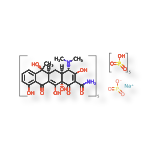
Details
| Stereochemistry | ABSOLUTE |
| Molecular Formula | 5C22H24N2O8.Na.O3P.5HO3P |
| Molecular Weight | 2724.034 |
| Optical Activity | UNSPECIFIED |
| Defined Stereocenters | 25 / 25 |
| E/Z Centers | 0 |
| Charge | 0 |
SHOW SMILES / InChI
SMILES
[Na+].OP(=O)=O.OP(=O)=O.OP(=O)=O.OP(=O)=O.OP(=O)=O.[O-]P(=O)=O.CN(C)[C@H]1[C@@H]2C[C@H]3C(C(=O)C4=C(C=CC=C4O)[C@@]3(C)O)=C(O)[C@]2(O)C(=O)C(C(N)=O)=C1O.CN(C)[C@H]5[C@@H]6C[C@H]7C(C(=O)C8=C(C=CC=C8O)[C@@]7(C)O)=C(O)[C@]6(O)C(=O)C(C(N)=O)=C5O.CN(C)[C@H]9[C@@H]%10C[C@H]%11C(C(=O)C%12=C(C=CC=C%12O)[C@@]%11(C)O)=C(O)[C@]%10(O)C(=O)C(C(N)=O)=C9O.CN(C)[C@H]%13[C@@H]%14C[C@H]%15C(C(=O)C%16=C(C=CC=C%16O)[C@@]%15(C)O)=C(O)[C@]%14(O)C(=O)C(C(N)=O)=C%13O.CN(C)[C@H]%17[C@@H]%18C[C@H]%19C(C(=O)C%20=C(C=CC=C%20O)[C@@]%19(C)O)=C(O)[C@]%18(O)C(=O)C(C(N)=O)=C%17O
InChI
InChIKey=DKNFPOTZPZOJHC-LBTQIPEASA-M
InChI=1S/5C22H24N2O8.Na.6HO3P/c5*1-21(31)8-5-4-6-11(25)12(8)16(26)13-9(21)7-10-15(24(2)3)17(27)14(20(23)30)19(29)22(10,32)18(13)28;;6*1-4(2)3/h5*4-6,9-10,15,25,27-28,31-32H,7H2,1-3H3,(H2,23,30);;6*(H,1,2,3)/q;;;;;+1;;;;;;/p-1/t5*9-,10-,15-,21+,22-;;;;;;;/m00000......./s1
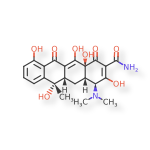
Discovered as natural products from actinomycetes soil bacteria, the tetracyclines were first reported in the scientific literature in 1948. They were noted for their broad spectrum antibacterial activity and were commercialized with clinical success beginning in the late 1940s to the early 1950s. By catalytic hydrogenation of Aureomycin, using palladium metal and hydrogen, the C7 deschloro derivative was synthesized, producing a compound of higher potency, a better solubility profile, and favorable pharmacological activity; it was subsequently named tetracycline. Tetracyclines are primarily bacteriostatic and exert their antimicrobial effect by the inhibition of protein synthesis by binding to the 30S ribosomal subunit. Tetracycline is active against a broad range of gram-negative and gram-positive organisms. Tetracycline is indicated in the treatment of infections caused by susceptible strains. To reduce the development of drug-resistant bacteria and maintain the effectiveness of tetracycline
hydrochloride and other antibacterial drugs, tetracycline hydrochloride should be used only to treat or
prevent infections that are proven or strongly suspected to be caused by bacteria.
Originator
Sources: http://pubs.acs.org/doi/abs/10.1021/ja01114a057 | http://pubs.acs.org/doi/abs/10.1021/ja01114a537
Curator's Comment: References retrieved from https://www.ncbi.nlm.nih.gov/pubmed/13117662 # Pfizer and Lederle Laboratories
Approval Year
Targets
| Primary Target | Pharmacology | Condition | Potency |
|---|---|---|---|
Target ID: CHEMBL2363135 |
Conditions
| Condition | Modality | Targets | Highest Phase | Product |
|---|---|---|---|---|
| Curative | TETRACYCLINE HYDROCHLORIDE Approved UseTetracycline is indicated in the treatment of infections caused by susceptible strains of the designated organisms in the conditions listed below:
• Upper respiratory tract infections caused by Streptococcus pyogenes, Streptococcus pneumoniae and Hemophilus influenzae. Note: Tetracycline should not be used for streptococcal disease unless the organism has been demonstrated to be susceptible.
• Lower respiratory tract infections caused by Streptococcus pyogenes, Streptococcus pneumoniae,
Mycoplasma pneumoniae (Eaton agent, and Klebsiella sp.)
• Skin and soft tissue infections caused by Streptococcus pyogenes, Staphylococcus aureaus.
(Tetracyclines are not the drugs of choice in the treatment of any type of staphylococcal infections.)
• Infections caused by rickettsia including Rocky Mountain spotted fever, typhus group infections,
Q fever, rickettsialpox.
• Psittacosis caused by Chlamydophila psittaci.
• Infections caused by Chlamydia trachomatis such as uncomplicated urethral, endocervical or rectal
infections, inclusion conjunctivitis, trachoma, and lymphogranuloma venereum.
• Granuloma inquinale caused by Klebsiella granulomatis.
• Relapsing fever caused by Borrelia sp.
• Bartonellosis caused by Bartonella bacilliformis.
• Chancroid caused by Hemophilus ducreyi.
• Tularemia caused by Francisella tularensis.
• Plaque caused by Yersinia pestis.
• Cholera caused by Vibrio cholerae.
• Brucellosis caused by Brucella species (tetracycline may be used in conjunction with an aminoglycoside).
• Infections due to Campylobacter fetus.
• As adjunctive therapy in intestinal amebiasis caused by Entamoeba histolytica.
• Urinary tract infections caused by susceptible strains of Escherichia coli, Klebsiella, etc.
• Other infections caused by susceptible gram-negative organisms such as E. coli, Enterobacter aerogenes, Shigella sp., Acinetobacter sp., Klebsiella sp., and Bacteroides sp.
• In severe acne, adjunctive therapy with tetracycline may be useful.
When penicillin is contraindicated, tetracyclines are alternative drugs in the treatment of the following infections:
• Syphilis and yaws caused by Treponema pallidum and pertenue, respectively,
• Vincent’s infection caused by Fusobacterium fusiforme,
• Infections caused by Neisseria gonorrhoeae,
• Anthrax caused by Bacillus anthracis,
• Infections due to Listeria monocytogenes,
• Actinomycosis caused by Actinomyces species,
• Infections due to Clostridium species. Launch Date1953 |
Cmax
| Value | Dose | Co-administered | Analyte | Population |
|---|---|---|---|---|
2.5 μg/mL EXPERIMENT https://pubmed.ncbi.nlm.nih.gov/6487493/ |
300 mg single, oral dose: 300 mg route of administration: Oral experiment type: SINGLE co-administered: |
TETRACYCLINE plasma | Homo sapiens population: HEALTHY age: ADULT sex: FEMALE / MALE food status: FASTED |
|
2.6 μg/mL EXPERIMENT https://pubmed.ncbi.nlm.nih.gov/856000/ |
500 mg single, oral dose: 500 mg route of administration: Oral experiment type: SINGLE co-administered: |
TETRACYCLINE serum | Homo sapiens population: HEALTHY age: ADULT sex: FEMALE / MALE food status: FED |
|
2.7 μg/mL EXPERIMENT https://pubmed.ncbi.nlm.nih.gov/856000/ |
500 mg single, oral dose: 500 mg route of administration: Oral experiment type: SINGLE co-administered: |
TETRACYCLINE serum | Homo sapiens population: HEALTHY age: ADULT sex: FEMALE / MALE food status: HIGH-FAT |
|
2 μg/mL EXPERIMENT https://pubmed.ncbi.nlm.nih.gov/856000/ |
500 mg single, oral dose: 500 mg route of administration: Oral experiment type: SINGLE co-administered: |
TETRACYCLINE serum | Homo sapiens population: HEALTHY age: ADULT sex: FEMALE / MALE food status: FED |
|
4.1 μg/mL EXPERIMENT https://pubmed.ncbi.nlm.nih.gov/856000/ |
500 mg single, oral dose: 500 mg route of administration: Oral experiment type: SINGLE co-administered: |
TETRACYCLINE serum | Homo sapiens population: HEALTHY age: ADULT sex: FEMALE / MALE food status: FASTED |
|
4.5 μg/mL EXPERIMENT https://pubmed.ncbi.nlm.nih.gov/856000/ |
500 mg single, oral dose: 500 mg route of administration: Oral experiment type: SINGLE co-administered: |
TETRACYCLINE serum | Homo sapiens population: HEALTHY age: ADULT sex: FEMALE / MALE food status: FASTED |
|
4.5 μg/mL EXPERIMENT https://pubmed.ncbi.nlm.nih.gov/856000/ |
500 mg single, oral dose: 500 mg route of administration: Oral experiment type: SINGLE co-administered: |
TETRACYCLINE serum | Homo sapiens population: HEALTHY age: ADULT sex: FEMALE / MALE food status: FASTED |
AUC
| Value | Dose | Co-administered | Analyte | Population |
|---|---|---|---|---|
26.91 μg × h/mL EXPERIMENT https://pubmed.ncbi.nlm.nih.gov/6487493/ |
300 mg single, oral dose: 300 mg route of administration: Oral experiment type: SINGLE co-administered: |
TETRACYCLINE plasma | Homo sapiens population: HEALTHY age: ADULT sex: FEMALE / MALE food status: FASTED |
|
27.27 μg × h/mL EXPERIMENT https://pubmed.ncbi.nlm.nih.gov/6487493/ |
300 mg 2 times / day steady-state, oral dose: 300 mg route of administration: Oral experiment type: STEADY-STATE co-administered: |
TETRACYCLINE plasma | Homo sapiens population: HEALTHY age: ADULT sex: FEMALE / MALE food status: FASTED |
|
27 μg × h/mL EXPERIMENT https://pubmed.ncbi.nlm.nih.gov/856000/ |
500 mg single, oral dose: 500 mg route of administration: Oral experiment type: SINGLE co-administered: |
TETRACYCLINE serum | Homo sapiens population: HEALTHY age: ADULT sex: FEMALE / MALE food status: FED |
|
31.7 μg × h/mL EXPERIMENT https://pubmed.ncbi.nlm.nih.gov/856000/ |
500 mg single, oral dose: 500 mg route of administration: Oral experiment type: SINGLE co-administered: |
TETRACYCLINE serum | Homo sapiens population: HEALTHY age: ADULT sex: FEMALE / MALE food status: HIGH-FAT |
|
25.5 μg × h/mL EXPERIMENT https://pubmed.ncbi.nlm.nih.gov/856000/ |
500 mg single, oral dose: 500 mg route of administration: Oral experiment type: SINGLE co-administered: |
TETRACYCLINE serum | Homo sapiens population: HEALTHY age: ADULT sex: FEMALE / MALE food status: FED |
|
74.7 μg × h/mL EXPERIMENT https://pubmed.ncbi.nlm.nih.gov/856000/ |
500 mg single, oral dose: 500 mg route of administration: Oral experiment type: SINGLE co-administered: |
TETRACYCLINE serum | Homo sapiens population: HEALTHY age: ADULT sex: FEMALE / MALE food status: FASTED |
|
55.7 μg × h/mL EXPERIMENT https://pubmed.ncbi.nlm.nih.gov/856000/ |
500 mg single, oral dose: 500 mg route of administration: Oral experiment type: SINGLE co-administered: |
TETRACYCLINE serum | Homo sapiens population: HEALTHY age: ADULT sex: FEMALE / MALE food status: FASTED |
|
56.6 μg × h/mL EXPERIMENT https://pubmed.ncbi.nlm.nih.gov/856000/ |
500 mg single, oral dose: 500 mg route of administration: Oral experiment type: SINGLE co-administered: |
TETRACYCLINE serum | Homo sapiens population: HEALTHY age: ADULT sex: FEMALE / MALE food status: FASTED |
T1/2
| Value | Dose | Co-administered | Analyte | Population |
|---|---|---|---|---|
7.85 h EXPERIMENT https://pubmed.ncbi.nlm.nih.gov/6487493/ |
300 mg single, oral dose: 300 mg route of administration: Oral experiment type: SINGLE co-administered: |
TETRACYCLINE plasma | Homo sapiens population: HEALTHY age: ADULT sex: FEMALE / MALE food status: FASTED |
|
5.6 h EXPERIMENT https://pubmed.ncbi.nlm.nih.gov/856000/ |
500 mg single, oral dose: 500 mg route of administration: Oral experiment type: SINGLE co-administered: |
TETRACYCLINE serum | Homo sapiens population: HEALTHY age: ADULT sex: FEMALE / MALE food status: FED |
|
6.2 h EXPERIMENT https://pubmed.ncbi.nlm.nih.gov/856000/ |
500 mg single, oral dose: 500 mg route of administration: Oral experiment type: SINGLE co-administered: |
TETRACYCLINE serum | Homo sapiens population: HEALTHY age: ADULT sex: FEMALE / MALE food status: HIGH-FAT |
|
7.2 h EXPERIMENT https://pubmed.ncbi.nlm.nih.gov/856000/ |
500 mg single, oral dose: 500 mg route of administration: Oral experiment type: SINGLE co-administered: |
TETRACYCLINE serum | Homo sapiens population: HEALTHY age: ADULT sex: FEMALE / MALE food status: FED |
|
8.1 h EXPERIMENT https://pubmed.ncbi.nlm.nih.gov/856000/ |
500 mg single, oral dose: 500 mg route of administration: Oral experiment type: SINGLE co-administered: |
TETRACYCLINE serum | Homo sapiens population: HEALTHY age: ADULT sex: FEMALE / MALE food status: FASTED |
|
6.7 h EXPERIMENT https://pubmed.ncbi.nlm.nih.gov/856000/ |
500 mg single, oral dose: 500 mg route of administration: Oral experiment type: SINGLE co-administered: |
TETRACYCLINE serum | Homo sapiens population: HEALTHY age: ADULT sex: FEMALE / MALE food status: FASTED |
|
6.1 h EXPERIMENT https://pubmed.ncbi.nlm.nih.gov/856000/ |
500 mg single, oral dose: 500 mg route of administration: Oral experiment type: SINGLE co-administered: |
TETRACYCLINE serum | Homo sapiens population: HEALTHY age: ADULT sex: FEMALE / MALE food status: FASTED |
Doses
| Dose | Population | Adverse events |
|---|---|---|
1000 mg 1 times / day multiple, oral Recommended Dose: 1000 mg, 1 times / day Route: oral Route: multiple Dose: 1000 mg, 1 times / day Sources: |
unhealthy, 14 - 35 years Health Status: unhealthy Age Group: 14 - 35 years Sex: M+F Sources: |
|
2.2 |500 mg/mL|mg 2 times / day multiple, topical|oral Dose: 2.2 |500 mg/mL|mg, 2 times / day Route: topical|oral Route: multiple Dose: 2.2 |500 mg/mL|mg, 2 times / day Sources: |
unhealthy, 14 - 35 years Health Status: unhealthy Age Group: 14 - 35 years Sex: M+F Sources: |
Other AEs: Discoloration skin... |
250 mg 4 times / day multiple, oral Recommended Dose: 250 mg, 4 times / day Route: oral Route: multiple Dose: 250 mg, 4 times / day Sources: |
unhealthy, 38 years |
Disc. AE: Mucosal ulceration... AEs leading to discontinuation/dose reduction: Mucosal ulceration (1 patient) Sources: |
7 g multiple, intrapleural Overdose Dose: 7 g Route: intrapleural Route: multiple Dose: 7 g Sources: |
unhealthy, 41 years |
Disc. AE: Pleural disorder... AEs leading to discontinuation/dose reduction: Pleural disorder Sources: |
2 % 2 times / day multiple, intralesional Dose: 2 %, 2 times / day Route: intralesional Route: multiple Dose: 2 %, 2 times / day Sources: |
unhealthy, 63 years (range: 53–72 years) Health Status: unhealthy Age Group: 63 years (range: 53–72 years) Sex: M+F Sources: |
AEs
| AE | Significance | Dose | Population |
|---|---|---|---|
| Discoloration skin | 2.2 |500 mg/mL|mg 2 times / day multiple, topical|oral Dose: 2.2 |500 mg/mL|mg, 2 times / day Route: topical|oral Route: multiple Dose: 2.2 |500 mg/mL|mg, 2 times / day Sources: |
unhealthy, 14 - 35 years Health Status: unhealthy Age Group: 14 - 35 years Sex: M+F Sources: |
|
| Mucosal ulceration | 1 patient Disc. AE |
250 mg 4 times / day multiple, oral Recommended Dose: 250 mg, 4 times / day Route: oral Route: multiple Dose: 250 mg, 4 times / day Sources: |
unhealthy, 38 years |
| Pleural disorder | Disc. AE | 7 g multiple, intrapleural Overdose Dose: 7 g Route: intrapleural Route: multiple Dose: 7 g Sources: |
unhealthy, 41 years |
PubMed
| Title | Date | PubMed |
|---|---|---|
| Multiparametric assay using HepaRG cells for predicting drug-induced liver injury. | 2015-07-02 |
|
| Increased hepatic Fatty Acid uptake and esterification contribute to tetracycline-induced steatosis in mice. | 2015-06 |
|
| Gene expression markers in the zebrafish embryo reflect a hepatotoxic response in animal models and humans. | 2014-10-01 |
|
| Mechanisms of amiodarone and valproic acid induced liver steatosis in mouse in vivo act as a template for other hepatotoxicity models. | 2014-08 |
|
| A simple transcriptomic signature able to predict drug-induced hepatic steatosis. | 2014-04 |
|
| Model steatogenic compounds (amiodarone, valproic acid, and tetracycline) alter lipid metabolism by different mechanisms in mouse liver slices. | 2014 |
|
| Effect of ribosome-targeting antibiotics on streptomycin-resistant Mycobacterium mutants in the rpsL gene. | 2013-08 |
|
| Evaluation of aggregating brain cell cultures for the detection of acute organ-specific toxicity. | 2013-06 |
|
| Old drug, new target: ellipticines selectively inhibit RNA polymerase I transcription. | 2013-02-15 |
|
| Development of a multiparametric cell-based protocol to screen and classify the hepatotoxicity potential of drugs. | 2012-05 |
|
| Fluorocyclines. 1. 7-fluoro-9-pyrrolidinoacetamido-6-demethyl-6-deoxytetracycline: a potent, broad spectrum antibacterial agent. | 2012-01-26 |
|
| Synergistic drug combinations for tuberculosis therapy identified by a novel high-throughput screen. | 2011-08 |
|
| Epidural abscess caused by community-associated methicillin-resistant Staphylococcus aureus strain USA300 in Japan. | 2010-10 |
|
| Tetracyclines: a pleitropic family of compounds with promising therapeutic properties. Review of the literature. | 2010-09 |
|
| Decreased nanobacteria levels and symptoms of nanobacteria-associated interstitial cystitis/painful bladder syndrome after tetracycline treatment. | 2010-01 |
|
| Gel entrapment culture of rat hepatocytes for investigation of tetracycline-induced toxicity. | 2009-07-15 |
|
| Protective effect of bicyclol on tetracycline-induced fatty liver in mice. | 2009-07-10 |
|
| In vitro and in vivo effects of doxycycline on Toxoplasma gondii. | 1990-05 |
|
| Anosmia after doxycycline use. | 1990-04-16 |
|
| Protective activity of tetracycline analogs against the cytopathic effect of the human immunodeficiency viruses in CEM cells. | 1990-01-01 |
|
| Combination chemotherapy for primary small intestinal lymphoma in the Middle East. | 1989-05 |
|
| Continuous thoracic epidural analgesia for the control of pain associated with pleural sclerosis. | 1989-01 |
|
| Pseudotumor cerebri, a rare adverse reaction to tetracycline therapy. A case report. | 1988-12 |
|
| Inhibition of HIV-1 RNA-dependent DNA polymerase and cellular DNA polymerases alpha, beta and gamma by phosphonoformic acid and other drugs. | 1988-02 |
|
| Tetracycline-induced renal hypophosphatemia in a patient with a syndrome of inappropriate secretion of antidiuretic hormone. | 1988 |
|
| Broth microdilution testing of susceptibilities to 30 antimicrobial agents of Mycobacterium avium strains from patients with acquired immune deficiency syndrome. | 1987-10 |
|
| Tetracycline sclerotherapy for hydroceles and epididymal cysts. | 1987-04 |
|
| [Effectiveness of legalon and essentiale in a tetracycline-induced liver lesion]. | 1986-10 |
|
| An aborted, prospective, randomized trial of sclerotherapy for prolonged drainage after mastectomy. | 1986-05 |
|
| Pseudotumor cerebri--a complication of tetracycline treatment of acne. | 1986-03 |
|
| Minor complication of thyroid cyst sclerosis with tetracycline. | 1986-01 |
|
| Congenital heart disease in relation to maternal use of Bendectin and other drugs in early pregnancy. | 1985-08-08 |
|
| Selective absorption of ultraviolet laser energy by human atherosclerotic plaque treated with tetracycline. | 1985-05-01 |
|
| Effect of toxic doses of progesterone on hepatotoxic effects of tetracycline. | 1985-04 |
|
| Hemolytic anemia after tetracycline therapy. | 1985-03-28 |
|
| Drug-induced myocarditis: a report of two cases. | 1979-05-01 |
|
| Tetracycline-induced aplastic anemia. | 1979-03 |
|
| [Tetracyclin intoxication versus idiopathic pancreatitis: report of a case with multiple organ involvement (author's transl)]. | 1979 |
|
| The absorption and sputum penetration of doxycycline. | 1978-11 |
|
| Activity of minocycline and tetracycline against respiratory pathogens related to blood levels. | 1975-09 |
|
| Tetracycline-induced immune hemolytic anemia. | 1974-05-01 |
|
| Protein synthesis in Mycobacterium tuberculosis H37Rv and the effect of streptomycin in streptomycin-susceptible and -resistant strains. | 1973-09 |
|
| Megaloblastic anemia associated with long-term tetracycline therapy. Report of a case. | 1973-06 |
|
| Disseminated intravascular coagulation associated with tetracycline-induced hepatorenal failure during pregnancy. | 1973-02-15 |
|
| Benign intracranial hypertension after antibiotic therapy. | 1972-07-01 |
|
| Polyuric acute renal failure after methoxyflurane and tetracycline. | 1971-12-11 |
|
| Protective effect of ascorbic acid, isoascorbic acid and mannitol against tetracycline-induced nephrotoxicity. | 1971-07 |
|
| Benign intracranial hypertension. Sequel to tetracycline therapy in a child. | 1971-05-31 |
|
| Iliacus haematoma syndrome as a complication of anticoagulant therapy. | 1968-10-12 |
|
| [Acute nephrosis following enterocolitis due to tetracycline]. | 1967-09-15 |
Patents
Sample Use Guides
TETRACYCLINE HYDROCHLORIDE - tetracycline hydrochloride capsule
Adults: Usual daily dose, 1 gram as 500 mg twice a day or 250 mg four times a day. Higher doses such as 500 mg four times a day may be required for severe infections or for those infections which do not respond to the smaller doses.
For pediatric patients above eight years of age: Usual daily dose, 10 mg/lb to 20 mg/lb (25mg/kg to 50 mg/kg) body weight divided in four equal doses.
TETRACYCLINE VISION 10 mg/g eye ointment
Adults and children: depending on the severity of condition, a strip of the eye ointment with length of 1 – 1.5 cm is inserted into the conjunctival fold of the lower eyelid 3 - 4 times daily and in more severe cases, up to 6 times daily.
Route of Administration:
Other
Standard tetracycline powders should provide the following range of Minimal Inhibitory Concentration values:
Enterococcus faecalis ATCC 29212 8 - 32 mcg/mL
Escherichia coli ATCC 25922 0.5 - 2 mcg/mL
Haemophilus influenzae ATCC 49247 4 - 32 mcg/mL
Mycoplasma pneumoniae ATCC 29342 0.06-0.5 mcg/mL
Staphylococcus aureus ATCC 29213 0.12 - 1 mcg/mL
Streptococcus pneumoniae ATCC 49619 0.06 - 0.5 mcg/mL
| Name | Type | Language | ||
|---|---|---|---|---|
|
Preferred Name | English | ||
|
Common Name | English | ||
|
Common Name | English | ||
|
Common Name | English | ||
|
Common Name | English | ||
|
Brand Name | English | ||
|
Common Name | English | ||
|
Common Name | English | ||
|
Common Name | English | ||
|
Common Name | English | ||
|
Common Name | English |
| Classification Tree | Code System | Code | ||
|---|---|---|---|---|
|
CFR |
21 CFR 520.2345F
Created by
admin on Mon Mar 31 17:35:20 GMT 2025 , Edited by admin on Mon Mar 31 17:35:20 GMT 2025
|
||
|
NCI_THESAURUS |
C1595
Created by
admin on Mon Mar 31 17:35:20 GMT 2025 , Edited by admin on Mon Mar 31 17:35:20 GMT 2025
|
| Code System | Code | Type | Description | ||
|---|---|---|---|---|---|
|
C87225
Created by
admin on Mon Mar 31 17:35:20 GMT 2025 , Edited by admin on Mon Mar 31 17:35:20 GMT 2025
|
PRIMARY | |||
|
2105975
Created by
admin on Mon Mar 31 17:35:20 GMT 2025 , Edited by admin on Mon Mar 31 17:35:20 GMT 2025
|
PRIMARY | |||
|
CHEMBL1440
Created by
admin on Mon Mar 31 17:35:20 GMT 2025 , Edited by admin on Mon Mar 31 17:35:20 GMT 2025
|
PRIMARY | |||
|
100000084818
Created by
admin on Mon Mar 31 17:35:20 GMT 2025 , Edited by admin on Mon Mar 31 17:35:20 GMT 2025
|
PRIMARY | |||
|
73050795
Created by
admin on Mon Mar 31 17:35:20 GMT 2025 , Edited by admin on Mon Mar 31 17:35:20 GMT 2025
|
PRIMARY | |||
|
15664-14-9
Created by
admin on Mon Mar 31 17:35:20 GMT 2025 , Edited by admin on Mon Mar 31 17:35:20 GMT 2025
|
ALTERNATIVE | |||
|
1336-20-5
Created by
admin on Mon Mar 31 17:35:20 GMT 2025 , Edited by admin on Mon Mar 31 17:35:20 GMT 2025
|
PRIMARY | |||
|
6B7BK5H33B
Created by
admin on Mon Mar 31 17:35:20 GMT 2025 , Edited by admin on Mon Mar 31 17:35:20 GMT 2025
|
PRIMARY | |||
|
m10611
Created by
admin on Mon Mar 31 17:35:20 GMT 2025 , Edited by admin on Mon Mar 31 17:35:20 GMT 2025
|
PRIMARY | Merck Index | ||
|
SUB04761MIG
Created by
admin on Mon Mar 31 17:35:20 GMT 2025 , Edited by admin on Mon Mar 31 17:35:20 GMT 2025
|
PRIMARY | |||
|
215-646-0
Created by
admin on Mon Mar 31 17:35:20 GMT 2025 , Edited by admin on Mon Mar 31 17:35:20 GMT 2025
|
PRIMARY |
ACTIVE MOIETY
SUBSTANCE RECORD