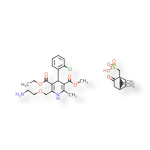
Details
| Stereochemistry | RACEMIC |
| Molecular Formula | C20H25ClN2O5 |
| Molecular Weight | 408.876 |
| Optical Activity | ( + / - ) |
| Defined Stereocenters | 0 / 1 |
| E/Z Centers | 0 |
| Charge | 0 |
SHOW SMILES / InChI
SMILES
CCOC(=O)C1=C(COCCN)NC(C)=C(C1C2=CC=CC=C2Cl)C(=O)OC
InChI
InChIKey=HTIQEAQVCYTUBX-UHFFFAOYSA-N
InChI=1S/C20H25ClN2O5/c1-4-28-20(25)18-15(11-27-10-9-22)23-12(2)16(19(24)26-3)17(18)13-7-5-6-8-14(13)21/h5-8,17,23H,4,9-11,22H2,1-3H3
Amlodipine is a dihydropyridine calcium antagonist (calcium ion antagonist or slow-channel blocker) that inhibits the transmembrane influx of calcium ions into vascular smooth muscle and cardiac muscle. Experimental data suggest that amlodipine binds to both dihydropyridine and nondihydropyridine binding sites. The contractile processes of cardiac muscle and vascular smooth muscle are dependent upon the movement of extracellular calcium ions into these cells through specific ion channels. Amlodipine inhibits calcium ion influx across cell membranes selectively, with a greater effect on vascular mooth muscle cells than on cardiac muscle cells. Amlodipine is indicated for the treatment of hypertension and coronary artery disease.
Originator
Sources: http://www.drugfuture.com/chemdata/amlodipine.html | http://www.pfizer.com/about/history/all
Curator's Comment: # Pfizer
Approval Year
Targets
| Primary Target | Pharmacology | Condition | Potency |
|---|---|---|---|
| 57.0 nM [IC50] |
Conditions
| Condition | Modality | Targets | Highest Phase | Product |
|---|---|---|---|---|
| Primary | NORVASC Approved UseAmlodipine besylate tablets USP are calcium channel blocker and may be used alone or in combination with other antihypertensive and antianginal agents for the treatment of: •Hypertension (1.1) о Amlodipine besylate tablets USP are indicated for the treatment of hypertension, to lower blood pressure. Lowering blood pressure reduces the risk of fatal and nonfatal cardiovascular events, primarily strokes and myocardial infarctions. •Coronary Artery Disease (1.2) о Chronic Stable Angina о Vasospastic Angina (Prinzmetal's or Variant Angina) о Angiographically Documented Coronary Artery Disease in patients without heart failure or an ejection fraction < 40% 1.1 Hypertension Amlodipine besylate tablets USP are indicated for the treatment of hypertension, to lower blood pressure. Lowering blood pressure reduces the risk of fatal and nonfatal cardiovascular events, primarily strokes and myocardial infarctions. These benefits have been seen in controlled trials of antihypertensive drugs from a wide variety of pharmacologic classes including amlodipine besylate. Control of high blood pressure should be part of comprehensive cardiovascular risk management, including, as appropriate, lipid control, diabetes management, antithrombotic therapy, smoking cessation, exercise, and limited sodium intake. Many patients will require more than one drug to achieve blood pressure goals. For specific advice on goals and management, see published guidelines, such as those of the National High Blood Pressure Education Program's Joint National Committee on Prevention, Detection, Evaluation, and Treatment of High Blood Pressure (JNC). Numerous antihypertensive drugs, from a variety of pharmacologic classes and with different mechanisms of action, have been shown in randomized controlled trials to reduce cardiovascular morbidity and mortality, and it can be concluded that it is blood pressure reduction, and not some other pharmacologic property of the drugs, that is largely responsible for those benefits. The largest and most consistent cardiovascular outcome benefit has been a reduction in the risk of stroke, but reductions in myocardial infarction and cardiovascular mortality also have been seen regularly. Elevated systolic or diastolic pressure causes increased cardiovascular risk, and the absolute risk increase per mmHg is greater at higher blood pressures, so that even modest reductions of severe hypertension can provide substantial benefit. Relative risk reduction from blood pressure reduction is similar across populations with varying absolute risk, so the absolute benefit is greater in patients who are at higher risk independent of their hypertension (for example, patients with diabetes or hyperlipidemia), and such patients would be expected to benefit from more aggressive treatment to a lower blood pressure goal. Some antihypertensive drugs have smaller blood pressure effects (as monotherapy) in black patients, and many antihypertensive drugs have additional approved indications and effects (e.g., on angina, heart failure, or diabetic kidney disease). These considerations may guide selection of therapy. Amlodipine besylate tablets USP may be used alone or in combination with other antihypertensive agents. 1.2 Coronary Artery Disease (CAD) Chronic Stable Angina Amlodipine besylate tablets USP are indicated for the symptomatic treatment of chronic stable angina. Amlodipine besylate tablets USP may be used alone or in combination with other antianginal agents. Vasospastic Angina (Prinzmetal's or Variant Angina) Amlodipine besylate tablets USP are indicated for the treatment of confirmed or suspected vasospastic angina. Amlodipine besylate tablets USP may be used as monotherapy or in combination with other antianginal agents. Angiographically Documented CAD In patients with recently documented CAD by angiography and without heart failure or an ejection fraction <40%, amlodipine besylate tablets USP are indicated to reduce the risk of hospitalization for angina and to reduce the risk of a coronary revascularization procedure. Launch Date1992 |
|||
| Primary | NORVASC Approved UseAmlodipine besylate tablets USP are calcium channel blocker and may be used alone or in combination with other antihypertensive and antianginal agents for the treatment of: •Hypertension (1.1) о Amlodipine besylate tablets USP are indicated for the treatment of hypertension, to lower blood pressure. Lowering blood pressure reduces the risk of fatal and nonfatal cardiovascular events, primarily strokes and myocardial infarctions. •Coronary Artery Disease (1.2) о Chronic Stable Angina о Vasospastic Angina (Prinzmetal's or Variant Angina) о Angiographically Documented Coronary Artery Disease in patients without heart failure or an ejection fraction < 40% 1.1 Hypertension Amlodipine besylate tablets USP are indicated for the treatment of hypertension, to lower blood pressure. Lowering blood pressure reduces the risk of fatal and nonfatal cardiovascular events, primarily strokes and myocardial infarctions. These benefits have been seen in controlled trials of antihypertensive drugs from a wide variety of pharmacologic classes including amlodipine besylate. Control of high blood pressure should be part of comprehensive cardiovascular risk management, including, as appropriate, lipid control, diabetes management, antithrombotic therapy, smoking cessation, exercise, and limited sodium intake. Many patients will require more than one drug to achieve blood pressure goals. For specific advice on goals and management, see published guidelines, such as those of the National High Blood Pressure Education Program's Joint National Committee on Prevention, Detection, Evaluation, and Treatment of High Blood Pressure (JNC). Numerous antihypertensive drugs, from a variety of pharmacologic classes and with different mechanisms of action, have been shown in randomized controlled trials to reduce cardiovascular morbidity and mortality, and it can be concluded that it is blood pressure reduction, and not some other pharmacologic property of the drugs, that is largely responsible for those benefits. The largest and most consistent cardiovascular outcome benefit has been a reduction in the risk of stroke, but reductions in myocardial infarction and cardiovascular mortality also have been seen regularly. Elevated systolic or diastolic pressure causes increased cardiovascular risk, and the absolute risk increase per mmHg is greater at higher blood pressures, so that even modest reductions of severe hypertension can provide substantial benefit. Relative risk reduction from blood pressure reduction is similar across populations with varying absolute risk, so the absolute benefit is greater in patients who are at higher risk independent of their hypertension (for example, patients with diabetes or hyperlipidemia), and such patients would be expected to benefit from more aggressive treatment to a lower blood pressure goal. Some antihypertensive drugs have smaller blood pressure effects (as monotherapy) in black patients, and many antihypertensive drugs have additional approved indications and effects (e.g., on angina, heart failure, or diabetic kidney disease). These considerations may guide selection of therapy. Amlodipine besylate tablets USP may be used alone or in combination with other antihypertensive agents. 1.2 Coronary Artery Disease (CAD) Chronic Stable Angina Amlodipine besylate tablets USP are indicated for the symptomatic treatment of chronic stable angina. Amlodipine besylate tablets USP may be used alone or in combination with other antianginal agents. Vasospastic Angina (Prinzmetal's or Variant Angina) Amlodipine besylate tablets USP are indicated for the treatment of confirmed or suspected vasospastic angina. Amlodipine besylate tablets USP may be used as monotherapy or in combination with other antianginal agents. Angiographically Documented CAD In patients with recently documented CAD by angiography and without heart failure or an ejection fraction <40%, amlodipine besylate tablets USP are indicated to reduce the risk of hospitalization for angina and to reduce the risk of a coronary revascularization procedure. Launch Date1992 |
|||
| Primary | Unknown Approved UseUnknown |
Cmax
| Value | Dose | Co-administered | Analyte | Population |
|---|---|---|---|---|
3 μg/L |
5 mg single, oral dose: 5 mg route of administration: Oral experiment type: SINGLE co-administered: |
AMLODIPINE plasma | Homo sapiens population: HEALTHY age: ADULT sex: FEMALE / MALE food status: UNKNOWN |
|
5.9 μg/L |
10 mg single, oral dose: 10 mg route of administration: Oral experiment type: SINGLE co-administered: |
AMLODIPINE plasma | Homo sapiens population: HEALTHY age: ADULT sex: UNKNOWN food status: UNKNOWN |
|
10.4 μg/L |
20 mg single, oral dose: 20 mg route of administration: Oral experiment type: SINGLE co-administered: |
AMLODIPINE plasma | Homo sapiens population: HEALTHY age: ADULT sex: UNKNOWN food status: UNKNOWN |
|
2.3 ng/mL EXPERIMENT https://pubmed.ncbi.nlm.nih.gov/7867683 |
5 mg single, oral dose: 5 mg route of administration: Oral experiment type: SINGLE co-administered: |
AMLODIPINE plasma | Homo sapiens population: HEALTHY age: ADULT sex: MALE food status: FASTED |
|
3.5 ng/mL EXPERIMENT https://pubmed.ncbi.nlm.nih.gov/8112371 |
5 mg single, oral dose: 5 mg route of administration: Oral experiment type: SINGLE co-administered: |
AMLODIPINE plasma | Homo sapiens population: HEALTHY age: ADULT sex: FEMALE / MALE food status: UNKNOWN |
|
10.5 ng/mL EXPERIMENT https://pubmed.ncbi.nlm.nih.gov/8112371 |
5 mg 1 times / day steady-state, oral dose: 5 mg route of administration: Oral experiment type: STEADY-STATE co-administered: |
AMLODIPINE plasma | Homo sapiens population: HEALTHY age: ADULT sex: FEMALE / MALE food status: UNKNOWN |
AUC
| Value | Dose | Co-administered | Analyte | Population |
|---|---|---|---|---|
187 μg × h/L |
5 mg single, oral dose: 5 mg route of administration: Oral experiment type: SINGLE co-administered: |
AMLODIPINE plasma | Homo sapiens population: HEALTHY age: ADULT sex: FEMALE / MALE food status: UNKNOWN |
|
238 μg × h/L |
10 mg single, oral dose: 10 mg route of administration: Oral experiment type: SINGLE co-administered: |
AMLODIPINE plasma | Homo sapiens population: HEALTHY age: ADULT sex: UNKNOWN food status: UNKNOWN |
|
464 μg × h/L |
20 mg single, oral dose: 20 mg route of administration: Oral experiment type: SINGLE co-administered: |
AMLODIPINE plasma | Homo sapiens population: HEALTHY age: ADULT sex: UNKNOWN food status: UNKNOWN |
|
114 ng × h/mL EXPERIMENT https://pubmed.ncbi.nlm.nih.gov/7867683 |
5 mg single, oral dose: 5 mg route of administration: Oral experiment type: SINGLE co-administered: |
AMLODIPINE plasma | Homo sapiens population: HEALTHY age: ADULT sex: MALE food status: FASTED |
|
169 ng × h/mL EXPERIMENT https://pubmed.ncbi.nlm.nih.gov/8112371 |
5 mg single, oral dose: 5 mg route of administration: Oral experiment type: SINGLE co-administered: |
AMLODIPINE plasma | Homo sapiens population: HEALTHY age: ADULT sex: FEMALE / MALE food status: UNKNOWN |
|
214 ng × h/mL EXPERIMENT https://pubmed.ncbi.nlm.nih.gov/8112371 |
5 mg 1 times / day steady-state, oral dose: 5 mg route of administration: Oral experiment type: STEADY-STATE co-administered: |
AMLODIPINE plasma | Homo sapiens population: HEALTHY age: ADULT sex: FEMALE / MALE food status: UNKNOWN |
T1/2
| Value | Dose | Co-administered | Analyte | Population |
|---|---|---|---|---|
48 h |
5 mg single, oral dose: 5 mg route of administration: Oral experiment type: SINGLE co-administered: |
AMLODIPINE plasma | Homo sapiens population: HEALTHY age: ADULT sex: FEMALE / MALE food status: UNKNOWN |
|
36 h |
10 mg single, oral dose: 10 mg route of administration: Oral experiment type: SINGLE co-administered: |
AMLODIPINE plasma | Homo sapiens population: HEALTHY age: ADULT sex: UNKNOWN food status: UNKNOWN |
|
37 h |
20 mg single, oral dose: 20 mg route of administration: Oral experiment type: SINGLE co-administered: |
AMLODIPINE plasma | Homo sapiens population: HEALTHY age: ADULT sex: UNKNOWN food status: UNKNOWN |
|
41 h EXPERIMENT https://pubmed.ncbi.nlm.nih.gov/8112371 |
5 mg single, oral dose: 5 mg route of administration: Oral experiment type: SINGLE co-administered: |
AMLODIPINE plasma | Homo sapiens population: HEALTHY age: ADULT sex: FEMALE / MALE food status: UNKNOWN |
|
47 h EXPERIMENT https://pubmed.ncbi.nlm.nih.gov/8112371 |
5 mg 1 times / day steady-state, oral dose: 5 mg route of administration: Oral experiment type: STEADY-STATE co-administered: |
AMLODIPINE plasma | Homo sapiens population: HEALTHY age: ADULT sex: FEMALE / MALE food status: UNKNOWN |
Funbound
| Value | Dose | Co-administered | Analyte | Population |
|---|---|---|---|---|
2% |
AMLODIPINE plasma | Homo sapiens population: UNKNOWN age: UNKNOWN sex: UNKNOWN food status: UNKNOWN |
Doses
| Dose | Population | Adverse events |
|---|---|---|
75 mg single, oral Overdose |
unhealthy, 42 years |
Disc. AE: Sinus tachycardia, Metabolic acidosis... AEs leading to discontinuation/dose reduction: Sinus tachycardia (1 patient) Sources: Metabolic acidosis (1 patient) Hypocalcemia (1 patient) |
10 mg 1 times / day steady, oral Recommended Dose: 10 mg, 1 times / day Route: oral Route: steady Dose: 10 mg, 1 times / day Sources: |
unhealthy, adult Health Status: unhealthy Age Group: adult Sex: unknown Sources: |
DLT: Edema, Dizziness... Dose limiting toxicities: Edema (10.8%) Sources: Dizziness (3.4%) Flushing (2.6%) Palpitation (4.5%) |
10 mg 1 times / day steady, oral Recommended Dose: 10 mg, 1 times / day Route: oral Route: steady Dose: 10 mg, 1 times / day Sources: |
unhealthy, adult Health Status: unhealthy Age Group: adult Sex: unknown Sources: |
Disc. AE: Headache... AEs leading to discontinuation/dose reduction: Headache (1.5%) Sources: |
2.5 mg 1 times / day steady, oral Recommended Dose: 2.5 mg, 1 times / day Route: oral Route: steady Dose: 2.5 mg, 1 times / day Sources: |
unhealthy, adult Health Status: unhealthy Age Group: adult Sex: unknown Sources: |
DLT: Edema, Dizziness... Dose limiting toxicities: Edema (1.8%) Sources: Dizziness (1.1%) Flushing (0.7%) Palpitation (0.7%) |
5 mg 1 times / day steady, oral Recommended Dose: 5 mg, 1 times / day Route: oral Route: steady Dose: 5 mg, 1 times / day Sources: |
unhealthy, adult Health Status: unhealthy Age Group: adult Sex: unknown Sources: |
DLT: Edema, Dizziness... Dose limiting toxicities: Edema (3%) Sources: Dizziness (3.4%) Flushing (1.4%) Palpitation (1.4%) |
5.6 mg 1 times / day steady, oral Recommended Dose: 5.6 mg, 1 times / day Route: oral Route: steady Dose: 5.6 mg, 1 times / day Sources: |
unhealthy, adult |
Other AEs: Neonatal disorder NOS... |
AEs
| AE | Significance | Dose | Population |
|---|---|---|---|
| Hypocalcemia | 1 patient Disc. AE |
75 mg single, oral Overdose |
unhealthy, 42 years |
| Metabolic acidosis | 1 patient Disc. AE |
75 mg single, oral Overdose |
unhealthy, 42 years |
| Sinus tachycardia | 1 patient Disc. AE |
75 mg single, oral Overdose |
unhealthy, 42 years |
| Edema | 10.8% DLT |
10 mg 1 times / day steady, oral Recommended Dose: 10 mg, 1 times / day Route: oral Route: steady Dose: 10 mg, 1 times / day Sources: |
unhealthy, adult Health Status: unhealthy Age Group: adult Sex: unknown Sources: |
| Flushing | 2.6% DLT |
10 mg 1 times / day steady, oral Recommended Dose: 10 mg, 1 times / day Route: oral Route: steady Dose: 10 mg, 1 times / day Sources: |
unhealthy, adult Health Status: unhealthy Age Group: adult Sex: unknown Sources: |
| Dizziness | 3.4% DLT |
10 mg 1 times / day steady, oral Recommended Dose: 10 mg, 1 times / day Route: oral Route: steady Dose: 10 mg, 1 times / day Sources: |
unhealthy, adult Health Status: unhealthy Age Group: adult Sex: unknown Sources: |
| Palpitation | 4.5% DLT |
10 mg 1 times / day steady, oral Recommended Dose: 10 mg, 1 times / day Route: oral Route: steady Dose: 10 mg, 1 times / day Sources: |
unhealthy, adult Health Status: unhealthy Age Group: adult Sex: unknown Sources: |
| Headache | 1.5% Disc. AE |
10 mg 1 times / day steady, oral Recommended Dose: 10 mg, 1 times / day Route: oral Route: steady Dose: 10 mg, 1 times / day Sources: |
unhealthy, adult Health Status: unhealthy Age Group: adult Sex: unknown Sources: |
| Flushing | 0.7% DLT |
2.5 mg 1 times / day steady, oral Recommended Dose: 2.5 mg, 1 times / day Route: oral Route: steady Dose: 2.5 mg, 1 times / day Sources: |
unhealthy, adult Health Status: unhealthy Age Group: adult Sex: unknown Sources: |
| Palpitation | 0.7% DLT |
2.5 mg 1 times / day steady, oral Recommended Dose: 2.5 mg, 1 times / day Route: oral Route: steady Dose: 2.5 mg, 1 times / day Sources: |
unhealthy, adult Health Status: unhealthy Age Group: adult Sex: unknown Sources: |
| Dizziness | 1.1% DLT |
2.5 mg 1 times / day steady, oral Recommended Dose: 2.5 mg, 1 times / day Route: oral Route: steady Dose: 2.5 mg, 1 times / day Sources: |
unhealthy, adult Health Status: unhealthy Age Group: adult Sex: unknown Sources: |
| Edema | 1.8% DLT |
2.5 mg 1 times / day steady, oral Recommended Dose: 2.5 mg, 1 times / day Route: oral Route: steady Dose: 2.5 mg, 1 times / day Sources: |
unhealthy, adult Health Status: unhealthy Age Group: adult Sex: unknown Sources: |
| Flushing | 1.4% DLT |
5 mg 1 times / day steady, oral Recommended Dose: 5 mg, 1 times / day Route: oral Route: steady Dose: 5 mg, 1 times / day Sources: |
unhealthy, adult Health Status: unhealthy Age Group: adult Sex: unknown Sources: |
| Palpitation | 1.4% DLT |
5 mg 1 times / day steady, oral Recommended Dose: 5 mg, 1 times / day Route: oral Route: steady Dose: 5 mg, 1 times / day Sources: |
unhealthy, adult Health Status: unhealthy Age Group: adult Sex: unknown Sources: |
| Edema | 3% DLT |
5 mg 1 times / day steady, oral Recommended Dose: 5 mg, 1 times / day Route: oral Route: steady Dose: 5 mg, 1 times / day Sources: |
unhealthy, adult Health Status: unhealthy Age Group: adult Sex: unknown Sources: |
| Dizziness | 3.4% DLT |
5 mg 1 times / day steady, oral Recommended Dose: 5 mg, 1 times / day Route: oral Route: steady Dose: 5 mg, 1 times / day Sources: |
unhealthy, adult Health Status: unhealthy Age Group: adult Sex: unknown Sources: |
| Neonatal disorder NOS | 11 patient | 5.6 mg 1 times / day steady, oral Recommended Dose: 5.6 mg, 1 times / day Route: oral Route: steady Dose: 5.6 mg, 1 times / day Sources: |
unhealthy, adult |
Overview
| CYP3A4 | CYP2C9 | CYP2D6 | hERG |
|---|---|---|---|
OverviewOther
| Other Inhibitor | Other Substrate | Other Inducer |
|---|---|---|
Drug as perpetrator
| Target | Modality | Activity | Metabolite | Clinical evidence |
|---|---|---|---|---|
| moderate [IC50 11.3 uM] | ||||
| no [IC50 >133 uM] | ||||
| no [IC50 >133 uM] | ||||
| no [IC50 >133 uM] | ||||
| no [IC50 >133 uM] | ||||
| no | ||||
| strong [Ki 0.13 uM] | ||||
| strong [Ki 1.95 uM] | ||||
| strong | ||||
| weak [IC50 57 uM] | ||||
| weak | ||||
| weak | ||||
| weak | ||||
| weak | yes (co-administration study) Comment: A prospective study in renal transplant patients (N=11) showed on an average of 40% increase in trough cyclosporine levels when concomitantly treated with amlodipine. Page: (Label 2) 24 |
|||
| yes [IC50 22 uM] | ||||
| yes [Inhibition 2 uM] | ||||
| yes | ||||
| yes | ||||
Page: (Label 2) 24 |
yes | yes (co-administration study) Comment: A prospective study in healthy Chinese volunteers (N=9) with CYP3A5 expressers showed a 2.5-to 4-fold increase in tacrolimus exposure when concomitantly administered with amlodipine. Page: (Label 2) 24 |
Drug as victim
| Target | Modality | Activity | Metabolite | Clinical evidence |
|---|---|---|---|---|
| likely | ||||
| major | ||||
Sources: https://www.accessdata.fda.gov/drugsatfda_docs/nda/2015/205003Orig1s000ClinPharmR.pdf#page=26 Page: (ClinPharm) 21, 26, (Label 2) 23 |
major | yes (co-administration study) Comment: Co-administration of the moderate CYP3A inhibitor diltiazem increases the exposure to amlodipine 1.6-fold., Erythromycin co-administration in healthy volunteers did not significantly change amlodipine systemic exposure. Sources: https://www.accessdata.fda.gov/drugsatfda_docs/nda/2015/205003Orig1s000ClinPharmR.pdf#page=26 Page: (ClinPharm) 21, 26, (Label 2) 23 |
||
| yes | yes (pharmacogenomic study) Comment: Following administration of amlodipine, blood pressure in all patients decreased. The magnitude of the change in blood pressure varied among patients. Individuals with the CYP3A5*1/*3 polymorphism exhibited the highest change in blood pressure, followed by CYP3A5*4, CYP3A5*1/*1, and CYP3A5*6 |
|||
| yes | yes (pharmacogenomic study) Comment: Amlodipine pharmacokinetics was affected by the genetic polymorphisms of the ABCB1 gene in humans. |
Tox targets
| Target | Modality | Activity | Metabolite | Clinical evidence |
|---|---|---|---|---|
PubMed
| Title | Date | PubMed |
|---|---|---|
| Amlodipine improves endothelial function and metabolic parameters in patients with hypertension. | 2009-03-20 |
|
| Amlodipine inhibits cell proliferation via PKD1-related pathway. | 2008-05-02 |
|
| Comparison of monotherapy versus combination antihypertensive therapy in elderly patients with essential hypertension. | 2008-04-05 |
|
| Synergistic effect of amlodipine and atorvastatin on blood pressure, left ventricular remodeling, and C-reactive protein in hypertensive patients with primary hypercholesterolemia. | 2008-03 |
|
| Effects of amlodipine, captopril, and bezafibrate on oxidative milieu in rats with fatty liver. | 2008-03 |
|
| Improved attainment of blood pressure and cholesterol goals using single-pill amlodipine/atorvastatin in African Americans: the CAPABLE trial. | 2008-01 |
|
| Vildagliptin, a novel dipeptidyl peptidase IV inhibitor, has no pharmacokinetic interactions with the antihypertensive agents amlodipine, valsartan, and ramipril in healthy subjects. | 2008-01 |
|
| Results of a comparative, phase III, 12-week, multicenter, prospective, randomized, double-blind assessment of the efficacy and tolerability of a fixed-dose combination of telmisartan and amlodipine versus amlodipine monotherapy in Indian adults with stage II hypertension. | 2007-12 |
|
| Antihypertensive efficacy of amlodipine and losartan after two 'missed' doses in patients with mild to moderate essential hypertension. | 2007-11-24 |
|
| Antihypertensive efficacy of the oral direct renin inhibitor aliskiren as add-on therapy in patients not responding to amlodipine monotherapy. | 2007-10 |
|
| Fibroblast apoptosis precedes cardiomyocyte mass reduction during left ventricular remodeling in hypertensive rats treated with amlodipine. | 2007-06 |
|
| G1 cell cycle arrest by amlodipine, a dihydropyridine Ca2+ channel blocker, in human epidermoid carcinoma A431 cells. | 2007-04-01 |
|
| Two multicenter, 8-week, randomized, double-blind, placebo-controlled, parallel-group studies evaluating the efficacy and tolerability of amlodipine and valsartan in combination and as monotherapy in adult patients with mild to moderate essential hypertension. | 2007-04 |
|
| Differential effects of dihydropyridine calcium antagonists on doxorubicin-induced nephrotoxicity in rats. | 2007-02-28 |
|
| Dysgeusia with amlodipine--a case report. | 2007-02 |
|
| Angiotensin-converting enzyme (ACE) inhibitor-associated angioedema of the stomach and small intestine: a case report. | 2006-12 |
|
| The effect of different antihypertensive drugs on cavernous tissue in experimental chronic renal insufficiency. | 2006-10-19 |
|
| Effect of food on the bioavailability of amlodipine besylate/atorvastatin calcium combination tablet. | 2006-10 |
|
| Incidence and predictors of angioedema in elderly hypertensive patients at high risk for cardiovascular disease: a report from the Antihypertensive and Lipid-Lowering Treatment to Prevent Heart Attack Trial (ALLHAT). | 2006-09 |
|
| Effect of stealthy liposomal topotecan plus amlodipine on the multidrug-resistant leukaemia cells in vitro and xenograft in mice. | 2006-06 |
|
| A novel stealth liposomal topotecan with amlodipine: apoptotic effect is associated with deletion of intracellular Ca2+ by amlodipine thus leading to an enhanced antitumor activity in leukemia. | 2006-05-15 |
|
| Beneficial effects of combined benazepril-amlodipine on cardiac nitric oxide, cGMP, and TNF-alpha production after cardiac ischemia. | 2006-05 |
|
| Pharmacoeconomic consequences of amlodipine besylate therapy in patients undergoing PTCA. | 2006-03 |
|
| Indapamide sustained release: a review of its use in the treatment of hypertension. | 2006 |
|
| An economic evaluation of the 2003 European Society of Hypertension-European Society of Cardiology guidelines for the management of mild-to-moderate hypertension in Greece. | 2005-09 |
|
| Calcium channel blockades exhibit anti-inflammatory and antioxidative effects by augmentation of endothelial nitric oxide synthase and the inhibition of angiotensin converting enzyme in the N(G)-nitro-L-arginine methyl ester-induced hypertensive rat aorta: vasoprotective effects beyond the blood pressure-lowering effects of amlodipine and manidipine. | 2005-08 |
|
| Clinic blood pressure responses to two amlodipine salt formulations, adipate and besylate, in adult Korean patients with mild to moderate hypertension: a multicenter, randomized, double-blind, parallel-group, 8-week comparison. | 2005-06 |
|
| Prediction of genotoxicity of chemical compounds by statistical learning methods. | 2005-06 |
|
| Efficacy and tolerability of combination therapy with valsartan plus hydrochlorothiazide compared with amlodipine monotherapy in hypertensive patients with other cardiovascular risk factors: the VAST study. | 2005-05 |
|
| Comparison of antihypertensive effects of an angiotensin-converting enzyme inhibitor, a calcium antagonist and a diuretic in patients with hypertension not controlled by angiotensin receptor blocker monotherapy. | 2005-04 |
|
| Exercise-related syncope induced by vasodilator therapy in an elderly hypertensive patient. | 2005-02 |
|
| Effects of valsartan/hydrochlorothiazide and amlodipine on ambulatory blood pressure and plasma norepinephrine levels in high-risk hypertensive patients. | 2004-10-29 |
|
| Effect of slow-release indapamide and perindopril compared with amlodipine on 24-hour blood pressure and left ventricular mass in hypertensive patients of African ancestry. | 2004-05 |
|
| Amlodipine and carvedilol prevent cytotoxicity in cortical neurons isolated from stroke-prone spontaneously hypertensive rats. | 2004-04 |
|
| Acute renal failure and hepatotoxicity associated with roxithromycin. | 2004-04 |
|
| Platelet morphology and plasma indices of platelet activation in essential hypertension: effects of amlodipine-based antihypertensive therapy. | 2004 |
|
| Irbesartan: a review of its use in hypertension and in the management of diabetic nephropathy. | 2004 |
|
| Biochemical changes on the cardioprotective effect of nicorandil and amlodipine during experimental myocardial infarction in rats. | 2003-12 |
|
| Heterogeneous effect of calcium antagonists on leg oedema: a comparison of amlodipine versus lercanidipine in hypertensive patients. | 2003-10 |
|
| Amlodipine reduces cyclosporin-induced hyperuricaemia in hypertensive renal transplant recipients. | 2003-10 |
|
| Better renoprotective effect of angiotensin II antagonist compared to dihydropyridine calcium channel blocker in childhood. | 2003-10 |
|
| Synergistic effect of nicorandil and amlodipine on lysosomal hydrolases during experimental myocardial infarction in rats. | 2003-09 |
|
| Comparative efficacy and safety of nisoldipine extended-release (ER) and amlodipine (CESNA-III study) in African American patients with hypertension. | 2003-09 |
|
| Antiproteinuric efficacy of losartan in comparison with amlodipine in non-diabetic proteinuric renal diseases: a double-blind, randomized clinical trial. | 2003-09 |
|
| Effects of antihypertensive drugs on peritoneal vessels in hypertensive dogs with mild renal insufficiency. | 2003 |
|
| A randomized, placebo-controlled, double-blind comparison of amlodipine and atenolol in patients with essential hypertension. | 1992-10 |
|
| Effects of amlodipine on myocardial infarction, infarct expansion, and ventricular geometry in the rat. | 1992-09 |
|
| The unique binding properties of amlodipine: a long-acting calcium antagonist. | 1991-08 |
|
| A double-blind evaluation of the effect of amlodipine on ambulatory blood pressure. | 1991 |
|
| 24-hour blood pressure control with the once-daily calcium antagonist amlodipine. | 1991 |
Sample Use Guides
Adult recommended starting dose: 5 mg once daily with maximum dose
10 mg once daily. Small, fragile, or elderly patients, or patients with hepatic
insufficiency may be started on 2.5 mg once daily.
Pediatric starting dose: 2.5 mg to 5 mg once daily. Important Limitation: Doses in excess of 5 mg daily have not been studied.
Route of Administration:
Oral
| Name | Type | Language | ||
|---|---|---|---|---|
|
Official Name | English | ||
|
Preferred Name | English | ||
|
Common Name | English | ||
|
Code | English | ||
|
Common Name | English | ||
|
Common Name | English | ||
|
Common Name | English | ||
|
Common Name | English | ||
|
Common Name | English | ||
|
Code | English | ||
|
Common Name | English | ||
|
Common Name | English | ||
|
Common Name | English |
| Classification Tree | Code System | Code | ||
|---|---|---|---|---|
|
WHO-ATC |
C10BX14
Created by
admin on Mon Mar 31 18:42:29 GMT 2025 , Edited by admin on Mon Mar 31 18:42:29 GMT 2025
|
||
|
WHO-ATC |
C09DB05
Created by
admin on Mon Mar 31 18:42:29 GMT 2025 , Edited by admin on Mon Mar 31 18:42:29 GMT 2025
|
||
|
WHO-VATC |
QC09XA53
Created by
admin on Mon Mar 31 18:42:29 GMT 2025 , Edited by admin on Mon Mar 31 18:42:29 GMT 2025
|
||
|
WHO-ATC |
C09DB04
Created by
admin on Mon Mar 31 18:42:29 GMT 2025 , Edited by admin on Mon Mar 31 18:42:29 GMT 2025
|
||
|
WHO-ATC |
C10BX07
Created by
admin on Mon Mar 31 18:42:29 GMT 2025 , Edited by admin on Mon Mar 31 18:42:29 GMT 2025
|
||
|
WHO-ATC |
C09DB01
Created by
admin on Mon Mar 31 18:42:29 GMT 2025 , Edited by admin on Mon Mar 31 18:42:29 GMT 2025
|
||
|
WHO-VATC |
QC09BB04
Created by
admin on Mon Mar 31 18:42:29 GMT 2025 , Edited by admin on Mon Mar 31 18:42:29 GMT 2025
|
||
|
WHO-VATC |
QC08CA01
Created by
admin on Mon Mar 31 18:42:29 GMT 2025 , Edited by admin on Mon Mar 31 18:42:29 GMT 2025
|
||
|
NCI_THESAURUS |
C333
Created by
admin on Mon Mar 31 18:42:29 GMT 2025 , Edited by admin on Mon Mar 31 18:42:29 GMT 2025
|
||
|
NDF-RT |
N0000175421
Created by
admin on Mon Mar 31 18:42:29 GMT 2025 , Edited by admin on Mon Mar 31 18:42:29 GMT 2025
|
||
|
WHO-ATC |
C10BX03
Created by
admin on Mon Mar 31 18:42:29 GMT 2025 , Edited by admin on Mon Mar 31 18:42:29 GMT 2025
|
||
|
LIVERTOX |
NBK548585
Created by
admin on Mon Mar 31 18:42:29 GMT 2025 , Edited by admin on Mon Mar 31 18:42:29 GMT 2025
|
||
|
WHO-ATC |
C09BB03
Created by
admin on Mon Mar 31 18:42:29 GMT 2025 , Edited by admin on Mon Mar 31 18:42:29 GMT 2025
|
||
|
WHO-ATC |
C08GA02
Created by
admin on Mon Mar 31 18:42:29 GMT 2025 , Edited by admin on Mon Mar 31 18:42:29 GMT 2025
|
||
|
WHO-ATC |
C09BB07
Created by
admin on Mon Mar 31 18:42:29 GMT 2025 , Edited by admin on Mon Mar 31 18:42:29 GMT 2025
|
||
|
WHO-VATC |
QC09BB07
Created by
admin on Mon Mar 31 18:42:29 GMT 2025 , Edited by admin on Mon Mar 31 18:42:29 GMT 2025
|
||
|
WHO-ATC |
C09XA53
Created by
admin on Mon Mar 31 18:42:29 GMT 2025 , Edited by admin on Mon Mar 31 18:42:29 GMT 2025
|
||
|
WHO-ATC |
C10BX09
Created by
admin on Mon Mar 31 18:42:29 GMT 2025 , Edited by admin on Mon Mar 31 18:42:29 GMT 2025
|
||
|
WHO-ATC |
C09XA54
Created by
admin on Mon Mar 31 18:42:29 GMT 2025 , Edited by admin on Mon Mar 31 18:42:29 GMT 2025
|
||
|
WHO-ATC |
C07FB13
Created by
admin on Mon Mar 31 18:42:29 GMT 2025 , Edited by admin on Mon Mar 31 18:42:29 GMT 2025
|
||
|
WHO-VATC |
QC09DX03
Created by
admin on Mon Mar 31 18:42:29 GMT 2025 , Edited by admin on Mon Mar 31 18:42:29 GMT 2025
|
||
|
WHO-ATC |
C09BX03
Created by
admin on Mon Mar 31 18:42:29 GMT 2025 , Edited by admin on Mon Mar 31 18:42:29 GMT 2025
|
||
|
WHO-VATC |
QC09DB04
Created by
admin on Mon Mar 31 18:42:29 GMT 2025 , Edited by admin on Mon Mar 31 18:42:29 GMT 2025
|
||
|
NDF-RT |
N0000000069
Created by
admin on Mon Mar 31 18:42:29 GMT 2025 , Edited by admin on Mon Mar 31 18:42:29 GMT 2025
|
||
|
WHO-VATC |
QC09DB01
Created by
admin on Mon Mar 31 18:42:29 GMT 2025 , Edited by admin on Mon Mar 31 18:42:29 GMT 2025
|
||
|
WHO-VATC |
QC09DX01
Created by
admin on Mon Mar 31 18:42:29 GMT 2025 , Edited by admin on Mon Mar 31 18:42:29 GMT 2025
|
||
|
WHO-VATC |
QC09DB07
Created by
admin on Mon Mar 31 18:42:29 GMT 2025 , Edited by admin on Mon Mar 31 18:42:29 GMT 2025
|
||
|
WHO-ATC |
C09DX06
Created by
admin on Mon Mar 31 18:42:29 GMT 2025 , Edited by admin on Mon Mar 31 18:42:29 GMT 2025
|
||
|
WHO-VATC |
QC08GA02
Created by
admin on Mon Mar 31 18:42:29 GMT 2025 , Edited by admin on Mon Mar 31 18:42:29 GMT 2025
|
||
|
WHO-ATC |
C09DB07
Created by
admin on Mon Mar 31 18:42:29 GMT 2025 , Edited by admin on Mon Mar 31 18:42:29 GMT 2025
|
||
|
WHO-ESSENTIAL MEDICINES LIST |
12.3
Created by
admin on Mon Mar 31 18:42:29 GMT 2025 , Edited by admin on Mon Mar 31 18:42:29 GMT 2025
|
||
|
WHO-ATC |
C10BX11
Created by
admin on Mon Mar 31 18:42:29 GMT 2025 , Edited by admin on Mon Mar 31 18:42:29 GMT 2025
|
||
|
WHO-ATC |
C09DX03
Created by
admin on Mon Mar 31 18:42:29 GMT 2025 , Edited by admin on Mon Mar 31 18:42:29 GMT 2025
|
||
|
WHO-VATC |
QC09DB02
Created by
admin on Mon Mar 31 18:42:29 GMT 2025 , Edited by admin on Mon Mar 31 18:42:29 GMT 2025
|
||
|
WHO-ATC |
C09DB06
Created by
admin on Mon Mar 31 18:42:29 GMT 2025 , Edited by admin on Mon Mar 31 18:42:29 GMT 2025
|
||
|
NDF-RT |
N0000007556
Created by
admin on Mon Mar 31 18:42:29 GMT 2025 , Edited by admin on Mon Mar 31 18:42:29 GMT 2025
|
||
|
WHO-ATC |
C09BB04
Created by
admin on Mon Mar 31 18:42:29 GMT 2025 , Edited by admin on Mon Mar 31 18:42:29 GMT 2025
|
||
|
WHO-VATC |
QC09DB06
Created by
admin on Mon Mar 31 18:42:29 GMT 2025 , Edited by admin on Mon Mar 31 18:42:29 GMT 2025
|
||
|
WHO-ATC |
C08CA01
Created by
admin on Mon Mar 31 18:42:29 GMT 2025 , Edited by admin on Mon Mar 31 18:42:29 GMT 2025
|
||
|
WHO-VATC |
QC10BX03
Created by
admin on Mon Mar 31 18:42:29 GMT 2025 , Edited by admin on Mon Mar 31 18:42:29 GMT 2025
|
||
|
WHO-VATC |
QC09DB05
Created by
admin on Mon Mar 31 18:42:29 GMT 2025 , Edited by admin on Mon Mar 31 18:42:29 GMT 2025
|
||
|
WHO-ATC |
C09BX01
Created by
admin on Mon Mar 31 18:42:29 GMT 2025 , Edited by admin on Mon Mar 31 18:42:29 GMT 2025
|
||
|
WHO-VATC |
QC09BB03
Created by
admin on Mon Mar 31 18:42:29 GMT 2025 , Edited by admin on Mon Mar 31 18:42:29 GMT 2025
|
||
|
WHO-ATC |
C09DX01
Created by
admin on Mon Mar 31 18:42:29 GMT 2025 , Edited by admin on Mon Mar 31 18:42:29 GMT 2025
|
||
|
WHO-ATC |
C09DB02
Created by
admin on Mon Mar 31 18:42:29 GMT 2025 , Edited by admin on Mon Mar 31 18:42:29 GMT 2025
|
| Code System | Code | Type | Description | ||
|---|---|---|---|---|---|
|
2668
Created by
admin on Mon Mar 31 18:42:29 GMT 2025 , Edited by admin on Mon Mar 31 18:42:29 GMT 2025
|
PRIMARY | |||
|
2162
Created by
admin on Mon Mar 31 18:42:29 GMT 2025 , Edited by admin on Mon Mar 31 18:42:29 GMT 2025
|
PRIMARY | |||
|
2669
Created by
admin on Mon Mar 31 18:42:29 GMT 2025 , Edited by admin on Mon Mar 31 18:42:29 GMT 2025
|
PRIMARY | |||
|
C61635
Created by
admin on Mon Mar 31 18:42:29 GMT 2025 , Edited by admin on Mon Mar 31 18:42:29 GMT 2025
|
PRIMARY | |||
|
17767
Created by
admin on Mon Mar 31 18:42:29 GMT 2025 , Edited by admin on Mon Mar 31 18:42:29 GMT 2025
|
PRIMARY | RxNorm | ||
|
m1757
Created by
admin on Mon Mar 31 18:42:29 GMT 2025 , Edited by admin on Mon Mar 31 18:42:29 GMT 2025
|
PRIMARY | Merck Index | ||
|
DTXSID7022596
Created by
admin on Mon Mar 31 18:42:29 GMT 2025 , Edited by admin on Mon Mar 31 18:42:29 GMT 2025
|
PRIMARY | |||
|
DB00381
Created by
admin on Mon Mar 31 18:42:29 GMT 2025 , Edited by admin on Mon Mar 31 18:42:29 GMT 2025
|
PRIMARY | |||
|
100000085259
Created by
admin on Mon Mar 31 18:42:29 GMT 2025 , Edited by admin on Mon Mar 31 18:42:29 GMT 2025
|
PRIMARY | |||
|
Amlodipine
Created by
admin on Mon Mar 31 18:42:29 GMT 2025 , Edited by admin on Mon Mar 31 18:42:29 GMT 2025
|
PRIMARY | |||
|
1J444QC288
Created by
admin on Mon Mar 31 18:42:29 GMT 2025 , Edited by admin on Mon Mar 31 18:42:29 GMT 2025
|
PRIMARY | |||
|
6981
Created by
admin on Mon Mar 31 18:42:29 GMT 2025 , Edited by admin on Mon Mar 31 18:42:29 GMT 2025
|
PRIMARY | |||
|
183
Created by
admin on Mon Mar 31 18:42:29 GMT 2025 , Edited by admin on Mon Mar 31 18:42:29 GMT 2025
|
PRIMARY | |||
|
D017311
Created by
admin on Mon Mar 31 18:42:29 GMT 2025 , Edited by admin on Mon Mar 31 18:42:29 GMT 2025
|
PRIMARY | |||
|
SUB05467MIG
Created by
admin on Mon Mar 31 18:42:29 GMT 2025 , Edited by admin on Mon Mar 31 18:42:29 GMT 2025
|
PRIMARY | |||
|
88150-42-9
Created by
admin on Mon Mar 31 18:42:29 GMT 2025 , Edited by admin on Mon Mar 31 18:42:29 GMT 2025
|
PRIMARY | |||
|
1J444QC288
Created by
admin on Mon Mar 31 18:42:29 GMT 2025 , Edited by admin on Mon Mar 31 18:42:29 GMT 2025
|
PRIMARY | |||
|
7079
Created by
admin on Mon Mar 31 18:42:29 GMT 2025 , Edited by admin on Mon Mar 31 18:42:29 GMT 2025
|
PRIMARY | |||
|
5729
Created by
admin on Mon Mar 31 18:42:29 GMT 2025 , Edited by admin on Mon Mar 31 18:42:29 GMT 2025
|
PRIMARY | |||
|
CHEMBL1491
Created by
admin on Mon Mar 31 18:42:29 GMT 2025 , Edited by admin on Mon Mar 31 18:42:29 GMT 2025
|
PRIMARY | |||
|
AMLODIPINE
Created by
admin on Mon Mar 31 18:42:29 GMT 2025 , Edited by admin on Mon Mar 31 18:42:29 GMT 2025
|
PRIMARY |
ACTIVE MOIETY
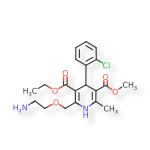
METABOLITE INACTIVE (PARENT)
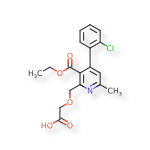
METABOLITE INACTIVE (PARENT)
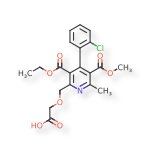
METABOLITE INACTIVE (PARENT)
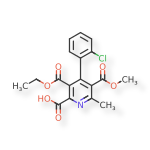
METABOLITE INACTIVE (PARENT)
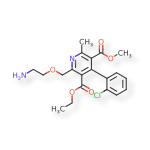
METABOLITE INACTIVE (PARENT)
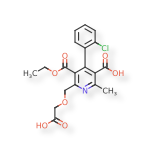
SALT/SOLVATE (PARENT)

SALT/SOLVATE (PARENT)
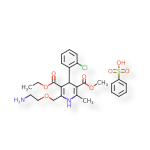
SALT/SOLVATE (PARENT)
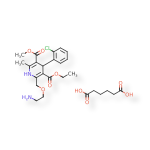
SALT/SOLVATE (PARENT)
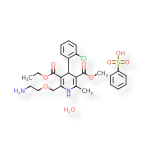
SALT/SOLVATE (PARENT)
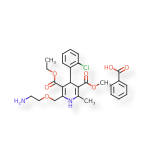
SALT/SOLVATE (PARENT)
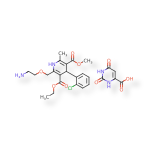
SALT/SOLVATE (PARENT)
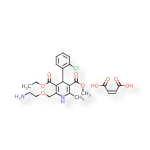
SALT/SOLVATE (PARENT)
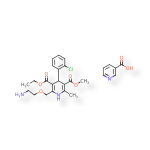
SALT/SOLVATE (PARENT)
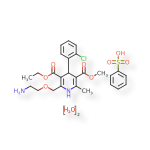
SALT/SOLVATE (PARENT)
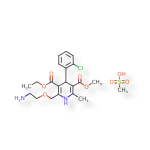
SALT/SOLVATE (PARENT)