


Details
| Stereochemistry | ABSOLUTE |
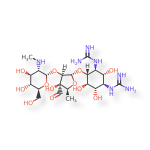
| Molecular Formula | 2C21H39N7O12.3H2O4S |
| Molecular Weight | 1457.384 |
| Optical Activity | UNSPECIFIED |
| Defined Stereocenters | 30 / 30 |
| E/Z Centers | 0 |
| Charge | 0 |
SHOW SMILES / InChI
SMILES
OS(O)(=O)=O.OS(O)(=O)=O.OS(O)(=O)=O.CN[C@H]1[C@H](O)[C@@H](O)[C@H](CO)O[C@H]1O[C@H]2[C@H](O[C@H]3[C@H](O)[C@@H](O)[C@H](NC(N)=N)[C@@H](O)[C@@H]3NC(N)=N)O[C@@H](C)[C@]2(O)C=O.CN[C@H]4[C@H](O)[C@@H](O)[C@H](CO)O[C@H]4O[C@H]5[C@H](O[C@H]6[C@H](O)[C@@H](O)[C@H](NC(N)=N)[C@@H](O)[C@@H]6NC(N)=N)O[C@@H](C)[C@]5(O)C=O
InChI
InChIKey=QTENRWWVYAAPBI-YCRXJPFRSA-N
InChI=1S/2C21H39N7O12.3H2O4S/c2*1-5-21(36,4-30)16(40-17-9(26-2)13(34)10(31)6(3-29)38-17)18(37-5)39-15-8(28-20(24)25)11(32)7(27-19(22)23)12(33)14(15)35;3*1-5(2,3)4/h2*4-18,26,29,31-36H,3H2,1-2H3,(H4,22,23,27)(H4,24,25,28);3*(H2,1,2,3,4)/t2*5-,6-,7+,8-,9-,10-,11+,12-,13-,14+,15+,16-,17-,18-,21+;;;/m00.../s1
| Molecular Formula | C21H39N7O12 |
| Molecular Weight | 581.5741 |
| Charge | 0 |
| Count |
|
| Stereochemistry | ABSOLUTE |
| Additional Stereochemistry | No |
| Defined Stereocenters | 15 / 15 |
| E/Z Centers | 0 |
| Optical Activity | UNSPECIFIED |
| Molecular Formula | H2O4S |
| Molecular Weight | 98.078 |
| Charge | 0 |
| Count |
|
| Stereochemistry | ACHIRAL |
| Additional Stereochemistry | No |
| Defined Stereocenters | 0 / 0 |
| E/Z Centers | 0 |
| Optical Activity | NONE |
DescriptionCurator's Comment: Description was created based on several sources, including http://www.accessdata.fda.gov/drugsatfda_docs/label/2012/064210s009lbl.pdf
Curator's Comment: Description was created based on several sources, including http://www.accessdata.fda.gov/drugsatfda_docs/label/2012/064210s009lbl.pdf
Streptomycin is a water-soluble aminoglycoside derived from Streptomyces griseus. Aminoglycosides work by binding to the bacterial 30S ribosomal subunit, causing misreading of t-RNA, leaving the bacterium unable to synthesize proteins vital to its growth. Aminoglycosides are useful primarily in infections involving aerobic, Gram-negative bacteria, such as Pseudomonas, Acinetobacter, and Enterobacter. In addition, some mycobacteria, including the bacteria that cause tuberculosis, are susceptible to aminoglycosides. Infections caused by Gram-positive bacteria can also be treated with aminoglycosides, but other types of antibiotics are more potent and less damaging to the host. In the past the aminoglycosides have been used in conjunction with penicillin-related antibiotics in streptococcal infections for their synergistic effects, particularly in endocarditis. Aminoglycosides are mostly ineffective against anaerobic bacteria, fungi and viruses. Aminoglycosides like Streptomycin "irreversibly" bind to specific 30S-subunit proteins and 16S rRNA. Specifically Streptomycin binds to four nucleotides of 16S rRNA and a single amino acid of protein S12. This interferes with decoding site in the vicinity of nucleotide 1400 in 16S rRNA of 30S subunit. This region interacts with the wobble base in the anticodon of tRNA. This leads to interference with the initiation complex, misreading of mRNA so incorrect amino acids are inserted into the polypeptide leading to nonfunctional or toxic peptides and the breakup of polysomes into nonfunctional monosomes.
Streptomycin is indicated for the treatment of tuberculosis. May also be used in combination with other drugs to treat tularemia (Francisella tularensis), plague (Yersia pestis), severe M. avium complex, brucellosis, and enterococcal endocarditis (e.g. E. faecalis, E. faecium).
Approval Year
Targets
| Primary Target | Pharmacology | Condition | Potency |
|---|---|---|---|
Target ID: map03010 |
|||
Target ID: CHEMBL360 |
5.36 µM [IC50] | ||
Target ID: CHEMBL612748 |
Conditions
| Condition | Modality | Targets | Highest Phase | Product |
|---|---|---|---|---|
| Curative | STREPTOMYCIN SULFATE Approved UseStreptomycin is indicated for the treatment of individuals with moderate to severe infections caused by susceptibile strains of microorganisms in the specific conditions listed below: Mycobacterium tuberculosis: The Advisory Council for the Elimination of Tuberculosis, the American Thoracic Society, and the Center for Disease Control recommend that either streptomycin or ethambutol be added as a fourth drug in a regimen containing isoniazid (INH), rifampin and pyrazinamide for initial treatment of tuberculosis unless the likelihood of INH or rifampin resistance is very low. The need for a fourth drug should be reassessed when the results of susceptibility testing are known. In the past when the national rate of primary drug resistance to isoniazid was known to be less than 4% and was either stable or declining, therapy with two and three drug regimens was considered adequate. If community rates of INH resistance are currently less than 4%, an initial treatment regimen with less than four drugs may be considered. Streptomycin is also indicated for therapy of tuberculosis when one or more of the above drugs is contraindicated because of toxicity or intolerance. The management of tuberculosis has become more complex as a consequence of increasing rates of drug resistance and concomitant HIV infection. Additional consultation from experts in the treatment of tuberculosis may be desirable in those settings. Non-tuberculosis infections: The use of streptomycin should be limited to the treatment of infections caused by bacteria which have been shown to be susceptible to the antibacterial effects of streptomycin and which are not amenable to therapy with less potentially toxic agents. Pasteurella pestis (plague), Francisella tularensis (tularemia), Brucella, Calymmatobacterium granulomatis (donovanosis, granuloma inguinale), H. ducreyi (chancroid), H. influenzae (in respiratory, endocardial, and meningeal infections-concomitantly with another antibacterial agent), K. pneumoniae pneumonia (concomitantly with another antibacterial agent), E.coli, Proteus, A. aerogenes, K. pneumoniae, and Enterococcus faecalis in urinary tract infections, Streptococcus viridans, Enterococcus faecalis (in endocardial infections -concomitantly with penicillin), Gram-negative bacillary bacteremia (concomitantly with another antibacterial agent). To reduce the development of drug-resistant bacteria and maintain the effectiveness of streptomycin and other antibacterial drugs, streptomycin should be used only to treat or prevent infections that are proven or strongly suspected to be caused by susceptible bacteria. When culture and susceptibility information are available, they should be considered in selecting or modifying antibacterial therapy. In the absence of such data, local epidemiology and susceptibility patterns may contribute to the empiric selection of therapy. Launch Date1946 |
|||
| Curative | STREPTOMYCIN SULFATE Approved UseStreptomycin is indicated for the treatment of individuals with moderate to severe infections caused by susceptibile strains of microorganisms in the specific conditions listed below: Mycobacterium tuberculosis: The Advisory Council for the Elimination of Tuberculosis, the American Thoracic Society, and the Center for Disease Control recommend that either streptomycin or ethambutol be added as a fourth drug in a regimen containing isoniazid (INH), rifampin and pyrazinamide for initial treatment of tuberculosis unless the likelihood of INH or rifampin resistance is very low. The need for a fourth drug should be reassessed when the results of susceptibility testing are known. In the past when the national rate of primary drug resistance to isoniazid was known to be less than 4% and was either stable or declining, therapy with two and three drug regimens was considered adequate. If community rates of INH resistance are currently less than 4%, an initial treatment regimen with less than four drugs may be considered. Streptomycin is also indicated for therapy of tuberculosis when one or more of the above drugs is contraindicated because of toxicity or intolerance. The management of tuberculosis has become more complex as a consequence of increasing rates of drug resistance and concomitant HIV infection. Additional consultation from experts in the treatment of tuberculosis may be desirable in those settings. Non-tuberculosis infections: The use of streptomycin should be limited to the treatment of infections caused by bacteria which have been shown to be susceptible to the antibacterial effects of streptomycin and which are not amenable to therapy with less potentially toxic agents. Pasteurella pestis (plague), Francisella tularensis (tularemia), Brucella, Calymmatobacterium granulomatis (donovanosis, granuloma inguinale), H. ducreyi (chancroid), H. influenzae (in respiratory, endocardial, and meningeal infections-concomitantly with another antibacterial agent), K. pneumoniae pneumonia (concomitantly with another antibacterial agent), E.coli, Proteus, A. aerogenes, K. pneumoniae, and Enterococcus faecalis in urinary tract infections, Streptococcus viridans, Enterococcus faecalis (in endocardial infections -concomitantly with penicillin), Gram-negative bacillary bacteremia (concomitantly with another antibacterial agent). To reduce the development of drug-resistant bacteria and maintain the effectiveness of streptomycin and other antibacterial drugs, streptomycin should be used only to treat or prevent infections that are proven or strongly suspected to be caused by susceptible bacteria. When culture and susceptibility information are available, they should be considered in selecting or modifying antibacterial therapy. In the absence of such data, local epidemiology and susceptibility patterns may contribute to the empiric selection of therapy. Launch Date1946 |
|||
| Curative | STREPTOMYCIN SULFATE Approved UseStreptomycin is indicated for the treatment of individuals with moderate to severe infections caused by susceptibile strains of microorganisms in the specific conditions listed below: Mycobacterium tuberculosis: The Advisory Council for the Elimination of Tuberculosis, the American Thoracic Society, and the Center for Disease Control recommend that either streptomycin or ethambutol be added as a fourth drug in a regimen containing isoniazid (INH), rifampin and pyrazinamide for initial treatment of tuberculosis unless the likelihood of INH or rifampin resistance is very low. The need for a fourth drug should be reassessed when the results of susceptibility testing are known. In the past when the national rate of primary drug resistance to isoniazid was known to be less than 4% and was either stable or declining, therapy with two and three drug regimens was considered adequate. If community rates of INH resistance are currently less than 4%, an initial treatment regimen with less than four drugs may be considered. Streptomycin is also indicated for therapy of tuberculosis when one or more of the above drugs is contraindicated because of toxicity or intolerance. The management of tuberculosis has become more complex as a consequence of increasing rates of drug resistance and concomitant HIV infection. Additional consultation from experts in the treatment of tuberculosis may be desirable in those settings. Non-tuberculosis infections: The use of streptomycin should be limited to the treatment of infections caused by bacteria which have been shown to be susceptible to the antibacterial effects of streptomycin and which are not amenable to therapy with less potentially toxic agents. Pasteurella pestis (plague), Francisella tularensis (tularemia), Brucella, Calymmatobacterium granulomatis (donovanosis, granuloma inguinale), H. ducreyi (chancroid), H. influenzae (in respiratory, endocardial, and meningeal infections-concomitantly with another antibacterial agent), K. pneumoniae pneumonia (concomitantly with another antibacterial agent), E.coli, Proteus, A. aerogenes, K. pneumoniae, and Enterococcus faecalis in urinary tract infections, Streptococcus viridans, Enterococcus faecalis (in endocardial infections -concomitantly with penicillin), Gram-negative bacillary bacteremia (concomitantly with another antibacterial agent). To reduce the development of drug-resistant bacteria and maintain the effectiveness of streptomycin and other antibacterial drugs, streptomycin should be used only to treat or prevent infections that are proven or strongly suspected to be caused by susceptible bacteria. When culture and susceptibility information are available, they should be considered in selecting or modifying antibacterial therapy. In the absence of such data, local epidemiology and susceptibility patterns may contribute to the empiric selection of therapy. Launch Date1946 |
|||
| Curative | STREPTOMYCIN SULFATE Approved UseStreptomycin is indicated for the treatment of individuals with moderate to severe infections caused by susceptibile strains of microorganisms in the specific conditions listed below: Mycobacterium tuberculosis: The Advisory Council for the Elimination of Tuberculosis, the American Thoracic Society, and the Center for Disease Control recommend that either streptomycin or ethambutol be added as a fourth drug in a regimen containing isoniazid (INH), rifampin and pyrazinamide for initial treatment of tuberculosis unless the likelihood of INH or rifampin resistance is very low. The need for a fourth drug should be reassessed when the results of susceptibility testing are known. In the past when the national rate of primary drug resistance to isoniazid was known to be less than 4% and was either stable or declining, therapy with two and three drug regimens was considered adequate. If community rates of INH resistance are currently less than 4%, an initial treatment regimen with less than four drugs may be considered. Streptomycin is also indicated for therapy of tuberculosis when one or more of the above drugs is contraindicated because of toxicity or intolerance. The management of tuberculosis has become more complex as a consequence of increasing rates of drug resistance and concomitant HIV infection. Additional consultation from experts in the treatment of tuberculosis may be desirable in those settings. Non-tuberculosis infections: The use of streptomycin should be limited to the treatment of infections caused by bacteria which have been shown to be susceptible to the antibacterial effects of streptomycin and which are not amenable to therapy with less potentially toxic agents. Pasteurella pestis (plague), Francisella tularensis (tularemia), Brucella, Calymmatobacterium granulomatis (donovanosis, granuloma inguinale), H. ducreyi (chancroid), H. influenzae (in respiratory, endocardial, and meningeal infections-concomitantly with another antibacterial agent), K. pneumoniae pneumonia (concomitantly with another antibacterial agent), E.coli, Proteus, A. aerogenes, K. pneumoniae, and Enterococcus faecalis in urinary tract infections, Streptococcus viridans, Enterococcus faecalis (in endocardial infections -concomitantly with penicillin), Gram-negative bacillary bacteremia (concomitantly with another antibacterial agent). To reduce the development of drug-resistant bacteria and maintain the effectiveness of streptomycin and other antibacterial drugs, streptomycin should be used only to treat or prevent infections that are proven or strongly suspected to be caused by susceptible bacteria. When culture and susceptibility information are available, they should be considered in selecting or modifying antibacterial therapy. In the absence of such data, local epidemiology and susceptibility patterns may contribute to the empiric selection of therapy. Launch Date1946 |
Cmax
| Value | Dose | Co-administered | Analyte | Population |
|---|---|---|---|---|
42.6 μg/mL EXPERIMENT https://pubmed.ncbi.nlm.nih.gov/11560193/ |
18 mg/kg single, intramuscular dose: 18 mg/kg route of administration: Intramuscular experiment type: SINGLE co-administered: |
STREPTOMYCIN plasma | Homo sapiens population: UNHEALTHY age: ADULT sex: FEMALE / MALE food status: UNKNOWN |
AUC
| Value | Dose | Co-administered | Analyte | Population |
|---|---|---|---|---|
264 μg × h/mL EXPERIMENT https://pubmed.ncbi.nlm.nih.gov/11560193/ |
18 mg/kg single, intramuscular dose: 18 mg/kg route of administration: Intramuscular experiment type: SINGLE co-administered: |
STREPTOMYCIN plasma | Homo sapiens population: UNHEALTHY age: ADULT sex: FEMALE / MALE food status: UNKNOWN |
T1/2
| Value | Dose | Co-administered | Analyte | Population |
|---|---|---|---|---|
2.67 h EXPERIMENT https://pubmed.ncbi.nlm.nih.gov/11560193/ |
18 mg/kg single, intramuscular dose: 18 mg/kg route of administration: Intramuscular experiment type: SINGLE co-administered: |
STREPTOMYCIN plasma | Homo sapiens population: UNHEALTHY age: ADULT sex: FEMALE / MALE food status: UNKNOWN |
Doses
| Dose | Population | Adverse events |
|---|---|---|
1 g 1 times / day multiple, intramuscular Recommended Dose: 1 g, 1 times / day Route: intramuscular Route: multiple Dose: 1 g, 1 times / day Sources: |
unhealthy, 12–70 |
Disc. AE: Heartburn, Fatigue... AEs leading to discontinuation/dose reduction: Heartburn (1.06%) Sources: Fatigue (1.06%) |
1 g 1 times / day steady, intravenous Recommended Dose: 1 g, 1 times / day Route: intravenous Route: steady Dose: 1 g, 1 times / day Sources: |
unhealthy, 15-70 |
Disc. AE: Hypersensitivity, Disorder vestibular... AEs leading to discontinuation/dose reduction: Hypersensitivity (1.7%) Sources: Disorder vestibular (0.84%) |
1225 mg 3 times / week steady, intravenous Recommended Dose: 1225 mg, 3 times / week Route: intravenous Route: steady Dose: 1225 mg, 3 times / week Sources: |
unhealthy, 25–76 |
Other AEs: Ototoxicity, Nephrotoxicity... Other AEs: Ototoxicity Sources: Nephrotoxicity Vestibular toxicity |
1225 mg 3 times / week steady, intravenous Recommended Dose: 1225 mg, 3 times / week Route: intravenous Route: steady Dose: 1225 mg, 3 times / week Sources: |
unhealthy, 25–76 |
Other AEs: Ototoxicity, Nephrotoxicity... Other AEs: Ototoxicity Sources: Nephrotoxicity Vestibular toxicity |
800 mg 1 times / day steady, intravenous Recommended Dose: 800 mg, 1 times / day Route: intravenous Route: steady Dose: 800 mg, 1 times / day Sources: |
unhealthy, 26–73 |
Other AEs: Ototoxicity, Nephrotoxicity... |
800 mg 1 times / day steady, intravenous Recommended Dose: 800 mg, 1 times / day Route: intravenous Route: steady Dose: 800 mg, 1 times / day Sources: |
unhealthy, 26–73 |
Other AEs: Ototoxicity, Nephrotoxicity... |
AEs
| AE | Significance | Dose | Population |
|---|---|---|---|
| Fatigue | 1.06% Disc. AE |
1 g 1 times / day multiple, intramuscular Recommended Dose: 1 g, 1 times / day Route: intramuscular Route: multiple Dose: 1 g, 1 times / day Sources: |
unhealthy, 12–70 |
| Heartburn | 1.06% Disc. AE |
1 g 1 times / day multiple, intramuscular Recommended Dose: 1 g, 1 times / day Route: intramuscular Route: multiple Dose: 1 g, 1 times / day Sources: |
unhealthy, 12–70 |
| Disorder vestibular | 0.84% Disc. AE |
1 g 1 times / day steady, intravenous Recommended Dose: 1 g, 1 times / day Route: intravenous Route: steady Dose: 1 g, 1 times / day Sources: |
unhealthy, 15-70 |
| Hypersensitivity | 1.7% Disc. AE |
1 g 1 times / day steady, intravenous Recommended Dose: 1 g, 1 times / day Route: intravenous Route: steady Dose: 1 g, 1 times / day Sources: |
unhealthy, 15-70 |
| Nephrotoxicity | 1225 mg 3 times / week steady, intravenous Recommended Dose: 1225 mg, 3 times / week Route: intravenous Route: steady Dose: 1225 mg, 3 times / week Sources: |
unhealthy, 25–76 |
|
| Ototoxicity | 1225 mg 3 times / week steady, intravenous Recommended Dose: 1225 mg, 3 times / week Route: intravenous Route: steady Dose: 1225 mg, 3 times / week Sources: |
unhealthy, 25–76 |
|
| Vestibular toxicity | 1225 mg 3 times / week steady, intravenous Recommended Dose: 1225 mg, 3 times / week Route: intravenous Route: steady Dose: 1225 mg, 3 times / week Sources: |
unhealthy, 25–76 |
|
| Nephrotoxicity | 1225 mg 3 times / week steady, intravenous Recommended Dose: 1225 mg, 3 times / week Route: intravenous Route: steady Dose: 1225 mg, 3 times / week Sources: |
unhealthy, 25–76 |
|
| Ototoxicity | 1225 mg 3 times / week steady, intravenous Recommended Dose: 1225 mg, 3 times / week Route: intravenous Route: steady Dose: 1225 mg, 3 times / week Sources: |
unhealthy, 25–76 |
|
| Vestibular toxicity | 1225 mg 3 times / week steady, intravenous Recommended Dose: 1225 mg, 3 times / week Route: intravenous Route: steady Dose: 1225 mg, 3 times / week Sources: |
unhealthy, 25–76 |
|
| Nephrotoxicity | 800 mg 1 times / day steady, intravenous Recommended Dose: 800 mg, 1 times / day Route: intravenous Route: steady Dose: 800 mg, 1 times / day Sources: |
unhealthy, 26–73 |
|
| Ototoxicity | 800 mg 1 times / day steady, intravenous Recommended Dose: 800 mg, 1 times / day Route: intravenous Route: steady Dose: 800 mg, 1 times / day Sources: |
unhealthy, 26–73 |
|
| Nephrotoxicity | 800 mg 1 times / day steady, intravenous Recommended Dose: 800 mg, 1 times / day Route: intravenous Route: steady Dose: 800 mg, 1 times / day Sources: |
unhealthy, 26–73 |
|
| Ototoxicity | 800 mg 1 times / day steady, intravenous Recommended Dose: 800 mg, 1 times / day Route: intravenous Route: steady Dose: 800 mg, 1 times / day Sources: |
unhealthy, 26–73 |
PubMed
| Title | Date | PubMed |
|---|---|---|
| Prevention of SIV rectal transmission and priming of T cell responses in macaques after local pre-exposure application of tenofovir gel. | 2008-08-05 |
|
| Effect of attenuation of Treg during BCG immunization on anti-mycobacterial Th1 responses and protection against Mycobacterium tuberculosis. | 2008-07-30 |
|
| Mouse hepatitis coronavirus RNA replication depends on GBF1-mediated ARF1 activation. | 2008-06-13 |
|
| Two specific drugs, BMS-345541 and purvalanol A induce apoptosis of HTLV-1 infected cells through inhibition of the NF-kappaB and cell cycle pathways. | 2008-06-10 |
|
| Effect of Ras inhibition in hematopoiesis and BCR/ABL leukemogenesis. | 2008-06-05 |
|
| Human IL-12 p40 as a reporter gene for high-throughput screening of engineered mouse embryonic stem cells. | 2008-06-03 |
|
| In infertile women, cells from Chlamydia trachomatis infected sites release higher levels of interferon-gamma, interleukin-10 and tumor necrosis factor-alpha upon heat-shock-protein stimulation than fertile women. | 2008-05-20 |
|
| The effect of radio-adaptive doses on HT29 and GM637 cells. | 2008-04-23 |
|
| Mucosal damage and neutropenia are required for Candida albicans dissemination. | 2008-02-08 |
|
| Genomic organization, sequence divergence, and recombination of feline immunodeficiency virus from lions in the wild. | 2008-02-05 |
|
| (R)-albuterol decreases immune responses: role of activated T cells. | 2008-01-14 |
|
| Regulation of glycogen synthase kinase 3beta functions by modification of the small ubiquitin-like modifier. | 2008 |
|
| Curcumin inhibits glyoxalase 1: a possible link to its anti-inflammatory and anti-tumor activity. | 2008 |
|
| Receptor-induced thiolate couples Env activation to retrovirus fusion and infection. | 2007-12-21 |
|
| Full-exon resequencing reveals toll-like receptor variants contribute to human susceptibility to tuberculosis disease. | 2007-12-19 |
|
| Purification of infectious human herpesvirus 6A virions and association of host cell proteins. | 2007-10-19 |
|
| Gentamicin suppresses endotoxin-driven TNF-alpha production in human and mouse proximal tubule cells. | 2007-10 |
|
| Selective damage of the vestibular apparatus following toxic effects of streptomycin. | 2007-07 |
|
| Effect and mechanism of lipopolysaccharide on allergen-induced interleukin-5 and eotaxins production by whole blood cultures of atopic asthmatics. | 2007-03 |
|
| Resistance of Leishmania (Leishmania) amazonensis and Leishmania (Viannia) braziliensis to nitric oxide correlates with disease severity in Tegumentary Leishmaniasis. | 2007-02-22 |
|
| ArhGAP9, a novel MAP kinase docking protein, inhibits Erk and p38 activation through WW domain binding. | 2007-02-06 |
|
| Interaction between Bluetongue virus outer capsid protein VP2 and vimentin is necessary for virus egress. | 2007-01-15 |
|
| Identification of putative cis-regulatory elements in Cryptosporidium parvum by de novo pattern finding. | 2007-01-09 |
|
| Inhibition of NF-kappaB activation in vivo impairs establishment of gammaherpesvirus latency. | 2007-01 |
|
| Dexamethasone stimulates expression of C-type Natriuretic Peptide in chondrocytes. | 2006-11-20 |
|
| Activity of 7-methyljuglone in combination with antituberculous drugs against Mycobacterium tuberculosis. | 2006-11 |
|
| Time- and concentration-dependent changes in gene expression induced by benzo(a)pyrene in two human cell lines, MCF-7 and HepG2. | 2006-10-16 |
|
| Antituberculous therapy-induced fulminant hepatic failure: successful treatment with liver transplantation and nonstandard antituberculous therapy. | 2006-09 |
|
| Endostatin inhibits VEGF-A induced osteoclastic bone resorption in vitro. | 2006-07-13 |
|
| Enhanced susceptibility of multidrug resistant strains of Mycobacterium tuberculosis to granulysin peptides correlates with a reduced fitness phenotype. | 2006-07 |
|
| Insulin-like growth factor-1 (IGF-1) induces the activation/phosphorylation of Akt kinase and cAMP response element-binding protein (CREB) by activating different signaling pathways in PC12 cells. | 2006-06-22 |
|
| Hearing impairment in patients with tuberculosis from Northeast Brazil. | 2006-05-16 |
|
| Streptomycin action to the mammalian inner ear vestibular organs: comparison between pigmented guinea pigs and rats. | 2006-04-28 |
|
| Rapid microbiologic and pharmacologic evaluation of experimental compounds against Mycobacterium tuberculosis. | 2006-04 |
|
| [Isoniazid-induced visual hallucinosis]. | 2006-03 |
|
| Fluoroquinolones: an important class of antibiotics against tuberculosis. | 2006 |
|
| Neogenin expression may be inversely correlated to the tumorigenicity of human breast cancer. | 2005-12-03 |
|
| Differential antibiotic susceptibilities of starved Mycobacterium tuberculosis isolates. | 2005-11 |
|
| Is liver transplantation advisable for isoniazid fulminant hepatitis in active extrapulmonary tuberculosis? | 2005-11 |
|
| Signaling of the Human P2Y(1) Receptor Measured by a Yeast Growth Assay with Comparisons to Assays of Phospholipase C and Calcium Mobilization in 1321N1 Human Astrocytoma Cells. | 2005-09 |
|
| Antimycobacterial agents differ with respect to their bacteriostatic versus bactericidal activities in relation to time of exposure, mycobacterial growth phase, and their use in combination. | 2005-06 |
|
| Intracellular localization of Crimean-Congo Hemorrhagic Fever (CCHF) virus glycoproteins. | 2005-04-25 |
|
| Cloning of the koi herpesvirus (KHV) gene encoding thymidine kinase and its use for a highly sensitive PCR based diagnosis. | 2005-03-17 |
|
| Unbiased quantification of Scarpa's ganglion neurons in aminoglycoside ototoxicity. | 2005 |
|
| Synthesis, antimicrobial activity and molecular modeling studies of halogenated 4-[1H-imidazol-1-yl(phenyl)methyl]-1,5-diphenyl-1H-pyrazoles. | 2004-10-15 |
|
| The Garrod Lecture. Understanding the chemotherapy of tuberculosis--current problems. | 1992-05 |
|
| [A case of pulmonary tuberculosis associated with severe skin eruption, prominent eosinophilia, and liver dysfunction induced by streptomycin]. | 1992-05 |
|
| Oxazolidinones, a new class of synthetic antituberculosis agent. In vitro and in vivo activities of DuP-721 against Mycobacterium tuberculosis. | 1991-11-01 |
|
| A method for evaluating antitubercular activity in mice. | 1949-12-14 |
|
| The evaluation of neomycin and other antimicrobial agents of bacterial and fungal origin, and substances from higher plants. | 1949-12-14 |
Patents
Sample Use Guides
Intramuscular Route Only
Adults: The preferred site is the upper outer quadrant of the buttock, (i.e., gluteus maximus), or themid-lateral thigh.
Children: It is recommended that intramuscular injections be given preferably in the mid-lateral
muscles of the thigh. In infants and small children the periphery of the upper outer quadrant of the gluteal
region should be used only when necessary, such as in burn patients, in order to minimize the possibility
of damage to the sciatic nerve.
1. TUBERCULOSIS:
Children daily - 20-40 mg/kg
Adults daily - 15 mg/kg
Streptomycin is usually administered daily as a single intramuscular injection. A total dose of not more than 120 g over the course of therapy should be given unless there are no other therapeutic options.
2. TULAREMIA: One to 2 g daily in divided doses for 7 to 14 days until the patient is afebrile for 5 to 7 days.
3. PLAGUE: Two grams of Streptomycin daily in two divided doses should be administered intramuscularly. A minimum of 10 days of therapy is recommended.
4. BACTERIAL ENDOCARDITIS:
a. Streptococcal endocarditis; in penicillin-sensitive alpha and non-hemolytic streptococcal endocarditis (penicillin MIC<0.1 mcg/mL), Streptomycin may be used for 2-week treatment concomitantly with penicillin. The Streptomycin regimen is 1 g b.i.d. for the first week, and 500 mg b.i.d. for the second week. If the patient is over 60 years of age, the dosage should be 500 mg b.i.d. for the entire 2- week period.
b. Enterococcal endocarditis: Streptomycin in doses of 1 g b.i.d. for 2 weeks and 500 mg b.i.d. for an additional 4 weeks is given in combination with penicillin. Ototoxicity may require termination of the Streptomycin prior to completion of the 6-week course of treatment.
5. CONCOMITANT USE WITH OTHER AGENTS: For concomitant use with other agents to which the infecting organism is also sensitive: Streptomycin is considered a secondline agent for the treatment of gram-negative bacillary bactermia, meningitis, and pneumonia; brucellosis; granuloma inguinale; chancroid, and urinary tract infection.
For adults: 1 to 2 grams in divided doses every six to twelve hours for moderate to severe infections. Doses should generally not exceed 2 grams per day.
For children: 20 to 40 mg/kg/day (8 to 20 mg/lb/day) in divided doses every 6 to 12 hours. (Particular care should be taken to avoid excessive dosage in children).
Route of Administration:
Intramuscular
| Substance Class |
Chemical
Created
by
admin
on
Edited
Mon Mar 31 18:02:32 GMT 2025
by
admin
on
Mon Mar 31 18:02:32 GMT 2025
|
| Record UNII |
CW25IKJ202
|
| Record Status |
Validated (UNII)
|
| Record Version |
|
-
Download
| Name | Type | Language | ||
|---|---|---|---|---|
|
Common Name | English | ||
|
Preferred Name | English | ||
|
Common Name | English | ||
|
Common Name | English | ||
|
Common Name | English | ||
|
Common Name | English | ||
|
Common Name | English | ||
|
Common Name | English | ||
|
Common Name | English | ||
|
Common Name | English | ||
|
Common Name | English | ||
|
Common Name | English | ||
|
Common Name | English | ||
|
Common Name | English | ||
|
Common Name | English | ||
|
Common Name | English | ||
|
Common Name | English | ||
|
Common Name | English | ||
|
Common Name | English | ||
|
Common Name | English | ||
|
Common Name | English | ||
|
Common Name | English | ||
|
Common Name | English | ||
|
Common Name | English | ||
|
Common Name | English | ||
|
Common Name | English |
| Classification Tree | Code System | Code | ||
|---|---|---|---|---|
|
NCI_THESAURUS |
C2363
Created by
admin on Mon Mar 31 18:02:32 GMT 2025 , Edited by admin on Mon Mar 31 18:02:32 GMT 2025
|
||
|
EPA PESTICIDE CODE |
6310
Created by
admin on Mon Mar 31 18:02:32 GMT 2025 , Edited by admin on Mon Mar 31 18:02:32 GMT 2025
|
||
|
CFR |
21 CFR 520.154B
Created by
admin on Mon Mar 31 18:02:32 GMT 2025 , Edited by admin on Mon Mar 31 18:02:32 GMT 2025
|
| Code System | Code | Type | Description | ||
|---|---|---|---|---|---|
|
CHEMBL372795
Created by
admin on Mon Mar 31 18:02:32 GMT 2025 , Edited by admin on Mon Mar 31 18:02:32 GMT 2025
|
PRIMARY | |||
|
DTXSID9026053
Created by
admin on Mon Mar 31 18:02:32 GMT 2025 , Edited by admin on Mon Mar 31 18:02:32 GMT 2025
|
PRIMARY | |||
|
3810-74-0
Created by
admin on Mon Mar 31 18:02:32 GMT 2025 , Edited by admin on Mon Mar 31 18:02:32 GMT 2025
|
PRIMARY | |||
|
757316
Created by
admin on Mon Mar 31 18:02:32 GMT 2025 , Edited by admin on Mon Mar 31 18:02:32 GMT 2025
|
PRIMARY | |||
|
C47729
Created by
admin on Mon Mar 31 18:02:32 GMT 2025 , Edited by admin on Mon Mar 31 18:02:32 GMT 2025
|
PRIMARY | |||
|
223-286-0
Created by
admin on Mon Mar 31 18:02:32 GMT 2025 , Edited by admin on Mon Mar 31 18:02:32 GMT 2025
|
PRIMARY | |||
|
CW25IKJ202
Created by
admin on Mon Mar 31 18:02:32 GMT 2025 , Edited by admin on Mon Mar 31 18:02:32 GMT 2025
|
PRIMARY | |||
|
100000085065
Created by
admin on Mon Mar 31 18:02:32 GMT 2025 , Edited by admin on Mon Mar 31 18:02:32 GMT 2025
|
PRIMARY | |||
|
10110
Created by
admin on Mon Mar 31 18:02:32 GMT 2025 , Edited by admin on Mon Mar 31 18:02:32 GMT 2025
|
PRIMARY | RxNorm | ||
|
DBSALT000422
Created by
admin on Mon Mar 31 18:02:32 GMT 2025 , Edited by admin on Mon Mar 31 18:02:32 GMT 2025
|
PRIMARY | |||
|
19648
Created by
admin on Mon Mar 31 18:02:32 GMT 2025 , Edited by admin on Mon Mar 31 18:02:32 GMT 2025
|
PRIMARY | |||
|
STREPTOMYCIN SULFATE
Created by
admin on Mon Mar 31 18:02:32 GMT 2025 , Edited by admin on Mon Mar 31 18:02:32 GMT 2025
|
PRIMARY | Description: A white or almost white powder; odourless or with a slight odour. Solubility: Very soluble in water; practically insoluble in ethanol (~750 g/l) TS and ether R. Category: Antibiotic. Storage: Streptomycin sulfate should be kept in a well-closed container and protected from moisture. Labelling: The designation sterile Streptomycin sulfate indicates that the substance complies with the additional requirements for sterile Streptomycin sulfate and may be used for parenteral administration or for other sterile applications. Additional information: Streptomycin sulfate is hygroscopic, but it is stable in air and on exposure to light. Definition: Streptomycin sulfate contains not less than 90.0% of (C21H39N7O12)2,3H2SO4 and not less than 720 International Units per mg, both calculated with reference to the dried substance. Manufacture: The method of manufacture is validated to demonstrate that the product, if tested, would comply with the following test. | ||
|
m10226
Created by
admin on Mon Mar 31 18:02:32 GMT 2025 , Edited by admin on Mon Mar 31 18:02:32 GMT 2025
|
PRIMARY | Merck Index | ||
|
CW25IKJ202
Created by
admin on Mon Mar 31 18:02:32 GMT 2025 , Edited by admin on Mon Mar 31 18:02:32 GMT 2025
|
PRIMARY | |||
|
streptomycin sulfate
Created by
admin on Mon Mar 31 18:02:32 GMT 2025 , Edited by admin on Mon Mar 31 18:02:32 GMT 2025
|
PRIMARY | |||
|
1623003
Created by
admin on Mon Mar 31 18:02:32 GMT 2025 , Edited by admin on Mon Mar 31 18:02:32 GMT 2025
|
PRIMARY | |||
|
SUB04593MIG
Created by
admin on Mon Mar 31 18:02:32 GMT 2025 , Edited by admin on Mon Mar 31 18:02:32 GMT 2025
|
PRIMARY |
| Related Record | Type | Details | ||
|---|---|---|---|---|
|
|
PARENT -> SALT/SOLVATE |
| Related Record | Type | Details | ||
|---|---|---|---|---|
|
IMPURITY -> PARENT |
|
| Related Record | Type | Details | ||
|---|---|---|---|---|
|
|
ACTIVE MOIETY |