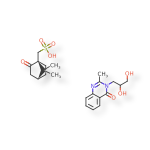
Details
| Stereochemistry | UNKNOWN |
| Molecular Formula | C12H14N2O3.C10H16O4S |
| Molecular Weight | 466.548 |
| Optical Activity | UNSPECIFIED |
| Defined Stereocenters | 2 / 3 |
| E/Z Centers | 0 |
| Charge | 0 |
SHOW SMILES / InChI
SMILES
CC1(C)[C@@H]2CC[C@@]1(CS(O)(=O)=O)C(=O)C2.CC3=NC4=C(C=CC=C4)C(=O)N3CC(O)CO
InChI
InChIKey=AJNMCFBQWSXQHS-STOWLHSFSA-N
InChI=1S/C12H14N2O3.C10H16O4S/c1-8-13-11-5-3-2-4-10(11)12(17)14(8)6-9(16)7-15;1-9(2)7-3-4-10(9,8(11)5-7)6-15(12,13)14/h2-5,9,15-16H,6-7H2,1H3;7H,3-6H2,1-2H3,(H,12,13,14)/t;7-,10-/m.1/s1
Diproqualone was used primarily for the treatment of inflammatory pain associated with osteoarthritis. The analgesic activity of diproqualoneis synergistic with that of noramidopyrine. It also display anti-inflammatory action in the rat, inhibiting plantar edema with dextran or serotonin, atopic edema from ovalbumin, etc. It has spasmolytic, anticholinergic and antihistaminic action in higher doses. It is not hypnotic and has no anticonvulsant effects. The therapeutic symptoms for diproqualone are all types of pain: postoperative, posttraumatic, dental, neuritis, anti-inflammatory arthritis, etc.
Approval Year
| Name | Type | Language | ||
|---|---|---|---|---|
|
Common Name | English | ||
|
Preferred Name | English |
| Code System | Code | Type | Description | ||
|---|---|---|---|---|---|
|
DZ5M7UH6PG
Created by
admin on Mon Mar 31 21:15:06 GMT 2025 , Edited by admin on Mon Mar 31 21:15:06 GMT 2025
|
PRIMARY | |||
|
13572-62-8
Created by
admin on Mon Mar 31 21:15:06 GMT 2025 , Edited by admin on Mon Mar 31 21:15:06 GMT 2025
|
PRIMARY | |||
|
DTXSID60929127
Created by
admin on Mon Mar 31 21:15:06 GMT 2025 , Edited by admin on Mon Mar 31 21:15:06 GMT 2025
|
PRIMARY |
SUBSTANCE RECORD