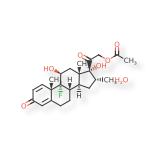
Details
| Stereochemistry | ABSOLUTE |
| Molecular Formula | C24H31FO6.H2O |
| Molecular Weight | 452.513 |
| Optical Activity | UNSPECIFIED |
| Defined Stereocenters | 8 / 8 |
| E/Z Centers | 0 |
| Charge | 0 |
SHOW SMILES / InChI
SMILES
O.C[C@@H]1C[C@H]2[C@@H]3CCC4=CC(=O)C=C[C@]4(C)[C@@]3(F)[C@@H](O)C[C@]2(C)[C@@]1(O)C(=O)COC(C)=O
InChI
InChIKey=DPHFJXVKASDMBW-RQRKFSSASA-N
InChI=1S/C24H31FO6.H2O/c1-13-9-18-17-6-5-15-10-16(27)7-8-21(15,3)23(17,25)19(28)11-22(18,4)24(13,30)20(29)12-31-14(2)26;/h7-8,10,13,17-19,28,30H,5-6,9,11-12H2,1-4H3;1H2/t13-,17+,18+,19+,21+,22+,23+,24+;/m1./s1
DescriptionSources: http://www.ema.europa.eu/docs/en_GB/document_library/EPAR_-_Product_Information/human/004071/WC500204050.pdfhttp://www.accessdata.fda.gov/drugsatfda_docs/label/2003/13422slr035_maxidex_lbl.pdfCurator's Comment: description was created based on several sources, including:
https://www.drugs.com/pro/dexamethasone.html | http://www.wikidoc.org/index.php/Dexamethasone_(oral) | http://www.accessdata.fda.gov/drugsatfda_docs/label/2014/040572s002lbl.pdf
Sources: http://www.ema.europa.eu/docs/en_GB/document_library/EPAR_-_Product_Information/human/004071/WC500204050.pdfhttp://www.accessdata.fda.gov/drugsatfda_docs/label/2003/13422slr035_maxidex_lbl.pdf
Curator's Comment: description was created based on several sources, including:
https://www.drugs.com/pro/dexamethasone.html | http://www.wikidoc.org/index.php/Dexamethasone_(oral) | http://www.accessdata.fda.gov/drugsatfda_docs/label/2014/040572s002lbl.pdf
Dexamethasone is an anti-inflammatory agent that is FDA approved for the treatment of many conditions, including rheumatic problems, a number of skin diseases, severe allergies, asthma, chronic obstructive lung disease, croup, brain swelling and others. Dexamethasone is a glucocorticoid agonist. Unbound dexamethasone crosses cell membranes and binds with high affinity to specific cytoplasmic glucocorticoid receptors. Adverse reactions are: Glaucoma with optic nerve damage, visual acuity and field defects; cataract formation; secondary ocular infection following suppression of host response; and perforation of the globe may occur; muscle weakness; osteoporosis and others. Aminoglutethimide may diminish adrenal suppression by corticosteroids. Macrolide antibiotics have been reported to cause a significant decrease in corticosteroid clearance.
CNS Activity
Sources: http://www.ema.europa.eu/docs/en_GB/document_library/EPAR_-_Product_Information/human/004071/WC500204050.pdfhttps://www.ncbi.nlm.nih.gov/pubmed/9528963
Curator's Comment: Known to be CNS penetrant in mouse. Human data not available.
Originator
Approval Year
Targets
| Primary Target | Pharmacology | Condition | Potency |
|---|---|---|---|
| 4.6 nM [Kd] | |||
| 3.7 nM [Kd] | |||
| 0.73 nM [Kd] |
Conditions
| Condition | Modality | Targets | Highest Phase | Product |
|---|---|---|---|---|
| Primary | MAXIDEX Approved UseFor steroid-responsive inflammatory ocular conditions for which a corticosteroid is indicated and where bacterial infection or a risk of bacterial ocular infection exists. Ocular steroids are indicated in inflammatory conditions of the palpebral and bulbar conjunctiva, cornea, and anterior segment of the globe where the inherent risk of steroid use in certain infective conjunctivitis is accepted to obtain a diminution in edema and inflammation. They are also indicated in chronic anterior uveitis and corneal injury from chemical, radiation or thermal burns, or penetration of foreign bodies. The use of a combination drug with an anti-infective component is indicated where the risk of infection is high or where there is an expectation that potentially dangerous numbers of bacteria will be present in the eye. The particular anti-infective drug in this product is active against the following common bacterial eye pathogens: Staphylococcus aureus, Escherichia coli, Haemophilus influenzae, Klebsiella/Enterobacter species, Neisseria species, Pseudomonas aeruginosa. This product does not provide adequate coverage against Serratia marcescens, and Streptococci, including Streptococcus pneumoniae. Launch Date1962 |
|||
| Primary | MAXIDEX Approved UseSteroid responsive inflammatory conditions of the palpebral and bulbar conjunctiva, cornea, and anterior segment of the globe such as allergic conjunctivitis, acne rosacea, superficial punctate keratitis, herpes zoster keratitis, iritis, cyclitis, selected infective conjunctivitides when the inherent hazard of steroid use is accepted to obtain an advisable diminution in edema and inflammation; corneal injury from chemical, radiation, or thermal burns, or penetration of foreign bodies. Launch Date1962 |
|||
| Primary | MAXIDEX Approved UseFor steroid-responsive inflammatory ocular conditions for which a corticosteroid is indicated and where bacterial infection or a risk of bacterial ocular infection exists. Ocular steroids are indicated in inflammatory conditions of the palpebral and bulbar conjunctiva, cornea, and anterior segment of the globe where the inherent risk of steroid use in certain infective conjunctivitis is accepted to obtain a diminution in edema and inflammation. They are also indicated in chronic anterior uveitis and corneal injury from chemical, radiation or thermal burns, or penetration of foreign bodies. The use of a combination drug with an anti-infective component is indicated where the risk of infection is high or where there is an expectation that potentially dangerous numbers of bacteria will be present in the eye. The particular anti-infective drug in this product is active against the following common bacterial eye pathogens: Staphylococcus aureus, Escherichia coli, Haemophilus influenzae, Klebsiella/Enterobacter species, Neisseria species, Pseudomonas aeruginosa. This product does not provide adequate coverage against Serratia marcescens, and Streptococci, including Streptococcus pneumoniae. Launch Date1962 |
|||
| Primary | MAXIDEX Approved UseFor steroid-responsive inflammatory ocular conditions for which a corticosteroid is indicated and where bacterial infection or a risk of bacterial ocular infection exists. Ocular steroids are indicated in inflammatory conditions of the palpebral and bulbar conjunctiva, cornea, and anterior segment of the globe where the inherent risk of steroid use in certain infective conjunctivitis is accepted to obtain a diminution in edema and inflammation. They are also indicated in chronic anterior uveitis and corneal injury from chemical, radiation or thermal burns, or penetration of foreign bodies. The use of a combination drug with an anti-infective component is indicated where the risk of infection is high or where there is an expectation that potentially dangerous numbers of bacteria will be present in the eye. The particular anti-infective drug in this product is active against the following common bacterial eye pathogens: Staphylococcus aureus, Escherichia coli, Haemophilus influenzae, Klebsiella/Enterobacter species, Neisseria species, Pseudomonas aeruginosa. This product does not provide adequate coverage against Serratia marcescens, and Streptococci, including Streptococcus pneumoniae. Launch Date1962 |
|||
| Primary | MAXIDEX Approved UseFor steroid-responsive inflammatory ocular conditions for which a corticosteroid is indicated and where bacterial infection or a risk of bacterial ocular infection exists. Ocular steroids are indicated in inflammatory conditions of the palpebral and bulbar conjunctiva, cornea, and anterior segment of the globe where the inherent risk of steroid use in certain infective conjunctivitis is accepted to obtain a diminution in edema and inflammation. They are also indicated in chronic anterior uveitis and corneal injury from chemical, radiation or thermal burns, or penetration of foreign bodies. The use of a combination drug with an anti-infective component is indicated where the risk of infection is high or where there is an expectation that potentially dangerous numbers of bacteria will be present in the eye. The particular anti-infective drug in this product is active against the following common bacterial eye pathogens: Staphylococcus aureus, Escherichia coli, Haemophilus influenzae, Klebsiella/Enterobacter species, Neisseria species, Pseudomonas aeruginosa. This product does not provide adequate coverage against Serratia marcescens, and Streptococci, including Streptococcus pneumoniae. Launch Date1962 |
|||
| Primary | MAXIDEX Approved UseFor steroid-responsive inflammatory ocular conditions for which a corticosteroid is indicated and where bacterial infection or a risk of bacterial ocular infection exists. Ocular steroids are indicated in inflammatory conditions of the palpebral and bulbar conjunctiva, cornea, and anterior segment of the globe where the inherent risk of steroid use in certain infective conjunctivitis is accepted to obtain a diminution in edema and inflammation. They are also indicated in chronic anterior uveitis and corneal injury from chemical, radiation or thermal burns, or penetration of foreign bodies. The use of a combination drug with an anti-infective component is indicated where the risk of infection is high or where there is an expectation that potentially dangerous numbers of bacteria will be present in the eye. The particular anti-infective drug in this product is active against the following common bacterial eye pathogens: Staphylococcus aureus, Escherichia coli, Haemophilus influenzae, Klebsiella/Enterobacter species, Neisseria species, Pseudomonas aeruginosa. This product does not provide adequate coverage against Serratia marcescens, and Streptococci, including Streptococcus pneumoniae. Launch Date1962 |
|||
| Primary | MAXIDEX Approved UseFor steroid-responsive inflammatory ocular conditions for which a corticosteroid is indicated and where bacterial infection or a risk of bacterial ocular infection exists. Ocular steroids are indicated in inflammatory conditions of the palpebral and bulbar conjunctiva, cornea, and anterior segment of the globe where the inherent risk of steroid use in certain infective conjunctivitis is accepted to obtain a diminution in edema and inflammation. They are also indicated in chronic anterior uveitis and corneal injury from chemical, radiation or thermal burns, or penetration of foreign bodies. The use of a combination drug with an anti-infective component is indicated where the risk of infection is high or where there is an expectation that potentially dangerous numbers of bacteria will be present in the eye. The particular anti-infective drug in this product is active against the following common bacterial eye pathogens: Staphylococcus aureus, Escherichia coli, Haemophilus influenzae, Klebsiella/Enterobacter species, Neisseria species, Pseudomonas aeruginosa. This product does not provide adequate coverage against Serratia marcescens, and Streptococci, including Streptococcus pneumoniae. Launch Date1962 |
|||
| Primary | MAXIDEX Approved UseFor steroid-responsive inflammatory ocular conditions for which a corticosteroid is indicated and where bacterial infection or a risk of bacterial ocular infection exists. Ocular steroids are indicated in inflammatory conditions of the palpebral and bulbar conjunctiva, cornea, and anterior segment of the globe where the inherent risk of steroid use in certain infective conjunctivitis is accepted to obtain a diminution in edema and inflammation. They are also indicated in chronic anterior uveitis and corneal injury from chemical, radiation or thermal burns, or penetration of foreign bodies. The use of a combination drug with an anti-infective component is indicated where the risk of infection is high or where there is an expectation that potentially dangerous numbers of bacteria will be present in the eye. The particular anti-infective drug in this product is active against the following common bacterial eye pathogens: Staphylococcus aureus, Escherichia coli, Haemophilus influenzae, Klebsiella/Enterobacter species, Neisseria species, Pseudomonas aeruginosa. This product does not provide adequate coverage against Serratia marcescens, and Streptococci, including Streptococcus pneumoniae. Launch Date1962 |
|||
| Primary | Neofordex Approved UseNeofordex is indicated in adults for the treatment of symptomatic multiple myeloma in combination with other medicinal products. Launch Date2016 |
Cmax
| Value | Dose | Co-administered | Analyte | Population |
|---|---|---|---|---|
9.87 ng/mL EXPERIMENT https://www.ncbi.nlm.nih.gov/pubmed/22047811 |
2 mg single, oral dose: 2 mg route of administration: Oral experiment type: SINGLE co-administered: |
DEXAMETHASONE plasma | Homo sapiens population: HEALTHY age: ADULT sex: FEMALE / MALE food status: FASTED |
AUC
| Value | Dose | Co-administered | Analyte | Population |
|---|---|---|---|---|
51.2 ng × h/mL EXPERIMENT https://www.ncbi.nlm.nih.gov/pubmed/22047811 |
2 mg single, oral dose: 2 mg route of administration: Oral experiment type: SINGLE co-administered: |
DEXAMETHASONE plasma | Homo sapiens population: HEALTHY age: ADULT sex: FEMALE / MALE food status: FASTED |
T1/2
| Value | Dose | Co-administered | Analyte | Population |
|---|---|---|---|---|
3.93 h EXPERIMENT https://www.ncbi.nlm.nih.gov/pubmed/22047811 |
2 mg single, oral dose: 2 mg route of administration: Oral experiment type: SINGLE co-administered: |
DEXAMETHASONE plasma | Homo sapiens population: HEALTHY age: ADULT sex: FEMALE / MALE food status: FASTED |
Funbound
| Value | Dose | Co-administered | Analyte | Population |
|---|---|---|---|---|
32% |
unknown, intravenous |
DEXAMETHASONE plasma | Homo sapiens population: UNKNOWN age: UNKNOWN sex: UNKNOWN food status: UNKNOWN |
|
30% EXPERIMENT https://www.ncbi.nlm.nih.gov/pubmed/3806166 |
DEXAMETHASONE plasma | Homo sapiens population: UNKNOWN age: UNKNOWN sex: UNKNOWN food status: UNKNOWN |
Doses
| Dose | Population | Adverse events |
|---|---|---|
96 mg multiple, oral |
unhealthy, 63 years (range: 30–78 years) Health Status: unhealthy Age Group: 63 years (range: 30–78 years) Sex: M+F Sources: |
|
0.1 % 3 times / day multiple, ophthalmic Dose: 0.1 %, 3 times / day Route: ophthalmic Route: multiple Dose: 0.1 %, 3 times / day Sources: |
unhealthy, 68.3 years (range: 51.0 - 83.0 years) Health Status: unhealthy Age Group: 68.3 years (range: 51.0 - 83.0 years) Sex: M+F Sources: |
Other AEs: Corneal erosion... |
0.6 mg/kg single, oral Dose: 0.6 mg/kg Route: oral Route: single Dose: 0.6 mg/kg Sources: |
unhealthy, children |
Other AEs: Constipation... Other AEs: Constipation (below serious, 1 patient) Sources: |
10 mg single, intravenous Dose: 10 mg Route: intravenous Route: single Dose: 10 mg Sources: |
unhealthy |
Other AEs: Drowsiness, Dizziness... Other AEs: Drowsiness (below serious, 19 patients) Sources: Dizziness (below serious, 3 patients) Adverse drug reaction NOS (below serious, 10 patients) |
12 mg 1 times / day multiple, intravenous Dose: 12 mg, 1 times / day Route: intravenous Route: multiple Dose: 12 mg, 1 times / day Sources: |
unhealthy |
Other AEs: Wound dehiscence... Other AEs: Wound dehiscence (below serious, 1 patient) Sources: |
20 mg single, intravenous Dose: 20 mg Route: intravenous Route: single Dose: 20 mg Sources: |
unhealthy |
|
24 mg 1 times / day multiple, intravenous Dose: 24 mg, 1 times / day Route: intravenous Route: multiple Dose: 24 mg, 1 times / day Sources: |
unhealthy |
Other AEs: Dizziness... Other AEs: Dizziness (below serious, 1 patient) Sources: |
8 mg 1 times / day multiple, oral Dose: 8 mg, 1 times / day Route: oral Route: multiple Dose: 8 mg, 1 times / day Sources: |
unhealthy |
Other AEs: Constipation, Dyspepsia... Other AEs: Constipation (below serious, 47 patients) Sources: Dyspepsia (below serious, 12 patients) Vomiting (below serious, 9 patients) Fatigue (below serious, 58 patients) Cholesterol high (below serious, 8 patients) Anorexia (below serious, 15 patients) Anxiety (below serious, 11 patient) Insomnia (below serious, 26 patients) Cough (below serious, 9 patients) Dyspnea (below serious, 20 patients) |
8 mg single, intravenous Dose: 8 mg Route: intravenous Route: single Dose: 8 mg Sources: |
pregnant |
Other AEs: Incision site bleeding, Body temperature decrease... Other AEs: Incision site bleeding (below serious, 1 patient) Sources: Body temperature decrease (below serious, 2 patients) Shivering (below serious, 1 patient) Tachycardia (below serious, 1 patient) Transfusion (below serious, 1 patient) |
AEs
| AE | Significance | Dose | Population |
|---|---|---|---|
| Corneal erosion | 10% | 0.1 % 3 times / day multiple, ophthalmic Dose: 0.1 %, 3 times / day Route: ophthalmic Route: multiple Dose: 0.1 %, 3 times / day Sources: |
unhealthy, 68.3 years (range: 51.0 - 83.0 years) Health Status: unhealthy Age Group: 68.3 years (range: 51.0 - 83.0 years) Sex: M+F Sources: |
| Constipation | below serious, 1 patient | 0.6 mg/kg single, oral Dose: 0.6 mg/kg Route: oral Route: single Dose: 0.6 mg/kg Sources: |
unhealthy, children |
| Adverse drug reaction NOS | below serious, 10 patients | 10 mg single, intravenous Dose: 10 mg Route: intravenous Route: single Dose: 10 mg Sources: |
unhealthy |
| Drowsiness | below serious, 19 patients | 10 mg single, intravenous Dose: 10 mg Route: intravenous Route: single Dose: 10 mg Sources: |
unhealthy |
| Dizziness | below serious, 3 patients | 10 mg single, intravenous Dose: 10 mg Route: intravenous Route: single Dose: 10 mg Sources: |
unhealthy |
| Wound dehiscence | below serious, 1 patient | 12 mg 1 times / day multiple, intravenous Dose: 12 mg, 1 times / day Route: intravenous Route: multiple Dose: 12 mg, 1 times / day Sources: |
unhealthy |
| Dizziness | below serious, 1 patient | 24 mg 1 times / day multiple, intravenous Dose: 24 mg, 1 times / day Route: intravenous Route: multiple Dose: 24 mg, 1 times / day Sources: |
unhealthy |
| Anxiety | below serious, 11 patient | 8 mg 1 times / day multiple, oral Dose: 8 mg, 1 times / day Route: oral Route: multiple Dose: 8 mg, 1 times / day Sources: |
unhealthy |
| Dyspepsia | below serious, 12 patients | 8 mg 1 times / day multiple, oral Dose: 8 mg, 1 times / day Route: oral Route: multiple Dose: 8 mg, 1 times / day Sources: |
unhealthy |
| Anorexia | below serious, 15 patients | 8 mg 1 times / day multiple, oral Dose: 8 mg, 1 times / day Route: oral Route: multiple Dose: 8 mg, 1 times / day Sources: |
unhealthy |
| Dyspnea | below serious, 20 patients | 8 mg 1 times / day multiple, oral Dose: 8 mg, 1 times / day Route: oral Route: multiple Dose: 8 mg, 1 times / day Sources: |
unhealthy |
| Insomnia | below serious, 26 patients | 8 mg 1 times / day multiple, oral Dose: 8 mg, 1 times / day Route: oral Route: multiple Dose: 8 mg, 1 times / day Sources: |
unhealthy |
| Constipation | below serious, 47 patients | 8 mg 1 times / day multiple, oral Dose: 8 mg, 1 times / day Route: oral Route: multiple Dose: 8 mg, 1 times / day Sources: |
unhealthy |
| Fatigue | below serious, 58 patients | 8 mg 1 times / day multiple, oral Dose: 8 mg, 1 times / day Route: oral Route: multiple Dose: 8 mg, 1 times / day Sources: |
unhealthy |
| Cholesterol high | below serious, 8 patients | 8 mg 1 times / day multiple, oral Dose: 8 mg, 1 times / day Route: oral Route: multiple Dose: 8 mg, 1 times / day Sources: |
unhealthy |
| Cough | below serious, 9 patients | 8 mg 1 times / day multiple, oral Dose: 8 mg, 1 times / day Route: oral Route: multiple Dose: 8 mg, 1 times / day Sources: |
unhealthy |
| Vomiting | below serious, 9 patients | 8 mg 1 times / day multiple, oral Dose: 8 mg, 1 times / day Route: oral Route: multiple Dose: 8 mg, 1 times / day Sources: |
unhealthy |
| Incision site bleeding | below serious, 1 patient | 8 mg single, intravenous Dose: 8 mg Route: intravenous Route: single Dose: 8 mg Sources: |
pregnant |
| Shivering | below serious, 1 patient | 8 mg single, intravenous Dose: 8 mg Route: intravenous Route: single Dose: 8 mg Sources: |
pregnant |
| Tachycardia | below serious, 1 patient | 8 mg single, intravenous Dose: 8 mg Route: intravenous Route: single Dose: 8 mg Sources: |
pregnant |
| Transfusion | below serious, 1 patient | 8 mg single, intravenous Dose: 8 mg Route: intravenous Route: single Dose: 8 mg Sources: |
pregnant |
| Body temperature decrease | below serious, 2 patients | 8 mg single, intravenous Dose: 8 mg Route: intravenous Route: single Dose: 8 mg Sources: |
pregnant |
Overview
| CYP3A4 | CYP2C9 | CYP2D6 | hERG |
|---|---|---|---|
Drug as perpetrator
| Target | Modality | Activity | Metabolite | Clinical evidence |
|---|---|---|---|---|
| inconclusive [IC50 15.4871 uM] | ||||
| no | ||||
| no | ||||
| no | ||||
| no | ||||
| no | ||||
| no | ||||
| no | ||||
| no | ||||
| no | ||||
| no | ||||
| no | ||||
| no | ||||
| weak [IC50 >300 uM] | ||||
| yes [IC50 8.709 uM] | ||||
| yes [Inhibition 10 uM] | ||||
| yes [Inhibition 10 uM] | ||||
| yes | ||||
| yes | ||||
| yes | ||||
| yes | ||||
| yes | ||||
| yes | ||||
| yes | ||||
| yes | ||||
| yes | yes (co-administration study) Comment: These data demonstrate that dexamethasone at doses used clinically increased CYP3A4 activity with extensive intersubject variability and that the extent of CYP3A4 induction was, in part, predicted by the baseline activity of CYP3A4 in both healthy volunteers and human hepatocyte cultures. Page: - |
Drug as victim
| Target | Modality | Activity | Metabolite | Clinical evidence |
|---|---|---|---|---|
Page: 258 | 259 |
no | |||
Page: - |
yes |
Tox targets
| Target | Modality | Activity | Metabolite | Clinical evidence |
|---|---|---|---|---|
PubMed
| Title | Date | PubMed |
|---|---|---|
| CEP-18770 (delanzomib) in combination with dexamethasone and lenalidomide inhibits the growth of multiple myeloma. | 2012-11 |
|
| Triptolide enhances the sensitivity of multiple myeloma cells to dexamethasone via microRNAs. | 2012-06 |
|
| Novel phosphatidylinositol 3-kinase inhibitor NVP-BKM120 induces apoptosis in myeloma cells and shows synergistic anti-myeloma activity with dexamethasone. | 2012-06 |
|
| Genomic screening for genes silenced by DNA methylation revealed an association between RASD1 inactivation and dexamethasone resistance in multiple myeloma. | 2009-07-01 |
|
| Combining milatuzumab with bortezomib, doxorubicin, or dexamethasone improves responses in multiple myeloma cell lines. | 2009-04-15 |
|
| A multicenter, randomized open study of early corticosteroid treatment (OSECT) in preterm infants with respiratory illness: comparison of early and late treatment and of dexamethasone and inhaled budesonide. | 2001-02 |
|
| Adverse effects of early dexamethasone treatment in extremely-low-birth-weight infants. National Institute of Child Health and Human Development Neonatal Research Network. | 2001-01-11 |
|
| Intractable nausea attributable to isolated deficiency of adrenocorticotropic hormone: prompt resolution after administration of glucocorticoid. | 2001-01-06 |
|
| Molecular and pharmacological evidence for modulation of kinin B(1) receptor expression by endogenous glucocorticoids hormones in rats. | 2001-01 |
|
| Evaluation of the myocilin (MYOC) glaucoma gene in monkey and human steroid-induced ocular hypertension. | 2001-01 |
|
| The clinical impact of metabolic bone disease in coeliac disease. | 2001-01 |
|
| Short term effects of corticosteroid pulse treatment on disease activity and the wellbeing of patients with active rheumatoid arthritis. | 2001-01 |
|
| Inhibition of NF-kappaB and AP-1 activation by R- and S-flurbiprofen. | 2001-01 |
|
| Topical 0.1% indomethacin solution versus topical 0.1% dexamethasone solution in the prevention of inflammation after cataract surgery. The Study Group. | 2000-12-23 |
|
| Prenatal exposure to high levels of glucocorticoids increases the susceptibility of cerebellar granule cells to oxidative stress-induced cell death. | 2000-12-19 |
|
| Low doses of oral dexamethasone for hormone-refractory prostate carcinoma. | 2000-12-15 |
|
| Suppressive effect of active hexose correlated compound (AHCC) on thymic apoptosis induced by dexamethasone in the rat. | 2000-12 |
|
| Effect of endogenous and exogenous prostaglandin E(2) on interleukin-1 beta-induced cyclooxygenase-2 expression in human airway smooth-muscle cells. | 2000-12 |
|
| Ritonavir increases the level of active ADD-1/SREBP-1 protein during adipogenesis. | 2000-11-10 |
|
| Regulation of leptin release by troglitazone in human adipose tissue. | 2000-11 |
|
| Ocular hypertensive response to topical dexamethasone in children: a dose-dependent phenomenon. | 2000-11 |
|
| Efficacy of galectins in the amelioration of nephrotoxic serum nephritis in Wistar Kyoto rats. | 2000-11 |
|
| Dexamethasone-induced cardiogenic shock rescued by percutaneous cardiopulmonary support (PCPS) in a patient with pheochromocytoma. | 2000-10 |
|
| Antenatal dexamethasone enhances surfactant protein synthesis in the hypoplastic lung of nitrofen-induced diaphragmatic hernia in rats. | 2000-10 |
|
| Role of caspases in dexamethasone-induced apoptosis and activation of c-Jun NH2-terminal kinase and p38 mitogen-activated protein kinase in human eosinophils. | 2000-10 |
|
| Endotoxin augments cerebral hyperemic response to halothane by inducing nitric oxide synthase and cyclooxygenase. | 2000-10 |
|
| Involvement of tyrosine hydroxylase up regulation in dexamethasone-induced hypertension of rats. | 2000-09-08 |
|
| Endocrinologic and psychological effects of short-term dexamethasone in anorexia nervosa. | 2000-09 |
|
| ECT administration in a patient after craniotomy and gamma knife surgery: a case report and review. | 2000-09 |
|
| Modification of biophysical properties of lung epithelial Na(+) channels by dexamethasone. | 2000-09 |
|
| Dexamethasone-suppressible hypertension. | 2000-08-26 |
|
| Effects of dexamethasone on mitogen-activated protein kinases in mouse macrophages: implications for the regulation of 85 kDa cytosolic phospholipase A(2). | 2000-08-15 |
|
| TEL/AML1 gene fusion is related to in vitro drug sensitivity for L-asparaginase in childhood acute lymphoblastic leukemia. | 2000-08-01 |
|
| Leptin production in adipocytes from morbidly obese subjects: stimulation by dexamethasone, inhibition with troglitazone, and influence of gender. | 2000-08 |
|
| Dexamethasone enhances ras-recision gene expression in cultured murine fetal lungs: role in development. | 2000-08 |
|
| Dexamethasone suppresses tumor necrosis factor-alpha-induced apoptosis in osteoblasts: possible role for ceramide. | 2000-08 |
|
| Effects of several glucocorticosteroids and PDE4 inhibitors on increases in total lung eosinophil peroxidase (EPO) levels following either systemic or intratracheal administration in sephadex- or ovalbumin-induced inflammatory models. | 2000-08 |
|
| Efficacy and harm of pharmacological prevention of acute mountain sickness: quantitative systematic review. | 2000-07-29 |
|
| Cognitive sequelae in children treated for acute lymphoblastic leukemia with dexamethasone or prednisone. | 2000-06-23 |
|
| Corticosteroids and cognitive function in humans: methodological considerations. | 2000-06-23 |
|
| Dexamethasone induced cardiac hypertrophy in newborn rats is accompanied by changes in myosin heavy chain phenotype and gene transcription. | 2000-06 |
|
| Expression and induction of CYP1A1/1A2, CYP2A6 and CYP3A4 in primary cultures of human hepatocytes: a 10-year follow-up. | 2000-06 |
|
| Combined administration of G-CSF and dexamethasone for the mobilization of granulocytes in normal donors: optimization of dosing. | 2000-06 |
|
| Down-regulation of thyroid transcription factor-1 gene expression in fetal lung hypoplasia is restored by glucocorticoids. | 2000-06 |
|
| Effects of selected herbicides on cytokine production in vitro. | 2000-05-19 |
|
| Orphan nuclear receptors constitutive androstane receptor and pregnane X receptor share xenobiotic and steroid ligands. | 2000-05-19 |
|
| Glucocorticoids act within minutes to inhibit recruitment of signalling factors to activated EGF receptors through a receptor-dependent, transcription-independent mechanism. | 2000-05 |
|
| Effect of polyunsaturated fatty acids on dexamethasone-induced gastric mucosal damage. | 2000-02 |
|
| Antenatal dexamethasone improves atrial natriuretic peptide receptors in hypoplastic lung in nitrofen-induced diaphragmatic hernia in rats. | 2000 |
|
| Blockade of cocaine-induced increases in adrenocorticotrophic hormone and cortisol does not attenuate the subjective effects of smoked cocaine in humans. | 1999-09 |
Patents
Sample Use Guides
The dose and administration frequency varies with the therapeutic protocol and the associated treatment(s). The usual posology of NEOFORDEX® is 40 mg once per day of administration.
Route of Administration:
Oral
The effects on apoptosis and related signaling pathways in the t(4;14)+ multiple myeloma (MM) subset, applying drug combinations including a FGFR3 tyrosine kinase inhibitor (RTKI), the proteasome inhibitor bortezomib, and dexamethasone were tested. RTKI, bortezomib, and dexamethasone were active as single agents in t(4;14)+ MM. RTK inhibition triggered complementary proapoptotic pathways (e.g., decrease of antiapoptotic Mcl-1 protein, down-regulation of p44/42 mitogen-activated protein kinase, and activation of proapoptotic stress-activated protein/c-Jun NH(2)-terminal kinases). Synergistic or additive effects were found by combinations of RTKI with dexamethasone or bortezomib. In t(4;14)+, N-ras-mutated NCI-H929 cells, resistance to RTKI was overcome by addition of dexamethasone. Notably, the combination of RTKI and dexamethasone showed additive proapoptotic effects in bortezomib-insensitive t(4;14)+ MM.
| Name | Type | Language | ||
|---|---|---|---|---|
|
Preferred Name | English | ||
|
Official Name | English | ||
|
Systematic Name | English | ||
|
Systematic Name | English | ||
|
Common Name | English | ||
|
Common Name | English | ||
|
Common Name | English | ||
|
Common Name | English | ||
|
Common Name | English | ||
|
Common Name | English | ||
|
Common Name | English |
| Classification Tree | Code System | Code | ||
|---|---|---|---|---|
|
NCI_THESAURUS |
C521
Created by
admin on Mon Mar 31 17:46:08 GMT 2025 , Edited by admin on Mon Mar 31 17:46:08 GMT 2025
|
| Code System | Code | Type | Description | ||
|---|---|---|---|---|---|
|
300000049080
Created by
admin on Mon Mar 31 17:46:08 GMT 2025 , Edited by admin on Mon Mar 31 17:46:08 GMT 2025
|
PRIMARY | |||
|
DTXSID20204402
Created by
admin on Mon Mar 31 17:46:08 GMT 2025 , Edited by admin on Mon Mar 31 17:46:08 GMT 2025
|
PRIMARY | |||
|
DB14649
Created by
admin on Mon Mar 31 17:46:08 GMT 2025 , Edited by admin on Mon Mar 31 17:46:08 GMT 2025
|
PRIMARY | |||
|
DEXAMETHASONE ACETATE MONOHYDRATE
Created by
admin on Mon Mar 31 17:46:08 GMT 2025 , Edited by admin on Mon Mar 31 17:46:08 GMT 2025
|
PRIMARY | Description: A white or almost white powder, odourless. Solubility: Practically insoluble in water; soluble in 40 parts of ethanol (~750 g/l) TS; slightly soluble in ether R.Category: Adrenoglucocorticoid. Storage: Dexamethasone acetate should be kept in a tightly closed container, protected from light. Labelling: The designation on the container of Dexamethasone acetate should state whether the substance is the monohydrateor is in the anhydrous form. | ||
|
DWN2WN457X
Created by
admin on Mon Mar 31 17:46:08 GMT 2025 , Edited by admin on Mon Mar 31 17:46:08 GMT 2025
|
PRIMARY | |||
|
656823
Created by
admin on Mon Mar 31 17:46:08 GMT 2025 , Edited by admin on Mon Mar 31 17:46:08 GMT 2025
|
PRIMARY | |||
|
826
Created by
admin on Mon Mar 31 17:46:08 GMT 2025 , Edited by admin on Mon Mar 31 17:46:08 GMT 2025
|
PRIMARY | |||
|
55812-90-3
Created by
admin on Mon Mar 31 17:46:08 GMT 2025 , Edited by admin on Mon Mar 31 17:46:08 GMT 2025
|
PRIMARY | |||
|
C77414
Created by
admin on Mon Mar 31 17:46:08 GMT 2025 , Edited by admin on Mon Mar 31 17:46:08 GMT 2025
|
PRIMARY |
ACTIVE MOIETY
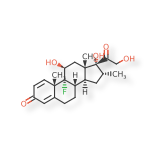
PARENT (SALT/SOLVATE)
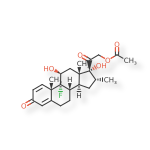
SUBSTANCE RECORD