


Details
| Stereochemistry | ACHIRAL |
| Molecular Formula | C4H11NO3.C2H4O2 |
| Molecular Weight | 181.187 |
| Optical Activity | NONE |
| Defined Stereocenters | 0 / 0 |
| E/Z Centers | 0 |
| Charge | 0 |
SHOW SMILES / InChI
SMILES
CC(O)=O.NC(CO)(CO)CO
InChI
InChIKey=PIEPQKCYPFFYMG-UHFFFAOYSA-N
InChI=1S/C4H11NO3.C2H4O2/c5-4(1-6,2-7)3-8;1-2(3)4/h6-8H,1-3,5H2;1H3,(H,3,4)
| Molecular Formula | C2H4O2 |
| Molecular Weight | 60.052 |
| Charge | 0 |
| Count |
|
| Stereochemistry | ACHIRAL |
| Additional Stereochemistry | No |
| Defined Stereocenters | 0 / 0 |
| E/Z Centers | 0 |
| Optical Activity | NONE |
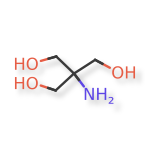
| Molecular Formula | C4H11NO3 |
| Molecular Weight | 121.135 |
| Charge | 0 |
| Count |
|
| Stereochemistry | ACHIRAL |
| Additional Stereochemistry | No |
| Defined Stereocenters | 0 / 0 |
| E/Z Centers | 0 |
| Optical Activity | NONE |
DescriptionCurator's Comment: Description was created based on several sources, including
https://www.drugs.com/pro/tham.html
https://ncit.nci.nih.gov/ncitbrowser/ConceptReport.jsp?dictionary=NCI_Thesaurus&ns=NCI_Thesaurus&code=C47775
http://www.cir-safety.org/sites/default/files/Tromet_092013_Rep.pdf
Curator's Comment: Description was created based on several sources, including
https://www.drugs.com/pro/tham.html
https://ncit.nci.nih.gov/ncitbrowser/ConceptReport.jsp?dictionary=NCI_Thesaurus&ns=NCI_Thesaurus&code=C47775
http://www.cir-safety.org/sites/default/files/Tromet_092013_Rep.pdf
Tromethamine is extensively used in biochemistry and molecular biology. Because tromethamine (in the form of R-NH2) is a proton acceptor with a pK of 7.8, it is an effective buffer that can
be used to maintain the pH of body fluids. Tromethamine is indicated for the prevention and correction of metabolic acidosis. When administered intravenously as a 0.3 M solution, tromethamine acts as a proton acceptor and prevents or corrects acidosis by actively binding hydrogen ions (H+). It binds not only cations of fixed or metabolic acids, but also hydrogen ions of carbonic acid, thus increasing bicarbonate anion (HCO3‾). TromeThamine also acts as an osmotic diuretic, increasing urine flow, urinary pH, and excretion of fixed acids, carbon dioxide and electrolytes. A significant fraction of tromethamine (30% at pH 7.40) is not ionized and therefore is capable of reaching equilibrium in total body water. This portion may penetrate cells and may neutralize acidic ions of the intracellular fluid.
Approval Year
Targets
| Primary Target | Pharmacology | Condition | Potency |
|---|---|---|---|
Target ID: GO:0006816 |
Conditions
| Condition | Modality | Targets | Highest Phase | Product |
|---|---|---|---|---|
| Primary | Tham Approved Useindicated for the prevention and correction of metabolic acidosis. In the following conditions it may help to sustain vital functions and thus provide time for treatment of the primary disease:
Metabolic Acidosis Associated with Cardiac Bypass Surgery.
Tham Solution has been found to be primarily beneficial in correcting metabolic acidosis which may occur during or immediately following cardiac bypass surgical procedures.
Correction of Acidity of ACD Blood in Cardiac Bypass Surgery.
It is well known that ACD blood is acidic and becomes more acidic on storage. TromeThamine effectively corrects this acidity. Tham Solution may be added directly to the blood used to prime the pump-oxygenator. When ACD blood is brought to a normal pH range the patient is spared an initial acid load. Additional tromeThamine may be indicated during cardiac bypass surgery should metabolic acidosis appear.
Metabolic Acidosis Associated with Cardiac Arrest. Launch Date1965 |
PubMed
| Title | Date | PubMed |
|---|---|---|
| Sintering temperature effects on the in vitro bioactive response of tape cast and sintered bioactive glass-ceramic in Tris buffer. | 2001-12-15 |
|
| Maltodextrin-anionic surfactant interactions: isothermal titration calorimetry and surface tension study. | 2001-10 |
|
| Characterization of a 5'-aldehyde terminus resulting from the oxidative attack at C5' of a 2-deoxyribose on DNA. | 2001-10 |
|
| A prospective randomised trial to compare the efficacy and safety of hemabate and syntometrine for the prevention of primary postpartum haemorrhage. | 2001-10 |
|
| Use of base in the treatment of severe acidemic states. | 2001-10 |
|
| Electrophysiological and biochemical changes in rabbit hearts stored at 4 degrees C for 6 or 24 h. | 2001-10 |
|
| Design, formation and properties of tetrahedral M(4)L(4) and M(4)L(6) supramolecular clusters. | 2001-09-19 |
|
| Phosphate ion channels in sarcoplasmic reticulum of rabbit skeletal muscle. | 2001-09-15 |
|
| Generation of live rat offspring by intrauterine insemination with epididymal spermatozoa cryopreserved at -196 degrees C. | 2001-09 |
|
| Detergent-like action of the antibiotic peptide surfactin on lipid membranes. | 2001-09 |
|
| Preservation of metabolic reserves and function after storage of myocytes in hypothermic UW solution. | 2001-09 |
|
| Mg2+-linked oligomerization modulates the catalytic activity of the Lon (La) protease from Mycobacterium smegmatis. | 2001-08-07 |
|
| Lipopolysaccharide stimulates norepinephrine efflux from the rat hypothalamus in vitro: blockade by soluble IL-1 receptor. | 2001-08-03 |
|
| Evidence for specific ceramidase present in the intestinal contents of rats and humans. | 2001-08 |
|
| Formaldehyde production by Tris buffer in peptide formulations at elevated temperature. | 2001-08 |
|
| Comparison of ketorolac tromethamine 0.5% and rimexolone 1% to control inflammation after cataract extraction. Prospective randomized double-masked study. | 2001-08 |
|
| Analysis of vancomycin and related impurities by micellar electrokinetic capillary chromatography. Method development and validation. | 2001-08 |
|
| Phosphodiester hydrolysis by lanthanide complexes of bis-tris propane. | 2001-07-16 |
|
| Thiols prevent H2O2-mediated loss of sperm motility in cryopreserved bull semen. | 2001-07-15 |
|
| Recognition and strand displacement of DNA oligonucleotides by peptide nucleic acids (PNAs). High-performance ion-exchange chromatographic analysis. | 2001-07-13 |
|
| Second trimester pregnancy termination in primigravidas by double application of dinoprostone gel and intramuscular administration of carboprost tromethamine. | 2001-07-05 |
|
| Analysis of glutathione by capillary electrophoresis based on sample stacking. | 2001-07 |
|
| Application of capillary electrophoresis for organic acid analysis in herbal studies. | 2001-07 |
|
| Separation of stilbenes by capillary electrophoresis and high-performance liquid chromatography. | 2001-07 |
|
| Electrophoretic migration behavior of DNA fragments in polymer solution. | 2001-07 |
|
| Basic fibroblast growth factor inhibits choriocapillaris atrophy in rabbit. | 2001-07 |
|
| Short-chain fatty acids enhance diffusional ca transport in the epithelium of the rat cecum and colon. | 2001-06-22 |
|
| Behaviour of inorganic and organic cations in the Debye-Hückel layer of DNA. | 2001-06-22 |
|
| Agonist-stimulated [35S]GTPgammaS autoradiography: optimization for high sensitivity. | 2001-06-22 |
|
| Topical ketorolac tromethamine in the reduction of adverse effects of laser in situ keratomileusist. | 2001-06 |
|
| Feasibility of urinary trans, trans-muconic acid determination using high performance liquid chromatography for biological monitoring of benzene exposure. | 2001-06 |
|
| Thin-layer chromatographic behavior of rare earths on silica gel with aqueous alkaline earth metal nitrate solutions as mobile phases. | 2001-06 |
|
| Kinetic and thermodynamic analysis of thermal unfolding of recombinant erythropoietin. | 2001-06 |
|
| In vitro processing of the proproteins GrdE of protein B of glycine reductase and PrdA of D-proline reductase from Clostridium sticklandii: formation of a pyruvoyl group from a cysteine residue. | 2001-06 |
|
| HCO3- potentiates the cAMP-dependent secretory response of the human distal colon through a DIDS-sensitive pathway. | 2001-05 |
|
| Thermolysis of free-radical initiators: tert-butylazocumene and its 1,3- and 1,4-bisazo and 1,3,5-trisazo analogues. | 2001-04-25 |
|
| Preparation and compressive strength of alpha-tricalcium phosphate/gelatin gel composite cement. | 2001-03-15 |
|
| Inhibition of human CYP1A2 activity in vitro by methylxanthines: potent competitive inhibition by 8-phenyltheophylline. | 2001-03 |
|
| Characterization of the mouse Dazap1 gene encoding an RNA-binding protein that interacts with infertility factors DAZ and DAZL. | 2001 |
|
| Deletion of the alpha-synuclein locus in a subpopulation of C57BL/6J inbred mice. | 2001 |
|
| Cell adhesion and signaling on the fibronectin 1st type III repeat; requisite roles for cell surface proteoglycans and integrins. | 2001 |
|
| Bone morphogenetic protein-5 (BMP-5) promotes dendritic growth in cultured sympathetic neurons. | 2001 |
|
| The antioxidant activity of BHT and new phenolic compounds PYA and PPA measured by chemiluminescence. | 2001 |
|
| MP20, the second most abundant lens membrane protein and member of the tetraspanin superfamily, joins the list of ligands of galectin-3. | 2001 |
|
| Gastroenteritis outbreaks associated with Norwalk-like viruses and their investigation by nested RT-PCR. | 2001 |
|
| Early events in the polymerization of fibrin. | 2001 |
|
| Pathological apoptosis by xanthurenic acid, a tryptophan metabolite: activation of cell caspases but not cytoskeleton breakdown. | 2001 |
|
| Effect of biofluid environment on the dissolution and flexural strength of calcium phosphate bone cements. | 2001 |
|
| Early-morning administration of dexketoprofen-trometamol in morning stiffness induced by nodal osteoarthritis of the hands. | 2001 |
|
| Extracting biological information from DNA arrays: an unexpected link between arginine and methionine metabolism in Bacillus subtilis. | 2001 |
Patents
Sample Use Guides
Usual Adult Dose for Metabolic Acidosis
Associated with Cardiac Bypass Surgery:
Initial dose: 500 mL (150 mEq) by slow intravenous infusion is considered adequate for most adults; up to 1000 mL may be required in severe cases
Maximum dose: 500 mg/kg (227 mg/lb) over a period of not less than one hour
Associated with Cardiac Arrest:
If the chest is open: 2 to 6 g (62 to 185 mL of a 0.3 M solution) injected into the ventricular cavity
If the chest is not open: 3.6 to 10.8 g (111 to 333 mL of a 0.3 M solution) injected into a larger peripheral vein if the chest is not open
Comment: Do not inject into the cardiac muscle
Route of Administration:
Intravenous
| Substance Class |
Chemical
Created
by
admin
on
Edited
Mon Mar 31 21:03:52 GMT 2025
by
admin
on
Mon Mar 31 21:03:52 GMT 2025
|
| Record UNII |
YYB8UMN69X
|
| Record Status |
Validated (UNII)
|
| Record Version |
|
-
Download
| Name | Type | Language | ||
|---|---|---|---|---|
|
Preferred Name | English | ||
|
Common Name | English | ||
|
Systematic Name | English | ||
|
Systematic Name | English | ||
|
Common Name | English | ||
|
Systematic Name | English | ||
|
Systematic Name | English | ||
|
Systematic Name | English |
| Code System | Code | Type | Description | ||
|---|---|---|---|---|---|
|
6850-28-8
Created by
admin on Mon Mar 31 21:03:52 GMT 2025 , Edited by admin on Mon Mar 31 21:03:52 GMT 2025
|
PRIMARY | |||
|
81291
Created by
admin on Mon Mar 31 21:03:52 GMT 2025 , Edited by admin on Mon Mar 31 21:03:52 GMT 2025
|
PRIMARY | |||
|
YYB8UMN69X
Created by
admin on Mon Mar 31 21:03:52 GMT 2025 , Edited by admin on Mon Mar 31 21:03:52 GMT 2025
|
PRIMARY | |||
|
229-939-6
Created by
admin on Mon Mar 31 21:03:52 GMT 2025 , Edited by admin on Mon Mar 31 21:03:52 GMT 2025
|
PRIMARY | |||
|
DTXSID2064490
Created by
admin on Mon Mar 31 21:03:52 GMT 2025 , Edited by admin on Mon Mar 31 21:03:52 GMT 2025
|
PRIMARY | |||
|
66869
Created by
admin on Mon Mar 31 21:03:52 GMT 2025 , Edited by admin on Mon Mar 31 21:03:52 GMT 2025
|
PRIMARY |
| Related Record | Type | Details | ||
|---|---|---|---|---|
|
PARENT -> SALT/SOLVATE |
|
| Related Record | Type | Details | ||
|---|---|---|---|---|
|
|
ACTIVE MOIETY |