


Details
| Stereochemistry | ABSOLUTE |
| Molecular Formula | C21H26NO4.Br |
| Molecular Weight | 436.339 |
| Optical Activity | UNSPECIFIED |
| Defined Stereocenters | 5 / 5 |
| E/Z Centers | 0 |
| Charge | 0 |
SHOW SMILES / InChI
SMILES
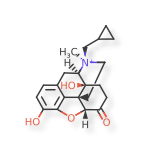
[Br-].C[N@+]2(CC1CC1)CC[C@]34[C@H]5OC6=C(O)C=CC(C[C@@H]2[C@]3(O)CCC5=O)=C46
InChI
InChIKey=IFGIYSGOEZJNBE-NQMNLMSRSA-N
InChI=1S/C21H25NO4.BrH/c1-22(11-12-2-3-12)9-8-20-17-13-4-5-14(23)18(17)26-19(20)15(24)6-7-21(20,25)16(22)10-13;/h4-5,12,16,19,25H,2-3,6-11H2,1H3;1H/t16-,19+,20+,21-,22-;/m1./s1
| Molecular Formula | C21H25NO4 |
| Molecular Weight | 355.4275 |
| Charge | 0 |
| Count |
|
| Stereochemistry | EPIMERIC |
| Additional Stereochemistry | No |
| Defined Stereocenters | 4 / 5 |
| E/Z Centers | 0 |
| Optical Activity | UNSPECIFIED |
| Molecular Formula | BrH |
| Molecular Weight | 80.912 |
| Charge | 0 |
| Count |
|
| Stereochemistry | ACHIRAL |
| Additional Stereochemistry | No |
| Defined Stereocenters | 0 / 0 |
| E/Z Centers | 0 |
| Optical Activity | NONE |
Methylnaltrexone, is a peripherally acting μ-opioid receptor antagonist that acts on the gastrointestinal tract to inhibit the opioid-induced decrease in gastric motility and transit time. It is used to treat opiate-induced constipation in adults with chronic non-cancer pain and in adults with advanced illness who are receiving palliative care.
Approval Year
Targets
| Primary Target | Pharmacology | Condition | Potency |
|---|---|---|---|
Target ID: CHEMBL233 |
Conditions
| Condition | Modality | Targets | Highest Phase | Product |
|---|---|---|---|---|
| Secondary | RELISTOR Approved UseRELISTOR is an opioid antagonist indicated for: Treatment of opioid-induced constipation (OIC) in adult patients with chronic non‑cancer pain (1.1) Treatment of opioid-induced constipation in patients with advanced illness who are receiving palliative care, when response to laxative therapy has not been sufficient. Limitation of Use: Use beyond four months has not been studied (1.2) 1.1 Opioid-Induced Constipation in Adult Patients with Chronic Non-Cancer Pain RELISTOR is indicated for the treatment of opioid-induced constipation in adult patients with chronic non‑cancer pain. 1.2 Opioid-Induced Constipation in Adult Patients with Advanced Illness RELISTOR is indicated for the treatment of opioid-induced constipation in adult patients with advanced illness who are receiving palliative care, when response to laxative therapy has not been sufficient. Limitation of Use Use of RELISTOR beyond four months has not been studied in the advanced illness population. Launch Date2008 |
Cmax
| Value | Dose | Co-administered | Analyte | Population |
|---|---|---|---|---|
538 ng/mL EXPERIMENT https://pubmed.ncbi.nlm.nih.gov/15831777/ |
0.3 mg/kg single, intravenous dose: 0.3 mg/kg route of administration: Intravenous experiment type: SINGLE co-administered: |
METHYLNALTREXONE plasma | Homo sapiens population: HEALTHY age: ADULT sex: FEMALE / MALE food status: FED |
AUC
| Value | Dose | Co-administered | Analyte | Population |
|---|---|---|---|---|
224 ng × h/mL EXPERIMENT https://pubmed.ncbi.nlm.nih.gov/15831777/ |
0.3 mg/kg single, intravenous dose: 0.3 mg/kg route of administration: Intravenous experiment type: SINGLE co-administered: |
METHYLNALTREXONE plasma | Homo sapiens population: HEALTHY age: ADULT sex: FEMALE / MALE food status: FED |
T1/2
| Value | Dose | Co-administered | Analyte | Population |
|---|---|---|---|---|
2.5 h EXPERIMENT https://pubmed.ncbi.nlm.nih.gov/15831777/ |
0.3 mg/kg single, intravenous dose: 0.3 mg/kg route of administration: Intravenous experiment type: SINGLE co-administered: |
METHYLNALTREXONE plasma | Homo sapiens population: HEALTHY age: ADULT sex: FEMALE / MALE food status: FED |
Funbound
| Value | Dose | Co-administered | Analyte | Population |
|---|---|---|---|---|
85% EXPERIMENT https://pubmed.ncbi.nlm.nih.gov/15831777/ |
0.3 mg/kg single, intravenous dose: 0.3 mg/kg route of administration: Intravenous experiment type: SINGLE co-administered: |
METHYLNALTREXONE plasma | Homo sapiens population: HEALTHY age: ADULT sex: FEMALE / MALE food status: FED |
Overview
| CYP3A4 | CYP2C9 | CYP2D6 | hERG |
|---|---|---|---|
OverviewOther
Drug as perpetrator
| Target | Modality | Activity | Metabolite | Clinical evidence |
|---|---|---|---|---|
| no | ||||
| no | ||||
| no | ||||
| not significant | ||||
| not significant | ||||
| not significant | ||||
| not significant | ||||
| not significant | ||||
| not significant | ||||
| not significant | ||||
| not significant | ||||
| not significant | ||||
| not significant | ||||
| not significant | ||||
| not significant | ||||
| not significant | ||||
| not significant | ||||
| unlikely [IC50 >10 uM] | ||||
| unlikely [IC50 >10 uM] | ||||
| unlikely [IC50 >10 uM] | ||||
| unlikely [IC50 >10 uM] | ||||
| unlikely [IC50 >100 uM] | ||||
| unlikely [IC50 >25 uM] | ||||
| weak | no (co-administration study) Comment: injection of drug did not affect metabolism of dextromethorphan: https://www.accessdata.fda.gov/drugsatfda_docs/label/2018/021964s019,208271s003lbl.pdf#page=9 Sources: https://www.accessdata.fda.gov/drugsatfda_docs/nda/2016/208271Orig1s000ClinpharmR.pdf#page=7 Page: 7.0 |
Drug as victim
| Target | Modality | Activity | Metabolite | Clinical evidence |
|---|---|---|---|---|
| no | ||||
| no | ||||
| no | ||||
| no | ||||
| no | ||||
| no | ||||
| no | ||||
| yes | ||||
| yes | ||||
| yes | ||||
| yes |
Tox targets
| Target | Modality | Activity | Metabolite | Clinical evidence |
|---|---|---|---|---|
PubMed
| Title | Date | PubMed |
|---|---|---|
| Methylnaltrexone treatment of opioid-induced constipation in patients with advanced illness. | 2009-11 |
|
| [Methylnaltrexone. A new approach for therapy of opioid-induced obstipation]. | 2009-10 |
|
| [Successful treatment of treatment-resistant opioid-induced constipation in a patient with incomplete paraplegia with methylnaltrexone]. | 2009-10 |
|
| Methylnaltrexone reduced body weight gain in ob/ob mice. | 2009-09-10 |
|
| Use of FDA approved methamphetamine to allow adjunctive use of methylnaltrexone to mediate core anti-growth factor signaling effects in glioblastoma. | 2009-09 |
|
| Protease inhibitor-induced nausea and vomiting is attenuated by a peripherally acting, opioid-receptor antagonist in a rat model. | 2009-08-21 |
|
| Methylnaltrexone: new drug. Opiate-induced constipation: barely more effective than placebo. | 2009-08 |
|
| Methylnaltrexone, a peripherally acting opioid receptor antagonist, enhances tumoricidal effects of 5-Fu on human carcinoma cells. | 2009-08 |
|
| Methylnaltrexone. | 2009-07 |
|
| An overview of constipation and newer therapies. | 2009-06-18 |
|
| Pharmacologic pearls for end-of-life care. | 2009-06-15 |
|
| Opioid receptors in the gastrointestinal tract. | 2009-06-05 |
|
| Preventing paralytic ileus: can the anesthesiologist help. | 2009-06 |
|
| Prokinetic drugs for feed intolerance in critical illness: current and potential therapies. | 2009-06 |
|
| Peripherally acting mu-opioid receptor antagonists and postoperative ileus: mechanisms of action and clinical applicability. | 2009-06 |
|
| Syntheses of novel high affinity ligands for opioid receptors. | 2009-04-15 |
|
| Novel opioid antagonists for opioid-induced bowel dysfunction and postoperative ileus. | 2009-04-04 |
|
| New drug update: 2008. | 2009-04 |
|
| Pharmacological management of postoperative ileus. | 2009-04 |
|
| Methylnaltrexone: the answer to opioid-induced constipation? | 2009-04 |
|
| Methylnaltrexone for treatment of opioid-induced constipation in advanced illness patients. | 2009-03-13 |
|
| Treating opioid-induced constipation with methylnaltrexone bromide. | 2009-03-07 |
|
| Methylnaltrexone methobromide: the first peripherally active, centrally inactive opioid receptor-antagonist. | 2009-03 |
|
| Detailing of gastrointestinal symptoms in cancer patients with advanced disease: new methodologies, new insights, and a proposed approach. | 2009-03 |
|
| Methylnaltrexone for opioid-induced constipation. | 2009-03 |
|
| Drug approvals: '08 in review. Methylnaltrexone (Relistor). | 2009-02 |
|
| How safe and effective is methylnaltrexone for the treatment of opioid-induced constipation in advanced illness? | 2009-01 |
|
| Methylnaltrexone reduced opioid-induced constipation in patients with terminal illness. | 2008-12 |
|
| Reversal of opioid-induced gastric dysfunction in a critically ill burn patient after methylnaltrexone. | 2008-12 |
|
| Methylnaltrexone: a new treatment for an old problem. | 2008-11 |
|
| New drugs: methylnaltrexone bromide, alvimopan, and rilonacept. | 2008-10-02 |
|
| Management of postoperative ileus: focus on alvimopan. | 2008-10 |
|
| Development of peripheral opioid antagonists' new insights into opioid effects. | 2008-10 |
|
| Management of constipation in the elderly: emerging therapeutic strategies. | 2008-09-07 |
|
| Methylnaltrexone for opioid-induced constipation in advanced illness. | 2008-09-04 |
|
| Methylnaltrexone for opioid-induced constipation in advanced illness. | 2008-09-04 |
|
| Efficacy and safety of mu-opioid antagonists in the treatment of opioid-induced bowel dysfunction: systematic review and meta-analysis of randomized controlled trials. | 2008-09 |
|
| [News from the cochrane library: mu opioid antagonists for opioid-induced bowel dysfunction]. | 2008-09 |
|
| Methylnaltrexone, a new peripherally acting mu-opioid receptor antagonist being evaluated for the treatment of postoperative ileus. | 2008-09 |
|
| Methylnaltrexone (Relistor) for opioid induced constipation. | 2008-08-11 |
|
| New approaches to the treatment of opioid-induced constipation. | 2008-08 |
|
| Managing opioid-induced constipation. | 2008-07 |
|
| The Food and Drug Administration approves methylnaltrexone bromide for opioid-induced constipation. | 2008-07 |
|
| Relistor approved for opioid-related constipation. | 2008-06-01 |
|
| Synergistic effects of methylnaltrexone with 5-fluorouracil and bevacizumab on inhibition of vascular endothelial growth factor-induced angiogenesis. | 2008-06 |
|
| Opioid side effects--mechanism-based therapy. | 2008-05-29 |
|
| Methylnaltrexone for opioid-induced constipation in advanced illness. | 2008-05-29 |
|
| Subcutaneous methylnaltrexone for the treatment of opioid-induced constipation in patients with advanced illness: a double-blind, randomized, parallel group, dose-ranging study. | 2008-05 |
|
| [Opioid-induced bowel dysfunction: a literature analysis on pathophysiology and treatment]. | 2008 |
|
| Opioid-induced constipation in intensive care patients: relief in sight? | 2008 |
Sample Use Guides
Dosing For opioid-induced constipation (OIC) in adult patients with chronic non-cancer pain: tablets: The recommended dosage is 450 mg once daily in the morning. injection: The recommended dosage is 12 mg subcutaneously once daily.
For OIC in adult patients with advanced illness: The pre-filled syringe is only for patients who require an injection dose of 8 mg or 12 mg. Administer one dose every other day, as needed, but no more frequently than one dose in a 24-hour period
Route of Administration:
Other
There was tested the effect of methylnaltrexone on the action of 5-fluorouracil (5-FU) in three human cancer cell lines. Compared to 5-FU 10 muM alone on SW-480 cells (63.5+/-1.1%), on MCF-7 cells (58.3+/-3.1%), or on non-small cell lung cancer cells (81.3+/-1.6%), 5-FU 10 muM plus methylnaltrexone 1.0 muM reduced cancer cell growth in all three cell lines to 50.2+/-2.9% for SW-480 cells (p<0.05), 50.0+/-1.7% for MCF-7 cells (p<0.05) and 68.7+/-2.2% for lung cancer cells (p<0.01). Methylnaltrexone alone also showed anti-proliferative activity in the three cell lines. Methylnaltrexone at 1.0 muM, reduced SW-480 cell growth to 81.9+/-3.7% (p<0.01), MCF-7 cell growth to 85.9+/-2.4% (p<0.01) and lung cancer cell growth to 85.5+/-2.2% (p<0.01). Apoptosis was not induced by treatment of SW-480 cells with 1.0 or 10 muM methylnaltrexone for 48 h. However, methylnaltrexone increased the number of cells in the G(1)-phase and decreased the expression of cyclin A.
| Substance Class |
Chemical
Created
by
admin
on
Edited
Mon Mar 31 18:31:31 GMT 2025
by
admin
on
Mon Mar 31 18:31:31 GMT 2025
|
| Record UNII |
RFO6IL3D3M
|
| Record Status |
Validated (UNII)
|
| Record Version |
|
-
Download
| Name | Type | Language | ||
|---|---|---|---|---|
|
Official Name | English | ||
|
Preferred Name | English | ||
|
Common Name | English | ||
|
Common Name | English | ||
|
Common Name | English | ||
|
Systematic Name | English | ||
|
Common Name | English | ||
|
Common Name | English | ||
|
Common Name | English | ||
|
Common Name | English | ||
|
Common Name | English | ||
|
Code | English | ||
|
Code | English | ||
|
Common Name | English | ||
|
Common Name | English | ||
|
Code | English | ||
|
Common Name | English | ||
|
Common Name | English | ||
|
Brand Name | English | ||
|
Common Name | English | ||
|
Common Name | English |
| Classification Tree | Code System | Code | ||
|---|---|---|---|---|
|
WHO-VATC |
QA06AH01
Created by
admin on Mon Mar 31 18:31:31 GMT 2025 , Edited by admin on Mon Mar 31 18:31:31 GMT 2025
|
||
|
EMA ASSESSMENT REPORTS |
RELISTOR (AUTHORIZED: OPIOID-RELATED DISEASES)
Created by
admin on Mon Mar 31 18:31:31 GMT 2025 , Edited by admin on Mon Mar 31 18:31:31 GMT 2025
|
||
|
EMA ASSESSMENT REPORTS |
RELISTOR (AUTHORIZED: CONSTIPATION)
Created by
admin on Mon Mar 31 18:31:31 GMT 2025 , Edited by admin on Mon Mar 31 18:31:31 GMT 2025
|
||
|
NCI_THESAURUS |
C681
Created by
admin on Mon Mar 31 18:31:31 GMT 2025 , Edited by admin on Mon Mar 31 18:31:31 GMT 2025
|
||
|
WHO-ATC |
A06AH01
Created by
admin on Mon Mar 31 18:31:31 GMT 2025 , Edited by admin on Mon Mar 31 18:31:31 GMT 2025
|
| Code System | Code | Type | Description | ||
|---|---|---|---|---|---|
|
979111
Created by
admin on Mon Mar 31 18:31:31 GMT 2025 , Edited by admin on Mon Mar 31 18:31:31 GMT 2025
|
PRIMARY | RxNorm | ||
|
1430735
Created by
admin on Mon Mar 31 18:31:31 GMT 2025 , Edited by admin on Mon Mar 31 18:31:31 GMT 2025
|
PRIMARY | |||
|
C80569
Created by
admin on Mon Mar 31 18:31:31 GMT 2025 , Edited by admin on Mon Mar 31 18:31:31 GMT 2025
|
PRIMARY | |||
|
m7442
Created by
admin on Mon Mar 31 18:31:31 GMT 2025 , Edited by admin on Mon Mar 31 18:31:31 GMT 2025
|
PRIMARY | Merck Index | ||
|
RFO6IL3D3M
Created by
admin on Mon Mar 31 18:31:31 GMT 2025 , Edited by admin on Mon Mar 31 18:31:31 GMT 2025
|
PRIMARY | |||
|
DBSALT000116
Created by
admin on Mon Mar 31 18:31:31 GMT 2025 , Edited by admin on Mon Mar 31 18:31:31 GMT 2025
|
PRIMARY | |||
|
916055-92-0
Created by
admin on Mon Mar 31 18:31:31 GMT 2025 , Edited by admin on Mon Mar 31 18:31:31 GMT 2025
|
PRIMARY | |||
|
100000089659
Created by
admin on Mon Mar 31 18:31:31 GMT 2025 , Edited by admin on Mon Mar 31 18:31:31 GMT 2025
|
PRIMARY | |||
|
RFO6IL3D3M
Created by
admin on Mon Mar 31 18:31:31 GMT 2025 , Edited by admin on Mon Mar 31 18:31:31 GMT 2025
|
PRIMARY | |||
|
CHEMBL1186579
Created by
admin on Mon Mar 31 18:31:31 GMT 2025 , Edited by admin on Mon Mar 31 18:31:31 GMT 2025
|
PRIMARY | |||
|
DTXSID30868236
Created by
admin on Mon Mar 31 18:31:31 GMT 2025 , Edited by admin on Mon Mar 31 18:31:31 GMT 2025
|
PRIMARY | |||
|
RR-16
Created by
admin on Mon Mar 31 18:31:31 GMT 2025 , Edited by admin on Mon Mar 31 18:31:31 GMT 2025
|
PRIMARY | |||
|
73232-52-7
Created by
admin on Mon Mar 31 18:31:31 GMT 2025 , Edited by admin on Mon Mar 31 18:31:31 GMT 2025
|
NON-SPECIFIC STEREOCHEMISTRY | |||
|
SUB25787
Created by
admin on Mon Mar 31 18:31:31 GMT 2025 , Edited by admin on Mon Mar 31 18:31:31 GMT 2025
|
PRIMARY | |||
|
16089914
Created by
admin on Mon Mar 31 18:31:31 GMT 2025 , Edited by admin on Mon Mar 31 18:31:31 GMT 2025
|
PRIMARY | |||
|
8728
Created by
admin on Mon Mar 31 18:31:31 GMT 2025 , Edited by admin on Mon Mar 31 18:31:31 GMT 2025
|
PRIMARY |
| Related Record | Type | Details | ||
|---|---|---|---|---|
|
|
PARENT -> SALT/SOLVATE |
|
| Related Record | Type | Details | ||
|---|---|---|---|---|
|
|
ACTIVE MOIETY |
|