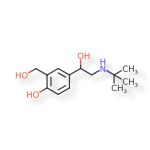
Details
| Stereochemistry | RACEMIC |
| Molecular Formula | C13H21NO3.ClH |
| Molecular Weight | 275.772 |
| Optical Activity | ( + / - ) |
| Defined Stereocenters | 0 / 1 |
| E/Z Centers | 0 |
| Charge | 0 |
SHOW SMILES / InChI
SMILES
Cl.CC(C)(C)NCC(O)C1=CC(CO)=C(O)C=C1
InChI
InChIKey=OWNWYCOLFIFTLK-UHFFFAOYSA-N
InChI=1S/C13H21NO3.ClH/c1-13(2,3)14-7-12(17)9-4-5-11(16)10(6-9)8-15;/h4-6,12,14-17H,7-8H2,1-3H3;1H
| Molecular Formula | ClH |
| Molecular Weight | 36.461 |
| Charge | 0 |
| Count |
|
| Stereochemistry | ACHIRAL |
| Additional Stereochemistry | No |
| Defined Stereocenters | 0 / 0 |
| E/Z Centers | 0 |
| Optical Activity | NONE |
| Molecular Formula | C13H21NO3 |
| Molecular Weight | 239.3107 |
| Charge | 0 |
| Count |
|
| Stereochemistry | RACEMIC |
| Additional Stereochemistry | No |
| Defined Stereocenters | 0 / 1 |
| E/Z Centers | 0 |
| Optical Activity | ( + / - ) |
Albuterol is a short acting beta2-adrenergic receptor agonist. Albuterol effectively alleviates bronchospasm due to bronchial asthma, chronic bronchitis, and other chronic bronchopulmonary disorders such as COPD. In vitro studies and in vivo pharmacologic studies have demonstrated that albuterol has a preferential effect on beta2-adrenergic receptors compared with isoproterenol. While it is recognized that beta2-adrenergic receptors are the predominant receptors in bronchial smooth muscle, data indicate that there is a population of beta2-receptors in the human heart existing in a concentration between 10% and 50%. The precise function of these receptors has not been established. The pharmacologic effects of beta-adrenergic agonist drugs, including albuterol, are at least in part attributable to stimulation through beta-adrenergic receptors of intracellular adenyl cyclase, the enzyme that catalyzes the conversion of adenosine triphosphate (ATP) to cyclic-3',5'- adenosine monophosphate (cyclic AMP). Increased cyclic AMP levels are associated with relaxation of bronchial smooth muscle and inhibition of release of mediators of immediate hypersensitivity from cells, especially from mast cells. Albuterol has been shown in most controlled clinical trials to have more effect on the respiratory tract, in the form of bronchial smooth muscle relaxation, than isoproterenol at comparable doses while producing fewer cardiovascular effects. Albuterol is longer acting than isoproterenol in most patients by any route of administration because it is not a substrate for the cellular uptake processes for catecholamines nor for catechol-O-methyl transferase.
Originator
Curator's Comment: On arriving at Allen and Hanburys in 1961 as Research Director, David set himself the task of finding a more selective bronchodilator than isoprenaline, the non-selective ß-adrenoceptor agonist, which was widely in use at the time but caused unwanted effects on the heart at doses that caused bronchodilation, even when inhaled. This led to the discovery of salbutamol, as the first selective ß2-adrenoceptor agonist for the treatment of bronchospasm associated with airway diseases such as asthma
Approval Year
Targets
| Primary Target | Pharmacology | Condition | Potency |
|---|---|---|---|
Target ID: CHEMBL213 |
|||
Target ID: CHEMBL246 |
|||
Target ID: CHEMBL210 |
Conditions
| Condition | Modality | Targets | Highest Phase | Product |
|---|---|---|---|---|
| Primary | PROVENTIL-HFA Approved UseAlbuterol sulfate inhalation solution is indicated for the relief of bronchospasm in patients 2 years of age and older with reversible obstructive airway disease and acute attacks of bronchospasm. Launch Date1996 |
Cmax
| Value | Dose | Co-administered | Analyte | Population |
|---|---|---|---|---|
4.12 ng/mL EXPERIMENT https://pubmed.ncbi.nlm.nih.gov/11301561/ |
10 mg single, respiratory dose: 10 mg route of administration: Respiratory experiment type: SINGLE co-administered: |
(R)-ALBUTEROL plasma | Homo sapiens population: HEALTHY age: ADULT sex: FEMALE / MALE food status: FASTED |
|
10.06 ng/mL EXPERIMENT https://pubmed.ncbi.nlm.nih.gov/11301561/ |
10 mg single, respiratory dose: 10 mg route of administration: Respiratory experiment type: SINGLE co-administered: |
(S)-ALBUTEROL plasma | Homo sapiens population: HEALTHY age: ADULT sex: FEMALE / MALE food status: FASTED |
|
0.84 ng/mL EXPERIMENT https://pubmed.ncbi.nlm.nih.gov/11301561/ |
2.5 mg single, respiratory dose: 2.5 mg route of administration: Respiratory experiment type: SINGLE co-administered: |
(R)-ALBUTEROL plasma | Homo sapiens population: HEALTHY age: ADULT sex: FEMALE / MALE food status: FASTED |
|
1.77 ng/mL EXPERIMENT https://pubmed.ncbi.nlm.nih.gov/11301561/ |
2.5 mg single, respiratory dose: 2.5 mg route of administration: Respiratory experiment type: SINGLE co-administered: |
(S)-ALBUTEROL plasma | Homo sapiens population: HEALTHY age: ADULT sex: FEMALE / MALE food status: FASTED |
|
13 ng/mL EXPERIMENT https://pubmed.ncbi.nlm.nih.gov/3653233/ |
4 mg single, oral dose: 4 mg route of administration: Oral experiment type: SINGLE co-administered: |
ALBUTEROL serum | Homo sapiens population: HEALTHY age: ADULT sex: MALE food status: FASTED |
|
14.7 ng/mL |
4 mg 4 times / day steady-state, oral dose: 4 mg route of administration: Oral experiment type: STEADY-STATE co-administered: |
ALBUTEROL plasma | Homo sapiens population: HEALTHY age: ADULT sex: MALE food status: FASTED |
|
15.1 ng/mL |
4 mg 4 times / day multiple, oral dose: 4 mg route of administration: Oral experiment type: MULTIPLE co-administered: |
ALBUTEROL plasma | Homo sapiens population: HEALTHY age: ADULT sex: MALE food status: FASTED |
|
1469 pg/mL EXPERIMENT https://pubmed.ncbi.nlm.nih.gov/9649352/ |
180 μg single, respiratory dose: 180 μg route of administration: Respiratory experiment type: SINGLE co-administered: |
ALBUTEROL plasma | Homo sapiens population: HEALTHY age: ADULT sex: FEMALE / MALE food status: UNKNOWN |
AUC
| Value | Dose | Co-administered | Analyte | Population |
|---|---|---|---|---|
15.97 ng × h/mL EXPERIMENT https://pubmed.ncbi.nlm.nih.gov/11301561/ |
10 mg single, respiratory dose: 10 mg route of administration: Respiratory experiment type: SINGLE co-administered: |
(R)-ALBUTEROL plasma | Homo sapiens population: HEALTHY age: ADULT sex: FEMALE / MALE food status: FASTED |
|
74.46 ng × h/mL EXPERIMENT https://pubmed.ncbi.nlm.nih.gov/11301561/ |
10 mg single, respiratory dose: 10 mg route of administration: Respiratory experiment type: SINGLE co-administered: |
(S)-ALBUTEROL plasma | Homo sapiens population: HEALTHY age: ADULT sex: FEMALE / MALE food status: FASTED |
|
1.61 ng × h/mL EXPERIMENT https://pubmed.ncbi.nlm.nih.gov/11301561/ |
2.5 mg single, respiratory dose: 2.5 mg route of administration: Respiratory experiment type: SINGLE co-administered: |
(R)-ALBUTEROL plasma | Homo sapiens population: HEALTHY age: ADULT sex: FEMALE / MALE food status: FASTED |
|
11.66 ng × h/mL EXPERIMENT https://pubmed.ncbi.nlm.nih.gov/11301561/ |
2.5 mg single, respiratory dose: 2.5 mg route of administration: Respiratory experiment type: SINGLE co-administered: |
(S)-ALBUTEROL plasma | Homo sapiens population: HEALTHY age: ADULT sex: FEMALE / MALE food status: FASTED |
|
3239 μg × min/L EXPERIMENT https://pubmed.ncbi.nlm.nih.gov/3653233/ |
1.5 mg single, intravenous dose: 1.5 mg route of administration: Intravenous experiment type: SINGLE co-administered: |
ALBUTEROL serum | Homo sapiens population: HEALTHY age: ADULT sex: MALE food status: FASTED |
|
3677 μg × min/L EXPERIMENT https://pubmed.ncbi.nlm.nih.gov/3653233/ |
4 mg single, oral dose: 4 mg route of administration: Oral experiment type: SINGLE co-administered: |
ALBUTEROL serum | Homo sapiens population: HEALTHY age: ADULT sex: MALE food status: FASTED |
|
72.6 ng × h/mL |
4 mg 4 times / day steady-state, oral dose: 4 mg route of administration: Oral experiment type: STEADY-STATE co-administered: |
ALBUTEROL plasma | Homo sapiens population: HEALTHY age: ADULT sex: MALE food status: FASTED |
|
77.4 ng × h/mL |
4 mg 4 times / day multiple, oral dose: 4 mg route of administration: Oral experiment type: MULTIPLE co-administered: |
ALBUTEROL plasma | Homo sapiens population: HEALTHY age: ADULT sex: MALE food status: FASTED |
|
4268 pg × h/mL EXPERIMENT https://pubmed.ncbi.nlm.nih.gov/9649352/ |
180 μg single, respiratory dose: 180 μg route of administration: Respiratory experiment type: SINGLE co-administered: |
ALBUTEROL plasma | Homo sapiens population: HEALTHY age: ADULT sex: FEMALE / MALE food status: UNKNOWN |
T1/2
| Value | Dose | Co-administered | Analyte | Population |
|---|---|---|---|---|
4 h EXPERIMENT https://pubmed.ncbi.nlm.nih.gov/11301561/ |
10 mg single, respiratory dose: 10 mg route of administration: Respiratory experiment type: SINGLE co-administered: |
(R)-ALBUTEROL plasma | Homo sapiens population: HEALTHY age: ADULT sex: FEMALE / MALE food status: FASTED |
|
5.75 h EXPERIMENT https://pubmed.ncbi.nlm.nih.gov/11301561/ |
10 mg single, respiratory dose: 10 mg route of administration: Respiratory experiment type: SINGLE co-administered: |
(S)-ALBUTEROL plasma | Homo sapiens population: HEALTHY age: ADULT sex: FEMALE / MALE food status: FASTED |
|
1.52 h EXPERIMENT https://pubmed.ncbi.nlm.nih.gov/11301561/ |
2.5 mg single, respiratory dose: 2.5 mg route of administration: Respiratory experiment type: SINGLE co-administered: |
(R)-ALBUTEROL plasma | Homo sapiens population: HEALTHY age: ADULT sex: FEMALE / MALE food status: FASTED |
|
5.29 h EXPERIMENT https://pubmed.ncbi.nlm.nih.gov/11301561/ |
2.5 mg single, respiratory dose: 2.5 mg route of administration: Respiratory experiment type: SINGLE co-administered: |
(S)-ALBUTEROL plasma | Homo sapiens population: HEALTHY age: ADULT sex: FEMALE / MALE food status: FASTED |
|
3.9 h |
400 μg single, intravenous dose: 400 μg route of administration: Intravenous experiment type: SINGLE co-administered: |
ALBUTEROL plasma | Homo sapiens population: HEALTHY age: ADULT sex: FEMALE / MALE food status: FASTED |
|
237 min EXPERIMENT https://pubmed.ncbi.nlm.nih.gov/3653233/ |
1.5 mg single, intravenous dose: 1.5 mg route of administration: Intravenous experiment type: SINGLE co-administered: |
ALBUTEROL serum | Homo sapiens population: HEALTHY age: ADULT sex: MALE food status: FASTED |
|
6.5 h |
4 mg 4 times / day multiple, oral dose: 4 mg route of administration: Oral experiment type: MULTIPLE co-administered: |
ALBUTEROL plasma | Homo sapiens population: HEALTHY age: ADULT sex: MALE food status: FASTED |
|
4.4 h EXPERIMENT https://pubmed.ncbi.nlm.nih.gov/9649352/ |
180 μg single, respiratory dose: 180 μg route of administration: Respiratory experiment type: SINGLE co-administered: |
ALBUTEROL plasma | Homo sapiens population: HEALTHY age: ADULT sex: FEMALE / MALE food status: UNKNOWN |
Funbound
| Value | Dose | Co-administered | Analyte | Population |
|---|---|---|---|---|
92% EXPERIMENT https://pubmed.ncbi.nlm.nih.gov/3790406/ |
ALBUTEROL plasma | Homo sapiens population: HEALTHY age: ADULT sex: FEMALE / MALE food status: |
Doses
| Dose | Population | Adverse events |
|---|---|---|
6 mg single, oral MTD |
unhealthy, ADULT Health Status: unhealthy Age Group: ADULT Sex: M+F Food Status: UNKNOWN Sources: |
DLT: Tremor... |
180 ug 4 times / day multiple, respiratory Studied dose Dose: 180 ug, 4 times / day Route: respiratory Route: multiple Dose: 180 ug, 4 times / day Sources: |
unhealthy, ADULT Health Status: unhealthy Age Group: ADULT Sex: M+F Food Status: UNKNOWN Sources: |
Disc. AE: Pancreatic carcinoma, Gastrointestinal carcinoma... AEs leading to discontinuation/dose reduction: Pancreatic carcinoma (0.6%) Sources: Gastrointestinal carcinoma (0.6%) Papillary thyroid cancer (0.6%) Asthma exacerbation (0.6%) |
1.9 mg/kg single, oral Overdose Dose: 1.9 mg/kg Route: oral Route: single Dose: 1.9 mg/kg Sources: |
healthy, CHILD Health Status: healthy Age Group: CHILD Sex: M Food Status: UNKNOWN Sources: |
Other AEs: Hypoglycemia, Hypokalemia... Other AEs: Hypoglycemia Sources: Hypokalemia (grade 1) Restlessness Sinus tachycardia Agitation Tremor NEC |
AEs
| AE | Significance | Dose | Population |
|---|---|---|---|
| Tremor | DLT | 6 mg single, oral MTD |
unhealthy, ADULT Health Status: unhealthy Age Group: ADULT Sex: M+F Food Status: UNKNOWN Sources: |
| Asthma exacerbation | 0.6% Disc. AE |
180 ug 4 times / day multiple, respiratory Studied dose Dose: 180 ug, 4 times / day Route: respiratory Route: multiple Dose: 180 ug, 4 times / day Sources: |
unhealthy, ADULT Health Status: unhealthy Age Group: ADULT Sex: M+F Food Status: UNKNOWN Sources: |
| Gastrointestinal carcinoma | 0.6% Disc. AE |
180 ug 4 times / day multiple, respiratory Studied dose Dose: 180 ug, 4 times / day Route: respiratory Route: multiple Dose: 180 ug, 4 times / day Sources: |
unhealthy, ADULT Health Status: unhealthy Age Group: ADULT Sex: M+F Food Status: UNKNOWN Sources: |
| Pancreatic carcinoma | 0.6% Disc. AE |
180 ug 4 times / day multiple, respiratory Studied dose Dose: 180 ug, 4 times / day Route: respiratory Route: multiple Dose: 180 ug, 4 times / day Sources: |
unhealthy, ADULT Health Status: unhealthy Age Group: ADULT Sex: M+F Food Status: UNKNOWN Sources: |
| Papillary thyroid cancer | 0.6% Disc. AE |
180 ug 4 times / day multiple, respiratory Studied dose Dose: 180 ug, 4 times / day Route: respiratory Route: multiple Dose: 180 ug, 4 times / day Sources: |
unhealthy, ADULT Health Status: unhealthy Age Group: ADULT Sex: M+F Food Status: UNKNOWN Sources: |
| Agitation | 1.9 mg/kg single, oral Overdose Dose: 1.9 mg/kg Route: oral Route: single Dose: 1.9 mg/kg Sources: |
healthy, CHILD Health Status: healthy Age Group: CHILD Sex: M Food Status: UNKNOWN Sources: |
|
| Hypoglycemia | 1.9 mg/kg single, oral Overdose Dose: 1.9 mg/kg Route: oral Route: single Dose: 1.9 mg/kg Sources: |
healthy, CHILD Health Status: healthy Age Group: CHILD Sex: M Food Status: UNKNOWN Sources: |
|
| Restlessness | 1.9 mg/kg single, oral Overdose Dose: 1.9 mg/kg Route: oral Route: single Dose: 1.9 mg/kg Sources: |
healthy, CHILD Health Status: healthy Age Group: CHILD Sex: M Food Status: UNKNOWN Sources: |
|
| Sinus tachycardia | 1.9 mg/kg single, oral Overdose Dose: 1.9 mg/kg Route: oral Route: single Dose: 1.9 mg/kg Sources: |
healthy, CHILD Health Status: healthy Age Group: CHILD Sex: M Food Status: UNKNOWN Sources: |
|
| Tremor NEC | 1.9 mg/kg single, oral Overdose Dose: 1.9 mg/kg Route: oral Route: single Dose: 1.9 mg/kg Sources: |
healthy, CHILD Health Status: healthy Age Group: CHILD Sex: M Food Status: UNKNOWN Sources: |
|
| Hypokalemia | grade 1 | 1.9 mg/kg single, oral Overdose Dose: 1.9 mg/kg Route: oral Route: single Dose: 1.9 mg/kg Sources: |
healthy, CHILD Health Status: healthy Age Group: CHILD Sex: M Food Status: UNKNOWN Sources: |
PubMed
| Title | Date | PubMed |
|---|---|---|
| beta-adrenergic receptor stimulation selectively inhibits IL-12p40 release in microglia. | 2001-04-27 |
|
| Effect of polymorphism of the beta(2)-adrenergic receptor on response to regular use of albuterol in asthma. | 2001-04-18 |
|
| A combination of fluticasone and salmeterol for asthma. | 2001-04-16 |
|
| Up-regulation of uncoupling proteins by beta-adrenergic stimulation in L6 myotubes. | 2001-04-13 |
|
| Salmeterol and fluticasone propionate given as a combination. Lack of systemic pharmacodynamic and pharmacokinetic interactions. | 2001-04-11 |
|
| Requirement of additional adenylate cyclase activation for the inhibition of human eosinophil degranulation by phosphodiesterase IV inhibitors. | 2001-04-06 |
|
| The diagnosis and treatment of cough. | 2001-04-05 |
|
| Profile of ligand binding to the porcine beta2-adrenergic receptor. | 2001-04 |
|
| Pharmacokinetics and systemic beta2-adrenoceptor-mediated responses to inhaled salbutamol. | 2001-04 |
|
| Use of a long-acting inhaled beta2-adrenergic agonist, salmeterol xinafoate, in patients with chronic obstructive pulmonary disease. | 2001-04 |
|
| The role of domiciliary nebulizers in managing patients with severe COPD. | 2001-04 |
|
| Comparative efficiency of commercial and improvised spacer device in acute bronchial asthma. | 2001-04 |
|
| The utility of peak flow, symptom scores, and beta-agonist use as outcome measures in asthma clinical research. | 2001-04 |
|
| Evaluation of salmeterol or montelukast as second-line therapy for asthma not controlled with inhaled corticosteroids. | 2001-04 |
|
| Comparative in vivo lung delivery of hydrofluoroalkane-salbutamol formulation via metered-dose inhaler alone, with plastic spacer, or with cardboard tube. | 2001-04 |
|
| Fluticasone propionate/salmeterol combination. | 2001-04 |
|
| Efficacy of nebulized epinephrine versus salbutamol in hospitalized infants with bronchiolitis. | 2001-04 |
|
| Interethnic variability in human drug responses. | 2001-04 |
|
| Genetic variation in beta-adrenergic receptors and their relationship to susceptibility for asthma and therapeutic response. | 2001-04 |
|
| Permeability of endothelial monolayers to albumin is increased by bradykinin and inhibited by prostaglandins. | 2001-04 |
|
| Nebivolol and airway responsiveness in the rabbit. | 2001-03-23 |
|
| Functional properties of atypical beta-adrenoceptors on the guinea pig duodenum. | 2001-03-23 |
|
| Solubility prediction of salmeterol xinafoate in water--dioxane mixtures. | 2001-03-23 |
|
| Hyperosmolar diabetic non-ketotic coma, hyperkalaemia and an unusual near death experience. | 2001-03 |
|
| Towards evidence based emergency medicine: best BETs from the Manchester Royal Infirmary. Salbutamol and ipratropium in COPD. | 2001-03 |
|
| Assessment of forearm vasodilator responses to acetylcholine and albuterol by strain gauge plethysmography: reproducibility and influence of strain gauge placement. | 2001-03 |
|
| Switching from Ventolin CFC to Ventolin HFA is well tolerated and effective in patients with asthma. | 2001-03 |
|
| Clinical predictors of health-related quality of life depend on asthma severity. | 2001-03 |
|
| The effect of salmeterol on markers of airway inflammation following segmental allergen challenge. | 2001-03 |
|
| Albuterol delivery in a neonatal ventilated lung model: Nebulization versus chlorofluorocarbon- and hydrofluoroalkane-pressurized metered dose inhalers. | 2001-03 |
|
| The mechanism of gentisic acid-induced relaxation of the guinea pig isolated trachea: the role of potassium channels and vasoactive intestinal peptide receptors. | 2001-03 |
|
| Effect of salmeterol on allergen-induced airway inflammation in mild allergic asthma. | 2001-03 |
|
| Single-isomer beta-agonists. | 2001-03 |
|
| Chronic systemic administration of salmeterol to rats promotes pulmonary beta(2)-adrenoceptor desensitization and down-regulation of G(s alpha). | 2001-03 |
|
| Salmeterol and conventional asthma therapy. | 2001-03 |
|
| Effectiveness and safety of salmeterol in nonspecialist practice settings. | 2001-03 |
|
| Low-dose fluticasone propionate compared with montelukast for first-line treatment of persistent asthma: a randomized clinical trial. | 2001-03 |
|
| [Bronchial asthma. A combination preparation improves patient compliance]. | 2001-02-22 |
|
| [Salmeterol plus fluticasone--a powerful team. New combined preparation improves compliance]. | 2001-02-08 |
|
| Respiratory and cardiovascular effects of WP-934 in guinea pigs. | 2001-02 |
|
| Some behavioural effects of antidepressant drugs are time-dependent. | 2001-02 |
|
| Quantitative determination of clenbuterol, salbutamol and tulobuterol enantiomers by capillary electrophoresis. | 2001-02 |
|
| Pediatric pre-hospital advanced life support care in an urban setting. | 2001-02 |
|
| Mometasone furoate: efficacy and safety in moderate asthma compared with beclomethasone dipropionate. | 2001-02 |
|
| Effects of therapeutic doses of albuterol on beta2-adrenergic receptor density and metabolic changes. | 2001-02 |
|
| Beta2-agonist exerts differential effects on the development of cord blood T cells but not on peripheral blood T cells. | 2001-02 |
|
| Effect of inspiratory flow rate on beta2-agonist induced bronchodilation in mechanically ventilated COPD patients. | 2001-01 |
|
| Nocturnal asthma uncontrolled by inhaled corticosteroids: theophylline or long-acting beta2 agonists? | 2001 |
|
| The effect of acute alteration in oxygen tension on the bronchodilator response to salbutamol in vitro and in vivo in man. | 2001 |
|
| Zafirlukast: an update of its pharmacology and therapeutic efficacy in asthma. | 2001 |
Sample Use Guides
In Vivo Use Guide
Curator's Comment: Albuterol also supplied as 2 mg tablets: usual dosage - 2 or 4 mg three or four times a day.
https://dailymed.nlm.nih.gov/dailymed/drugInfo.cfm?setid=87b8cd3c-2849-4b50-b63e-9ea379165c07
Intravenous salbutamol is commonly used to treat children with severe asthma unresponsive to inhaled β2-agonist therapy, usual dose is 4ug/kg.
https://www.drugs.com/uk/ventolin-injection-500mcg-1ml-leaflet.html
Two inhalations repeated every 4 to 6 hours (aerosol, metered)
Route of Administration:
Respiratory
| Substance Class |
Chemical
Created
by
admin
on
Edited
Tue Apr 01 17:06:57 GMT 2025
by
admin
on
Tue Apr 01 17:06:57 GMT 2025
|
| Record UNII |
P12862PDAK
|
| Record Status |
Validated (UNII)
|
| Record Version |
|
-
Download
| Name | Type | Language | ||
|---|---|---|---|---|
|
Common Name | English | ||
|
Preferred Name | English | ||
|
Common Name | English | ||
|
Systematic Name | English | ||
|
Common Name | English |
| Code System | Code | Type | Description | ||
|---|---|---|---|---|---|
|
DTXSID80965587
Created by
admin on Tue Apr 01 17:06:57 GMT 2025 , Edited by admin on Tue Apr 01 17:06:57 GMT 2025
|
PRIMARY | |||
|
100000181252
Created by
admin on Tue Apr 01 17:06:57 GMT 2025 , Edited by admin on Tue Apr 01 17:06:57 GMT 2025
|
PRIMARY | |||
|
6452399
Created by
admin on Tue Apr 01 17:06:57 GMT 2025 , Edited by admin on Tue Apr 01 17:06:57 GMT 2025
|
PRIMARY | |||
|
P12862PDAK
Created by
admin on Tue Apr 01 17:06:57 GMT 2025 , Edited by admin on Tue Apr 01 17:06:57 GMT 2025
|
PRIMARY | |||
|
51293-66-4
Created by
admin on Tue Apr 01 17:06:57 GMT 2025 , Edited by admin on Tue Apr 01 17:06:57 GMT 2025
|
PRIMARY | |||
|
39006-83-2
Created by
admin on Tue Apr 01 17:06:57 GMT 2025 , Edited by admin on Tue Apr 01 17:06:57 GMT 2025
|
SUPERSEDED |
| Related Record | Type | Details | ||
|---|---|---|---|---|
|
|
PARENT -> SALT/SOLVATE |