


Details
| Stereochemistry | ABSOLUTE |
| Molecular Formula | C11H9I3N2O4.C6H14N2O2 |
| Molecular Weight | 760.1011 |
| Optical Activity | UNSPECIFIED |
| Defined Stereocenters | 1 / 1 |
| E/Z Centers | 0 |
| Charge | 0 |
SHOW SMILES / InChI
SMILES
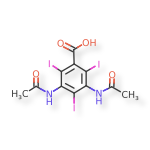
NCCCC[C@H](N)C(O)=O.CC(=O)NC1=C(I)C(C(O)=O)=C(I)C(NC(C)=O)=C1I
InChI
InChIKey=PGWLUYCTYOGUBP-ZSCHJXSPSA-N
InChI=1S/C11H9I3N2O4.C6H14N2O2/c1-3(17)15-9-6(12)5(11(19)20)7(13)10(8(9)14)16-4(2)18;7-4-2-1-3-5(8)6(9)10/h1-2H3,(H,15,17)(H,16,18)(H,19,20);5H,1-4,7-8H2,(H,9,10)/t;5-/m.0/s1
| Molecular Formula | C6H14N2O2 |
| Molecular Weight | 146.1876 |
| Charge | 0 |
| Count |
|
| Stereochemistry | ABSOLUTE |
| Additional Stereochemistry | No |
| Defined Stereocenters | 1 / 1 |
| E/Z Centers | 0 |
| Optical Activity | UNSPECIFIED |
| Molecular Formula | C11H9I3N2O4 |
| Molecular Weight | 613.9136 |
| Charge | 0 |
| Count |
|
| Stereochemistry | ACHIRAL |
| Additional Stereochemistry | No |
| Defined Stereocenters | 0 / 0 |
| E/Z Centers | 0 |
| Optical Activity | NONE |
DescriptionSources: http://www.drugbank.ca/drugs/DB00271Curator's Comment: Description was created based on several sources, including http://www.accessdata.fda.gov/drugsatfda_docs/label/2015/010040s171lbl.pdf
Sources: http://www.drugbank.ca/drugs/DB00271
Curator's Comment: Description was created based on several sources, including http://www.accessdata.fda.gov/drugsatfda_docs/label/2015/010040s171lbl.pdf
This compound belongs to the class of organic compounds known as aminobenzoic acids. These are benzoic acids containing an amine group attached to the benzene moiety. A commonly used x-ray contrast medium. Used, alone or in combination, for a wide variety of diagnostic imaging methods, including angiography, urography, cholangiography, computed tomography, hysterosalpingography, and retrograde pyelography. It can be used for imaging the gastrointestinal tract in patients allergic to barium. Radiopaque agents are drugs used to help diagnose certain medical problems. They contain iodine, which blocks x-rays. Depending on how the radiopaque agent is given, it localizes or builds up in certain areas of the body. The resulting high level of iodine allows the x-rays to make a "picture" of the area. The areas of the body in which the radiopaque agent localizes will appear white on the x-ray film. This creates the needed distinction, or contrast, between one organ and other tissues.
CNS Activity
Approval Year
Conditions
| Condition | Modality | Targets | Highest Phase | Product |
|---|---|---|---|---|
| Diagnostic | Cystografin Approved UseRetrograde cystourethrography Launch Date1955 |
|||
| Diagnostic | Gastrografin Approved UseGastrografin (DIATRIZOIC ACID) is indicated for radiographic examination of segments of the gastrointestinal tract (esophagus, stomach, proximal small intestine, and colon). Launch Date1958 |
Cmax
| Value | Dose | Co-administered | Analyte | Population |
|---|---|---|---|---|
7 mg/mL EXPERIMENT https://pubmed.ncbi.nlm.nih.gov/6706519 |
7.2 mg/kg single, intravenous dose: 7.2 mg/kg route of administration: Intravenous experiment type: SINGLE co-administered: |
HYDROGEN IODIDE plasma | Homo sapiens population: HEALTHY age: ADULT sex: FEMALE / MALE food status: UNKNOWN |
|
3.6 mg/mL EXPERIMENT https://pubmed.ncbi.nlm.nih.gov/6706519 |
3.36 mg/kg single, intravenous dose: 3.36 mg/kg route of administration: Intravenous experiment type: SINGLE co-administered: |
HYDROGEN IODIDE plasma | Homo sapiens population: HEALTHY age: ADULT sex: UNKNOWN food status: UNKNOWN |
T1/2
| Value | Dose | Co-administered | Analyte | Population |
|---|---|---|---|---|
102 min EXPERIMENT https://pubmed.ncbi.nlm.nih.gov/6706519 |
7.2 mg/kg single, intravenous dose: 7.2 mg/kg route of administration: Intravenous experiment type: SINGLE co-administered: |
HYDROGEN IODIDE plasma | Homo sapiens population: HEALTHY age: ADULT sex: FEMALE / MALE food status: UNKNOWN |
|
110 min EXPERIMENT https://pubmed.ncbi.nlm.nih.gov/6706519 |
3.36 mg/kg single, intravenous dose: 3.36 mg/kg route of administration: Intravenous experiment type: SINGLE co-administered: |
HYDROGEN IODIDE plasma | Homo sapiens population: HEALTHY age: ADULT sex: UNKNOWN food status: UNKNOWN |
PubMed
| Title | Date | PubMed |
|---|---|---|
| Use of near-infrared reflection spectroscopy to study the effects of X-ray contrast media on renal tolerance in rats: effects of a prostacyclin analogue and of phosphodiesterase inhibitors. | 2002-12 |
|
| Rectal washout with cytotoxic solution can be extended to the whole colon. | 2002-12 |
|
| Evidence for involvement of mast cell degranulation and subsequent stimulation of histamine H1 and H2 receptors in radiographic contrast media-increased vascular permeability in rats. | 2002-12 |
|
| The role of theophylline in contrast-induced nephropathy: a case-control study. | 2002-11 |
|
| Pressure-assisted micturating cystourethrography: reduction in duration of procedure and fluoroscopy time. | 2002-11 |
|
| Thumbprinting due to ischemic colitis in a patient on oral anticoagulation. | 2002-10-31 |
|
| The value of contrast radiology for postoperative adhesive small bowel obstruction. | 2002-10-26 |
|
| Venous port salvage utilizing low dose tPA. | 2002-10-23 |
|
| Chronic renal dysfunction late after liver transplantation. | 2002-10 |
|
| Iodinated contrast medium-induced potassium release: the effect of mixing ratios. | 2002-09-26 |
|
| [Fast method of labelling leukocytes with 99mTc HM PAO]. | 2002-09-19 |
|
| [Ultrasound and X-ray urethrography and urethroscopy during endoscopic operations on the urethra]. | 2002-09-10 |
|
| Renal chemoembolization with mitomycin c/Ethibloc: pharmacokinetics and efficacy in an animal model. | 2002-09 |
|
| The diagnostic yield of colonoscopy and the therapeutic value of intraduodenal amidotrizoic acid injection in intestinal Diphyllobothrium latum infection: report of a case. | 2002-09 |
|
| Ex vivo expansion of megakaryocyte progenitors from cryopreserved umbilical cord blood. A potential source of megakaryocytes for transplantation. | 2002-09 |
|
| Is same-day sonography of the gallbladder feasible after intravenous urography or contrast-enhanced computed tomography? | 2002-09 |
|
| Iothalamate measured by capillary electrophoresis is a suitable alternative to radiolabeled inulin in renal micropuncture. | 2002-09 |
|
| Type IV diaphragmatic hiatal hernia. | 2002-08-03 |
|
| Diagnosis and management of enterovesical fistulas in patients with Crohn's disease. | 2002-08 |
|
| Electrocardiographic effects of diagnostic imaging agents. | 2002-08 |
|
| Radiocontrast-induced renal tubular cell apoptosis: hypertonic versus oxidative stress. | 2002-08 |
|
| Application of oral contrast media in coregistered positron emission tomography-CT. | 2002-08 |
|
| Emergency colonoscopy for distal intestinal obstruction syndrome in cystic fibrosis patients. | 2002-08 |
|
| Effects of intrathecal injection of diatrizoate on dopamine receptors. | 2002-07 |
|
| Assessment of hypothalamic-pituitary-adrenal axis function after corticosteroid therapy in inflammatory bowel disease. | 2002-07 |
|
| Contrast radiography and intestinal obstruction. | 2002-07 |
|
| Therapeutic value of gastrografin in adhesive small bowel obstruction after unsuccessful conservative treatment: a prospective randomized trial. | 2002-07 |
|
| Local tissue toxicity in response to extravascular extravasation of magnetic resonance contrast media. | 2002-07 |
|
| Safety and efficacy of postoperative continuous positive airway pressure to prevent pulmonary complications after Roux-en-Y gastric bypass. | 2002-05-23 |
|
| Aneurysmal bone cysts: treatment with direct percutaneous Ethibloc injection: long-term results. | 2002-05-23 |
|
| Jejunum free flap in hypopharynx reconstruction: case series. | 2002-05-10 |
|
| A case of gastric duplication evaluated by gastric emptying scintigraphy. | 2002-05 |
|
| Long-term survival of patients with stage IV hypopharyngeal cancer: impact of fundus rotation gastroplasty. | 2002-05 |
|
| New strategies in nonoperative management of meconium ileus. | 2002-05 |
|
| Renal excretion of ingested gastrografin: clinical relevance in early postoperative treatment of patients who have undergone gastric surgery. | 2002-05 |
|
| [Which imaging in case of sigmoid diverticulitis? The value of ultrasound (Conventional B-mode in combination with hydrocolonsonography and colour flow Doppler) in comparison to the well-established modalities like contrast enema and helical computertomography]. | 2002-04 |
|
| Short-term moderate sodium restriction induces relative hyperfiltration in normotensive normoalbuminuric Type I diabetes mellitus. | 2002-04 |
|
| Gastrografin administration in the treatment of postoperative delayed gastric emptying. | 2002-04 |
|
| Effect of iomeprol on rat hippocampal slice synaptic transmission: comparison with other X-ray contrast agents. | 2002-04 |
|
| Do clinically relevant circulating concentrations of radiographic contrast agents inhibit platelet-dependent arterial thrombosis? | 2002-03-01 |
|
| Early esophageal transit study after laparoscopic fundoplication: how useful is it? | 2002-03 |
|
| Gastrocolocutaneous Fistula as a complication of peg tube placement. | 2002-03 |
|
| Changes in the fibrinolytic system during angiography with ionic and with nonionic contrast media. | 2002-03 |
|
| Laparoscopic repair for perforated peptic ulcer: a randomized controlled trial. | 2002-03 |
|
| Primary anastomosis and diverting colostomy in diffuse diverticular peritonitis. | 2002-02 |
|
| Virtual gastroduodenoscopy: a new look at the bypassed stomach and duodenum after laparoscopic Roux-en-Y gastric bypass for morbid obesity. | 2002-02 |
|
| The utility of contrast studies and drains in the management of patients after Roux-en-Y gastric bypass. | 2002-02 |
|
| [Opportunities of delayed densitometry of "late (fixed) contrast" as a test for tumors in residual mediastinal lesion in primary mediastinal lymphosarcoma after polychemotherapy]. | 2002 |
|
| Ionic radiocontrast media disrupt intercellular contacts via an extracellular calcium-independent mechanism. | 2002 |
|
| An analysis of mechanisms underlying the antifibrinolytic properties of radiographic contrast agents. | 2001-12 |
Sample Use Guides
In Vivo Use Guide
Curator's Comment: For radiographic examination of segments of the gastrointestinal tract (Gastrografin) oral administration: adult oral dosage may range from 30 to 90 mL (11 to 33 g iodine), depending on the nature of the examination and the size of the patient. For Enemas or Enterostomy Instillations: should be diluted when it is used for enemas and enterostomy instillations. When used as an enema, the suggested dilution for adults is 240 mL (88 g iodine) in 1,000 mL of tap water. http://www.drugs.com/pro/gastrografin.html
;
The dose for retrograde use in cystography and voiding cystourethrography ranges from 25 to 300 mL depending on the age of the patient and the degree of bladder irritability
Route of Administration:
Other
| Substance Class |
Chemical
Created
by
admin
on
Edited
Mon Mar 31 21:29:47 GMT 2025
by
admin
on
Mon Mar 31 21:29:47 GMT 2025
|
| Record UNII |
O08Q0N9P6D
|
| Record Status |
Validated (UNII)
|
| Record Version |
|
-
Download
| Name | Type | Language | ||
|---|---|---|---|---|
|
Common Name | English | ||
|
Preferred Name | English | ||
|
Common Name | English | ||
|
Common Name | English |
| Code System | Code | Type | Description | ||
|---|---|---|---|---|---|
|
SUB14396MIG
Created by
admin on Mon Mar 31 21:29:47 GMT 2025 , Edited by admin on Mon Mar 31 21:29:47 GMT 2025
|
PRIMARY | |||
|
156987
Created by
admin on Mon Mar 31 21:29:47 GMT 2025 , Edited by admin on Mon Mar 31 21:29:47 GMT 2025
|
PRIMARY | |||
|
O08Q0N9P6D
Created by
admin on Mon Mar 31 21:29:47 GMT 2025 , Edited by admin on Mon Mar 31 21:29:47 GMT 2025
|
PRIMARY | |||
|
100000076790
Created by
admin on Mon Mar 31 21:29:47 GMT 2025 , Edited by admin on Mon Mar 31 21:29:47 GMT 2025
|
PRIMARY | |||
|
77035-55-3
Created by
admin on Mon Mar 31 21:29:47 GMT 2025 , Edited by admin on Mon Mar 31 21:29:47 GMT 2025
|
PRIMARY | |||
|
DTXSID10227842
Created by
admin on Mon Mar 31 21:29:47 GMT 2025 , Edited by admin on Mon Mar 31 21:29:47 GMT 2025
|
PRIMARY |
| Related Record | Type | Details | ||
|---|---|---|---|---|
|
|
PARENT -> SALT/SOLVATE |
| Related Record | Type | Details | ||
|---|---|---|---|---|
|
|
ACTIVE MOIETY |