Details
| Stereochemistry | ACHIRAL |
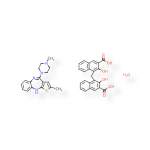
| Molecular Formula | C23H16O6.C17H20N4S |
| Molecular Weight | 700.802 |
| Optical Activity | NONE |
| Defined Stereocenters | 0 / 0 |
| E/Z Centers | 0 |
| Charge | 0 |
SHOW SMILES / InChI
SMILES
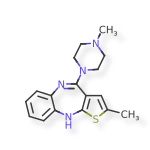
CN1CCN(CC1)C2=NC3=C(NC4=C2C=C(C)S4)C=CC=C3.OC(=O)C5=C(O)C(CC6=C7C=CC=CC7=CC(C(O)=O)=C6O)=C8C=CC=CC8=C5
InChI
InChIKey=IUDQMMSLVSVGDZ-UHFFFAOYSA-N
InChI=1S/C23H16O6.C17H20N4S/c24-20-16(14-7-3-1-5-12(14)9-18(20)22(26)27)11-17-15-8-4-2-6-13(15)10-19(21(17)25)23(28)29;1-12-11-13-16(21-9-7-20(2)8-10-21)18-14-5-3-4-6-15(14)19-17(13)22-12/h1-10,24-25H,11H2,(H,26,27)(H,28,29);3-6,11,19H,7-10H2,1-2H3
| Molecular Formula | C17H20N4S |
| Molecular Weight | 312.432 |
| Charge | 0 |
| Count |
|
| Stereochemistry | ACHIRAL |
| Additional Stereochemistry | No |
| Defined Stereocenters | 0 / 0 |
| E/Z Centers | 0 |
| Optical Activity | NONE |
| Molecular Formula | C23H16O6 |
| Molecular Weight | 388.3695 |
| Charge | 0 |
| Count |
|
| Stereochemistry | ACHIRAL |
| Additional Stereochemistry | No |
| Defined Stereocenters | 0 / 0 |
| E/Z Centers | 0 |
| Optical Activity | NONE |
DescriptionSources: http://www.accessdata.fda.gov/drugsatfda_docs/label/2016/020592s067,021086s043,021253s056lbl.pdfCurator's Comment: description was created based on several sources, including
http://www.priory.com/focus3.htm
Sources: http://www.accessdata.fda.gov/drugsatfda_docs/label/2016/020592s067,021086s043,021253s056lbl.pdf
Curator's Comment: description was created based on several sources, including
http://www.priory.com/focus3.htm
Olanzapine is a novel antipsychotic agent marketed by Lilly & Co. It has a pleotrophic pharmacology and affects dopaminergic, serotonergic, muscarinic and adrenergic activities. Olanzapine is used to treat the symptoms of psychotic conditions such as schizophrenia and bipolar disorder (manic depression) in adults and children who are at least 13 years old. Olanzapine is sometimes used together with other antipsychotic medications or antidepressants. The mechanism of action of olanzapine, as with other drugs having efficacy in schizophrenia, is unknown. However, it has been proposed that this drug’s efficacy in schizophrenia is mediated through a combination of dopamine and serotonin type 2 (5HT2) antagonism. The mechanism of action of olanzapine in the treatment of acute manic or mixed episodes associated with bipolar I disorder is unknown. Olanzapine treatment led to rapid phosphorylation of kinases from all three pathways in PC12 cells. Phosphorylation of Akt was blocked with selective inhibitors (wortmannin and LY294002), which implicates phosphoinositide 3-kinase (PI3K) in the signaling cascade. Short-term mitogenic effects of olanzapine were abolished with a selective inhibitor of Akt, but not by inhibition of the ERK pathway. Olanzapine is metabolized by the cytochrome P450 system; principally by isozyme 1A2 and to a lesser extent by 2D6. By these mechanisms more than 40% of the oral dose, on average, is removed by the hepatic first-pass effect. Drugs or agents that increase the activity of CYP1A2, notably tobacco smoke, may significantly increase hepatic first-pass clearance of Olanzapine; conversely, drugs which inhibit 1A2 activity (examples: Ciprofloxacin, Fluvoxamine) may reduce Olanzapine clearance. The most common side effects appear to be somnolence and weight gain. About 11% of patients gain weight -especially if on a high starting dose and if they were underweight pre-treatment. Sexual dysfunction is a problem for many patients, although sexual dysfunction in schizophrneia does not appear to be primarily attributable to drugs.
CNS Activity
Approval Year
Targets
| Primary Target | Pharmacology | Condition | Potency |
|---|---|---|---|
Target ID: CHEMBL217 |
|||
Target ID: CHEMBL224 |
Conditions
| Condition | Modality | Targets | Highest Phase | Product |
|---|---|---|---|---|
| Primary | ZYPREXA Approved UseOlanzapine orally disintegrating tablets, USP are atypical antipsychotic indicated: As oral formulation for the: Treatment of schizophrenia. (1.1) Adults: Efficacy was established in three clinical trials in patients with schizophrenia: two 6-week trials and one maintenance trial. (14.1) Adolescents (ages 13 to 17): Efficacy was established in one 6-week trial in patients with schizophrenia (14.1). The increased potential (in adolescents compared with adults) for weight gain and dyslipidemia may lead clinicians to consider prescribing other drugs first in adolescents. (1.1) Acute treatment of manic or mixed episodes associated with bipolar I disorder and maintenance treatment of bipolar I disorder. (1.2) Adults: Efficacy was established in three clinical trials in patients with manic or mixed episodes of bipolar I disorder: two 3- to 4-week trials and one maintenance trial. (14.2) Adolescents (ages 13 to 17): Efficacy was established in one 3-week trial in patients with manic or mixed episodes associated with bipolar I disorder (14.2). The increased potential (in adolescents compared with adults) for weight gain and dyslipidemia may lead clinicians to consider prescribing other drugs first in adolescents. (1.2) Medication therapy for pediatric patients with schizophrenia or bipolar I disorder should be undertaken only after a thorough diagnostic evaluation and with careful consideration of the potential risks. (1.3) Adjunct to valproate or lithium in the treatment of manic or mixed episodes associated with bipolar I disorder. (1.2) Efficacy was established in two 6-week clinical trials in adults (14.2). Maintenance efficacy has not been systematically evaluated. As O lanzapine Orally Disintegrating Tablets, USP and Fluoxetine in Combination for the: Treatment of depressive episodes associated with bipolar I disorder. (1.5) Efficacy was established with Symbyax* (olanzapine and fluoxetine in combination); refer to the product label for Symbyax*. 1.1 Schizophrenia Olanzapine orally disintegrating tablets, USP are indicated for the treatment of schizophrenia. Efficacy was established in three clinical trials in adult patients with schizophrenia: two 6-week trials and one maintenance trial. In adolescent patients with schizophrenia (ages 13 to 17), efficacy was established in one 6-week trial [see Clinical Studies (14.1) Launch Date1996 |
|||
| Primary | ZYPREXA Approved UseOlanzapine orally disintegrating tablets, USP are atypical antipsychotic indicated: As oral formulation for the: Treatment of schizophrenia. (1.1) Adults: Efficacy was established in three clinical trials in patients with schizophrenia: two 6-week trials and one maintenance trial. (14.1) Adolescents (ages 13 to 17): Efficacy was established in one 6-week trial in patients with schizophrenia (14.1). The increased potential (in adolescents compared with adults) for weight gain and dyslipidemia may lead clinicians to consider prescribing other drugs first in adolescents. (1.1) Acute treatment of manic or mixed episodes associated with bipolar I disorder and maintenance treatment of bipolar I disorder. (1.2) Adults: Efficacy was established in three clinical trials in patients with manic or mixed episodes of bipolar I disorder: two 3- to 4-week trials and one maintenance trial. (14.2) Adolescents (ages 13 to 17): Efficacy was established in one 3-week trial in patients with manic or mixed episodes associated with bipolar I disorder (14.2). The increased potential (in adolescents compared with adults) for weight gain and dyslipidemia may lead clinicians to consider prescribing other drugs first in adolescents. (1.2) Medication therapy for pediatric patients with schizophrenia or bipolar I disorder should be undertaken only after a thorough diagnostic evaluation and with careful consideration of the potential risks. (1.3) Adjunct to valproate or lithium in the treatment of manic or mixed episodes associated with bipolar I disorder. (1.2) Efficacy was established in two 6-week clinical trials in adults (14.2). Maintenance efficacy has not been systematically evaluated. As O lanzapine Orally Disintegrating Tablets, USP and Fluoxetine in Combination for the: Treatment of depressive episodes associated with bipolar I disorder. (1.5) Efficacy was established with Symbyax* (olanzapine and fluoxetine in combination); refer to the product label for Symbyax*. 1.1 Schizophrenia Olanzapine orally disintegrating tablets, USP are indicated for the treatment of schizophrenia. Efficacy was established in three clinical trials in adult patients with schizophrenia: two 6-week trials and one maintenance trial. In adolescent patients with schizophrenia (ages 13 to 17), efficacy was established in one 6-week trial [see Clinical Studies (14.1) Launch Date1996 |
Cmax
| Value | Dose | Co-administered | Analyte | Population |
|---|---|---|---|---|
44.4 ng/mL EXPERIMENT https://pubmed.ncbi.nlm.nih.gov/16542203/ |
15 mg 1 times / day multiple, oral dose: 15 mg route of administration: Oral experiment type: MULTIPLE co-administered: |
OLANZAPINE plasma | Homo sapiens population: HEALTHY age: ADULT sex: MALE food status: FASTED |
|
45.9 ng/mL EXPERIMENT https://pubmed.ncbi.nlm.nih.gov/16542203/ |
15 mg 1 times / day multiple, oral dose: 15 mg route of administration: Oral experiment type: MULTIPLE co-administered: LAMOTRIGINE |
OLANZAPINE plasma | Homo sapiens population: HEALTHY age: ADULT sex: MALE food status: FASTED |
|
17.3 ng/mL EXPERIMENT https://www.ncbi.nlm.nih.gov/pubmed/12895191 |
10 mg single, oral dose: 10 mg route of administration: Oral experiment type: SINGLE co-administered: |
OLANZAPINE plasma | Homo sapiens population: HEALTHY age: ADULT sex: MALE food status: FASTED |
AUC
| Value | Dose | Co-administered | Analyte | Population |
|---|---|---|---|---|
786 ng × h/mL EXPERIMENT https://pubmed.ncbi.nlm.nih.gov/16542203/ |
15 mg 1 times / day multiple, oral dose: 15 mg route of administration: Oral experiment type: MULTIPLE co-administered: |
OLANZAPINE plasma | Homo sapiens population: HEALTHY age: ADULT sex: MALE food status: FASTED |
|
817 ng × h/mL EXPERIMENT https://pubmed.ncbi.nlm.nih.gov/16542203/ |
15 mg 1 times / day multiple, oral dose: 15 mg route of administration: Oral experiment type: MULTIPLE co-administered: LAMOTRIGINE |
OLANZAPINE plasma | Homo sapiens population: HEALTHY age: ADULT sex: MALE food status: FASTED |
|
712 ng × h/mL EXPERIMENT https://www.ncbi.nlm.nih.gov/pubmed/12895191 |
10 mg single, oral dose: 10 mg route of administration: Oral experiment type: SINGLE co-administered: |
OLANZAPINE plasma | Homo sapiens population: HEALTHY age: ADULT sex: MALE food status: FASTED |
T1/2
| Value | Dose | Co-administered | Analyte | Population |
|---|---|---|---|---|
28.7 h EXPERIMENT https://www.ncbi.nlm.nih.gov/pubmed/12895191 |
10 mg single, oral dose: 10 mg route of administration: Oral experiment type: SINGLE co-administered: |
OLANZAPINE plasma | Homo sapiens population: HEALTHY age: ADULT sex: MALE food status: FASTED |
PubMed
| Title | Date | PubMed |
|---|---|---|
| Quantitative determination of olanzapine in rat brain tissue by high-performance liquid chromatography with electrochemical detection. | 2001-03-05 |
|
| Separation of olanzapine, carbamazepine and their main metabolites by capillary electrophoresis with pseudo-stationary phases. | 2001-03-05 |
|
| Electrooxidation potential as a tool in the early screening for new safer clozapine-like analogues. | 2001-03-01 |
|
| Olanzapine-lnduced hyperglycemic nonketonic coma. | 2001-03 |
|
| 5-HT(2A) and D(2) receptor blockade increases cortical DA release via 5-HT(1A) receptor activation: a possible mechanism of atypical antipsychotic-induced cortical dopamine release. | 2001-03 |
|
| Atypical antipsychotics and hyperglycaemia. | 2001-03 |
|
| Dose-dependent olanzapine-associated leukopenia: three case reports. | 2001-03 |
|
| Low blood glucose and olanzapine. | 2001-03 |
|
| Does fast dissociation from the dopamine d(2) receptor explain the action of atypical antipsychotics?: A new hypothesis. | 2001-03 |
|
| Treatment of psychogenic polydipsia: comparison of risperidone and olanzapine, and the effects of an adjunctive angiotensin-II receptor blocking drug (irbesartan). | 2001-02 |
|
| Long-term olanzapine treatment: weight change and weight-related health factors in schizophrenia. | 2001-02 |
|
| Priapism associated with polypharmacy. | 2001-02 |
|
| Tolerability and effectiveness of atypical antipsychotics in male geriatric inpatients. | 2001-02 |
|
| New onset diabetes and atypical antipsychotics. | 2001-02 |
|
| Supersensitivity psychosis in patients with schizophrenia after sudden olanzapine withdrawal. | 2001-02 |
|
| A case report of olanzapine-induced hypersensitivity syndrome. | 2001-02 |
|
| Olanzapine and hypertriglyceridemia. | 2001-02 |
|
| Screening for detection of new antidepressants, neuroleptics, hypnotics, and their metabolites in urine by GC-MS developed using rat liver microsomes. | 2001-02 |
|
| Fully automated on-line determination of olanzapine in serum for routine therapeutic drug monitoring. | 2001-02 |
|
| Effects of newer atypical antipsychotics on autonomic neurocardiac function: a comparison between amisulpride, olanzapine, sertindole, and clozapine. | 2001-02 |
|
| Olanzapine plasma concentrations and clinical response: acute phase results of the North American Olanzapine Trial. | 2001-02 |
|
| The economic consequences of a drug-drug interaction. | 2001-02 |
|
| Repeated episodes of hypothermia in a subject treated with haloperidol, levomepromazine, olanzapine, and thioridazine. | 2001-02 |
|
| Atypical antipsychotics and cardiovascular risk in schizophrenic patients. | 2001-02 |
|
| Traditional and new antipsychotic drugs differentially alter neurotransmission markers in basal ganglia-thalamocortical neural pathways. | 2001-02 |
|
| Antipsychotic drugs classified by their effects on the release of dopamine and noradrenaline in the prefrontal cortex and striatum. | 2001-01-26 |
|
| [Olanzapine and pregnancy]. | 2001-01-21 |
|
| Dopamine transporter density in young patients with schizophrenia assessed with [123]FP-CIT SPECT. | 2001-01-15 |
|
| A sensitive high-performance liquid chromatographic method using electrochemical detection for the analysis of olanzapine and desmethylolanzapine in plasma of schizophrenic patients using a new solid-phase extraction procedure. | 2001-01-05 |
|
| Allelic variation in the 5-HT2C receptor (HT2RC) and the increase in slow wave sleep produced by olanzapine. | 2001-01-01 |
|
| Consistency of atypical antipsychotic superiority to placebo in recent clinical trials. | 2001-01-01 |
|
| Double-blind comparison of olanzapine versus clozapine in schizophrenic patients clinically eligible for treatment with clozapine. | 2001-01-01 |
|
| The effects of olanzapine in reducing the emergence of psychosis among nursing home patients with Alzheimer's disease. | 2001-01 |
|
| Short-term effects of olanzapine in Huntington disease. | 2001-01 |
|
| Bodyweight gain with atypical antipsychotics. A comparative review. | 2001-01 |
|
| Treatment of bipolar depression with twice-weekly fluoxetine: management of antidepressant-induced mania. | 2001-01 |
|
| Olanzapine-induced leukopenia with human leukocyte antigen profiling. | 2001-01 |
|
| Superior efficacy of olanzapine over haloperidol: analysis of patients with schizophrenia from a multicenter international trial. | 2001 |
|
| Weight change and atypical antipsychotic treatment in patients with schizophrenia. | 2001 |
|
| Cardiac safety parameters of olanzapine: comparison with other atypical and typical antipsychotics. | 2001 |
|
| Introduction: a new era in the pharmacotherapy of psychotic disorders. | 2001 |
|
| Evidence for the effectiveness of olanzapine among patients nonresponsive and/or intolerant to risperidone. | 2001 |
|
| An efficacy analysis of olanzapine treatment data in schizophrenia patients with catatonic signs and symptoms. | 2001 |
|
| The efficacy of a rapid-acting intramuscular formulation of olanzapine for positive symptoms. | 2001 |
|
| Effective resolution with olanzapine of acute presentation of behavioral agitation and positive psychotic symptoms in schizophrenia. | 2001 |
|
| Rapid tranquilization with olanzapine in acute psychosis: a case series. | 2001 |
|
| Antipsychotic medications and the elderly: effects on cognition and implications for use. | 2001 |
|
| Olanzapine: an updated review of its use in the management of schizophrenia. | 2001 |
|
| Atypical antipsychotics: new directions and new challenges in the treatment of schizophrenia. | 2001 |
|
| D2 receptor occupancy under recommended and high doses of olanzapine: an iodine-123-iodobenzamide SPECT study. | 2000 |
Sample Use Guides
Schizophrenia:
Adults: Oral olanzapine should be administered on a once-a-day schedule without regard to meals, generally beginning with 5 to 10 mg initially, with a target dose of 10 mg/day within several days. Further dosage adjustments, if indicated, should generally occur at intervals of not less than 1 week, since steady state for olanzapine would not be achieved for approximately 1 week in the typical patient.
Adolescents: Oral olanzapine should be administered on a once-a-day schedule without regard to meals with a recommended starting dose of 2.5 or 5 mg, with a target dose of 10 mg/day. Efficacy in adolescents with schizophrenia was demonstrated based on a flexible dose range of 2.5 to 20 mg/day in clinical trials, with a mean modal dose of 12.5 mg/day (mean dose of 11.1 mg/day).
Bipolar I Disorder (Manic or Mixed Episodes):
Adults: Oral olanzapine should be administered on a once-a-day schedule without regard to meals, generally beginning with 10 or 15 mg. Dosage adjustments, if indicated, should generally occur at intervals of not less than 24 hours, reflecting the procedures in the placebo-controlled trials.
Adolescents: Oral olanzapine should be administered on a once-a-day schedule without regard to meals with a recommended starting dose of 2.5 or 5 mg, with a target dose of 10 mg/day. Efficacy in adolescents with bipolar I disorder (manic or mixed episodes) was demonstrated based on a flexible dose range of 2.5 to 20 mg/day in clinical trials, with a mean modal dose of 10.7 mg/day (mean dose of 8.9 mg/day).
IntraMuscular:
Agitation Associated with Schizophrenia and Bipolar I Mania:
The efficacy of intramuscular olanzapine for injection in controlling agitation in these disorders was demonstrated in a dose range of 2.5 mg to 10 mg.
Route of Administration:
Other
In Vitro Use Guide
Curator's Comment: Molecular mechanisms of the neuroprotection by olanzapine were explored, specifically the activation of various protein kinase signaling pathways including Akt/protein kinase B (PKB), extracellular-regulated kinase (ERK), ERK1/2, and mitogen-activated protein kinase (MAPK), p38. Olanzapine treatment led to rapid phosphorylation of kinases from all three pathways in PC12 cells. Phosphorylation of Akt was blocked with selective inhibitors (wortmannin and LY294002), which implicates phosphoinositide 3-kinase (PI3K) in the signaling cascade. Short-term mitogenic effects of olanzapine were abolished with a selective inhibitor of Akt, but not by inhibition of the ERK pathway.
Unknown
| Substance Class |
Chemical
Created
by
admin
on
Edited
Mon Mar 31 21:25:51 GMT 2025
by
admin
on
Mon Mar 31 21:25:51 GMT 2025
|
| Record UNII |
H6S0L674WD
|
| Record Status |
Validated (UNII)
|
| Record Version |
|
-
Download
| Name | Type | Language | ||
|---|---|---|---|---|
|
Common Name | English | ||
|
Preferred Name | English | ||
|
Common Name | English | ||
|
Common Name | English | ||
|
Common Name | English |
| Code System | Code | Type | Description | ||
|---|---|---|---|---|---|
|
100000124353
Created by
admin on Mon Mar 31 21:25:52 GMT 2025 , Edited by admin on Mon Mar 31 21:25:52 GMT 2025
|
PRIMARY | |||
|
SUB32279
Created by
admin on Mon Mar 31 21:25:52 GMT 2025 , Edited by admin on Mon Mar 31 21:25:52 GMT 2025
|
PRIMARY | |||
|
H6S0L674WD
Created by
admin on Mon Mar 31 21:25:52 GMT 2025 , Edited by admin on Mon Mar 31 21:25:52 GMT 2025
|
PRIMARY | |||
|
221373-09-7
Created by
admin on Mon Mar 31 21:25:52 GMT 2025 , Edited by admin on Mon Mar 31 21:25:52 GMT 2025
|
PRIMARY | |||
|
135566052
Created by
admin on Mon Mar 31 21:25:52 GMT 2025 , Edited by admin on Mon Mar 31 21:25:52 GMT 2025
|
PRIMARY |
| Related Record | Type | Details | ||
|---|---|---|---|---|
|
SOLVATE->ANHYDROUS |
| Related Record | Type | Details | ||
|---|---|---|---|---|
|
|
ACTIVE MOIETY |