Details
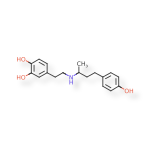
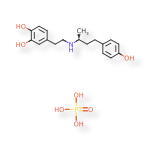
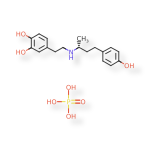
| Stereochemistry | RACEMIC |
| Molecular Formula | C18H23NO3.H3O4P |
| Molecular Weight | 399.3753 |
| Optical Activity | ( + / - ) |
| Defined Stereocenters | 0 / 1 |
| E/Z Centers | 0 |
| Charge | 0 |
SHOW SMILES / InChI
SMILES
OP(O)(O)=O.CC(CCC1=CC=C(O)C=C1)NCCC2=CC(O)=C(O)C=C2
InChI
InChIKey=JJDDIKDNBCHINM-UHFFFAOYSA-N
InChI=1S/C18H23NO3.H3O4P/c1-13(2-3-14-4-7-16(20)8-5-14)19-11-10-15-6-9-17(21)18(22)12-15;1-5(2,3)4/h4-9,12-13,19-22H,2-3,10-11H2,1H3;(H3,1,2,3,4)
| Molecular Formula | C18H23NO3 |
| Molecular Weight | 301.3801 |
| Charge | 0 |
| Count |
|
| Stereochemistry | RACEMIC |
| Additional Stereochemistry | No |
| Defined Stereocenters | 0 / 1 |
| E/Z Centers | 0 |
| Optical Activity | ( + / - ) |
| Molecular Formula | H3O4P |
| Molecular Weight | 97.9952 |
| Charge | 0 |
| Count |
|
| Stereochemistry | ACHIRAL |
| Additional Stereochemistry | No |
| Defined Stereocenters | 0 / 0 |
| E/Z Centers | 0 |
| Optical Activity | NONE |
Dobutamine is a sympathomimetic drug used in the treatment of heart failure and cardiogenic shock. Dobutamine hydrochloride is a direct-acting inotropic agent whose primary activity results from stimulation of the ß-receptors of the heart while producing comparatively mild chronotropic, hypertensive, arrhythmogenic, and vasodilative effects. It does not
cause the release of endogenous norepinephrine, as does dopamine. Dobutamine directly stimulates beta-1 receptors of the heart to increase myocardial contractility and stroke volume, resulting in increased cardiac output. Dobutamine Injection, USP is indicated when parenteral therapy is necessary for inotropic support in the short-term treatment of adults with cardiac decompensation due to depressed contractility resulting either from organic heart disease or from cardiac surgical procedures.
Originator
Sources: http://www.drugsupdate.com/generic/view/814/Dobutamine | https://www.ncbi.nlm.nih.gov/pubmed/234805
Curator's Comment: Dobutamine was developed in the 1970s by Drs. Ronald Tuttle and Jack Mills at Eli Lilly and Company, as a structural analogue of isoprenaline.
Approval Year
Targets
| Primary Target | Pharmacology | Condition | Potency |
|---|---|---|---|
| 3.2 µM [Ki] | |||
| 1.4 µM [Ki] |
Conditions
| Condition | Modality | Targets | Highest Phase | Product |
|---|---|---|---|---|
| Primary | Dobutamine hydrochloride Approved UseDobutamine in 5% Dextrose Injection is indicated when parenteral therapy is necessary for inotropic support in the short-term treatment of patients with cardiac decompensation due to depressed contractility resulting either from organic heart disease or from cardiac surgical procedures. Experience with intravenous dobutamine in controlled trials does not extend beyond 48 hours of repeated boluses and/or continuous infusions. Whether given orally, continuously intravenously, or intermittently intravenously, neither dobutamine nor any other cyclic-AMP-dependent inotrope has been shown in controlled trials to be safe or effective in the long-term treatment of congestive heart failure. In controlled trials of chronic oral therapy with various such agents, symptoms were not consistently alleviated, and the cyclic-AMP-dependent inotropes were consistently associated with increased risks of hospitalization and death. Patients with NYHA Class IV symptoms appeared to be at particular risk. Launch Date1978 |
AUC
| Value | Dose | Co-administered | Analyte | Population |
|---|---|---|---|---|
14 ng × h/mL EXPERIMENT https://pubmed.ncbi.nlm.nih.gov/699477/ |
2.5 μg/kg/min other, intravenous dose: 2.5 μg/kg/min route of administration: Intravenous experiment type: OTHER co-administered: |
DOBUTAMINE plasma | Homo sapiens population: UNHEALTHY age: ADOLESCENT sex: FEMALE / MALE food status: UNKNOWN |
T1/2
| Value | Dose | Co-administered | Analyte | Population |
|---|---|---|---|---|
2.37 min EXPERIMENT https://pubmed.ncbi.nlm.nih.gov/699477/ |
2.5 μg/kg/min other, intravenous dose: 2.5 μg/kg/min route of administration: Intravenous experiment type: OTHER co-administered: |
DOBUTAMINE plasma | Homo sapiens population: UNHEALTHY age: ADOLESCENT sex: FEMALE / MALE food status: UNKNOWN |
Doses
| Dose | Population | Adverse events |
|---|---|---|
40 ug/kg/min multiple, intravenous Highest studied dose Dose: 40 ug/kg/min Route: intravenous Route: multiple Dose: 40 ug/kg/min Sources: |
unhealthy, 43 years (ranhe: 20-72 years) Health Status: unhealthy Age Group: 43 years (ranhe: 20-72 years) Sources: |
Other AEs: Adverse event... |
30 ug/kg/min multiple, intravenous Dose: 30 ug/kg/min Route: intravenous Route: multiple Dose: 30 ug/kg/min Sources: |
unhealthy, 43 years (ranhe: 20-72 years) Health Status: unhealthy Age Group: 43 years (ranhe: 20-72 years) Sources: |
Disc. AE: Angina, Arrhythmia... AEs leading to discontinuation/dose reduction: Angina (5 patients) Sources: Arrhythmia (5 patients) Hypertension (severe, 5 patients) |
2 ug/kg/min multiple, intravenous Dose: 2 ug/kg/min Route: intravenous Route: multiple Dose: 2 ug/kg/min Sources: |
unhealthy, 46 years |
Disc. AE: Eosinophilia... AEs leading to discontinuation/dose reduction: Eosinophilia (1 patient) Sources: |
AEs
| AE | Significance | Dose | Population |
|---|---|---|---|
| Adverse event | 40 ug/kg/min multiple, intravenous Highest studied dose Dose: 40 ug/kg/min Route: intravenous Route: multiple Dose: 40 ug/kg/min Sources: |
unhealthy, 43 years (ranhe: 20-72 years) Health Status: unhealthy Age Group: 43 years (ranhe: 20-72 years) Sources: |
|
| Angina | 5 patients Disc. AE |
30 ug/kg/min multiple, intravenous Dose: 30 ug/kg/min Route: intravenous Route: multiple Dose: 30 ug/kg/min Sources: |
unhealthy, 43 years (ranhe: 20-72 years) Health Status: unhealthy Age Group: 43 years (ranhe: 20-72 years) Sources: |
| Arrhythmia | 5 patients Disc. AE |
30 ug/kg/min multiple, intravenous Dose: 30 ug/kg/min Route: intravenous Route: multiple Dose: 30 ug/kg/min Sources: |
unhealthy, 43 years (ranhe: 20-72 years) Health Status: unhealthy Age Group: 43 years (ranhe: 20-72 years) Sources: |
| Hypertension | severe, 5 patients Disc. AE |
30 ug/kg/min multiple, intravenous Dose: 30 ug/kg/min Route: intravenous Route: multiple Dose: 30 ug/kg/min Sources: |
unhealthy, 43 years (ranhe: 20-72 years) Health Status: unhealthy Age Group: 43 years (ranhe: 20-72 years) Sources: |
| Eosinophilia | 1 patient Disc. AE |
2 ug/kg/min multiple, intravenous Dose: 2 ug/kg/min Route: intravenous Route: multiple Dose: 2 ug/kg/min Sources: |
unhealthy, 46 years |
PubMed
| Title | Date | PubMed |
|---|---|---|
| Atrial fibrillation in dobutamine stress echocardiography. | 2006-07-28 |
|
| Beneficial effects of high doses of growth hormone in the introduction and optimization of medical treatment in decompensated congestive heart failure. | 2006-06-28 |
|
| Adenoviral gene transfer of Akt enhances myocardial contractility and intracellular calcium handling. | 2006-01 |
|
| Myocardial stiffness, cardiac remodeling, and diastolic dysfunction in calcification-prone fetuin-A-deficient mice. | 2005-11 |
|
| Treatment of cardiogenic shock with levosimendan in combination with beta-adrenergic antagonists. | 2005-11 |
|
| A Dobutamine paradox: eosinophilic myocarditis in the explanted heart of a 9-year-old girl undergoing cardiac transplantation. | 2005-10 |
|
| Polymorphism of the AHSG gene is associated with increased adipocyte beta2-adrenoceptor function. | 2005-10 |
|
| Clinical and prognostic implications of angina pectoris developing during dobutamine stress echocardiography in the absence of inducible wall motion abnormalities. | 2005-09-15 |
|
| Sustained ventricular tachycardia induced by dobutamine stress echocardiography: a prospective study. | 2005-09 |
|
| Upstream transcription factor-1 gene polymorphism is associated with increased adipocyte lipolysis. | 2005-09 |
|
| Detrimental effects after dobutamine infusion on rat left ventricular function: mechanical work and energetics. | 2005-07 |
|
| [Levosimendan, a revolution in the world of inotropic agents?]. | 2005-05-25 |
|
| Dobutamine-induced bradycardia in a dog. | 2005-03 |
|
| Dobutamine induced severe midventricular obstruction and mitral regurgitation in left ventricular apical ballooning syndrome. | 2005-03 |
|
| The Arg389Gly beta1-adrenoceptor gene polymorphism determines contractile response to catecholamines. | 2004-11 |
|
| Dobutamine inhibits phorbol-myristate-acetate-induced activation of nuclear factor-kappaB in human T lymphocytes in vitro. | 2004-11 |
|
| Dobutamine stress MRI. Part I. Safety and feasibility of dobutamine cardiovascular magnetic resonance in patients suspected of myocardial ischemia. | 2004-10 |
|
| Overexpression of the catalytic subunit of protein phosphatase 2A impairs cardiac function. | 2004-09-24 |
|
| Protein kinase Cepsilon overexpression alters myofilament properties and composition during the progression of heart failure. | 2004-08-20 |
|
| Myocardial ischemia and induction of sustained ventricular tachyarrhythmias: evaluation using dobutamine stress echocardiography-electrophysiologic testing. | 2004-08 |
|
| Hypersensitivity myocarditis complicating hypertrophic cardiomyopathy heart. | 2004-07 |
|
| Prognostic value of dobutamine stress echocardiography in patients with normal left ventricular systolic function. | 2004-07 |
|
| Dobutamine-induced myoclonia in severe renal failure. | 2004-05 |
|
| Synergistic contributions of the functional groups of epinephrine to its affinity and efficacy at the beta2 adrenergic receptor. | 2004-05 |
|
| Heme oxygenase-1 gene expression in pericentral hepatocytes through beta1-adrenoceptor stimulation. | 2004-04 |
|
| Eosinophilic myocarditis in patients awaiting heart transplantation. | 2004-03 |
|
| Chronic beta-adrenoreceptor stimulation in vivo decreased Bcl-2 and increased Bax expression but did not activate apoptotic pathways in mouse heart. | 2004-03 |
|
| Chronic phospholamban inhibition prevents progressive cardiac dysfunction and pathological remodeling after infarction in rats. | 2004-03 |
|
| Effects of growth hormone on the function of beta-adrenoceptor subtypes in rat adipocytes. | 2004-02 |
|
| Dobutamine-induced ST-segment elevation associated with a biphasic response of wall motion in patients with a recent myocardial infarction is caused by myocardial ischaemia and is abolished by revascularization of the infarct-related artery. | 2003-12 |
|
| Gene therapy in cardiac surgery: intramyocardial injection of naked plasmid DNA for chronic myocardial ischemia. | 2003-11 |
|
| Beta 1-adrenergic receptor polymorphisms confer differential function and predisposition to heart failure. | 2003-10 |
|
| Electrical storm: case series and review of management. | 2003-09 |
|
| Dobutamine modulates lipopolysaccharide-induced macrophage inflammatory protein-1alpha and interleukin-8 production in human monocytes. | 2003-07 |
|
| Dobutamine inhibits monocyte chemoattractant protein-1 production and chemotaxis in human monocytes. | 2003-07 |
|
| [Left ventricular hypertrophy: a marker for patients at risk of arterial hypotension during stress echocardiography with dobutamine?]. | 2003-06 |
|
| Levosimendan: a new dual-action drug in the treatment of acute heart failure. | 2003-06 |
|
| Expression of glycerokinase in brown adipose tissue is stimulated by the sympathetic nervous system. | 2003-06 |
|
| Levosimendan in patients with low-output heart failure: lessons from the LIDO trial. | 2003-05 |
|
| Sensitive method of detecting myocardial ischemia during dobutamine stress echocardiography. | 2003-04 |
|
| Comparison of late outcome in patients with versus without angina pectoris having reversible perfusion abnormalities during dobutamine stress technetium-99m sestamibi single-photon emission computed tomography. | 2003-02-01 |
|
| Dopamine stabilizes milrinone-induced changes in heart rate and arterial pressure during anaesthesia with isoflurane. | 2003-02 |
|
| Catecholamine-induced T-wave lability in congenital long QT syndrome: a novel phenomenon associated with syncope and cardiac arrest. | 2003-01 |
|
| [Safety of stress echocardiography with dobutamine used in patients with aortic stenosis and left ventricular dysfunction]. | 2002 |
|
| The relationship between modified pulse wave transit time and cardiovascular changes in isoflurane anesthetized dogs. | 1999-12 |
|
| Cimetidine-dobutamine interaction? | 1992-11 |
|
| Long-term dobutamine therapy for refractory congestive heart failure. | 1992-07 |
|
| Clinical significance of abrupt vasodepression during dobutamine stress echocardiography. | 1992-06-01 |
|
| Modulation of inotropic therapy by venodilation in acute heart failure: a randomised comparison of four inotropic agents, alone and combined with isosorbide dinitrate. | 1992-01 |
|
| Influence of dobutamine on regional myocardial blood flow and ventricular performance during acute and chronic myocardial ischemia in dogs. | 1976-05 |
Patents
Sample Use Guides
Usual Adult Dose for Congestive Heart Failure
Initial dose: 0.5 to 1 mcg/kg/min IV infusion
Maintenance dose: 2 to 20 mcg/kg/min IV infusion
Maximum dose: 40 mcg/kg/min IV infusion
Route of Administration:
Intravenous
| Substance Class |
Chemical
Created
by
admin
on
Edited
Mon Mar 31 23:42:19 GMT 2025
by
admin
on
Mon Mar 31 23:42:19 GMT 2025
|
| Record UNII |
8YJK630WIW
|
| Record Status |
Validated (UNII)
|
| Record Version |
|
-
Download
| Name | Type | Language | ||
|---|---|---|---|---|
|
Preferred Name | English | ||
|
Common Name | English | ||
|
Systematic Name | English |
| Code System | Code | Type | Description | ||
|---|---|---|---|---|---|
|
120885-52-1
Created by
admin on Mon Mar 31 23:42:19 GMT 2025 , Edited by admin on Mon Mar 31 23:42:19 GMT 2025
|
PRIMARY | |||
|
8YJK630WIW
Created by
admin on Mon Mar 31 23:42:19 GMT 2025 , Edited by admin on Mon Mar 31 23:42:19 GMT 2025
|
PRIMARY | |||
|
22366973
Created by
admin on Mon Mar 31 23:42:19 GMT 2025 , Edited by admin on Mon Mar 31 23:42:19 GMT 2025
|
PRIMARY | |||
|
120885-55-4
Created by
admin on Mon Mar 31 23:42:19 GMT 2025 , Edited by admin on Mon Mar 31 23:42:19 GMT 2025
|
SUPERSEDED |
| Related Record | Type | Details | ||
|---|---|---|---|---|
|
|
PARENT -> SALT/SOLVATE | |||
|
|
ENANTIOMER -> RACEMATE | |||
|
|
ENANTIOMER -> RACEMATE |