


Details
| Stereochemistry | ACHIRAL |
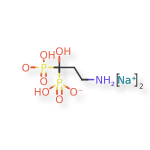
| Molecular Formula | C3H9NO7P2.2Na.5H2O |
| Molecular Weight | 369.1095 |
| Optical Activity | NONE |
| Defined Stereocenters | 0 / 0 |
| E/Z Centers | 0 |
| Charge | 0 |
SHOW SMILES / InChI
SMILES
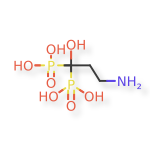
O.O.O.O.O.[Na+].[Na+].NCCC(O)(P(O)([O-])=O)P(O)([O-])=O
InChI
InChIKey=CZYWHNTUXNGDGR-UHFFFAOYSA-L
InChI=1S/C3H11NO7P2.2Na.5H2O/c4-2-1-3(5,12(6,7)8)13(9,10)11;;;;;;;/h5H,1-2,4H2,(H2,6,7,8)(H2,9,10,11);;;5*1H2/q;2*+1;;;;;/p-2
| Molecular Formula | Na |
| Molecular Weight | 22.98976928 |
| Charge | 1 |
| Count |
|
| Stereochemistry | ACHIRAL |
| Additional Stereochemistry | No |
| Defined Stereocenters | 0 / 0 |
| E/Z Centers | 0 |
| Optical Activity | NONE |
| Molecular Formula | H2O |
| Molecular Weight | 18.0153 |
| Charge | 0 |
| Count |
|
| Stereochemistry | ACHIRAL |
| Additional Stereochemistry | No |
| Defined Stereocenters | 0 / 0 |
| E/Z Centers | 0 |
| Optical Activity | NONE |
| Molecular Formula | C3H11NO7P2 |
| Molecular Weight | 235.0695 |
| Charge | 0 |
| Count |
|
| Stereochemistry | ACHIRAL |
| Additional Stereochemistry | No |
| Defined Stereocenters | 0 / 0 |
| E/Z Centers | 0 |
| Optical Activity | NONE |
Pamidronic acid (Pamidronate Disodium) is a bone resorption inhibitor. The principal pharmacologic action of pamidronate disodium is inhibition of bone resorption. Although the mechanism of
antiresorptive action is not completely understood, several factors are thought to contribute to this action. Pamidronate disodium
adsorbs to calcium phosphate (hydroxyapatite) crystals in bone and may directly block dissolution of this mineral component of bone.
In vitro studies also suggest that inhibition of osteoclast activity contributes to inhibition of bone resorption. In animal studies, at doses
recommended for the treatment of hypercalcemia, pamidronate disodium inhibits bone resorption apparently without inhibiting bone
formation and mineralization. Of relevance to the treatment of hypercalcemia of malignancy is the finding that pamidronate disodium
inhibits the accelerated bone resorption that results from osteoclast hyperactivity induced by various tumors in animal studies. Pamidronate disodium, in conjunction with adequate hydration, is indicated for the treatment of moderate or severe hypercalcemia
associated with malignancy, with or without bone metastases. Pamidronate disodium is indicated for the treatment of patients with moderate to severe Paget’s disease of bone. Pamidronate disodium is indicated, in conjunction with standard antineoplastic therapy, for the treatment of osteolytic bone metastases
of breast cancer and osteolytic lesions of multiple myeloma.
Originator
Approval Year
Targets
| Primary Target | Pharmacology | Condition | Potency |
|---|---|---|---|
| 55.9 nM [Ki] |
Conditions
| Condition | Modality | Targets | Highest Phase | Product |
|---|---|---|---|---|
| Primary | PAMIDRONATE DISODIUM Approved UseHypercalcemia of Malignancy
Pamidronate disodium, in conjunction with adequate hydration, is indicated for the treatment of moderate or severe hypercalcemia
associated with malignancy, with or without bone metastases. Patients who have either epidermoid or non-epidermoid tumors respond
to treatment with pamidronate disodium. Vigorous saline hydration, an integral part of hypercalcemia therapy, should be initiated
promptly and an attempt should be made to restore the urine output to about 2 L/day throughout treatment. Mild or asymptomatic
hypercalcemia may be treated with conservative measures (i.e., saline hydration, with or without loop diuretics). Patients should
be hydrated adequately throughout the treatment, but overhydration, especially in those patients who have cardiac failure, must
be avoided. Diuretic therapy should not be employed prior to correction of hypovolemia. The safety and efficacy of pamidronate
disodium in the treatment of hypercalcemia associated with hyperparathyroidism or with other non-tumor-related conditions has not
been established.
Paget’s Disease
Pamidronate disodium is indicated for the treatment of patients with moderate to severe Paget’s disease of bone. The effectiveness
of pamidronate disodium was demonstrated primarily in patients with serum alkaline phosphatase ≥3 times the upper limit of normal.
Pamidronate disodium therapy in patients with Paget’s disease has been effective in reducing serum alkaline phosphatase and urinary
hydroxyproline levels by ≥50% in at least 50% of patients, and by ≥30% in at least 80% of patients. Pamidronate disodium therapy
has also been effective in reducing these biochemical markers in patients with Paget’s disease who failed to respond, or no longer
responded to other treatments.
Osteolytic Bone Metastases of Breast Cancer and Osteolytic Lesions of Multiple Myeloma
Pamidronate disodium is indicated, in conjunction with standard antineoplastic therapy, for the treatment of osteolytic bone metastases
of breast cancer and osteolytic lesions of multiple myeloma. The pamidronate disodium treatment effect appeared to be smaller in
the study of breast cancer patients receiving hormonal therapy than in the study of those receiving chemotherapy, however, overall
evidence of clinical benefit has been demonstrated. Launch Date1991 |
|||
| Primary | PAMIDRONATE DISODIUM Approved UseHypercalcemia of Malignancy
Pamidronate disodium, in conjunction with adequate hydration, is indicated for the treatment of moderate or severe hypercalcemia
associated with malignancy, with or without bone metastases. Patients who have either epidermoid or non-epidermoid tumors respond
to treatment with pamidronate disodium. Vigorous saline hydration, an integral part of hypercalcemia therapy, should be initiated
promptly and an attempt should be made to restore the urine output to about 2 L/day throughout treatment. Mild or asymptomatic
hypercalcemia may be treated with conservative measures (i.e., saline hydration, with or without loop diuretics). Patients should
be hydrated adequately throughout the treatment, but overhydration, especially in those patients who have cardiac failure, must
be avoided. Diuretic therapy should not be employed prior to correction of hypovolemia. The safety and efficacy of pamidronate
disodium in the treatment of hypercalcemia associated with hyperparathyroidism or with other non-tumor-related conditions has not
been established.
Paget’s Disease
Pamidronate disodium is indicated for the treatment of patients with moderate to severe Paget’s disease of bone. The effectiveness
of pamidronate disodium was demonstrated primarily in patients with serum alkaline phosphatase ≥3 times the upper limit of normal.
Pamidronate disodium therapy in patients with Paget’s disease has been effective in reducing serum alkaline phosphatase and urinary
hydroxyproline levels by ≥50% in at least 50% of patients, and by ≥30% in at least 80% of patients. Pamidronate disodium therapy
has also been effective in reducing these biochemical markers in patients with Paget’s disease who failed to respond, or no longer
responded to other treatments.
Osteolytic Bone Metastases of Breast Cancer and Osteolytic Lesions of Multiple Myeloma
Pamidronate disodium is indicated, in conjunction with standard antineoplastic therapy, for the treatment of osteolytic bone metastases
of breast cancer and osteolytic lesions of multiple myeloma. The pamidronate disodium treatment effect appeared to be smaller in
the study of breast cancer patients receiving hormonal therapy than in the study of those receiving chemotherapy, however, overall
evidence of clinical benefit has been demonstrated. Launch Date1991 |
|||
| Primary | PAMIDRONATE DISODIUM Approved UseHypercalcemia of Malignancy
Pamidronate disodium, in conjunction with adequate hydration, is indicated for the treatment of moderate or severe hypercalcemia
associated with malignancy, with or without bone metastases. Patients who have either epidermoid or non-epidermoid tumors respond
to treatment with pamidronate disodium. Vigorous saline hydration, an integral part of hypercalcemia therapy, should be initiated
promptly and an attempt should be made to restore the urine output to about 2 L/day throughout treatment. Mild or asymptomatic
hypercalcemia may be treated with conservative measures (i.e., saline hydration, with or without loop diuretics). Patients should
be hydrated adequately throughout the treatment, but overhydration, especially in those patients who have cardiac failure, must
be avoided. Diuretic therapy should not be employed prior to correction of hypovolemia. The safety and efficacy of pamidronate
disodium in the treatment of hypercalcemia associated with hyperparathyroidism or with other non-tumor-related conditions has not
been established.
Paget’s Disease
Pamidronate disodium is indicated for the treatment of patients with moderate to severe Paget’s disease of bone. The effectiveness
of pamidronate disodium was demonstrated primarily in patients with serum alkaline phosphatase ≥3 times the upper limit of normal.
Pamidronate disodium therapy in patients with Paget’s disease has been effective in reducing serum alkaline phosphatase and urinary
hydroxyproline levels by ≥50% in at least 50% of patients, and by ≥30% in at least 80% of patients. Pamidronate disodium therapy
has also been effective in reducing these biochemical markers in patients with Paget’s disease who failed to respond, or no longer
responded to other treatments.
Osteolytic Bone Metastases of Breast Cancer and Osteolytic Lesions of Multiple Myeloma
Pamidronate disodium is indicated, in conjunction with standard antineoplastic therapy, for the treatment of osteolytic bone metastases
of breast cancer and osteolytic lesions of multiple myeloma. The pamidronate disodium treatment effect appeared to be smaller in
the study of breast cancer patients receiving hormonal therapy than in the study of those receiving chemotherapy, however, overall
evidence of clinical benefit has been demonstrated. Launch Date1991 |
Cmax
| Value | Dose | Co-administered | Analyte | Population |
|---|---|---|---|---|
1.92 μg/mL EXPERIMENT https://pubmed.ncbi.nlm.nih.gov/9115053/ |
90 mg single, intravenous dose: 90 mg route of administration: Intravenous experiment type: SINGLE co-administered: |
PAMIDRONATE DISODIUM plasma | Homo sapiens population: UNHEALTHY age: ADULT sex: UNKNOWN food status: UNKNOWN |
|
0.73 μg/mL |
30 mg single, intravenous dose: 30 mg route of administration: Intravenous experiment type: SINGLE co-administered: |
PAMIDRONATE DISODIUM plasma | Homo sapiens population: UNHEALTHY age: ADULT sex: FEMALE / MALE food status: UNKNOWN |
|
1.44 μg/mL |
60 mg single, intravenous dose: 60 mg route of administration: Intravenous experiment type: SINGLE co-administered: |
PAMIDRONATE DISODIUM plasma | Homo sapiens population: UNHEALTHY age: ADULT sex: FEMALE / MALE food status: UNKNOWN |
|
2.61 μg/mL |
90 mg single, intravenous dose: 90 mg route of administration: Intravenous experiment type: SINGLE co-administered: |
PAMIDRONATE DISODIUM plasma | Homo sapiens population: UNHEALTHY age: ADULT sex: FEMALE / MALE food status: UNKNOWN |
AUC
| Value | Dose | Co-administered | Analyte | Population |
|---|---|---|---|---|
10.2 μg × h/mL EXPERIMENT https://pubmed.ncbi.nlm.nih.gov/9115053/ |
90 mg single, intravenous dose: 90 mg route of administration: Intravenous experiment type: SINGLE co-administered: |
PAMIDRONATE DISODIUM plasma | Homo sapiens population: UNHEALTHY age: ADULT sex: UNKNOWN food status: UNKNOWN |
T1/2
| Value | Dose | Co-administered | Analyte | Population |
|---|---|---|---|---|
28 h |
30 mg single, intravenous dose: 30 mg route of administration: Intravenous experiment type: SINGLE co-administered: |
PAMIDRONATE DISODIUM plasma | Homo sapiens population: UNHEALTHY age: ADULT sex: FEMALE / MALE food status: UNKNOWN |
|
28 h |
60 mg single, intravenous dose: 60 mg route of administration: Intravenous experiment type: SINGLE co-administered: |
PAMIDRONATE DISODIUM plasma | Homo sapiens population: UNHEALTHY age: ADULT sex: FEMALE / MALE food status: UNKNOWN |
|
28 h |
90 mg single, intravenous dose: 90 mg route of administration: Intravenous experiment type: SINGLE co-administered: |
PAMIDRONATE DISODIUM plasma | Homo sapiens population: UNHEALTHY age: ADULT sex: FEMALE / MALE food status: UNKNOWN |
Doses
| Dose | Population | Adverse events |
|---|---|---|
5.6 mg/kg 3 times / day multiple, oral Highest studied dose Dose: 5.6 mg/kg, 3 times / day Route: oral Route: multiple Dose: 5.6 mg/kg, 3 times / day Sources: |
unhealthy, adult Health Status: unhealthy Age Group: adult Sex: M+F Sources: |
Disc. AE: Diarrhea... AEs leading to discontinuation/dose reduction: Diarrhea Sources: |
120 mg/kg 1 times / day multiple, intravenous Overdose Dose: 120 mg/kg, 1 times / day Route: intravenous Route: multiple Dose: 120 mg/kg, 1 times / day Sources: |
unhealthy, adult Health Status: unhealthy Age Group: adult Sources: |
Disc. AE: Hypocalcemia... AEs leading to discontinuation/dose reduction: Hypocalcemia Sources: |
285 mg/kg 1 times / day multiple, intravenous Overdose Dose: 285 mg/kg, 1 times / day Route: intravenous Route: multiple Dose: 285 mg/kg, 1 times / day Sources: |
unhealthy, adult Health Status: unhealthy Age Group: adult Sex: F Sources: |
Disc. AE: Fever, Hypotension... AEs leading to discontinuation/dose reduction: Fever Sources: Hypotension Taste perversion |
90 mg/kg 1 times / day single, intravenous Recommended Dose: 90 mg/kg, 1 times / day Route: intravenous Route: single Dose: 90 mg/kg, 1 times / day Sources: |
unhealthy, adult Health Status: unhealthy Age Group: adult Sex: M+F Sources: |
Disc. AE: Interstitial pneumonitis, Hypocalcemia... AEs leading to discontinuation/dose reduction: Interstitial pneumonitis Sources: Hypocalcemia Bone pain |
AEs
| AE | Significance | Dose | Population |
|---|---|---|---|
| Diarrhea | Disc. AE | 5.6 mg/kg 3 times / day multiple, oral Highest studied dose Dose: 5.6 mg/kg, 3 times / day Route: oral Route: multiple Dose: 5.6 mg/kg, 3 times / day Sources: |
unhealthy, adult Health Status: unhealthy Age Group: adult Sex: M+F Sources: |
| Hypocalcemia | Disc. AE | 120 mg/kg 1 times / day multiple, intravenous Overdose Dose: 120 mg/kg, 1 times / day Route: intravenous Route: multiple Dose: 120 mg/kg, 1 times / day Sources: |
unhealthy, adult Health Status: unhealthy Age Group: adult Sources: |
| Fever | Disc. AE | 285 mg/kg 1 times / day multiple, intravenous Overdose Dose: 285 mg/kg, 1 times / day Route: intravenous Route: multiple Dose: 285 mg/kg, 1 times / day Sources: |
unhealthy, adult Health Status: unhealthy Age Group: adult Sex: F Sources: |
| Hypotension | Disc. AE | 285 mg/kg 1 times / day multiple, intravenous Overdose Dose: 285 mg/kg, 1 times / day Route: intravenous Route: multiple Dose: 285 mg/kg, 1 times / day Sources: |
unhealthy, adult Health Status: unhealthy Age Group: adult Sex: F Sources: |
| Taste perversion | Disc. AE | 285 mg/kg 1 times / day multiple, intravenous Overdose Dose: 285 mg/kg, 1 times / day Route: intravenous Route: multiple Dose: 285 mg/kg, 1 times / day Sources: |
unhealthy, adult Health Status: unhealthy Age Group: adult Sex: F Sources: |
| Bone pain | Disc. AE | 90 mg/kg 1 times / day single, intravenous Recommended Dose: 90 mg/kg, 1 times / day Route: intravenous Route: single Dose: 90 mg/kg, 1 times / day Sources: |
unhealthy, adult Health Status: unhealthy Age Group: adult Sex: M+F Sources: |
| Hypocalcemia | Disc. AE | 90 mg/kg 1 times / day single, intravenous Recommended Dose: 90 mg/kg, 1 times / day Route: intravenous Route: single Dose: 90 mg/kg, 1 times / day Sources: |
unhealthy, adult Health Status: unhealthy Age Group: adult Sex: M+F Sources: |
| Interstitial pneumonitis | Disc. AE | 90 mg/kg 1 times / day single, intravenous Recommended Dose: 90 mg/kg, 1 times / day Route: intravenous Route: single Dose: 90 mg/kg, 1 times / day Sources: |
unhealthy, adult Health Status: unhealthy Age Group: adult Sex: M+F Sources: |
PubMed
| Title | Date | PubMed |
|---|---|---|
| Pamidronate-related nephrotoxicity (tubulointerstitial nephritis) in a patient with osteolytic bone metastases. | 2001-12 |
|
| Zoledronic acid versus pamidronate in the treatment of skeletal metastases in patients with breast cancer or osteolytic lesions of multiple myeloma: a phase III, double-blind, comparative trial. | 2001-11-06 |
|
| Targeting of tumor cells for human gammadelta T cells by nonpeptide antigens. | 2001-11-01 |
|
| [Two cases of effective weekly paclitaxel administration for metastatic breast cancer]. | 2001-11 |
|
| Bisphosphonates in the treatment of Charcot neuroarthropathy: a double-blind randomised controlled trial. | 2001-11 |
|
| Extracellular signal-regulated kinases and calcium channels are involved in the proliferative effect of bisphosphonates on osteoblastic cells in vitro. | 2001-11 |
|
| Antibacterial effect of human V gamma 2V delta 2 T cells in vivo. | 2001-11 |
|
| Prevention of bone loss and fracture after lung transplantation: a pilot study. | 2001-10-15 |
|
| Paget's disease of the spine and its management. | 2001-10 |
|
| A microcosting analysis of zoledronic acid and pamidronate therapy in patients with metastatic bone disease. | 2001-10 |
|
| Nitrogen-containing bisphosphonates induce apoptosis of Caco-2 cells in vitro by inhibiting the mevalonate pathway: a model of bisphosphonate-induced gastrointestinal toxicity. | 2001-10 |
|
| Pamidronate-induced remission of pain associated with hypertrophic pulmonary osteoarthropathy in chemoendocrine therapy-refractory inoperable metastatic breast carcinoma. | 2001-10 |
|
| The use of a whole body index with bone scintigraphy to monitor the response to therapy in Paget's disease. | 2001-10 |
|
| Trastuzumab and breast cancer. | 2001-09-27 |
|
| Bone loss accompanying medical therapies. | 2001-09-27 |
|
| Pamidronate to prevent bone loss during androgen-deprivation therapy for prostate cancer. | 2001-09-27 |
|
| Bisphosphonates are potent inhibitors of Trypanosoma cruzi farnesyl pyrophosphate synthase. | 2001-09-07 |
|
| Vgamma2Vdelta2 T-cell receptor-mediated recognition of aminobisphosphonates. | 2001-09-01 |
|
| Hypercalcemia in patients with oral squamous cell carcinoma. | 2001-09 |
|
| Intravenous pamidronate reduces osteoporosis and improves formation of the regenerate during distraction osteogenesis. A study in immature rabbits. | 2001-09 |
|
| Bisphosphonates and nephrocalcinosis in a rabbit leg lengthening model: a histological and therapeutic comparison. | 2001-09 |
|
| Bisphosphonates for osteoporosis. | 2001-09 |
|
| Isoprenoid biosynthesis. Metabolite profiling of peppermint oil gland secretory cells and application to herbicide target analysis. | 2001-09 |
|
| Bisphosphonate therapy for Paget's disease in a patient with hypoparathyroidism: profound hypocalcemia, rapid response, and prolonged remission. | 2001-09 |
|
| Severe osteopenia in a young boy with Kostmann's congenital neutropenia treated with granulocyte colony-stimulating factor: suggested therapeutic approach. | 2001-09 |
|
| Adjuvant bisphosphonate therapy: the future. | 2001-08 |
|
| Dosing regimens and main adverse events of bisphosphonates. | 2001-08 |
|
| Analysis of skeletal-related events in breast cancer and response to therapy. | 2001-08 |
|
| Effects of a bisphosphonate on the expression of bone specific genes after autogenous free bone grafting in rats. | 2001-08 |
|
| Idiopathic orbital inflammation following intravenous pamidronate. | 2001-08 |
|
| Pamidronate in incident pain due to bone metastases. | 2001-08 |
|
| Scintigraphic evaluation of pamidronate and corticosteroid therapy in a patient with progressive diaphyseal dysplasia (Camurati-Engelmann disease). | 2001-08 |
|
| Pamidronate for bone pain from osteolytic lesions in Langerhans'-cell histiocytosis. | 2001-07-19 |
|
| Bisphosphonates may be useful in treatment of bone metastases. | 2001-07-18 |
|
| Safety and efficacy of bisphosphonates beyond 24 months in cancer patients. | 2001-07-15 |
|
| Pamidronate decreases tumor-induced osteoclastogenesis in osteopetrotic mice. | 2001-07 |
|
| [Tumor-induced hypercalcemia. Review of bisphosphonate treatment]. | 2001-07 |
|
| Ocular adverse effects of alendronic acid. | 2001-06 |
|
| [Chronic recurrent multifocal osteomyelitis in children: report of 17 cases]. | 2001-06 |
|
| [Analgesic effect of Pamidronate on bone pain in patient with hypertrophic pulmonary osteoarthropathy]. | 2001-06 |
|
| Disease controlling antirheumatic therapy in spondyloarthropathy. | 2001-06 |
|
| Pamidronate increases markers of bone formation in patients with multiple myeloma in plateau phase under interferon-alpha treatment. | 2001-05 |
|
| Bisphosphonates in multiple myeloma. | 2001 |
|
| Bisphosphonates for osteoporosis in people with cystic fibrosis. | 2001 |
|
| Incremental cost analysis of ambulatory clinic and home-based intravenous therapy for patients with multiple myeloma. | 2001 |
|
| [Paget disease or fibrous dysplasia of the radius?--A case report]. | 2001 |
|
| The clinical and cost considerations of bisphosphonates in preventing bone complications in patients with metastatic breast cancer or multiple myeloma. | 2001 |
|
| Bone mineral density response to long-term bisphosphonate therapy in fibrous dysplasia. | 2001 |
|
| [Vertebral osteoporosis induced by corticoids and cyclosporine ina a patient with Still disease]. | 2001 |
|
| Bone loss. Therapeutic approaches for preventing bone loss in inflammatory arthritis. | 2001 |
Patents
Sample Use Guides
Moderate Hypercalcemia
The recommended dose of pamidronate disodium in moderate hypercalcemia (corrected serum calcium* of approximately
12 to 13.5 mg/dL) is 60 to 90 mg given as a SINGLE-DOSE, intravenous infusion over 2 to 24 hours. Longer infusions (i.e., >2
hours) may reduce the risk for renal toxicity, particularly in patients with preexisting renal insufficiency.
Severe Hypercalcemia
The recommended dose of pamidronate disodium in severe hypercalcemia (corrected serum calcium* >13.5 mg/dL) is 90 mg
given as a SINGLE-DOSE, intravenous infusion over 2 to 24 hours. Longer infusions (i.e., >2 hours) may reduce the risk for
renal toxicity, particularly in patients with preexisting renal insufficiency.
Route of Administration:
Intravenous
In Vitro Use Guide
Curator's Comment: Bone marrow stromal cells were isolated from the marrow aspirates obtained from the
long/iliac bones, and cultured in medium supplemented with 1 ng/ml bFGF.
BMSCs proliferation was significantly inhibited with 10(−4) M Pamidronic acid (pamidronate)
after 72h and 168h, and with 6 × 10(−5) M pamidronate after 168h. Alveolar osteoblasts cultured in osteogenic medium exhibited significantly lower alkaline phosphatase (AP) activities with 6 × 10(−5) M and 10(−4) M pamidronate (39% and 16%
of the unsupplemented group) as compared to all lower concentration groups after 168h.
| Substance Class |
Chemical
Created
by
admin
on
Edited
Mon Mar 31 17:50:45 GMT 2025
by
admin
on
Mon Mar 31 17:50:45 GMT 2025
|
| Record UNII |
8742T8ZQZA
|
| Record Status |
Validated (UNII)
|
| Record Version |
|
-
Download
| Name | Type | Language | ||
|---|---|---|---|---|
|
Official Name | English | ||
|
Preferred Name | English | ||
|
Common Name | English | ||
|
Systematic Name | English | ||
|
Code | English | ||
|
Common Name | English | ||
|
Common Name | English | ||
|
Common Name | English | ||
|
Common Name | English | ||
|
Common Name | English | ||
|
Common Name | English | ||
|
Common Name | English | ||
|
Common Name | English | ||
|
Code | English | ||
|
Common Name | English | ||
|
Common Name | English | ||
|
Common Name | English |
| Classification Tree | Code System | Code | ||
|---|---|---|---|---|
|
NCI_THESAURUS |
C67439
Created by
admin on Mon Mar 31 17:50:45 GMT 2025 , Edited by admin on Mon Mar 31 17:50:45 GMT 2025
|
||
|
NCI_THESAURUS |
C443
Created by
admin on Mon Mar 31 17:50:45 GMT 2025 , Edited by admin on Mon Mar 31 17:50:45 GMT 2025
|
| Code System | Code | Type | Description | ||
|---|---|---|---|---|---|
|
8742T8ZQZA
Created by
admin on Mon Mar 31 17:50:45 GMT 2025 , Edited by admin on Mon Mar 31 17:50:45 GMT 2025
|
PRIMARY | |||
|
CHEMBL834
Created by
admin on Mon Mar 31 17:50:45 GMT 2025 , Edited by admin on Mon Mar 31 17:50:45 GMT 2025
|
PRIMARY | |||
|
C1345
Created by
admin on Mon Mar 31 17:50:45 GMT 2025 , Edited by admin on Mon Mar 31 17:50:45 GMT 2025
|
PRIMARY | |||
|
DBSALT000836
Created by
admin on Mon Mar 31 17:50:45 GMT 2025 , Edited by admin on Mon Mar 31 17:50:45 GMT 2025
|
PRIMARY | |||
|
109552-15-0
Created by
admin on Mon Mar 31 17:50:45 GMT 2025 , Edited by admin on Mon Mar 31 17:50:45 GMT 2025
|
PRIMARY | |||
|
100000153229
Created by
admin on Mon Mar 31 17:50:45 GMT 2025 , Edited by admin on Mon Mar 31 17:50:45 GMT 2025
|
PRIMARY | |||
|
105443
Created by
admin on Mon Mar 31 17:50:45 GMT 2025 , Edited by admin on Mon Mar 31 17:50:45 GMT 2025
|
PRIMARY | RxNorm | ||
|
DTXSID101016128
Created by
admin on Mon Mar 31 17:50:45 GMT 2025 , Edited by admin on Mon Mar 31 17:50:45 GMT 2025
|
PRIMARY | |||
|
SUB03610MIG
Created by
admin on Mon Mar 31 17:50:45 GMT 2025 , Edited by admin on Mon Mar 31 17:50:45 GMT 2025
|
PRIMARY | |||
|
1492801
Created by
admin on Mon Mar 31 17:50:45 GMT 2025 , Edited by admin on Mon Mar 31 17:50:45 GMT 2025
|
PRIMARY | |||
|
Z-77
Created by
admin on Mon Mar 31 17:50:45 GMT 2025 , Edited by admin on Mon Mar 31 17:50:45 GMT 2025
|
PRIMARY | |||
|
SUB127152
Created by
admin on Mon Mar 31 17:50:45 GMT 2025 , Edited by admin on Mon Mar 31 17:50:45 GMT 2025
|
PRIMARY | |||
|
60342
Created by
admin on Mon Mar 31 17:50:45 GMT 2025 , Edited by admin on Mon Mar 31 17:50:45 GMT 2025
|
PRIMARY | |||
|
8742T8ZQZA
Created by
admin on Mon Mar 31 17:50:45 GMT 2025 , Edited by admin on Mon Mar 31 17:50:45 GMT 2025
|
PRIMARY |
| Related Record | Type | Details | ||
|---|---|---|---|---|
|
|
PARENT -> SALT/SOLVATE | |||
|
ANHYDROUS->SOLVATE |
| Related Record | Type | Details | ||
|---|---|---|---|---|
|
IMPURITY -> PARENT |
CHROMATOGRAPHIC PURITY (HPLC/UV)
EP
|
||
|
IMPURITY -> PARENT |
CHROMATOGRAPHIC PURITY (HPLC/UV)
EP
|
||
|
IMPURITY -> PARENT |
CHROMATOGRAPHIC PURITY (HPLC/UV)
EP
|
| Related Record | Type | Details | ||
|---|---|---|---|---|
|
|
ACTIVE MOIETY |