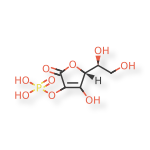
Details
| Stereochemistry | ABSOLUTE |
| Molecular Formula | C6H6O9P.3Na |
| Molecular Weight | 322.0495 |
| Optical Activity | UNSPECIFIED |
| Defined Stereocenters | 2 / 2 |
| E/Z Centers | 0 |
| Charge | 0 |
SHOW SMILES / InChI
SMILES
[Na+].[Na+].[Na+].OC[C@H](O)[C@H]1OC(=O)C(OP([O-])([O-])=O)=C1[O-]
InChI
InChIKey=YRWWOAFMPXPHEJ-OFBPEYICSA-K
InChI=1S/C6H9O9P.3Na/c7-1-2(8)4-3(9)5(6(10)14-4)15-16(11,12)13;;;/h2,4,7-9H,1H2,(H2,11,12,13);;;/q;3*+1/p-3/t2-,4+;;;/m0.../s1
| Molecular Formula | C6H6O9P |
| Molecular Weight | 253.0802 |
| Charge | -3 |
| Count |
|
| Stereochemistry | ABSOLUTE |
| Additional Stereochemistry | No |
| Defined Stereocenters | 2 / 2 |
| E/Z Centers | 0 |
| Optical Activity | UNSPECIFIED |
| Molecular Formula | Na |
| Molecular Weight | 22.98976928 |
| Charge | 1 |
| Count |
|
| Stereochemistry | ACHIRAL |
| Additional Stereochemistry | No |
| Defined Stereocenters | 0 / 0 |
| E/Z Centers | 0 |
| Optical Activity | NONE |
Ascorbic acid (vitamin C) is a water-soluble vitamin. It occurs as a white or slightly yellow crystal or powder with a slight acidic taste. Ascorbic acid is an electron donor, and this property accounts for all its known functions. As an electron donor, ascorbic acid is a potent water-soluble antioxidant in humans. Ascorbic acid acts as an antioxidant under physiologic conditions exhibiting a cross over role as a pro-oxidant in pathological conditions. Oxidized ascorbic acid (dehydroascorbic acid (DHA) directly inhibits IkappaBalpha kinase beta (IKKbeta) and IKKalpha enzymatic activity in vitro, whereas ascorbic acid did not have this effect. These findings define a function for vitamin C in signal transduction other than as an antioxidant and mechanistically illuminate how vitamin C down-modulates NF-kappaB signaling. Vitamin C is recommended for the prevention and treatment of scurvy. Its parenteral administration is desirable for patients with an acute deficiency or for those whose absorption of orally ingested ascorbic acid (vitamin c) is uncertain. Symptoms of mild deficiency may include faulty bone and tooth development, gingivitis, bleeding gums, and loosened teeth. Febrile states, chronic illness, and infection (pneumonia, whooping cough, tuberculosis, diphtheria, sinusitis, rheumatic fever, etc.) increase the need for ascorbic acid (vitamin c). Hemovascular disorders, burns, delayed fracture and wound healing are indications for an increase in the daily intake.
CNS Activity
Curator's Comment: Ascorbic acid readily crosses the blood-brain barrier. Ascorbate (vitamin C) is a vital antioxidant molecule in the brain. Neurodegenerative diseases typically involve high levels of oxidative stress and thus ascorbate has been posited to have potential therapeutic roles against ischemic stroke, Alzheimer's disease, Parkinson's disease, and Huntington's disease.
Originator
Curator's Comment: In 1928, Albert Szent-Györgyi isolated a substance from adrenal glands that he called 'hexuronic acid'. Four years later, Charles Glen King isolated vitamin C in his laboratory and concluded that it was the same as 'hexuronic acid'. Norman Haworth deduced the chemical structure of vitamin C in 1933.
Approval Year
Targets
| Primary Target | Pharmacology | Condition | Potency |
|---|---|---|---|
Target ID: CHEMBL1991 |
|||
Target ID: CHEMBL3476 |
Conditions
| Condition | Modality | Targets | Highest Phase | Product |
|---|---|---|---|---|
| Preventing | Vitamin C Approved UseVitamin C is recommended for the prevention and treatment of scurvy. Its parenteral administration is desirable for patients with an acute deficiency or for those whose absorption of orally ingested ascorbic acid (vitamin c) is uncertain.
Symptoms of mild deficiency may include faulty bone and tooth development, gingivitis, bleeding gums, and loosened teeth. Febrile states, chronic illness, and infection (pneumonia, whooping cough, tuberculosis, diphtheria, sinusitis, rheumatic fever, etc.) increase the need for ascorbic acid (vitamin c) .
Hemovascular disorders, burns, delayed fracture and wound healing are indications for an increase in the daily intake |
|||
| Preventing | Vitamin C Approved UseVitamin C is recommended for the prevention and treatment of scurvy. Its parenteral administration is desirable for patients with an acute deficiency or for those whose absorption of orally ingested ascorbic acid (vitamin c) is uncertain.
Symptoms of mild deficiency may include faulty bone and tooth development, gingivitis, bleeding gums, and loosened teeth. Febrile states, chronic illness, and infection (pneumonia, whooping cough, tuberculosis, diphtheria, sinusitis, rheumatic fever, etc.) increase the need for ascorbic acid (vitamin c) .
Hemovascular disorders, burns, delayed fracture and wound healing are indications for an increase in the daily intake |
Cmax
| Value | Dose | Co-administered | Analyte | Population |
|---|---|---|---|---|
33 mM EXPERIMENT https://pubmed.ncbi.nlm.nih.gov/23670640/ |
50 g/m² 1 times / day multiple, intravenous dose: 50 g/m² route of administration: Intravenous experiment type: MULTIPLE co-administered: |
ASCORBIC ACID plasma | Homo sapiens population: UNHEALTHY age: ADULT sex: FEMALE / MALE food status: UNKNOWN |
AUC
| Value | Dose | Co-administered | Analyte | Population |
|---|---|---|---|---|
124 mM × h EXPERIMENT https://pubmed.ncbi.nlm.nih.gov/23670640/ |
50 g/m² 1 times / day multiple, intravenous dose: 50 g/m² route of administration: Intravenous experiment type: MULTIPLE co-administered: |
ASCORBIC ACID plasma | Homo sapiens population: UNHEALTHY age: ADULT sex: FEMALE / MALE food status: UNKNOWN |
T1/2
| Value | Dose | Co-administered | Analyte | Population |
|---|---|---|---|---|
1.8 h EXPERIMENT https://pubmed.ncbi.nlm.nih.gov/23670640/ |
50 g/m² 1 times / day multiple, intravenous dose: 50 g/m² route of administration: Intravenous experiment type: MULTIPLE co-administered: |
ASCORBIC ACID plasma | Homo sapiens population: UNHEALTHY age: ADULT sex: FEMALE / MALE food status: UNKNOWN |
PubMed
| Title | Date | PubMed |
|---|---|---|
| Ascorbic acid differentially modulates the induction of heme oxygenase-1, NAD(P)H:quinone oxidoreductase 1 and glutathione S-transferase Ya by As(3+), Cd(2+) and Cr(6+). | 2007-02-08 |
|
| Formation of Nepsilon-(succinyl)lysine in vivo: a novel marker for docosahexaenoic acid-derived protein modification. | 2006-07 |
|
| Retinoic acid and ascorbic acid act synergistically in inhibiting human breast cancer cell proliferation. | 2006-07 |
|
| Combined antioxidant (beta-carotene, alpha-tocopherol and ascorbic acid) supplementation increases the levels of lung retinoic acid and inhibits the activation of mitogen-activated protein kinase in the ferret lung cancer model. | 2006-07 |
|
| N-(4-hydroxyphenyl)retinamide-induced apoptosis triggered by reactive oxygen species is mediated by activation of MAPKs in head and neck squamous carcinoma cells. | 2006-05-04 |
|
| Attenuation of abnormalities in the lipid metabolism during experimental myocardial infarction induced by isoproterenol in rats: beneficial effect of ferulic acid and ascorbic acid. | 2006-05 |
|
| Ascorbic acid enhances the inhibitory effect of aspirin on neuronal cyclooxygenase-2-mediated prostaglandin E2 production. | 2006-05 |
|
| Ascorbate depletion mediates up-regulation of hypoxia-associated proteins by cell density and nickel. | 2006-04-01 |
|
| Phenotypes of mice lacking extracellular superoxide dismutase and copper- and zinc-containing superoxide dismutase. | 2006-03-17 |
|
| Antioxidant supplementation with or without B-group vitamins after acute ischemic stroke: a randomized controlled trial. | 2006-03-07 |
|
| Impact of diabetes mellitus on the relationships between iron-, inflammatory- and oxidative stress status. | 2006-03-01 |
|
| Antioxidant effect of ascorbic acid on PCB (Aroclor 1254) induced oxidative stress in hypothalamus of albino rats. | 2006-03 |
|
| Ascorbic acid deficiency stimulates hepatic expression of inflammatory chemokine, cytokine-induced neutrophil chemoattractant-1, in scurvy-prone ODS rats. | 2006-02 |
|
| Synergistic interactions of ferulic acid with ascorbic acid: its cardioprotective role during isoproterenol induced myocardial infarction in rats. | 2006-02 |
|
| Ascorbic acid and alpha-tocopherol down-regulate apolipoprotein A-I gene expression in HepG2 and Caco-2 cell lines. | 2006-02 |
|
| Morphology and DNA degeneration during autoschizic cell death in bladder carcinoma T24 cells induced by ascorbate and menadione treatment. | 2006-01 |
|
| Effects of nitrofen and vitamins A, C and E on maturation of cultured human H441 pneumocytes. | 2006 |
|
| Megaloblastic anaemia: response to Amples A and B (folic acid, vitamin B12 (Cyanocobalamin), niacin and vitamin C)--a case report. | 2005-12-16 |
|
| Studies on the protective role of vitamin C and E against polychlorinated biphenyl (Aroclor 1254)--induced oxidative damage in Leydig cells. | 2005-11 |
|
| Relationship of bone morphogenetic protein expression during osteoblast differentiation to wild type p53. | 2005-11 |
|
| Inhibition of iNOS gene expression by quercetin is mediated by the inhibition of IkappaB kinase, nuclear factor-kappa B and STAT1, and depends on heme oxygenase-1 induction in mouse BV-2 microglia. | 2005-10-03 |
|
| Iron-ascorbic acid-induced oxidant stress and its quenching by paraoxonase 1 in HDL and the liver: comparison between humans and rats. | 2005-10-01 |
|
| Effects of prenatal vitamins A, E, and C on the hypoplastic hearts of fetal rats with diaphragmatic hernia. | 2005-08 |
|
| [The role of reactive oxygen species in N-[4-hydroxyphenyl] retinamide induced apoptosis in bladder cancer cell lineT24]. | 2005-06 |
|
| Transport mechanism and substrate specificity of human organic anion transporter 2 (hOat2 [SLC22A7]). | 2005-05 |
|
| Mismatch repair proteins are activators of toxic responses to chromium-DNA damage. | 2005-05 |
|
| The amyloid precursor protein (APP) of Alzheimer disease and its paralog, APLP2, modulate the Cu/Zn-Nitric Oxide-catalyzed degradation of glypican-1 heparan sulfate in vivo. | 2005-04-08 |
|
| Ascorbic acid inhibits osteoclastogenesis of RAW264.7 cells induced by receptor activated nuclear factor kappaB ligand (RANKL) in vitro. | 2005-03 |
|
| [Effect of compound salvia injection on nitrate ester tolerance]. | 2005-01 |
|
| Antioxidant vitamin supplementation reduces benzo(a)pyrene-DNA adducts and potential cancer risk in female smokers. | 2005-01 |
|
| Effects of vitamin C and aspirin in ischemic stroke-related lipid peroxidation: results of the AVASAS (Aspirin Versus Ascorbic acid plus Aspirin in Stroke) Study. | 2005 |
|
| Anti-angiogenesis efficacy of the garlic ingredient alliin and antioxidants: role of nitric oxide and p53. | 2005 |
|
| [Ascorbic acid inhibits the formation and function of osteoclasts from RAW264.7 cells induced by receptor activated nuclear factor kappaB ligand in vitro]. | 2004-12-17 |
|
| Nelfinavir induces necrosis of 3T3F44-2A adipocytes by oxidative stress. | 2004-12-15 |
|
| Preferential inhibition of paraoxonase activity of human paraoxonase 1 by negatively charged lipids. | 2004-12 |
|
| Cytoprotection by bcl-2 gene transfer against ischemic liver injuries together with repressed lipid peroxidation and increased ascorbic acid in livers and serum. | 2004-11-15 |
|
| Does supplemental vitamin C increase cardiovascular disease risk in women with diabetes? | 2004-11 |
|
| Changes of gene expression profiles during neuronal differentiation of central nervous system precursors treated with ascorbic acid. | 2004-10-01 |
|
| Effects of various antioxidants on endotoxin-induced lung injury and gene expression: mRNA expressions of MnSOD, interleukin-1beta and iNOS. | 2004-09-30 |
|
| Ascorbic acid responsive genes during neuronal differentiation of embryonic stem cells. | 2004-08-26 |
|
| Effect of ascorbic acid supplementation on testicular steroidogenesis and germ cell death in cadmium-treated male rats. | 2004-06-30 |
|
| Norepinephrine induces apoptosis in neonatal rat cardiomyocytes through a reactive oxygen species-TNF alpha-caspase signaling pathway. | 2004-06-01 |
|
| Micronutrient deficiencies as predisposing factors for hypertension in lacto-vegetarian Indian adults. | 2004-06 |
|
| Alteration of cellular phenotype and responses to oxidative stress by manganese superoxide dismutase and a superoxide dismutase mimic in RWPE-2 human prostate adenocarcinoma cells. | 2004-06 |
|
| Vitamin C rescues in part the effects of nitrofen on cultured human pneumocytes. | 2004-04 |
|
| Incorporation of an oxygen from water into troglitazone quinone by cytochrome P450 and myeloperoxidase. | 2004-04 |
|
| Ascorbic acid treatment corrects the phenotype of a mouse model of Charcot-Marie-Tooth disease. | 2004-04 |
|
| Copper ions and hypochlorite are mainly responsible for oxidative inactivation of paraoxon-hydrolyzing activity in human high density lipoprotein. | 2004-03-07 |
|
| Vitamin C and vitamin E protect the rat testes from cadmium-induced reactive oxygen species. | 2004-02-29 |
|
| Vanadium and ascorbate effects on 3-hydroxy-3-methylglutaryl coenzyme A reductase, cholesterol and tissue minerals in guinea pigs fed low-chromium diets. | 1991-01-01 |
Patents
Sample Use Guides
Ascorbic acid (vitamin c) is usually administered orally. When oral administration is not feasible or when malabsorption is suspected, the drug may be administered IM, IV, or subcutaneously. When given parenterally, utilization of the vitamin reportedly is best after IM administration and that is the preferred parenteral route.
For intravenous injection, dilution into a large volume parenteral such as Normal Saline, Water for Injection, or Glucose is recommended to minimize the adverse reactions associated with intravenous injection.
The average protective dose of vitamin C for adults is 70 to 150 mg daily. In the presence of scurvy, doses of 300 mg to 1 g daily are recommended. However, as much as 6 g has been administered parenterally to normal adults without evidence of toxicity.
To enhance wound healing, doses of 300 to 500 mg daily for a week or ten days both preoperatively and postoperatively are generally considered adequate, although considerably larger amounts have been recommended. In the treatment of burns, doses are governed by the extent of tissue injury. For severe burns, daily doses of 1 to 2 g are recommended. In other conditions in which the need for vitamin C is increased, three to five times the daily optimum allowances appear to be adequate.
Parenteral drug products should be inspected visually for particulate matter and discoloration prior to administration, whenever the solution and container permit.
Route of Administration:
Other
cell-derived decellularized extracellular matrix (dECM) with 250 µM of L-ascorbic acid phosphate (AA) treatment for 10 d had better rejuvenation in chondrogenic capacity if the deposited cells were from passage 2 rather than passage 5, despite no significant difference in matrix stiffness. In the dose regimen study, we found that dECMs deposited by varied concentrations of AA yielded expanded cells with higher proliferation capacity despite lower expression levels of stem cell related surface markers. Compared to cells expanded on tissue culture polystyrene, those on dECM exhibited greater chondrogenic potential, particularly for the dECMs with 50 µM and 250 µM of AA treatment. With the supplementation of ethyl-3,4-dihydroxybenzoate (EDHB), an inhibitor targeting procollagen synthesis, the dECM with 50 µM of AA treatment exhibited a dramatic decrease in the rejuvenation effect of expanded cell chondrogenic potential at both mRNA and protein levels despite no significant difference in matrix stiffness.
| Substance Class |
Chemical
Created
by
admin
on
Edited
Mon Mar 31 18:25:53 GMT 2025
by
admin
on
Mon Mar 31 18:25:53 GMT 2025
|
| Record UNII |
836SJG51DR
|
| Record Status |
Validated (UNII)
|
| Record Version |
|
-
Download
| Name | Type | Language | ||
|---|---|---|---|---|
|
Preferred Name | English | ||
|
Official Name | English | ||
|
Common Name | English | ||
|
Common Name | English | ||
|
Common Name | English |
| Classification Tree | Code System | Code | ||
|---|---|---|---|---|
|
NCI_THESAURUS |
C68507
Created by
admin on Mon Mar 31 18:25:53 GMT 2025 , Edited by admin on Mon Mar 31 18:25:53 GMT 2025
|
| Code System | Code | Type | Description | ||
|---|---|---|---|---|---|
|
836SJG51DR
Created by
admin on Mon Mar 31 18:25:53 GMT 2025 , Edited by admin on Mon Mar 31 18:25:53 GMT 2025
|
PRIMARY | |||
|
836SJG51DR
Created by
admin on Mon Mar 31 18:25:53 GMT 2025 , Edited by admin on Mon Mar 31 18:25:53 GMT 2025
|
PRIMARY | |||
|
100000183888
Created by
admin on Mon Mar 31 18:25:53 GMT 2025 , Edited by admin on Mon Mar 31 18:25:53 GMT 2025
|
PRIMARY | |||
|
C87289
Created by
admin on Mon Mar 31 18:25:53 GMT 2025 , Edited by admin on Mon Mar 31 18:25:53 GMT 2025
|
PRIMARY | |||
|
10990876
Created by
admin on Mon Mar 31 18:25:53 GMT 2025 , Edited by admin on Mon Mar 31 18:25:53 GMT 2025
|
PRIMARY | |||
|
1364501
Created by
admin on Mon Mar 31 18:25:53 GMT 2025 , Edited by admin on Mon Mar 31 18:25:53 GMT 2025
|
PRIMARY | RxNorm | ||
|
81687
Created by
admin on Mon Mar 31 18:25:53 GMT 2025 , Edited by admin on Mon Mar 31 18:25:53 GMT 2025
|
PRIMARY | |||
|
C011669
Created by
admin on Mon Mar 31 18:25:53 GMT 2025 , Edited by admin on Mon Mar 31 18:25:53 GMT 2025
|
PRIMARY | |||
|
66170-10-3
Created by
admin on Mon Mar 31 18:25:53 GMT 2025 , Edited by admin on Mon Mar 31 18:25:53 GMT 2025
|
PRIMARY | |||
|
DTXSID601014965
Created by
admin on Mon Mar 31 18:25:53 GMT 2025 , Edited by admin on Mon Mar 31 18:25:53 GMT 2025
|
PRIMARY |
| Related Record | Type | Details | ||
|---|---|---|---|---|
|
|
PARENT -> SALT/SOLVATE |
|