


Details
| Stereochemistry | RACEMIC |
| Molecular Formula | C22H28N2O2.ClH |
| Molecular Weight | 388.931 |
| Optical Activity | ( + / - ) |
| Defined Stereocenters | 0 / 1 |
| E/Z Centers | 0 |
| Charge | 0 |
SHOW SMILES / InChI
SMILES
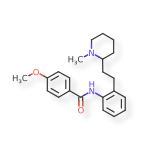
Cl.COC1=CC=C(C=C1)C(=O)NC2=CC=CC=C2CCC3CCCCN3C
InChI
InChIKey=OJIIZIWOLTYOBS-UHFFFAOYSA-N
InChI=1S/C22H28N2O2.ClH/c1-24-16-6-5-8-19(24)13-10-17-7-3-4-9-21(17)23-22(25)18-11-14-20(26-2)15-12-18;/h3-4,7,9,11-12,14-15,19H,5-6,8,10,13,16H2,1-2H3,(H,23,25);1H
| Molecular Formula | ClH |
| Molecular Weight | 36.461 |
| Charge | 0 |
| Count |
|
| Stereochemistry | ACHIRAL |
| Additional Stereochemistry | No |
| Defined Stereocenters | 0 / 0 |
| E/Z Centers | 0 |
| Optical Activity | NONE |
| Molecular Formula | C22H28N2O2 |
| Molecular Weight | 352.4699 |
| Charge | 0 |
| Count |
|
| Stereochemistry | RACEMIC |
| Additional Stereochemistry | No |
| Defined Stereocenters | 0 / 1 |
| E/Z Centers | 0 |
| Optical Activity | ( + / - ) |
DescriptionCurator's Comment: description was created based on several sources, including
https://www.drugbank.ca/drugs/DB01228 | https://www.ncbi.nlm.nih.gov/pubmed/8230126
Curator's Comment: description was created based on several sources, including
https://www.drugbank.ca/drugs/DB01228 | https://www.ncbi.nlm.nih.gov/pubmed/8230126
Encainide is an antiarrhythmic drug, developed by Bristol Myers Co supplied 25 and 35 mg capsules for oral administration. Encainide is no longer used because of its frequent proarrhythmic side effects. The mechanisms of the antiarrhythmic effects of Enkaid are unknown but probably are the result of its ability to slow conduction, reduce membrane responsiveness, inhibit automaticity, and increase the ratio of the effective refractory period to action potential duration. Enkaid produces a differentially greater effect on the ischemic zone as compared with normal cells in the myocardium. This could result in the elimination of the disparity in the electrophysiologic properties between these two zones and eliminate pathways of abnormal impulse conduction, development of boundary currents and/or sites of abnormal impulse generation. The absorption of Enkaid after oral administration is nearly complete with peak plasma levels present 30 to 90 minutes after dosing. There are two major genetically determined patterns of encainide metabolism. In over 90% of patients, the drug is rapidly and extensively metabolized with an elimination half-life of 1 to 2 hours. These patients convert encainide to two active metabolites, O-demethylencainide (ODE) and 3-methoxy-O-demethylencainide (MODE), that are more active (on a per mg basis) than encainide itself. In less than 10% of patients, metabolism of encainide is slower and the estimated encainide elimination half-life is 6 to 11 hours. Slow metabolism of encainide is associated with a diminished ability to metabolize debrisoquin. Enkaid should be administered only after appropriate clinical assessment and the dosage of Enkaid must be individualized for each patient on the basis of therapeutic response and tolerance. The recommended initial dosing schedule for adults is one 25 mg Enkaid capsule t.i.d. at approximately 8-hour intervals.
Originator
Approval Year
Cmax
| Value | Dose | Co-administered | Analyte | Population |
|---|---|---|---|---|
60.8 ng/mL EXPERIMENT https://pubmed.ncbi.nlm.nih.gov/1909559 |
25 mg single, oral dose: 25 mg route of administration: Oral experiment type: SINGLE co-administered: |
ENCAINIDE plasma | Homo sapiens population: HEALTHY age: ADULT sex: FEMALE / MALE food status: UNKNOWN |
|
100.7 ng/mL EXPERIMENT https://pubmed.ncbi.nlm.nih.gov/1909559 |
25 mg single, oral dose: 25 mg route of administration: Oral experiment type: SINGLE co-administered: |
ENCAINIDE plasma | Homo sapiens population: UNHEALTHY age: ADULT sex: FEMALE / MALE food status: UNKNOWN |
|
75.2 ng/mL EXPERIMENT https://pubmed.ncbi.nlm.nih.gov/1909559 |
25 mg 3 times / day multiple, oral dose: 25 mg route of administration: Oral experiment type: MULTIPLE co-administered: |
ENCAINIDE plasma | Homo sapiens population: HEALTHY age: ADULT sex: FEMALE / MALE food status: UNKNOWN |
|
151 ng/mL EXPERIMENT https://pubmed.ncbi.nlm.nih.gov/1909559 |
25 mg 3 times / day multiple, oral dose: 25 mg route of administration: Oral experiment type: MULTIPLE co-administered: |
ENCAINIDE plasma | Homo sapiens population: UNHEALTHY age: ADULT sex: FEMALE / MALE food status: UNKNOWN |
AUC
| Value | Dose | Co-administered | Analyte | Population |
|---|---|---|---|---|
747 ng × h/mL EXPERIMENT https://pubmed.ncbi.nlm.nih.gov/1909559 |
25 mg single, intravenous dose: 25 mg route of administration: Intravenous experiment type: SINGLE co-administered: |
ENCAINIDE plasma | Homo sapiens population: HEALTHY age: ADULT sex: FEMALE / MALE food status: UNKNOWN |
|
641 ng × h/mL EXPERIMENT https://pubmed.ncbi.nlm.nih.gov/1909559 |
25 mg single, intravenous dose: 25 mg route of administration: Intravenous experiment type: SINGLE co-administered: |
ENCAINIDE plasma | Homo sapiens population: UNHEALTHY age: ADULT sex: FEMALE / MALE food status: UNKNOWN |
|
124 ng × h/mL EXPERIMENT https://pubmed.ncbi.nlm.nih.gov/1909559 |
25 mg single, oral dose: 25 mg route of administration: Oral experiment type: SINGLE co-administered: |
ENCAINIDE plasma | Homo sapiens population: HEALTHY age: ADULT sex: FEMALE / MALE food status: UNKNOWN |
|
335 μg × h/mL EXPERIMENT https://pubmed.ncbi.nlm.nih.gov/1909559 |
25 mg single, oral dose: 25 mg route of administration: Oral experiment type: SINGLE co-administered: |
ENCAINIDE plasma | Homo sapiens population: UNHEALTHY age: ADULT sex: FEMALE / MALE food status: UNKNOWN |
|
147 ng × h/mL EXPERIMENT https://pubmed.ncbi.nlm.nih.gov/1909559 |
25 mg 3 times / day multiple, oral dose: 25 mg route of administration: Oral experiment type: MULTIPLE co-administered: |
ENCAINIDE plasma | Homo sapiens population: HEALTHY age: ADULT sex: FEMALE / MALE food status: UNKNOWN |
|
416 ng × h/mL EXPERIMENT https://pubmed.ncbi.nlm.nih.gov/1909559 |
25 mg 3 times / day multiple, oral dose: 25 mg route of administration: Oral experiment type: MULTIPLE co-administered: |
ENCAINIDE plasma | Homo sapiens population: UNHEALTHY age: ADULT sex: FEMALE / MALE food status: UNKNOWN |
T1/2
| Value | Dose | Co-administered | Analyte | Population |
|---|---|---|---|---|
3.3 h EXPERIMENT https://pubmed.ncbi.nlm.nih.gov/1909559 |
25 mg single, intravenous dose: 25 mg route of administration: Intravenous experiment type: SINGLE co-administered: |
ENCAINIDE plasma | Homo sapiens population: HEALTHY age: ADULT sex: FEMALE / MALE food status: UNKNOWN |
|
3.3 h EXPERIMENT https://pubmed.ncbi.nlm.nih.gov/1909559 |
25 mg single, intravenous dose: 25 mg route of administration: Intravenous experiment type: SINGLE co-administered: |
ENCAINIDE plasma | Homo sapiens population: UNHEALTHY age: ADULT sex: FEMALE / MALE food status: UNKNOWN |
|
1.2 h EXPERIMENT https://pubmed.ncbi.nlm.nih.gov/1909559 |
25 mg single, oral dose: 25 mg route of administration: Oral experiment type: SINGLE co-administered: |
ENCAINIDE plasma | Homo sapiens population: HEALTHY age: ADULT sex: FEMALE / MALE food status: UNKNOWN |
|
2.6 h EXPERIMENT https://pubmed.ncbi.nlm.nih.gov/1909559 |
25 mg single, oral dose: 25 mg route of administration: Oral experiment type: SINGLE co-administered: |
ENCAINIDE plasma | Homo sapiens population: UNHEALTHY age: ADULT sex: FEMALE / MALE food status: UNKNOWN |
|
2.8 h EXPERIMENT https://pubmed.ncbi.nlm.nih.gov/1909559 |
25 mg 3 times / day multiple, oral dose: 25 mg route of administration: Oral experiment type: MULTIPLE co-administered: |
ENCAINIDE plasma | Homo sapiens population: HEALTHY age: ADULT sex: FEMALE / MALE food status: UNKNOWN |
|
3.1 h EXPERIMENT https://pubmed.ncbi.nlm.nih.gov/1909559 |
25 mg 3 times / day multiple, oral dose: 25 mg route of administration: Oral experiment type: MULTIPLE co-administered: |
ENCAINIDE plasma | Homo sapiens population: UNHEALTHY age: ADULT sex: FEMALE / MALE food status: UNKNOWN |
Doses
| Dose | Population | Adverse events |
|---|---|---|
50 mg 3 times / day multiple, oral Dose: 50 mg, 3 times / day Route: oral Route: multiple Dose: 50 mg, 3 times / day Sources: |
unhealthy, 24-83 years Health Status: unhealthy Age Group: 24-83 years Sex: M+F Sources: |
Disc. AE: Fatigue... AEs leading to discontinuation/dose reduction: Fatigue (severe, 1 patient) Sources: |
75 mg 4 times / day multiple, oral Studied dose Dose: 75 mg, 4 times / day Route: oral Route: multiple Dose: 75 mg, 4 times / day Sources: |
unhealthy, 57 years |
AEs
| AE | Significance | Dose | Population |
|---|---|---|---|
| Fatigue | severe, 1 patient Disc. AE |
50 mg 3 times / day multiple, oral Dose: 50 mg, 3 times / day Route: oral Route: multiple Dose: 50 mg, 3 times / day Sources: |
unhealthy, 24-83 years Health Status: unhealthy Age Group: 24-83 years Sex: M+F Sources: |
PubMed
| Title | Date | PubMed |
|---|---|---|
| Effectiveness of prophylactic implantation of cardioverter-defibrillators without cardiac resynchronization therapy in patients with ischaemic or non-ischaemic heart disease: a systematic review and meta-analysis. | 2010-11 |
|
| [When and how to treat ventricular ectopic beats]. | 2010-10 |
|
| Premature Ventricular Contractions and Non-sustained Ventricular Tachycardia: Association with Sudden Cardiac Death, Risk Stratification, and Management Strategies. | 2010-08-15 |
|
| Beta1-adrenoceptor polymorphism predicts flecainide action in patients with atrial fibrillation. | 2010-07-02 |
|
| Systematic reviews, systematic error and the acquisition of clinical knowledge. | 2010-06-10 |
|
| A mathematical model to understand the mechanisms of action of class 1 antiarrhythmic drugs. | 2010-06 |
|
| Reporting bias in medical research - a narrative review. | 2010-04-13 |
|
| What an emergency physician needs to know about acute care of cardiac arrhythmias. | 2010-04 |
|
| EVITA: a tool for the early evaluation of pharmaceutical innovations with regard to therapeutic advantage. | 2010-03-16 |
|
| Anti- or profibrillatory effects of Na(+) channel blockade depend on the site of application relative to gradients in repolarization. | 2010 |
|
| Challenging cardiac electrophysiology. | 2010 |
|
| What is treatment success in cardiac resynchronization therapy? | 2009-11 |
|
| Complex correlation measure: a novel descriptor for Poincaré plot. | 2009-08-13 |
|
| Recent advances in pharmacotherapy of atrial fibrillation. | 2009-08 |
|
| Pharmacological characteristics and clinical applications of K201. | 2009-05 |
|
| Update on terbinafine with a focus on dermatophytoses. | 2009-04-21 |
|
| A preliminary assessment of the effects of ATI-2042 in subjects with paroxysmal atrial fibrillation using implanted pacemaker methodology. | 2009-04 |
|
| Clinical and arrhythmic outcomes after implantation of a defibrillator for primary prevention of sudden death in patients with post-myocardial infarction cardiomyopathy: The Survey to Evaluate Arrhythmia Rate in High-risk MI patients (SEARCH-MI). | 2009-04 |
|
| Surrogate end points and their role in clinical trial. | 2009-02 |
|
| Risk stratification for sudden cardiac death: current approaches and predictive value. | 2009-01 |
|
| Polymorphism of human cytochrome P450 2D6 and its clinical significance: Part I. | 2009 |
|
| Role of cytochrome P450 in drug interactions. | 2008-10-18 |
|
| Pharmacogenetics: data, concepts and tools to improve drug discovery and drug treatment. | 2008-02 |
|
| Protein C as a surrogate end-point for clinical trials of sepsis. | 2008 |
|
| An improved HPLC assay with fluorescence detection for the determination of domperidone and three major metabolites for application to in vitro drug metabolism studies. | 2007-06-01 |
|
| Planning a clinical research study. | 2007-01 |
|
| Steroids in late ARDS? | 2007 |
|
| Decrease in density of INa is in the common final pathway to heart block in murine hearts overexpressing calcineurin. | 2006-12 |
|
| Primary prevention of fatal ventricular arrhythmias with implantable cardioverter-defibrillator therapy--an analysis of implications based on MADIT II criteria. | 2006-01 |
|
| Effects of cardioactive medications on retrograde conduction: continuing relevance for current devices. | 2006-01 |
|
| Safety and tolerability of oral antifungal agents in the treatment of fungal nail disease: a proven reality. | 2005-12 |
|
| Chiropractic as spine care: a model for the profession. | 2005-07-06 |
|
| Non-linear heart rate variability and risk stratification in cardiovascular disease. | 2005-07-01 |
|
| Fetal tachyarrhythmia - part II: treatment. | 2004-10-01 |
|
| Imaging dopamine neurotransmission in Parkinson's disease: biomarker versus surrogate end point. | 2004-09 |
|
| Pro/con clinical debate: steroids are a key component in the treatment of SARS. Pro: Yes, steroids are a key component of the treatment regimen for SARS. | 2004-04 |
|
| Congenital junctional ectopic tachycardia: presentation and outcome. | 2003-07-01 |
|
| Human variability in polymorphic CYP2D6 metabolism: is the kinetic default uncertainty factor adequate? | 2002-11 |
|
| [Caution in therapy of ventricular extrasystole. Staying safe with electrolytes]. | 2002-08-22 |
|
| Impact of stereoselectivity on the pharmacokinetics and pharmacodynamics of antiarrhythmic drugs. | 2002 |
|
| Effects of advancing age on the efficacy and side effects of antiarrhythmic drugs in post-myocardial infarction patients with ventricular arrhythmias. The CAST Investigators. | 1992-07 |
|
| Increased risk of death and cardiac arrest from encainide and flecainide in patients after non-Q-wave acute myocardial infarction in the Cardiac Arrhythmia Suppression Trial. CAST Investigators. | 1991-12-15 |
|
| Proarrhythmia, cardiac arrest and death in young patients receiving encainide and flecainide. The Pediatric Electrophysiology Group. | 1991-08 |
|
| Possible atrial proarrhythmic effects of class 1C antiarrhythmic drugs. | 1990-08-01 |
|
| Reversal of proarrhythmic effects of flecainide acetate and encainide hydrochloride by propranolol. | 1989-12 |
|
| Congestive heart failure induced by six of the newer antiarrhythmic drugs. | 1989-11-01 |
|
| Reevaluation of digoxin-encainide interactions using an animal model. | 1988-07 |
|
| Facilitation of ventricular tachyarrhythmia induction by isoproterenol. | 1984-10-01 |
|
| New drugs for treating cardiac arrhythmias. | 1981-01 |
Patents
Sample Use Guides
The recommended initial dosing schedule for adults is one 25 mg Enkaid capsule t.i.d. at approximately 8-hour intervals. After a period of 3 to 5 days, the dosage may be increased to 35 mg t.i.d. if necessary. If the desired therapeutic response is not achieved after an additional 3 to 5 days, the dose may again be adjusted to 50 mg t.i.d. Rapid dose escalation should be avoided.
Route of Administration:
Oral
Homogenates of neuronal membrane vesicles were freshly prepraed from the cortex of male Sprague-Dawley. Vesicular homogenate were added to an incubation buffer containing [3H]batrachotoxinin benzoate (3H-BTX-B) (56.8 Ci/mmol; 10 nM final concentration); Leiurus quinquestriatus (Lqq) North African scorpion venom (17 mkM); tetrodotoxin (1.0 mkM), and unlabeled Encainide. Preparations were incubated at 37 OC for 2 h, followed by rapid filtration through Whatman GF/C filters using 10 mL per tube of ice cold wash buffer. Total radioactivity bound to neural membranes was determined by liquid scintillation spectrometry.
| Substance Class |
Chemical
Created
by
admin
on
Edited
Mon Mar 31 17:48:39 GMT 2025
by
admin
on
Mon Mar 31 17:48:39 GMT 2025
|
| Record UNII |
4CH7J36N9S
|
| Record Status |
Validated (UNII)
|
| Record Version |
|
-
Download
| Name | Type | Language | ||
|---|---|---|---|---|
|
Official Name | English | ||
|
Preferred Name | English | ||
|
Code | English | ||
|
Common Name | English | ||
|
Common Name | English | ||
|
Common Name | English | ||
|
Common Name | English | ||
|
Common Name | English | ||
|
Common Name | English | ||
|
Code | English | ||
|
Brand Name | English | ||
|
Common Name | English | ||
|
Common Name | English |
| Classification Tree | Code System | Code | ||
|---|---|---|---|---|
|
CFR |
21 CFR 216.24
Created by
admin on Mon Mar 31 17:48:39 GMT 2025 , Edited by admin on Mon Mar 31 17:48:39 GMT 2025
|
||
|
NCI_THESAURUS |
C47793
Created by
admin on Mon Mar 31 17:48:39 GMT 2025 , Edited by admin on Mon Mar 31 17:48:39 GMT 2025
|
||
|
NCI_THESAURUS |
C93038
Created by
admin on Mon Mar 31 17:48:39 GMT 2025 , Edited by admin on Mon Mar 31 17:48:39 GMT 2025
|
| Code System | Code | Type | Description | ||
|---|---|---|---|---|---|
|
66794-74-9
Created by
admin on Mon Mar 31 17:48:39 GMT 2025 , Edited by admin on Mon Mar 31 17:48:39 GMT 2025
|
PRIMARY | |||
|
DBSALT002712
Created by
admin on Mon Mar 31 17:48:39 GMT 2025 , Edited by admin on Mon Mar 31 17:48:39 GMT 2025
|
PRIMARY | |||
|
CHEMBL315838
Created by
admin on Mon Mar 31 17:48:39 GMT 2025 , Edited by admin on Mon Mar 31 17:48:39 GMT 2025
|
PRIMARY | |||
|
DTXSID2049004
Created by
admin on Mon Mar 31 17:48:39 GMT 2025 , Edited by admin on Mon Mar 31 17:48:39 GMT 2025
|
PRIMARY | |||
|
m4895
Created by
admin on Mon Mar 31 17:48:39 GMT 2025 , Edited by admin on Mon Mar 31 17:48:39 GMT 2025
|
PRIMARY | Merck Index | ||
|
SUB01885MIG
Created by
admin on Mon Mar 31 17:48:39 GMT 2025 , Edited by admin on Mon Mar 31 17:48:39 GMT 2025
|
PRIMARY | |||
|
100000087241
Created by
admin on Mon Mar 31 17:48:39 GMT 2025 , Edited by admin on Mon Mar 31 17:48:39 GMT 2025
|
PRIMARY | |||
|
48040
Created by
admin on Mon Mar 31 17:48:39 GMT 2025 , Edited by admin on Mon Mar 31 17:48:39 GMT 2025
|
PRIMARY | |||
|
281189
Created by
admin on Mon Mar 31 17:48:39 GMT 2025 , Edited by admin on Mon Mar 31 17:48:39 GMT 2025
|
PRIMARY | RxNorm | ||
|
59880
Created by
admin on Mon Mar 31 17:48:39 GMT 2025 , Edited by admin on Mon Mar 31 17:48:39 GMT 2025
|
PRIMARY | |||
|
C75131
Created by
admin on Mon Mar 31 17:48:39 GMT 2025 , Edited by admin on Mon Mar 31 17:48:39 GMT 2025
|
PRIMARY | |||
|
4CH7J36N9S
Created by
admin on Mon Mar 31 17:48:39 GMT 2025 , Edited by admin on Mon Mar 31 17:48:39 GMT 2025
|
PRIMARY |
| Related Record | Type | Details | ||
|---|---|---|---|---|
|
|
PARENT -> SALT/SOLVATE |
| Related Record | Type | Details | ||
|---|---|---|---|---|
|
|
ACTIVE MOIETY |