


Details
| Stereochemistry | ACHIRAL |
| Molecular Formula | C13H8Cl2N2O4.H2O |
| Molecular Weight | 345.135 |
| Optical Activity | NONE |
| Defined Stereocenters | 0 / 0 |
| E/Z Centers | 0 |
| Charge | 0 |
SHOW SMILES / InChI
SMILES
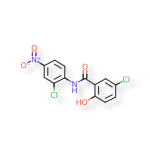
O.OC1=C(C=C(Cl)C=C1)C(=O)NC2=CC=C(C=C2Cl)[N+]([O-])=O
InChI
InChIKey=ZBXRPLQCPHTHLM-UHFFFAOYSA-N
InChI=1S/C13H8Cl2N2O4.H2O/c14-7-1-4-12(18)9(5-7)13(19)16-11-3-2-8(17(20)21)6-10(11)15;/h1-6,18H,(H,16,19);1H2
| Molecular Formula | C13H8Cl2N2O4 |
| Molecular Weight | 327.12 |
| Charge | 0 |
| Count |
|
| Stereochemistry | ACHIRAL |
| Additional Stereochemistry | No |
| Defined Stereocenters | 0 / 0 |
| E/Z Centers | 0 |
| Optical Activity | NONE |
| Molecular Formula | H2O |
| Molecular Weight | 18.0153 |
| Charge | 0 |
| Count |
|
| Stereochemistry | ACHIRAL |
| Additional Stereochemistry | No |
| Defined Stereocenters | 0 / 0 |
| E/Z Centers | 0 |
| Optical Activity | NONE |
DescriptionSources: http://www.drugbank.ca/drugs/DB06803Curator's Comment: Description was created based on several sources, including
https://www.drugs.com/mmx/niclosamide.html
Sources: http://www.drugbank.ca/drugs/DB06803
Curator's Comment: Description was created based on several sources, including
https://www.drugs.com/mmx/niclosamide.html
Niclosamide is an antihelminth used against tapeworm infections. It may act by the uncoupling of the electron transport chain to ATP synthase. The disturbance of this crucial metabolic pathway prevents creation of adenosine tri-phosphate (ATP), an essential molecule that supplies energy for metabolism. Niclosamide works by killing tapeworms on contact. Adult worms (but not ova) are rapidly killed, presumably due to uncoupling of oxidative phosphorylation or stimulation of ATPase activity. The killed worms are then passed in the stool or sometimes destroyed in the intestine. Niclosamide may work as a molluscicide by binding to and damaging DNA. Niclosamide is used for the treatment of tapeworm and intestinal fluke infections: Taenia saginata (Beef Tapeworm), Taenia solium (Pork Tapeworm), Diphyllobothrium latum (Fish Tapeworm), Fasciolopsis buski (large intestinal fluke). Niclosamide is also used as a molluscicide in the control of schistosomiasis. Niclosamide was marketed under the trade name Niclocide, now discontinued.
Approval Year
Targets
| Primary Target | Pharmacology | Condition | Potency |
|---|---|---|---|
Target ID: CHEMBL352 |
|||
Target ID: CHEMBL357 |
|||
Target ID: CHEMBL3356 |
2.7 µM [Ki] | ||
Target ID: CHEMBL612450 |
|||
Target ID: Taenia saginata |
|||
Target ID: CHEMBL387 |
45.0 µM [IC50] | ||
Target ID: CHEMBL2366043 |
Conditions
| Condition | Modality | Targets | Highest Phase | Product |
|---|---|---|---|---|
| Curative | NICLOCIDE Approved UseDiphyllobothriasis (treatment)—Niclosamide is indicated in the treatment of diphyllobothriasis caused by Diphyllobothrium latum (broad or fish tapeworm).
Hymenolepiasis (treatment)—Niclosamide is indicated in the treatment of hymenolepiasis caused by Hymenolepis nana (dwarf tapeworm) and [H. diminuta (rat tapeworm)] .
Taeniasis (treatment)—Niclosamide is indicated in the treatment of taeniasis caused by Taenia saginata (beef tapeworm) and [T. solium (pork tapeworm)] .
[Dipylidiasis (treatment)]—Niclosamide is used in the treatment of dipylidiasis caused by Dipylidium caninum (dog and cat tapeworm). Launch Date1982 |
|||
| Curative | NICLOCIDE Approved UseDiphyllobothriasis (treatment)—Niclosamide is indicated in the treatment of diphyllobothriasis caused by Diphyllobothrium latum (broad or fish tapeworm).
Hymenolepiasis (treatment)—Niclosamide is indicated in the treatment of hymenolepiasis caused by Hymenolepis nana (dwarf tapeworm) and [H. diminuta (rat tapeworm)] .
Taeniasis (treatment)—Niclosamide is indicated in the treatment of taeniasis caused by Taenia saginata (beef tapeworm) and [T. solium (pork tapeworm)] .
[Dipylidiasis (treatment)]—Niclosamide is used in the treatment of dipylidiasis caused by Dipylidium caninum (dog and cat tapeworm). Launch Date1982 |
|||
| Curative | NICLOCIDE Approved UseDiphyllobothriasis (treatment)—Niclosamide is indicated in the treatment of diphyllobothriasis caused by Diphyllobothrium latum (broad or fish tapeworm).
Hymenolepiasis (treatment)—Niclosamide is indicated in the treatment of hymenolepiasis caused by Hymenolepis nana (dwarf tapeworm) and [H. diminuta (rat tapeworm)] .
Taeniasis (treatment)—Niclosamide is indicated in the treatment of taeniasis caused by Taenia saginata (beef tapeworm) and [T. solium (pork tapeworm)] .
[Dipylidiasis (treatment)]—Niclosamide is used in the treatment of dipylidiasis caused by Dipylidium caninum (dog and cat tapeworm). Launch Date1982 |
Doses
| Dose | Population | Adverse events |
|---|---|---|
1000 mg 3 times / day steady, oral Dose: 1000 mg, 3 times / day Route: oral Route: steady Dose: 1000 mg, 3 times / day Sources: |
unhealthy |
DLT: Nausea, Vomiting... Dose limiting toxicities: Nausea (grade 3, 2 patients) Sources: Vomiting (grade 3, 2 patients) Diarrhea (grade 3, 2 patients) Colitis (grade 3, 2 patients) |
AEs
| AE | Significance | Dose | Population |
|---|---|---|---|
| Colitis | grade 3, 2 patients DLT |
1000 mg 3 times / day steady, oral Dose: 1000 mg, 3 times / day Route: oral Route: steady Dose: 1000 mg, 3 times / day Sources: |
unhealthy |
| Diarrhea | grade 3, 2 patients DLT |
1000 mg 3 times / day steady, oral Dose: 1000 mg, 3 times / day Route: oral Route: steady Dose: 1000 mg, 3 times / day Sources: |
unhealthy |
| Nausea | grade 3, 2 patients DLT |
1000 mg 3 times / day steady, oral Dose: 1000 mg, 3 times / day Route: oral Route: steady Dose: 1000 mg, 3 times / day Sources: |
unhealthy |
| Vomiting | grade 3, 2 patients DLT |
1000 mg 3 times / day steady, oral Dose: 1000 mg, 3 times / day Route: oral Route: steady Dose: 1000 mg, 3 times / day Sources: |
unhealthy |
Overview
| CYP3A4 | CYP2C9 | CYP2D6 | hERG |
|---|---|---|---|
OverviewOther
Drug as perpetrator
| Target | Modality | Activity | Metabolite | Clinical evidence |
|---|---|---|---|---|
| yes [Ki 2.7 uM] | ||||
| yes [Ki 6 uM] | ||||
| yes |
Drug as victim
| Target | Modality | Activity | Metabolite | Clinical evidence |
|---|---|---|---|---|
Page: 3.0 |
no | |||
Page: 3.0 |
no | |||
Page: 3.0 |
no | |||
Page: 3.0 |
no | |||
Page: 3.0 |
no | |||
Page: 3.0 |
no | |||
Page: 3.0 |
no | |||
Page: 3.0 |
no | |||
Page: 3.0 |
no | |||
Page: 7.0 |
no | |||
Page: 7.0 |
no | |||
Page: 7.0 |
no | |||
Page: 7.0 |
no | |||
Page: 7.0 |
no | |||
Page: 6.0 |
yes | |||
Page: 6.0 |
yes | |||
Page: 7.0 |
yes | |||
Page: 7.0 |
yes | |||
Page: 7.0 |
yes | |||
Page: 7.0 |
yes | |||
Page: 7.0 |
yes | |||
Page: 7.0 |
yes | |||
Page: 7.0 |
yes |
PubMed
| Title | Date | PubMed |
|---|---|---|
| Multi-residue determination of phenolic and salicylanilide anthelmintics and related compounds in bovine kidney by liquid chromatography-tandem mass spectrometry. | 2009-11-13 |
|
| Halogenated pesticide transformation by a laccase-mediator system. | 2009-10 |
|
| A novel method for oral delivery of apolipoprotein mimetic peptides synthesized from all L-amino acids. | 2009-08 |
|
| Drug discovery for schistosomiasis: hit and lead compounds identified in a library of known drugs by medium-throughput phenotypic screening. | 2009-07-14 |
|
| Connectivity sustains disease transmission in environments with low potential for endemicity: modelling schistosomiasis with hydrologic and social connectivities. | 2009-06-06 |
|
| Diphyllobothrium latum identified by capsule endoscopy--an unusual cause of iron-deficiency anemia. | 2009-06 |
|
| The autonomous notch signal pathway is activated by baicalin and baicalein but is suppressed by niclosamide in K562 cells. | 2009-03-01 |
|
| Spatial epidemiology in zoonotic parasitic diseases: insights gained at the 1st International Symposium on Geospatial Health in Lijiang, China, 2007. | 2009-02-04 |
|
| A retrospective analysis of prevalence of gastrointestinal parasites among school children in the Palajunoj Valley of Guatemala. | 2009-02 |
|
| Taenia solium cysticercosis hotspots surrounding tapeworm carriers: clustering on human seroprevalence but not on seizures. | 2009 |
|
| Potential of some monoterpenoids and their new N-methyl carbamate derivatives against Schistosomiasis snail vector, Biomphalaria alexandrina. | 2008-11 |
|
| Harnessing the wealth of Chinese scientific literature: schistosomiasis research and control in China. | 2008-09-30 |
|
| [Snail control by using soil pasting mixed with niclosamide]. | 2008-08 |
|
| Efficacy of temperature, and two commonly used molluscicides and fertilizers on Fasciola gigantica eggs. | 2008-08 |
|
| A novel molluscicidal formulation of niclosamide. | 2008-07 |
|
| Hymenolepis diminuta: mitochondrial transhydrogenase as an additional site for anaerobic phosphorylation. | 2008-05 |
|
| [Human infection due to Bertiella sp (cestode: Anoplocephalidae) in a man originating from Yemen in Algeria]. | 2008-04 |
|
| In vitro trypanocidal activity of the anti-helminthic drug niclosamide. | 2008-04 |
|
| Voltammetric Behavior of o-Nitrophenol and Damage to DNA. | 2008-03 |
|
| Successful treatment of niclosamide- and praziquantel-resistant beef tapeworm infection with nitazoxanide. | 2008-01 |
|
| Tribendimidine and albendazole for treating soil-transmitted helminths, Strongyloides stercoralis and Taenia spp.: open-label randomized trial. | 2008 |
|
| Effect of niclosamide on the tegumental surface of Haplorchis taichui using scanning electron microscopy. | 2007-12 |
|
| [Study on molluscicidal effect of chlorosalicylicamide]. | 2007-10 |
|
| Taeniasis and its socio-economic implication in Awassa town and its surroundings, Southern Ethiopia. | 2007-10 |
|
| Sympatric occurrence of Taenia solium, T. saginata, and T. asiatica, Thailand. | 2007-09 |
|
| Community acceptability of the use of low-dose niclosamide (Bayluscide), as a molluscicide in the control of human schistosomiasis in Sahelian Cameroon. | 2007-09 |
|
| Specific plant terpenoids and lignoids possess potent antiviral activities against severe acute respiratory syndrome coronavirus. | 2007-08-23 |
|
| A studies on chemical control of S. mansoni intermediate host. | 2007-08-01 |
|
| Large water management projects and schistosomiasis control, Dongting Lake region, China. | 2007-07 |
|
| Cream formulations protecting against cercarial dermatitis by Trichobilharzia. | 2007-06 |
|
| 5(6)-Carboxyfluorescein diacetate as an indicator of Caenorhabditis elegans viability for the development of an in vitro anthelmintic drug assay. | 2007-03-30 |
|
| [Study on molluscicidal effect of the extracts from sarcotesta of Ginkgo biloba]. | 2007-02-28 |
|
| Lower-rim substituted calixarenes and their applications. | 2007 |
|
| Influence of certain fertilizers on the activity of some molluscicides against Biomphalaria alexandrina and Lymnaea natalensis snails. | 2006-12 |
|
| [Cleaning and molluscicide treatment for schistosomiasis control]. | 2006-10-14 |
|
| [A study on the effect of Oncomelania hupensis hupensiss killed with niclosamide in China]. | 2006-08 |
|
| Synthesis of furo-salicylanilides and their heterocyclic derivatives with anticipated molluscicidal activity. | 2006-08 |
|
| [Synergic effects of synthesis arecoline in combination with snail-killing drugs niclosamide]. | 2006-07 |
|
| Prioritizing genomic drug targets in pathogens: application to Mycobacterium tuberculosis. | 2006-06-09 |
|
| Field trials of low dose Bayluscide on snail hosts of schistosome and selected non-target organisms in sahelian Cameroon. | 2006-06 |
|
| Potential antivirals and antiviral strategies against SARS coronavirus infections. | 2006-04 |
|
| Catalysis of NADH-->NADP+ transhydrogenation by adult Hymenolepis diminuta mitochondria. | 2006-02 |
|
| [Case report: taeniasis, is it a cause of psychiatric and neural symptoms?]. | 2006 |
|
| Role of chemotherapy of taeniasis in prevention of neurocysticercosis. | 2006 |
|
| Impact of certain plants and synthetic molluscicides on some fresh water snails and fish. | 2005-12 |
|
| Comparison of the aqueous solubilization of practically insoluble niclosamide by polyamidoamine (PAMAM) dendrimers and cyclodextrins. | 2005-11-04 |
|
| Effect of 4-sulphonato-calix[n]arenes and cyclodextrins on the solubilization of niclosamide, a poorly water soluble anthelmintic. | 2005-09-02 |
|
| Taeniasis and cysticercosis in housemaids working in affluent neighborhoods in Lima, Peru. | 2005-09 |
|
| [Treatment of intestinal helminthiasis with albendazole]. | 2005-06-30 |
|
| Residues of the lampricides 3-trifluoromethyl-4-nitrophenol and niclosamide in muscle tissue of rainbow trout. | 2005-06-29 |
Patents
| Substance Class |
Chemical
Created
by
admin
on
Edited
Mon Mar 31 19:26:57 GMT 2025
by
admin
on
Mon Mar 31 19:26:57 GMT 2025
|
| Record UNII |
20Z25R1145
|
| Record Status |
Validated (UNII)
|
| Record Version |
|
-
Download
| Name | Type | Language | ||
|---|---|---|---|---|
|
Preferred Name | English | ||
|
Common Name | English | ||
|
Systematic Name | English | ||
|
Common Name | English | ||
|
Systematic Name | English | ||
|
Systematic Name | English | ||
|
Common Name | English | ||
|
Common Name | English | ||
|
Common Name | English |
| Code System | Code | Type | Description | ||
|---|---|---|---|---|---|
|
NICLOSAMIDE MONOHYDRATE
Created by
admin on Mon Mar 31 19:26:57 GMT 2025 , Edited by admin on Mon Mar 31 19:26:57 GMT 2025
|
PRIMARY | Description: A cream-coloured, crystalline powder; odourless. Solubility: Practically insoluble in water; soluble in 150 parts of ethanol (~750 g/L) TS; slightly soluble in ether R and acetone R. Category: Taeniacide. Storage: Niclosamide should be kept in a tightly closed container. Labelling: The designation on the container of Niclosamide should state whether the substance is the monohydrate or is in theanhydrous form.Additional information: Anhydrous Niclosamide is hygroscopic. Niclosamide monohydrate may exhibit polymorphism. Definition: Niclosamide contains not less than 98.0% and not more than 100.5% of C13H8Cl2N2O4, calculated with reference tothe dried substance. | ||
|
73360-56-2
Created by
admin on Mon Mar 31 19:26:57 GMT 2025 , Edited by admin on Mon Mar 31 19:26:57 GMT 2025
|
PRIMARY | |||
|
SUB12175MIG
Created by
admin on Mon Mar 31 19:26:57 GMT 2025 , Edited by admin on Mon Mar 31 19:26:57 GMT 2025
|
PRIMARY | |||
|
DTXSID70223608
Created by
admin on Mon Mar 31 19:26:57 GMT 2025 , Edited by admin on Mon Mar 31 19:26:57 GMT 2025
|
PRIMARY | |||
|
100000079592
Created by
admin on Mon Mar 31 19:26:57 GMT 2025 , Edited by admin on Mon Mar 31 19:26:57 GMT 2025
|
PRIMARY | |||
|
12296604
Created by
admin on Mon Mar 31 19:26:57 GMT 2025 , Edited by admin on Mon Mar 31 19:26:57 GMT 2025
|
PRIMARY | |||
|
20Z25R1145
Created by
admin on Mon Mar 31 19:26:57 GMT 2025 , Edited by admin on Mon Mar 31 19:26:57 GMT 2025
|
PRIMARY |
| Related Record | Type | Details | ||
|---|---|---|---|---|
|
ANHYDROUS->SOLVATE | |||
|
|
PARENT -> SALT/SOLVATE |
| Related Record | Type | Details | ||
|---|---|---|---|---|
|
|
ACTIVE MOIETY |