Details
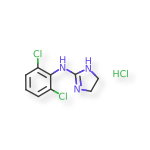
| Stereochemistry | ACHIRAL |
| Molecular Formula | C9H9Cl2N3.ClH |
| Molecular Weight | 266.555 |
| Optical Activity | NONE |
| Defined Stereocenters | 0 / 0 |
| E/Z Centers | 0 |
| Charge | 0 |
SHOW SMILES / InChI
SMILES
Cl.ClC1=CC=CC(Cl)=C1NC2=NCCN2
InChI
InChIKey=ZNIFSRGNXRYGHF-UHFFFAOYSA-N
InChI=1S/C9H9Cl2N3.ClH/c10-6-2-1-3-7(11)8(6)14-9-12-4-5-13-9;/h1-3H,4-5H2,(H2,12,13,14);1H
DescriptionCurator's Comment: description was created based on several sources, including
https://www.accessdata.fda.gov/drugsatfda_docs/label/2012/017407s037lbl.pdf | https://clinicaltrials.gov/ct2/show/NCT02177461 | https://www.accessdata.fda.gov/drugsatfda_docs/label/2009/022331lbl.pdf | https://clinicaltrials.gov/ct2/show/NCT00556959
Curator's Comment: description was created based on several sources, including
https://www.accessdata.fda.gov/drugsatfda_docs/label/2012/017407s037lbl.pdf | https://clinicaltrials.gov/ct2/show/NCT02177461 | https://www.accessdata.fda.gov/drugsatfda_docs/label/2009/022331lbl.pdf | https://clinicaltrials.gov/ct2/show/NCT00556959
Clonidine is a centrally acting α2 adrenergic agonist and imidazoline receptor agonist used to treat high blood pressure, attention deficit hyperactivity disorder, anxiety disorders, tic disorders, withdrawal (from either alcohol, opioids, or smoking), migraine, menopausal flushing, diarrhea, and certain pain conditions. Clonidine treats high blood pressure by stimulating α2 receptors in the brain, which decreases peripheral vascular resistance, lowering blood pressure. It has specificity towards the presynaptic α2 receptors in the vasomotor center in the brainstem. This binding decreases presynaptic calcium levels, thus inhibiting the release of norepinephrine (NE). It has also been proposed that the antihypertensive effect of clonidine is due to agonism on the I1 receptor (imidazoline receptor), which mediates the sympatho-inhibitory actions of imidazolines to lower blood pressure. Clonidines mechanism of action in the treatment of ADHD is to increase noradrenergic tone in the prefrontal cortex (PFC) directly by binding to postsynaptic α2A adrenergic receptors and indirectly by increasing norepinephrine input from the locus coeruleus. Clonidine indicated in the treatment of hypertension. Clonidine hydrochloride tablets may be employed alone or concomitantly with other antihypertensive agents. The US Food and Drug Administration (FDA) has approved clonidine for the treatment of attention deficit hyperactivity disorder (ADHD), under the trade name of Kapvay alone or with stimulants in 2010, for pediatric patients aged 6–17 years.
Approval Year
Targets
| Primary Target | Pharmacology | Condition | Potency |
|---|---|---|---|
Target ID: CHEMBL1867 |
30.2 nM [EC50] | ||
Target ID: CHEMBL2095158 |
3.8 nM [Ki] | ||
Target ID: CHEMBL1942 |
31.6 nM [Ki] | ||
Target ID: CHEMBL1916 |
9.3 nM [Ki] | ||
Target ID: CHEMBL2094251 |
290.0 nM [EC50] |
Conditions
| Condition | Modality | Targets | Highest Phase | Product |
|---|---|---|---|---|
| Primary | CATAPRES-TTS-1 Approved UseINDICATIONS & USAGE Clonidine hydrochloride tablets, USP are indicated in the treatment of hypertension. Clonidine hydrochloride tablets, USP may be employed alone or concomitantly with other antihypertensive agents. Launch Date1984 |
|||
| Primary | KAPVAY Approved UseINDICATIONS AND USAGE. KAPVAY® is a centrally acting alpha2-adrenergic agonist indicated for the treatment of attention deficit hyperactivity disorder (ADHD) as monotherapy or as adjunctive therapy to stimulant medications Launch Date2009 |
|||
| Primary | CATAPRES-TTS-1 Approved UseINDICATIONS & USAGE Clonidine hydrochloride tablets, USP are indicated in the treatment of hypertension. Clonidine hydrochloride tablets, USP may be employed alone or concomitantly with other antihypertensive agents. Launch Date1984 |
Cmax
| Value | Dose | Co-administered | Analyte | Population |
|---|---|---|---|---|
443 pg/mL |
0.1 mg single, oral dose: 0.1 mg route of administration: Oral experiment type: SINGLE co-administered: |
CLONIDINE plasma | Homo sapiens population: HEALTHY age: ADULT sex: UNKNOWN food status: FASTED |
AUC
| Value | Dose | Co-administered | Analyte | Population |
|---|---|---|---|---|
7313 pg × h/mL |
0.1 mg single, oral dose: 0.1 mg route of administration: Oral experiment type: SINGLE co-administered: |
CLONIDINE plasma | Homo sapiens population: HEALTHY age: ADULT sex: UNKNOWN food status: FASTED |
T1/2
| Value | Dose | Co-administered | Analyte | Population |
|---|---|---|---|---|
12.57 h |
0.1 mg single, oral dose: 0.1 mg route of administration: Oral experiment type: SINGLE co-administered: |
CLONIDINE plasma | Homo sapiens population: HEALTHY age: ADULT sex: UNKNOWN food status: FASTED |
Overview
| CYP3A4 | CYP2C9 | CYP2D6 | hERG |
|---|---|---|---|
OverviewOther
| Other Inhibitor | Other Substrate | Other Inducer |
|---|---|---|
Drug as perpetrator
| Target | Modality | Activity | Metabolite | Clinical evidence |
|---|---|---|---|---|
| likely | ||||
Page: abstract |
no | |||
| yes [IC50 1.21 uM] | ||||
Page: 3.0 |
yes |
Drug as victim
| Target | Modality | Activity | Metabolite | Clinical evidence |
|---|---|---|---|---|
Page: 1.0 |
no | |||
Page: 1.0 |
no | |||
Page: 1.0 |
no | |||
Page: 1.0 |
no | |||
Page: 1.0 |
no | |||
Page: 1.0 |
no | |||
Page: 1.0 |
no | |||
Page: 1.0 |
no | |||
Page: 1.0 |
no | |||
Page: abstract |
yes | |||
Page: abstract |
yes | |||
Page: abstract |
yes | |||
Page: abstract |
yes | |||
Page: abstract |
yes |
Tox targets
| Target | Modality | Activity | Metabolite | Clinical evidence |
|---|---|---|---|---|
PubMed
| Title | Date | PubMed |
|---|---|---|
| Blockade by agmatine of catecholamine release from chromaffin cells is unrelated to imidazoline receptors. | 2001-04-06 |
|
| Evidence for functional presynaptic alpha-2 adrenoceptors and their down-regulation in human heart failure. | 2001-04 |
|
| Oops--wrong dose of epidural clonidine in children! | 2001-04 |
|
| Alpha2 adrenergic receptors and the central control of breathing in the cane toad, Bufo marinus. | 2001-04 |
|
| Alpha2A-adrenoceptor mediated tachypnea in awake goats. | 2001-04 |
|
| Brain alpha(2)-adrenoceptors in monoamine-depleted rats: increased receptor density, G coupling proteins, receptor turnover and receptor mRNA. | 2001-04 |
|
| Sodium-induced rise in blood pressure is suppressed by androgen receptor blockade. | 2001-04 |
|
| [Adiuvants in the axillary brachial plexus blockade. Comparison between clonidine, sufentanil and tramadol]. | 2001-03-30 |
|
| Alpha-adrenergic agonists inhibit the dipsogenic effect of angiotensin II by their stimulation of atrial natriuretic peptide release. | 2001-03-23 |
|
| Gelatin microspheres crosslinked with D,L-glyceraldehyde as a potential drug delivery system: preparation, characterisation, in vitro and in vivo studies. | 2001-03-14 |
|
| Morphine and clonidine activate different K+ channels on rat amygdala neurons. | 2001-03-09 |
|
| Linkage study of the alpha2A adrenergic receptor in attention-deficit hyperactivity disorder families. | 2001-03-08 |
|
| Premedication modifies the quality of sedation with propofol during regional anesthesia. | 2001-03 |
|
| Clonidine-induced antinociception and locomotor hypoactivity are reduced by dexamethasone in mice. | 2001-03 |
|
| Noradrenergic modulation of calcium currents and synaptic transmission in the olfactory bulb of Xenopus laevis tadpoles. | 2001-03 |
|
| Inositolphosphate formation in thoracic and abdominal rat aorta following Gq/11-coupled receptor stimulation. | 2001-03 |
|
| Selective imidazoline I2 ligands do not show antidepressant-like activity in the forced swim test in mice. | 2001-03 |
|
| Ultrasonic vocalizations of preweanling rats: involvement of both alpha(2)-adrenoceptor and kappa-opioid receptor systems. | 2001-03 |
|
| Effects of N-(2-chloroethyl)-N-ethyl-2-bromobenzylamine (DSP4) on alpha2-adrenoceptors which regulate the synthesis and release of noradrenaline in the rat brain. | 2001-03 |
|
| The antinociceptive effect of intrathecal administration of epibatidine with clonidine or neostigmine in the formalin test in rats. | 2001-03 |
|
| Antinociceptive interaction between spinal clonidine and lidocaine in the rat formalin test: an isobolographic analysis. | 2001-03 |
|
| The analgesic interaction between intrathecal clonidine and glutamate receptor antagonists on thermal and formalin-induced pain in rats. | 2001-03 |
|
| Neural circuits regulating pulsatile luteinizing hormone release in the female guinea-pig: opioid, adrenergic and serotonergic interactions. | 2001-03 |
|
| Noradrenergic dysfunction in the prefrontal cortex in depression: an [15O] H2O PET study of the neuromodulatory effects of clonidine. | 2001-02-15 |
|
| Continuous intrathecal morphine treatment for chronic pain of nonmalignant etiology: long-term benefits and efficacy. | 2001-02 |
|
| The impact of glycaemic control on autoregulation of glomerular filtration rate in patients with non-insulin dependent diabetes. | 2001-02 |
|
| Some behavioural effects of antidepressant drugs are time-dependent. | 2001-02 |
|
| Baclofen versus clonidine in the treatment of opiates withdrawal, side-effects aspect: a double-blind randomized controlled trial. | 2001-02 |
|
| Interactions of ligands at angiotensin II-receptors and imidazoline receptors. | 2001-02 |
|
| Imidazolines inhibit secretory responses of rat colonic mucosa to calcium-dependent but not cyclic AMP-dependent secretagogues. | 2001-02 |
|
| Comparison of the effects of clonidine and hydroxyzine on haemodynamic and catecholamine reactions to microlaryngoscopy. | 2001-02 |
|
| The use of baclofen in cluster headache. | 2001-02 |
|
| Differential effects of clonidine, dopamine, dobutamine, and dopexamine on basal and acid-stimulated mucosal blood flow in the rat stomach. | 2001-02 |
|
| [Preliminary report: the efficacy of clonidine hydrochloride ointment for postherpetic neuralgia]. | 2001-02 |
|
| Nitric oxide and central antihypertensive drugs: one more difference between catecholamines and imidazolines. | 2001-02 |
|
| Mortality after coronary artery occlusion in different models of cardiac hypertrophy in rats. | 2001-02 |
|
| Characterization of adenylyl cyclases in cultured human granulosa cells. | 2001-02 |
|
| Galanin/alpha2-adrenoceptor interactions in telencephalic and diencephalic regions of the rat. | 2001-01-22 |
|
| Characterization of prejunctional purinoceptors inhibiting noradrenaline release in rat mesenteric arteries. | 2001-01 |
|
| [Cardiovascular stress protection following anesthesia induction. Comparison of clonidine and esmolol]. | 2001-01 |
|
| Do infant rats cry? | 2001-01 |
|
| Antagonistic effects of selective alpha1-adrenoceptor antagonists MDL73005EF and tamsulosin and partial agonists clonidine and tizanidine in rat thoracic aorta and rabbit iliac artery. | 2001-01 |
|
| Treatment of chronic hypertension with intravenous enalaprilat and transdermal clonidine. | 2001-01 |
|
| Chronic treatment with desipramine facilitates its effect on extracellular noradrenaline in the rat hippocampus: studies on the role of presynaptic alpha2-adrenoceptors. | 2001-01 |
|
| Drug treatment options for irritable bowel syndrome: managing for success. | 2001 |
|
| Alpha2 adrenergic agonists for the management of opioid withdrawal. | 2001 |
|
| Hypoxic-ischaemic brain damage in immature rats: effects of adrenoceptor modulation. | 2001 |
|
| [Potentiation of local anesthesia in endonasal surgery]. | 2001 |
|
| P75-expressing elements are necessary for anti-allodynic effects of spinal clonidine and neostigmine. | 2001 |
|
| Letter: Dementia associated with clonidine therapy. | 1975-03-15 |
Sample Use Guides
In Vivo Use Guide
Curator's Comment: https://www.accessdata.fda.gov/drugsatfda_docs/label/2012/018891s028lbl.pdf
Oral
Initial Dose 0.1 mg tablet twice daily (morning and bedtime). Elderly patients may benefit from a lower initial dose
Maintenance Dose Further increments of 0.1 mg per day may be made at weekly intervals if necessary until the desired response is achieved. Taking the larger portion of the oral daily dose at bedtime may minimize transient adjustment effects of dry mouth and drowsiness. The therapeutic doses most commonly employed have ranged from 0.2 mg to 0.6 mg per day given in divided doses. Studies have indicated that 2.4 mg is the maximum effective daily dose, but doses as high as this have rarely been employed.
Transdermal: once every 7 days to a hairless area of intact skin on the upper outer arm or chest.
Route of Administration:
Other
Neural membranes (P2 fractions) were prepared from the prefrontal cortex of human brains obtained at autopsy. Specific Clonidine binding was measured in 0.55 mL aliquots (50 mM Tris HCl, pH 7.5) of the neural membranes, which were incubated with [3H]RX821002 (1 nM) for 30 min at 25 °C in the absence or presence of the Clonidine (10^-12 M to 10^-3 M, 10 concentrations). Specific binding was determined and plotted as a function of the compound concentration. Incubations were terminated by diluting the samples with 5 mL of ice-cold Tris incubation buffer (4 °C). Membrane-bound [3H]RX821002 was separated by vacuum filtration through Whatman GF/C glass fiber filters. Then the filters were rinsed twice with 5 mL of incubation buffer and transferred to minivials containing 3 mL of OptiPhase “HiSafe” II cocktail and counted for radioactivity by liquid scintillation spectrometry.
| Name | Type | Language | ||
|---|---|---|---|---|
|
Preferred Name | English | ||
|
Official Name | English | ||
|
Systematic Name | English | ||
|
Brand Name | English | ||
|
Common Name | English | ||
|
Common Name | English | ||
|
Systematic Name | English | ||
|
Common Name | English | ||
|
Systematic Name | English | ||
|
Common Name | English | ||
|
Brand Name | English | ||
|
Common Name | English | ||
|
Common Name | English | ||
|
Common Name | English | ||
|
Brand Name | English | ||
|
Common Name | English | ||
|
Code | English | ||
|
Common Name | English | ||
|
Common Name | English | ||
|
Common Name | English | ||
|
Common Name | English | ||
|
Brand Name | English | ||
|
Systematic Name | English | ||
|
Common Name | English | ||
|
Code | English |
| Classification Tree | Code System | Code | ||
|---|---|---|---|---|
|
NCI_THESAURUS |
C29709
Created by
admin on Mon Mar 31 17:47:58 GMT 2025 , Edited by admin on Mon Mar 31 17:47:58 GMT 2025
|
||
|
EU-Orphan Drug |
EU/3/11/919
Created by
admin on Mon Mar 31 17:47:58 GMT 2025 , Edited by admin on Mon Mar 31 17:47:58 GMT 2025
|
| Code System | Code | Type | Description | ||
|---|---|---|---|---|---|
|
W76I6XXF06
Created by
admin on Mon Mar 31 17:47:58 GMT 2025 , Edited by admin on Mon Mar 31 17:47:58 GMT 2025
|
PRIMARY | |||
|
CHEMBL134
Created by
admin on Mon Mar 31 17:47:58 GMT 2025 , Edited by admin on Mon Mar 31 17:47:58 GMT 2025
|
PRIMARY | |||
|
DBSALT000538
Created by
admin on Mon Mar 31 17:47:58 GMT 2025 , Edited by admin on Mon Mar 31 17:47:58 GMT 2025
|
PRIMARY | |||
|
SUB01362MIG
Created by
admin on Mon Mar 31 17:47:58 GMT 2025 , Edited by admin on Mon Mar 31 17:47:58 GMT 2025
|
PRIMARY | |||
|
224-121-5
Created by
admin on Mon Mar 31 17:47:58 GMT 2025 , Edited by admin on Mon Mar 31 17:47:58 GMT 2025
|
PRIMARY | |||
|
4205-91-8
Created by
admin on Mon Mar 31 17:47:58 GMT 2025 , Edited by admin on Mon Mar 31 17:47:58 GMT 2025
|
PRIMARY | |||
|
142432
Created by
admin on Mon Mar 31 17:47:58 GMT 2025 , Edited by admin on Mon Mar 31 17:47:58 GMT 2025
|
PRIMARY | RxNorm | ||
|
756699
Created by
admin on Mon Mar 31 17:47:58 GMT 2025 , Edited by admin on Mon Mar 31 17:47:58 GMT 2025
|
PRIMARY | |||
|
20179
Created by
admin on Mon Mar 31 17:47:58 GMT 2025 , Edited by admin on Mon Mar 31 17:47:58 GMT 2025
|
PRIMARY | |||
|
C47979
Created by
admin on Mon Mar 31 17:47:58 GMT 2025 , Edited by admin on Mon Mar 31 17:47:58 GMT 2025
|
PRIMARY | |||
|
100000090325
Created by
admin on Mon Mar 31 17:47:58 GMT 2025 , Edited by admin on Mon Mar 31 17:47:58 GMT 2025
|
PRIMARY | |||
|
m3650
Created by
admin on Mon Mar 31 17:47:58 GMT 2025 , Edited by admin on Mon Mar 31 17:47:58 GMT 2025
|
PRIMARY | Merck Index | ||
|
DTXSID8044670
Created by
admin on Mon Mar 31 17:47:58 GMT 2025 , Edited by admin on Mon Mar 31 17:47:58 GMT 2025
|
PRIMARY | |||
|
W76I6XXF06
Created by
admin on Mon Mar 31 17:47:58 GMT 2025 , Edited by admin on Mon Mar 31 17:47:58 GMT 2025
|
PRIMARY | |||
|
1140407
Created by
admin on Mon Mar 31 17:47:58 GMT 2025 , Edited by admin on Mon Mar 31 17:47:58 GMT 2025
|
PRIMARY |
ACTIVE MOIETY
SUBSTANCE RECORD