Details
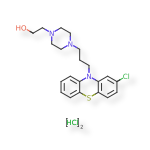
| Stereochemistry | ACHIRAL |
| Molecular Formula | C21H26ClN3OS.2ClH |
| Molecular Weight | 476.891 |
| Optical Activity | NONE |
| Defined Stereocenters | 0 / 0 |
| E/Z Centers | 0 |
| Charge | 0 |
SHOW SMILES / InChI
SMILES
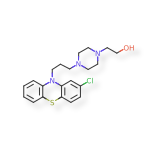
Cl.Cl.OCCN1CCN(CCCN2C3=CC=CC=C3SC4=CC=C(Cl)C=C24)CC1
InChI
InChIKey=JGTYANSBOIVAMH-UHFFFAOYSA-N
InChI=1S/C21H26ClN3OS.2ClH/c22-17-6-7-21-19(16-17)25(18-4-1-2-5-20(18)27-21)9-3-8-23-10-12-24(13-11-23)14-15-26;;/h1-2,4-7,16,26H,3,8-15H2;2*1H
Perphenazine is a relatively high potency phenothiazine that blocks dopamine 2 receptors predominantly, but also may possess antagonist actions at histamine 1 and cholinergic M1 and alpha 1 adrenergic receptors in the vomiting center leading to reduced nausea and vomiting. The drug was approved by FDA for the treatment of schizophrenia and control of severe nausea and vomiting (either alone or in combination with amitriptyline hydrochloride). Perphenazine is extensively hepatic to metabolites via sulfoxidation, hydroxylation, dealkylation, and glucuronidation; primarily metabolized by CYP2D6 to N-dealkylated perphenazine, perphenazine sulfoxide, and 7-hydroxyperphenazine (active metabolite with 70% of the activity of perphenazine) and excreted in the urine and feces.
Approval Year
Targets
| Primary Target | Pharmacology | Condition | Potency |
|---|---|---|---|
Target ID: P14416 Gene ID: 1813.0 Gene Symbol: DRD2 Target Organism: Homo sapiens (Human) |
0.16 nM [Ki] | ||
Target ID: P35367 Gene ID: 3269.0 Gene Symbol: HRH1 Target Organism: Homo sapiens (Human) |
8.0 nM [Kd] | ||
Target ID: P11229 Gene ID: 1128.0 Gene Symbol: CHRM1 Target Organism: Homo sapiens (Human) |
1.5 µM [Kd] | ||
Target ID: CHEMBL2094251 |
10.0 nM [Ki] |
Conditions
| Condition | Modality | Targets | Highest Phase | Product |
|---|---|---|---|---|
| Preventing | PERPHENAZINE Approved UsePerphenazine is indicated for use in the treatment of schizophrenia and for the control of severe nausea and vomiting in adults. Launch Date1988 |
|||
| Preventing | PERPHENAZINE Approved UsePerphenazine is indicated for use in the treatment of schizophrenia and for the control of severe nausea and vomiting in adults. Launch Date1988 |
|||
| Primary | PERPHENAZINE Approved UsePerphenazine is indicated for use in the treatment of schizophrenia and for the control of severe nausea and vomiting in adults. Launch Date1988 |
|||
| Primary | PERPHENAZINE AND AMITRIPTYLINE HYDROCHLORIDE Approved UsePerphenazine and amitriptyline hydrochloride tablets are recommended for treatment of (1) patients with moderate to severe anxiety and/or agitation and depressed mood, (2) patients with depression in whom anxiety and/or agitation are severe, and (3) patients with depression and anxiety in association with chronic physical disease. In many of these patients, anxiety masks the depressive state so that, although therapy with a tranquilizer appears to be indicated, the administration of a tranquilizer alone will not be adequate. Launch Date1988 |
|||
| Primary | PERPHENAZINE AND AMITRIPTYLINE HYDROCHLORIDE Approved UsePerphenazine and amitriptyline hydrochloride tablets are recommended for treatment of (1) patients with moderate to severe anxiety and/or agitation and depressed mood, (2) patients with depression in whom anxiety and/or agitation are severe, and (3) patients with depression and anxiety in association with chronic physical disease. In many of these patients, anxiety masks the depressive state so that, although therapy with a tranquilizer appears to be indicated, the administration of a tranquilizer alone will not be adequate. Launch Date1988 |
Cmax
| Value | Dose | Co-administered | Analyte | Population |
|---|---|---|---|---|
0.546 ng/mL |
16 mg single, oral dose: 16 mg route of administration: Oral experiment type: SINGLE co-administered: |
PERPHENAZINE plasma | Homo sapiens population: UNKNOWN age: UNKNOWN sex: UNKNOWN food status: UNKNOWN |
|
984 pg/mL |
4 mg 3 times / day steady-state, oral dose: 4 mg route of administration: Oral experiment type: STEADY-STATE co-administered: |
PERPHENAZINE plasma | Homo sapiens population: UNKNOWN age: UNKNOWN sex: UNKNOWN food status: UNKNOWN |
|
509 pg/mL |
4 mg 3 times / day steady-state, oral dose: 4 mg route of administration: Oral experiment type: STEADY-STATE co-administered: |
7-HYDROXYPERPHENAZINE plasma | Homo sapiens population: UNKNOWN age: UNKNOWN sex: UNKNOWN food status: UNKNOWN |
AUC
| Value | Dose | Co-administered | Analyte | Population |
|---|---|---|---|---|
6.673 ng × h/mL |
16 mg single, oral dose: 16 mg route of administration: Oral experiment type: SINGLE co-administered: |
PERPHENAZINE plasma | Homo sapiens population: UNKNOWN age: UNKNOWN sex: UNKNOWN food status: UNKNOWN |
T1/2
| Value | Dose | Co-administered | Analyte | Population |
|---|---|---|---|---|
9.12 h |
16 mg single, oral dose: 16 mg route of administration: Oral experiment type: SINGLE co-administered: |
PERPHENAZINE plasma | Homo sapiens population: UNKNOWN age: UNKNOWN sex: UNKNOWN food status: UNKNOWN |
|
12 h |
4 mg 3 times / day steady-state, oral dose: 4 mg route of administration: Oral experiment type: STEADY-STATE co-administered: |
PERPHENAZINE plasma | Homo sapiens population: UNKNOWN age: UNKNOWN sex: UNKNOWN food status: UNKNOWN |
|
18.8 h |
4 mg 3 times / day steady-state, oral dose: 4 mg route of administration: Oral experiment type: STEADY-STATE co-administered: |
7-HYDROXYPERPHENAZINE plasma | Homo sapiens population: UNKNOWN age: UNKNOWN sex: UNKNOWN food status: UNKNOWN |
Funbound
| Value | Dose | Co-administered | Analyte | Population |
|---|---|---|---|---|
9% |
unknown, unknown |
PERPHENAZINE unknown | Homo sapiens population: UNKNOWN age: UNKNOWN sex: UNKNOWN food status: UNKNOWN |
Doses
| Dose | Population | Adverse events |
|---|---|---|
0.93 g single, oral Overdose |
unhealthy, 42 |
Disc. AE: QT interval prolonged, Hypothermia... AEs leading to discontinuation/dose reduction: QT interval prolonged Sources: Hypothermia Loss of consciousness PR interval prolonged QRS prolonged |
200 mg single, oral Overdose |
unhealthy, 48 |
Disc. AE: Coma, Hypothermia... AEs leading to discontinuation/dose reduction: Coma Sources: Hypothermia Tachycardia Miosis |
30 mg 1 times / day multiple, intramuscular Recommended Dose: 30 mg, 1 times / day Route: intramuscular Route: multiple Dose: 30 mg, 1 times / day Sources: |
unhealthy Health Status: unhealthy Sources: |
Disc. AE: Tardive dyskinesia... AEs leading to discontinuation/dose reduction: Tardive dyskinesia Sources: |
30 mg 1 times / day multiple, intramuscular Recommended Dose: 30 mg, 1 times / day Route: intramuscular Route: multiple Dose: 30 mg, 1 times / day Sources: |
unhealthy Health Status: unhealthy Sources: |
Disc. AE: Neuroleptic malignant syndrome... AEs leading to discontinuation/dose reduction: Neuroleptic malignant syndrome Sources: |
64 mg 1 times / day multiple, oral Recommended Dose: 64 mg, 1 times / day Route: oral Route: multiple Dose: 64 mg, 1 times / day Sources: |
unhealthy Health Status: unhealthy Sources: |
Disc. AE: Tardive dyskinesia... AEs leading to discontinuation/dose reduction: Tardive dyskinesia Sources: |
64 mg 1 times / day multiple, oral Recommended Dose: 64 mg, 1 times / day Route: oral Route: multiple Dose: 64 mg, 1 times / day Sources: |
unhealthy Health Status: unhealthy Sources: |
Disc. AE: Neuroleptic malignant syndrome... AEs leading to discontinuation/dose reduction: Neuroleptic malignant syndrome Sources: |
20 mg single, intramuscular Studied dose Dose: 20 mg Route: intramuscular Route: single Dose: 20 mg Sources: |
unhealthy |
Disc. AE: Neuroleptic malignant syndrome... AEs leading to discontinuation/dose reduction: Neuroleptic malignant syndrome Sources: |
AEs
| AE | Significance | Dose | Population |
|---|---|---|---|
| Hypothermia | Disc. AE | 0.93 g single, oral Overdose |
unhealthy, 42 |
| Loss of consciousness | Disc. AE | 0.93 g single, oral Overdose |
unhealthy, 42 |
| PR interval prolonged | Disc. AE | 0.93 g single, oral Overdose |
unhealthy, 42 |
| QRS prolonged | Disc. AE | 0.93 g single, oral Overdose |
unhealthy, 42 |
| QT interval prolonged | Disc. AE | 0.93 g single, oral Overdose |
unhealthy, 42 |
| Coma | Disc. AE | 200 mg single, oral Overdose |
unhealthy, 48 |
| Hypothermia | Disc. AE | 200 mg single, oral Overdose |
unhealthy, 48 |
| Miosis | Disc. AE | 200 mg single, oral Overdose |
unhealthy, 48 |
| Tachycardia | Disc. AE | 200 mg single, oral Overdose |
unhealthy, 48 |
| Tardive dyskinesia | Disc. AE | 30 mg 1 times / day multiple, intramuscular Recommended Dose: 30 mg, 1 times / day Route: intramuscular Route: multiple Dose: 30 mg, 1 times / day Sources: |
unhealthy Health Status: unhealthy Sources: |
| Neuroleptic malignant syndrome | Disc. AE | 30 mg 1 times / day multiple, intramuscular Recommended Dose: 30 mg, 1 times / day Route: intramuscular Route: multiple Dose: 30 mg, 1 times / day Sources: |
unhealthy Health Status: unhealthy Sources: |
| Tardive dyskinesia | Disc. AE | 64 mg 1 times / day multiple, oral Recommended Dose: 64 mg, 1 times / day Route: oral Route: multiple Dose: 64 mg, 1 times / day Sources: |
unhealthy Health Status: unhealthy Sources: |
| Neuroleptic malignant syndrome | Disc. AE | 64 mg 1 times / day multiple, oral Recommended Dose: 64 mg, 1 times / day Route: oral Route: multiple Dose: 64 mg, 1 times / day Sources: |
unhealthy Health Status: unhealthy Sources: |
| Neuroleptic malignant syndrome | Disc. AE | 20 mg single, intramuscular Studied dose Dose: 20 mg Route: intramuscular Route: single Dose: 20 mg Sources: |
unhealthy |
Overview
| CYP3A4 | CYP2C9 | CYP2D6 | hERG |
|---|---|---|---|
OverviewOther
| Other Inhibitor | Other Substrate | Other Inducer |
|---|---|---|
Drug as perpetrator
| Target | Modality | Activity | Metabolite | Clinical evidence |
|---|---|---|---|---|
Page: abstract |
no | |||
Page: abstract |
no | |||
Page: abstract |
no | |||
Page: abstract |
yes [IC50 1.5 uM] | |||
Page: abstract |
yes [IC50 38.2 uM] | |||
Page: 42.0 |
yes [IC50 66.2 uM] | |||
Page: abstract |
yes [Ki 65.1 uM] | |||
Page: 945.0 |
yes | |||
Page: 962.0 |
yes |
Drug as victim
| Target | Modality | Activity | Metabolite | Clinical evidence |
|---|---|---|---|---|
Page: 961.0 |
yes | |||
Page: 510.0 |
yes | |||
Page: 961.0 |
yes | |||
Page: 961.0 |
yes |
Tox targets
| Target | Modality | Activity | Metabolite | Clinical evidence |
|---|---|---|---|---|
Page: 1033.0 |
||||
Page: abstract |
PubMed
| Title | Date | PubMed |
|---|---|---|
| Selective inhibition of hepatitis C virus infection by hydroxyzine and benztropine. | 2014-06 |
|
| Antitubercular pharmacodynamics of phenothiazines. | 2013-04 |
|
| Profiling of a prescription drug library for potential renal drug-drug interactions mediated by the organic cation transporter 2. | 2011-07-14 |
|
| Olanzapine use in women with antipsychotic-induced hyperprolactinemia. | 1998-10 |
|
| Association of plasma homovanillic acid with behavioral symptoms in patients diagnosed with dementia: a preliminary report. | 1997-12-01 |
|
| Induction of mania by risperidone resistant to mood stabilizers. | 1997-02 |
|
| BMY-14802 reversed the sigma receptor agonist-induced neck dystonia in rats. | 1996 |
|
| The efficacy of prophylactic ondansetron, droperidol, perphenazine, and metoclopramide in the prevention of nausea and vomiting after major gynecologic surgery. | 1995-07 |
|
| Binding of typical and atypical antipsychotic agents to 5-hydroxytryptamine-6 and 5-hydroxytryptamine-7 receptors. | 1994-03 |
|
| Risperidone versus perphenazine in the treatment of chronic schizophrenic patients with acute exacerbations. | 1993-12 |
|
| The relationship between blood perphenazine levels, early resolution of psychotic symptoms, and side effects. | 1990-08 |
|
| Zuclopenthixol and perphenazine in patients with acute psychotic states. A double-blind multicentre study. | 1987-07 |
|
| Neuroleptic malignant syndrome during perphenazine treatment. | 1987-03 |
|
| L-tryptophan in drug-induced movement disorders with insomnia. | 1986-05-08 |
|
| Tourette-like syndrome following low dose short-term neuroleptic treatment. | 1986-05 |
|
| A case of progressive hemichorea responsive to high-dose reserpine. | 1986-03 |
|
| Effect of different neuroleptics in tardive dyskinesia and parkinsonism. A video-controlled multicenter study with chlorprothixene, perphenazine, haloperidol and haloperidol + biperiden. Nordic Dyskinesia Study Group. | 1986 |
|
| GABAergic, dopaminergic and cholinergic interactions in perphenazine-induced catatonia in rats. | 1985-12 |
|
| Pharmacology in vivo of the phenylindan derivative, Lu 19-005, a new potent inhibitor of dopamine, noradrenaline and 5-hydroxytryptamine uptake in rat brain. | 1985-04 |
|
| Sigma opiates and certain antipsychotic drugs mutually inhibit (+)-[3H] SKF 10,047 and [3H]haloperidol binding in guinea pig brain membranes. | 1984-09 |
|
| Unique sensitivity of Hb Zürich to oxidative injury by phenazopyridine: reversal of the effects by elevating carboxyhemoglobin levels in vivo and in vitro. | 1983-06 |
|
| Cerebellar syndrome following neuroleptic induced heat stroke. | 1983-02 |
|
| Dose-response relationships of perphenazine in the treatment of acute psychoses. | 1982 |
|
| Actions of clonidine on convulsions and behaviour. | 1981-07 |
|
| Prolactin and the small intestine. Effect of hyperprolactinaemia on mucosal structure in the rat. | 1981-07 |
|
| Tricyclic antidepressants and alcoholic blackouts. | 1981-06 |
|
| Plasma levels of perphenazine (Trilafon) related to development of extrapyramidal side effects. | 1981 |
|
| Pituitary sensitivity to LHRH in hyperprolactinemia induced by perphenazine and renal pituitary transplants in female rats. | 1980-04 |
|
| Electrophysiologic studies of perphenazine and protriptyline in a patient with psychotropic drug-induced ventricular fibrillation. | 1979-08 |
|
| Seven cases of somnambulism induced by drugs. | 1979-07 |
|
| Metoclopramide and dystonic reactions in Sardinians. | 1979-06-23 |
|
| Toxic psychosis with cimetidine. | 1979-05 |
|
| Death attributed to ventricular arrhythmia induced by thioridazine in combination with a single Contac C capsule. | 1978-10-07 |
|
| [Acute dystonia in children. 2 cases caused by perphenazine (Trilafon)]. | 1978-03-10 |
|
| Drug-induced anaphylaxis, convulsions, deafness, and extrapyramidal symptoms. | 1977-03-12 |
|
| Asymptomatic idiopathic syndrome of prolonged Q-T interval in a 45-year-old woman. Ventricular tachyarrhythmias precipitated by hypokalemia and therapy with amitriptyline and prephenazine. | 1977-02 |
|
| Letter: Side-effects of perphenazine. | 1975-06-21 |
|
| The mechanism of the potentiating effect of antidepressant drugs on the protective influenc oe of diphenhydramine in experimental catatonia. The role of histamine. | 1974 |
|
| Idiosyncratic responses to phenothiazines. | 1972-01-22 |
|
| Increased sensitivity to neuroleptics in rats with lesions of the central nervous system. | 1972 |
|
| Iatrogenic epilepsy due to antidepressant drugs. | 1969-10-11 |
|
| Dystonic reaction to perphenazine. | 1969-08-09 |
|
| Perphenazine dystonia presenting as recurrent dislocation of the jaw. | 1969-01 |
|
| Phenothiazines and diabetes in hospitalized women. | 1968-01 |
|
| Oculogyric crises due to phenothiazines. | 1967-07-22 |
|
| Side-effects of phenothiazines. | 1967-04-01 |
|
| Specific therapeutic actions of acetophenazine, perphenazine, and benzquinamide in newly admitted schizophrenic patients. | 1967-03-01 |
|
| Phenothiazines in early labour. | 1967-02-11 |
|
| Drug-induced extrapyramidal symptoms: their incidence and treatment. | 1967-01 |
|
| The bucco-linguo-masticatory syndrome as a side-effect of neuroleptics therapy. | 1967 |
Patents
Sample Use Guides
Moderately disturbed nonhospitalized patients with schizophrenia: 4 to 8 mg t.i.d. initially; reduce as soon as possible to minimum effective dosage. Hospitalized patients with schizophrenia: 8 to 16 mg b.i.d. to q.i.d.; avoid dosages in excess of 64 mg daily. Severe nausea and vomiting in adults: 8 to 16 mg daily in divided doses; 24 mg occasionally may be necessary; early dosage reduction is desirable.
Route of Administration:
Oral
Perphenazine (10-100 microM) was administered, either alone or combined with dopamine, to primary mouse neuronal or intact brain culture and to a human neuroblastoma (NB) cell line (SK-N-SH). Cell viability (measured by neutral red and alamar blue), DNA fragmentation (flow cytometry-NB) were determined. Neuroblastoma: perphenazine decreased viability by 87%.
| Name | Type | Language | ||
|---|---|---|---|---|
|
Common Name | English | ||
|
Preferred Name | English | ||
|
Systematic Name | English | ||
|
Systematic Name | English | ||
|
Systematic Name | English | ||
|
Systematic Name | English |
| Code System | Code | Type | Description | ||
|---|---|---|---|---|---|
|
THW7Y583I9
Created by
admin on Mon Mar 31 22:45:47 GMT 2025 , Edited by admin on Mon Mar 31 22:45:47 GMT 2025
|
PRIMARY | |||
|
m8567
Created by
admin on Mon Mar 31 22:45:47 GMT 2025 , Edited by admin on Mon Mar 31 22:45:47 GMT 2025
|
PRIMARY | Merck Index | ||
|
DTXSID70173977
Created by
admin on Mon Mar 31 22:45:47 GMT 2025 , Edited by admin on Mon Mar 31 22:45:47 GMT 2025
|
PRIMARY | |||
|
217-944-6
Created by
admin on Mon Mar 31 22:45:47 GMT 2025 , Edited by admin on Mon Mar 31 22:45:47 GMT 2025
|
PRIMARY | |||
|
2015-28-3
Created by
admin on Mon Mar 31 22:45:47 GMT 2025 , Edited by admin on Mon Mar 31 22:45:47 GMT 2025
|
PRIMARY | |||
|
74835
Created by
admin on Mon Mar 31 22:45:47 GMT 2025 , Edited by admin on Mon Mar 31 22:45:47 GMT 2025
|
PRIMARY |
ACTIVE MOIETY
SUBSTANCE RECORD