Details
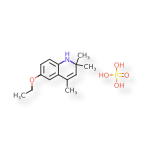
| Stereochemistry | ACHIRAL |
| Molecular Formula | C14H19NO.H3O4P |
| Molecular Weight | 315.3019 |
| Optical Activity | NONE |
| Defined Stereocenters | 0 / 0 |
| E/Z Centers | 0 |
| Charge | 0 |
SHOW SMILES / InChI
SMILES
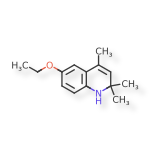
OP(O)(O)=O.CCOC1=CC2=C(NC(C)(C)C=C2C)C=C1
InChI
InChIKey=HGXWAQIWVLMXFM-UHFFFAOYSA-N
InChI=1S/C14H19NO.H3O4P/c1-5-16-11-6-7-13-12(8-11)10(2)9-14(3,4)15-13;1-5(2,3)4/h6-9,15H,5H2,1-4H3;(H3,1,2,3,4)
DescriptionCurator's Comment: https://www.ncbi.nlm.nih.gov/pubmed/27350330
https://www.ncbi.nlm.nih.gov/pubmed/10853663
www.ncbi.nlm.nih.gov/pubmed/14644360
https://www.ncbi.nlm.nih.gov/pubmed/16266792
http://www.accessdata.fda.gov/scripts/cdrh/cfdocs/cfcfr/CFRSearch.cfm?fr=573.380
https://www.accessdata.fda.gov/scripts/cdrh/cfdocs/cfcfr/CFRSearch.cfm?fr=172.140
Curator's Comment: https://www.ncbi.nlm.nih.gov/pubmed/27350330
https://www.ncbi.nlm.nih.gov/pubmed/10853663
www.ncbi.nlm.nih.gov/pubmed/14644360
https://www.ncbi.nlm.nih.gov/pubmed/16266792
http://www.accessdata.fda.gov/scripts/cdrh/cfdocs/cfcfr/CFRSearch.cfm?fr=573.380
https://www.accessdata.fda.gov/scripts/cdrh/cfdocs/cfcfr/CFRSearch.cfm?fr=172.140
Ethoxyquin (EQ) has been used as an antioxidant in animal feed for many years, but pharmacological use of EQ has never been evaluated in humans despite that small
amounts of EQ exist in certain food items. The level of this antioxidant in animal feeds should not be higher than 150 ppm (U.S. FDA permissions). Ethoxyquin is rapidly absorbed from gastrointestinal tract of laboratory animals like rats and mice. Peak blood concentration of the compound is observed within 1 h. Distribution of EQ in animal body is similar when it is administered orally and intravenously. Small amounts of parent EQ were detected in liver, kidney, and adipose tissue and fish muscles. It is excreted predominantly as metabolites via urine. Ethoxyquin is also registered as an antioxidant to control scald (browning) in apples and pears. EQ-induced DNA damage in human lymphocytes in a dose-dependent manner. According to the studies on dogs and laboratory animals it was shown that ethoxyquin had little acute toxicity, except when it is administered parenterally. Values of LD50 for EQ are 1700 mg kg−1 bw (rats, oral gavage), 2000 mg kg−1 bw (rats, dermal treatment, 24 h), 900 mg kg−1 bw (mice, intraperitoneal administration), and 180 mg kg−1 bw (mice, intravenous administration).
Approval Year
PubMed
| Title | Date | PubMed |
|---|---|---|
| Evidence that the capacity of nongenotoxic carcinogens to induce oxidative stress is subject to marked variability. | 2015-05 |
|
| Screening of a chemical library reveals novel PXR-activating pharmacologic compounds. | 2015-01-05 |
|
| Benzo(a)pyrene induces hepatic AKR1A1 mRNA expression in tilapia fish (Oreochromis niloticus). | 2012-07 |
|
| Transcription factor-mediated regulation of carboxylesterase enzymes in livers of mice. | 2012-06 |
|
| The monoamine oxidase A inhibitor clorgyline is a broad-spectrum inhibitor of fungal ABC and MFS transporter efflux pump activities which reverses the azole resistance of Candida albicans and Candida glabrata clinical isolates. | 2012-03 |
|
| Widely used pesticides with previously unknown endocrine activity revealed as in vitro antiandrogens. | 2011-06 |
|
| Regulation of aldo-keto reductase AKR1B10 gene expression: involvement of transcription factor Nrf2. | 2011-05-30 |
|
| Comparative study of human and mouse pregnane X receptor agonistic activity in 200 pesticides using in vitro reporter gene assays. | 2011-02-27 |
|
| Levels of synthetic antioxidants (ethoxyquin, butylated hydroxytoluene and butylated hydroxyanisole) in fish feed and commercially farmed fish. | 2010-12 |
|
| Effects of typical inducers on olfactory xenobiotic-metabolizing enzyme, transporter, and transcription factor expression in rats. | 2010-10 |
|
| 4-(8-Eth-oxy-2,3-dihydro-1H-cyclo-penta-[c]quinolin-4-yl)butane-1-peroxol. | 2010-06-16 |
|
| Proteomic analysis of Nrf2 deficient transgenic mice reveals cellular defence and lipid metabolism as primary Nrf2-dependent pathways in the liver. | 2010-06-16 |
|
| Screening of agrochemicals in foodstuffs using low-temperature plasma (LTP) ambient ionization mass spectrometry. | 2010-05 |
|
| Determination of ethoxyquin by high-performance liquid chromatography with fluorescence detection and its application to the survey of residues in food products of animal origin. | 2010-03-26 |
|
| Modulation of ethoxyquin genotoxicity by free radical scavengers and DNA damage repair in human lymphocytes. | 2010-03-15 |
|
| Expression and localization of rat aldo-keto reductases and induction of the 1B13 and 1D2 isoforms by phenolic antioxidants. | 2010-02 |
|
| Assessment of the Efficacy of L-Lysine Sulfate vis-à-vis L-Lysine Hydrochloride as Sources of Supplemental Lysine in Broiler Chickens. | 2010 |
|
| Induced expression of drug metabolizing enzymes by preventive agents: role of the antioxidant response element. | 2009-11-10 |
|
| Comparison of supplements to enhance recovery of heat-injured Salmonella from egg albumen. | 2009-10 |
|
| Stabilizing oils from smoked pink salmon (Oncorhynchus gorbuscha). | 2009-04 |
|
| Induction of mouse UDP-glucuronosyltransferase mRNA expression in liver and intestine by activators of aryl-hydrocarbon receptor, constitutive androstane receptor, pregnane X receptor, peroxisome proliferator-activated receptor alpha, and nuclear factor erythroid 2-related factor 2. | 2009-04 |
|
| Role of the tumor suppressor PTEN in antioxidant responsive element-mediated transcription and associated histone modifications. | 2009-03 |
|
| Induction of hepatic glutathione S-transferases in male mice by prototypes of various classes of microsomal enzyme inducers. | 2008-12 |
|
| Accumulation and depuration of the synthetic antioxidant ethoxyquin in the muscle of Atlantic salmon (Salmo salar L.). | 2008-05 |
|
| The combination of deoxynivalenol and zearalenone at permitted feed concentrations causes serious physiological effects in young pigs. | 2008-03 |
|
| Tissue distribution, ontogeny, and regulation of aldehyde dehydrogenase (Aldh) enzymes mRNA by prototypical microsomal enzyme inducers in mice. | 2008-01 |
|
| Abstracts of papers presented at the 2008 pittsburgh conference. | 2008 |
|
| The Role of PPARs in Cancer. | 2008 |
|
| Identification of unknown pesticides in fruits using ultra-performance liquid chromatography-quadrupole time-of-flight mass spectrometry. Imazalil as a case study of quantification. | 2007-12-28 |
|
| Assessment of the stability of pesticides during the cryogenic processing of fruits and vegetables. | 2007-11 |
|
| [Hypersensitivity to the antioxidant ethoxyquin]. | 2007-10 |
|
| Importance of hepatic induction of constitutive androstane receptor and other transcription factors that regulate xenobiotic metabolism and transport. | 2007-10 |
|
| Evaluation of PCDD/Fs characterization in animal feed and feed additives. | 2007-09 |
|
| Antioxidant profile of ethoxyquin and some of its S, Se, and Te analogues. | 2007-08-03 |
|
| Evaluation of the genotoxic and antioxidant effects of two novel feed additives (ethoxyquin complexes with flavonoids) by the comet assay and micronucleus test. | 2007-06 |
|
| Simultaneous quantitative determination of the synthetic antioxidant ethoxyquin and its major metabolite in Atlantic salmon (Salmo salar, L), ethoxyquin dimer, by reversed-phase high-performance liquid chromatography with fluorescence detection. | 2007-05-04 |
|
| Hepatic metabolism, phase I and II biotransformation enzymes in Atlantic salmon (Salmo Salar, L) during a 12 week feeding period with graded levels of the synthetic antioxidant, ethoxyquin. | 2007-05 |
|
| Polycyclic aromatic hydrocarbon (PAH) metabolizing enzyme activities in human lung, and their inducibility by exposure to naphthalene, phenanthrene, pyrene, chrysene, and benzo(a)pyrene as shown in the rat lung and liver. | 2007-03 |
|
| Simultaneous determination of five synthetic antioxidants in edible vegetable oil by GC-MS. | 2006-11 |
|
| Genotoxic and antioxidant activities of ethoxyquin salts evaluated by the comet assay. | 2006-09-25 |
|
| Dual role of peroxiredoxin I in macrophage-derived foam cells. | 2006-09-22 |
|
| Microwave-assisted copper-catalyzed preparation of diaryl chalcogenides. | 2006-07-07 |
|
| Mechanism of action of dietary chemoprotective agents in rat liver: induction of phase I and II drug metabolizing enzymes and aflatoxin B1 metabolism. | 1997-09 |
|
| Regulation of aflatoxin B1-metabolizing aldehyde reductase and glutathione S-transferase by chemoprotectors. | 1994-05-15 |
|
| Resistance to aflatoxin B1 is associated with the expression of a novel aldo-keto reductase which has catalytic activity towards a cytotoxic aldehyde-containing metabolite of the toxin. | 1993-09-01 |
|
| Summation effects of uracil and other promoters on epithelial lesion development in the F344 rat urinary bladder initiated by N-butyl-N-(4-hydroxybutyl)nitrosamine. | 1991-11 |
|
| Inhibitory effects of ethoxyquin, 4,4'-diaminodiphenylmethane and acetaminophen on rat hepatocarcinogenesis. | 1986-03 |
|
| Effects of some non-steroidal anti-inflammatory drugs and other agents on cyclooxygenase and lipoxygenase activities in some enzyme preparations. | 1985-06 |
|
| Modifying effects of butylated hydroxyanisole, ethoxyquin and acetaminophen on induction of neoplastic lesions in rat liver and kidney initiated by N-ethyl-N-hydroxyethylnitrosamine. | 1984-04 |
|
| Modification of chemical carcinogenesis by antioxidants. | 1983 |
Patents
Sample Use Guides
In Vivo Use Guide
Curator's Comment: Cisplatin induced significant nucleolar atrophy while the co-treatment with EQ was able to maintain physiological nucleolar sizes.
Rats, 75 μg/kg/day daily
Route of Administration:
Intraperitoneal
An immortalized rat DRG neuronal cell line (50B11) was used to examine the neurotoxicity of cisplatin and the effect of EQ on its neurotoxicity by measuring cellular ATP levels. 50B11 cells were incubated with cisplatin at different concentrations, ranging from 300 pM to 10 μM. When cells were exposed to cisplatin at 3 μM concentration combined with varying amounts of EQ (1 nM to 10 μM), there was consistent neuroprotection from 30nM to 300nM.
| Name | Type | Language | ||
|---|---|---|---|---|
|
Preferred Name | English | ||
|
Common Name | English |
| Code System | Code | Type | Description | ||
|---|---|---|---|---|---|
|
DTXSID20621473
Created by
admin on Tue Apr 01 19:47:15 GMT 2025 , Edited by admin on Tue Apr 01 19:47:15 GMT 2025
|
PRIMARY | |||
|
3658-72-8
Created by
admin on Tue Apr 01 19:47:15 GMT 2025 , Edited by admin on Tue Apr 01 19:47:15 GMT 2025
|
PRIMARY | |||
|
L3ZFF2BRN8
Created by
admin on Tue Apr 01 19:47:15 GMT 2025 , Edited by admin on Tue Apr 01 19:47:15 GMT 2025
|
PRIMARY | |||
|
22011663
Created by
admin on Tue Apr 01 19:47:15 GMT 2025 , Edited by admin on Tue Apr 01 19:47:15 GMT 2025
|
PRIMARY |
PARENT (SALT/SOLVATE)
SUBSTANCE RECORD