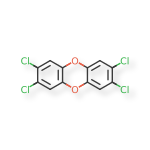
Details
| Stereochemistry | ACHIRAL |
| Molecular Formula | C12H4Cl4O2 |
| Molecular Weight | 321.971 |
| Optical Activity | NONE |
| Defined Stereocenters | 0 / 0 |
| E/Z Centers | 0 |
| Charge | 0 |
SHOW SMILES / InChI
SMILES
ClC1=CC2=C(OC3=CC(Cl)=C(Cl)C=C3O2)C=C1Cl
InChI
InChIKey=HGUFODBRKLSHSI-UHFFFAOYSA-N
InChI=1S/C12H4Cl4O2/c13-5-1-9-10(2-6(5)14)18-12-4-8(16)7(15)3-11(12)17-9/h1-4H
2,3,7,8-Tetrachlorodibenzo-p-dioxin which is often referred to simply as dioxin and is the reference for a number of compounds which are similar structurally and have dioxin-like toxicity. A substance extremely toxic to mammals, with a wide variation in sensitivity among species. Longer-term exposure of test mammals to lesser amounts can affect reproduction, cause birth defects, damage the liver and suppress the immune system. Several studies suggest that exposure to TCDD increases the risk of several types of cancer in people. Animal studies have also shown an increased risk of cancer from exposure to TCDD. The WHO and the USA DHHS have determined that TCDD is a human carcinogen. TCDD is a persistent environmental contaminant inadvertently produced as a by-product of herbicide and pesticide manufacturing. TCDD is also released during the bleaching process at tree pulp and paper mills, and during burning of municipal solid waste. Dioxins, like TCDD, have a long environmental half-life, bioaccumulate in the food chain, and can be found in human fat tissue, blood serum, breast milk and ovarian follicular fluid. TCDD is an aryl hydrocarbon receptor (AhR) agonist
Approval Year
PubMed
| Title | Date | PubMed |
|---|---|---|
| Aromatic hydrocarbon receptor (AhR).AhR nuclear translocator- and p53-mediated induction of the murine multidrug resistance mdr1 gene by 3-methylcholanthrene and benzo(a)pyrene in hepatoma cells. | 2001-02-16 |
|
| 7-ketocholesterol is an endogenous modulator for the arylhydrocarbon receptor. | 2001-02-02 |
|
| Anti-CD40 Treatment of 2,3,7,8-tetrachlorodibenzo-p-dioxin (TCDD)-exposed C57Bl/6 mice induces activation of antigen presenting cells yet fails to overcome TCDD-induced suppression of allograft immunity. | 2001-01-01 |
|
| Health risks posed by use of Di-2-ethylhexyl phthalate (DEHP) in PVC medical devices: a critical review. | 2001-01 |
|
| Serum levels of TCDD and dioxin-like chemicals in Rhesus monkeys chronically exposed to dioxin: correlation of increased serum PCB levels with endometriosis. | 2001-01 |
|
| Organochlorine contaminants and biomarker response in double-crested cormorants nesting in Green Bay and Lake Michigan, Wisconsin, USA. | 2001-01 |
|
| Induction of lung lesions in female rats following chronic exposure to 2,3,7,8-tetrachlorodibenzo-p-dioxin. | 2000-12-29 |
|
| The murine IL-2 promoter contains distal regulatory elements responsive to the Ah receptor, a member of the evolutionarily conserved bHLH-PAS transcription factor family. | 2000-12-15 |
|
| NRH:quinone oxidoreductase2 (NQO2). | 2000-12-01 |
|
| Effect of 2,3,7,8-tetrachlorodibenzo-p-dioxin on the expression of cytochrome P450 1A1, the aryl hydrocarbon receptor, and the aryl hydrocarbon receptor nuclear translocator in rat brain and pituitary. | 2000-12-01 |
|
| 2,3,7,8-tetrachlorodibenzo-p-dioxin increases serum and kidney retinoic acid levels and kidney retinol esterification in the rat. | 2000-12-01 |
|
| Regulation of prostaglandin endoperoxide H synthase-2 induction by dioxin in rat hepatocytes: possible c-Src-mediated pathway. | 2000-12 |
|
| 2,3,7,8-tetrachlorodibenzo-p-dioxin inhibits luminal cell differentiation and androgen responsiveness of the ventral prostate without inhibiting prostatic 5alpha-dihydrotestosterone formation or testicular androgen production in rat offspring. | 2000-12 |
|
| 3',4'-dimethoxyflavone as an aryl hydrocarbon receptor antagonist in human breast cancer cells. | 2000-12 |
|
| Nonspecific stimulation of the maternal immune system. I. Effects On teratogen-induced fetal malformations. | 2000-12 |
|
| The effects of perinatal exposure to low doses of 2,3,7,8-tetrachlorodibenzo-p-dioxin on immune organs in rats. | 2000-11-23 |
|
| Identification and expression of alternatively spliced aryl hydrocarbon nuclear translocator 2 (ARNT2) cDNAs from zebrafish with distinct functions. | 2000-11-15 |
|
| Down-regulation of murine Cyp1a-1 in mouse hepatoma Hepa-1c1c7 cells by bisphenol A. | 2000-11-02 |
|
| Comparative studies on the effects of green tea extracts and individual tea catechins on human CYP1A gene expression. | 2000-11-01 |
|
| Putative link between transcriptional regulation of IgM expression by 2,3,7,8-tetrachlorodibenzo-p-dioxin and the aryl hydrocarbon receptor/dioxin-responsive enhancer signaling pathway. | 2000-11 |
|
| The transcriptional signature of dioxin in human hepatoma HepG2 cells. | 2000-10-15 |
|
| Ovarian tumors in rats induced by chronic 2,3,7,8-tetrachlorodibenzo-p-dioxin treatment. | 2000-10-01 |
|
| Hemodynamic dysfunction and cytochrome P4501A mRNA expression induced by 2,3,7,8-tetrachlorodibenzo-p-dioxin during embryonic stages of lake trout development. | 2000-10-01 |
|
| Conditional disruption of the aryl hydrocarbon receptor nuclear translocator (Arnt) gene leads to loss of target gene induction by the aryl hydrocarbon receptor and hypoxia-inducible factor 1alpha. | 2000-10 |
|
| Inhibition of dioxin effects on bone formation in vitro by a newly described aryl hydrocarbon receptor antagonist, resveratrol. | 2000-10 |
|
| Antiestrogenic effects of 2,3,7,8-tetrachlorodibenzo-p-dioxin in mouse uterus: critical role of the aryl hydrocarbon receptor in stromal tissue. | 2000-10 |
|
| Dose-response relationships for induction of CYP1A1 and CYP1A2 enzyme activity in liver, lung, and skin in female mice following subchronic exposure to polychlorinated biphenyls. | 2000-09-15 |
|
| The bioflavonoid galangin blocks aryl hydrocarbon receptor activation and polycyclic aromatic hydrocarbon-induced pre-B cell apoptosis. | 2000-09 |
|
| Disruption of dioxin-inducible phase I and phase II gene expression patterns by cadmium, chromium, and arsenic. | 2000-08 |
|
| Endocrine disruptive effects of polychlorinated aromatic hydrocarbons on intestinal cholecystokinin in rats. | 2000-08 |
|
| TCDD suppression of tissue transglutaminase stimulation by retinoids in malignant human keratinocytes. | 2000-08 |
|
| Effect of chlorinated hydrocarbons on expression of cytochrome P450 1A1, 1A2 and 1B1 and 2- and 4-hydroxylation of 17beta-estradiol in female Sprague-Dawley rats. | 2000-08 |
|
| Crosstalk between estrogen receptor alpha and the aryl hydrocarbon receptor in breast cancer cells involves unidirectional activation of proteasomes. | 2000-07-28 |
|
| Molecular characterization and developmental expression of the aryl hydrocarbon receptor from the chick embryo. | 2000-07 |
|
| An aryl hydrocarbon receptor conformation acts as the functional core of nuclear dioxin signaling. | 2000-06-15 |
|
| Differential expression of two CYP1A genes in rainbow trout (Oncorhynchys mykiss). | 2000-06-15 |
|
| Inhibition of 2,3,7,8-tetrachlorodibenzo-p-dioxin (TCDD)-stimulated Cyp1a1 promoter activity by hypoxic agents. | 2000-06-15 |
|
| 2,3,7,8-tetrachlorodibenzo-p-dioxin (TCDD) induces binding of a 50 kDa protein on the 3' untranslated region of urokinase-type plasminogen activator mRNA. | 2000-06-07 |
|
| Demonstration of 2,3,7,8-tetrachlorodibenzo-p-dioxin attenuation of P450 steroidogenic enzyme mRNAs in rat granulosa cell in vitro by competitive reverse transcriptase-polymerase chain reaction assay. | 2000-06 |
|
| Generation of alphabeta T-cell receptor+ CD4- CD8+ cells in major histocompatibility complex class I-deficient mice upon activation of the aryl hydrocarbon receptor by 2,3,7,8-tetrachlorodibenzo-p-dioxin. | 2000-06 |
|
| Characterization of CYP1A1 and CYP1A3 gene expression in rainbow trout (Oncorhynchus mykiss). | 2000-05-01 |
|
| Diflubenzuron, a benzoyl-urea insecticide, is a potent inhibitor of TCDD-induced CYP1A1 expression in HepG2 cells. | 2000-05-01 |
|
| A novel 4 S [3H]beta-naphthoflavone-binding protein in liver cytosol of female Sprague-Dawley rats treated with aryl hydrocarbon receptor agonists. | 2000-05-01 |
|
| Nitric oxide inhibits dioxin action for the stimulation of Cyp1a1 promoter activity. | 2000-05 |
|
| Superinduction of CYP1A1 gene expression. Regulation of 2,3,7, 8-tetrachlorodibenzo-p-dioxin-induced degradation of Ah receptor by cycloheximide. | 2000-04-28 |
|
| Environmental polycyclic aromatic hydrocarbons affect androgen receptor activation in vitro. | 2000-04-14 |
|
| TCDD induces CYP1A4 and CYP1A5 in chick liver and kidney and only CYP1A4, an enzyme lacking arachidonic acid epoxygenase activity, in myocardium and vascular endothelium. | 2000-04-01 |
|
| Estrogen and aryl hydrocarbon receptor expression and crosstalk in human Ishikawa endometrial cancer cells. | 2000-04 |
|
| Effect of 2,3,7,8-tetrachlorodibenzo-p-dioxin on the expression of follicle-stimulating hormone receptors during cell differentiation in cultured granulosa cells. | 2000-04 |
|
| Role of p53 tumor suppressor gene in the toxicity of TCDD, endrin, naphthalene, and chromium (VI) in liver and brain tissues of mice. | 2000-03-15 |
Patents
Sample Use Guides
Treatment of pregnant female Sprague-Dawley rats on Gestational Day 15 with a single oral dose of 2,3,7,8-tetrachlorodibenzo-p-dioxin (TCDD) (0.5, 1.0, or 2.0 ug/kg) or indole-3-carbinol (I3C, 1.0 or 100 mg/kg), an aryl hydrocarbon (Ah) receptor agonist which is found in cruciferous vegetables, resulted in reproductive abnormalities in the male offspring (three to five litters in each treatment group).
Route of Administration:
Oral
| Name | Type | Language | ||
|---|---|---|---|---|
|
Common Name | English | ||
|
Preferred Name | English | ||
|
Systematic Name | English | ||
|
Common Name | English | ||
|
Common Name | English | ||
|
Common Name | English | ||
|
Common Name | English | ||
|
Systematic Name | English | ||
|
Common Name | English | ||
|
Common Name | English | ||
|
Common Name | English | ||
|
Code | English | ||
|
Systematic Name | English |
| Classification Tree | Code System | Code | ||
|---|---|---|---|---|
|
EPA PESTICIDE CODE |
600000
Created by
admin on Mon Mar 31 18:44:30 GMT 2025 , Edited by admin on Mon Mar 31 18:44:30 GMT 2025
|
| Code System | Code | Type | Description | ||
|---|---|---|---|---|---|
|
15625
Created by
admin on Mon Mar 31 18:44:30 GMT 2025 , Edited by admin on Mon Mar 31 18:44:30 GMT 2025
|
PRIMARY | |||
|
DO80M48B6O
Created by
admin on Mon Mar 31 18:44:30 GMT 2025 , Edited by admin on Mon Mar 31 18:44:30 GMT 2025
|
PRIMARY | |||
|
C864
Created by
admin on Mon Mar 31 18:44:30 GMT 2025 , Edited by admin on Mon Mar 31 18:44:30 GMT 2025
|
PRIMARY | |||
|
m10491
Created by
admin on Mon Mar 31 18:44:30 GMT 2025 , Edited by admin on Mon Mar 31 18:44:30 GMT 2025
|
PRIMARY | Merck Index | ||
|
DTXSID2021315
Created by
admin on Mon Mar 31 18:44:30 GMT 2025 , Edited by admin on Mon Mar 31 18:44:30 GMT 2025
|
PRIMARY | |||
|
2,3,7,8-Tetrachlorodibenzodioxin
Created by
admin on Mon Mar 31 18:44:30 GMT 2025 , Edited by admin on Mon Mar 31 18:44:30 GMT 2025
|
PRIMARY | |||
|
36682
Created by
admin on Mon Mar 31 18:44:30 GMT 2025 , Edited by admin on Mon Mar 31 18:44:30 GMT 2025
|
PRIMARY | |||
|
28119
Created by
admin on Mon Mar 31 18:44:30 GMT 2025 , Edited by admin on Mon Mar 31 18:44:30 GMT 2025
|
PRIMARY | |||
|
134044
Created by
admin on Mon Mar 31 18:44:30 GMT 2025 , Edited by admin on Mon Mar 31 18:44:30 GMT 2025
|
PRIMARY | |||
|
SUB33620
Created by
admin on Mon Mar 31 18:44:30 GMT 2025 , Edited by admin on Mon Mar 31 18:44:30 GMT 2025
|
PRIMARY | |||
|
DO80M48B6O
Created by
admin on Mon Mar 31 18:44:30 GMT 2025 , Edited by admin on Mon Mar 31 18:44:30 GMT 2025
|
PRIMARY | |||
|
1746-01-6
Created by
admin on Mon Mar 31 18:44:30 GMT 2025 , Edited by admin on Mon Mar 31 18:44:30 GMT 2025
|
PRIMARY | |||
|
4151
Created by
admin on Mon Mar 31 18:44:30 GMT 2025 , Edited by admin on Mon Mar 31 18:44:30 GMT 2025
|
PRIMARY | |||
|
217-122-7
Created by
admin on Mon Mar 31 18:44:30 GMT 2025 , Edited by admin on Mon Mar 31 18:44:30 GMT 2025
|
PRIMARY | |||
|
100000127538
Created by
admin on Mon Mar 31 18:44:30 GMT 2025 , Edited by admin on Mon Mar 31 18:44:30 GMT 2025
|
PRIMARY |
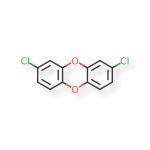
METABOLITE (PARENT)
SUBSTANCE RECORD