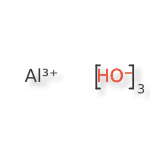
Details
| Stereochemistry | ACHIRAL |
| Molecular Formula | Al.3HO |
| Molecular Weight | 78.0036 |
| Optical Activity | NONE |
| Defined Stereocenters | 0 / 0 |
| E/Z Centers | 0 |
| Charge | 0 |
SHOW SMILES / InChI
SMILES
[OH-].[OH-].[OH-].[Al+3]
InChI
InChIKey=WNROFYMDJYEPJX-UHFFFAOYSA-K
InChI=1S/Al.3H2O/h;3*1H2/q+3;;;/p-3
DescriptionCurator's Comment: description was created based on several sources, including
https://www.drugs.com/international/algeldrate.html | https://www.ncbi.nlm.nih.gov/pubmed/18362170 | https://www.ncbi.nlm.nih.gov/pubmed/12222737 | https://www.ncbi.nlm.nih.gov/pubmed/9115023 | https://www.ncbi.nlm.nih.gov/pubmed/15479434
Curator's Comment: description was created based on several sources, including
https://www.drugs.com/international/algeldrate.html | https://www.ncbi.nlm.nih.gov/pubmed/18362170 | https://www.ncbi.nlm.nih.gov/pubmed/12222737 | https://www.ncbi.nlm.nih.gov/pubmed/9115023 | https://www.ncbi.nlm.nih.gov/pubmed/15479434
Algeldrate (Aluminium hydroxide) is the amphoteric inorganic compound used as an antacid in the treatment of Duodenal, Peptic and Stomach Ulcer and some other conditions. Aluminium hydroxide is preferred over other alternatives such as sodium bicarbonate because Al(OH)3, being insoluble, does not increase the pH of stomach above 7 and hence, does not trigger secretion of excess acid by the stomach. Brand names include Alu-Cap, Aludrox, Gaviscon or Pepsamar. It reacts with the excess acid in the stomach, reducing the acidity of the stomach content, which may relieve the symptoms of ulcers, heartburn or dyspepsia. Such products can cause constipation, because the aluminum ions inhibit the contractions of smooth muscle cells in the gastrointestinal tract, slowing peristalsis and lengthening the time needed for stool to pass through the colon. Some such products (such as Maalox) are formulated to minimize such effects through the inclusion of equal concentrations of magnesium hydroxide or magnesium carbonate, which have counterbalancing laxative effects. This compound is also used to control phosphate (phosphorus) levels in the blood of people suffering from kidney failure. Precipitated aluminum hydroxide is included as an adjuvant in some vaccines (e.g. anthrax vaccine). One of the well-known brands of aluminum hydroxide adjuvant is Alhydrogel, made by Brenntag Biosector. Since it absorbs protein well, it also functions to stabilize vaccines by preventing the proteins in the vaccine from precipitating or sticking to the walls of the container during storage. Aluminium hydroxide is sometimes mistakenly called "alum", which properly refers to aluminum potassium sulfate. Vaccine formulations containing aluminum hydroxide stimulate the immune system by inducing the release of uric acid, an immunological danger signal. This strongly attracts certain types of monocytes which differentiate into dendritic cells. The dendritic cells pick up the antigen, carry it to lymph nodes, and stimulate T cells and B cells. It appears to contribute to induction of a good Th2 response, so is useful for immunizing against pathogens that are blocked by antibodies. In the 1960s and 1970s, it was speculated that aluminum was related to various neurological disorders including Alzheimer's disease. Since then, multiple epidemiological studies have found no connection between exposure to aluminum and neurological disorders.
Approval Year
PubMed
| Title | Date | PubMed |
|---|---|---|
| Toxicoproteomic analysis of pulmonary carbon nanotube exposure using LC-MS/MS. | 2015-03-02 |
|
| Pesticide exposure and depression among male private pesticide applicators in the agricultural health study. | 2014-09 |
|
| Atomic layer deposition coating of carbon nanotubes with aluminum oxide alters pro-fibrogenic cytokine expression by human mononuclear phagocytes in vitro and reduces lung fibrosis in mice in vivo. | 2014 |
|
| New insight into artifactual phenomena during in vitro toxicity assessment of engineered nanoparticles: study of TNF-α adsorption on alumina oxide nanoparticle. | 2013-04 |
|
| Effect of acute aluminum phosphide exposure on rats: a biochemical and histological correlation. | 2012-11-23 |
|
| Al₂O₃ nanoparticles induce mitochondria-mediated cell death and upregulate the expression of signaling genes in human mesenchymal stem cells. | 2012-11 |
|
| Zeta potential and solubility to toxic ions as mechanisms of lung inflammation caused by metal/metal oxide nanoparticles. | 2012-04 |
|
| Blood levels of methemoglobin in patients with aluminum phosphide poisoning and its correlation with patient's outcome. | 2011-03 |
|
| In vivo toxicity of nano-alumina on mice neurobehavioral profiles and the potential mechanisms. | 2011-02-19 |
|
| Aluminum nanoparticle exposure in L1 larvae results in more severe lethality toxicity than in L4 larvae or young adults by strengthening the formation of stress response and intestinal lipofuscin accumulation in nematodes. | 2011-01 |
|
| Altered glucose homeostasis in response to aluminium phosphide induced cellular oxygen deficit in rat. | 2010-07 |
|
| Inhibition of a protein tyrosine phosphatase using mesoporous oxides. | 2010-03-11 |
|
| The effects of implant surface nanoscale features on osteoblast-specific gene expression. | 2009-09 |
|
| Aluminum phosphide fatalities at mild exertion in asymptomatic children: a clue to understand the variations of the autopsy findings. | 2009-08 |
|
| Retrospective analysis of 4-week inhalation studies in rats with focus on fate and pulmonary toxicity of two nanosized aluminum oxyhydroxides (boehmite) and pigment-grade iron oxide (magnetite): the key metric of dose is particle mass and not particle surface area. | 2009-05-17 |
|
| Efficacy of simple short-term in vitro assays for predicting the potential of metal oxide nanoparticles to cause pulmonary inflammation. | 2009-02 |
|
| Hyperglycemia in acute aluminum phosphide poisoning as a potential prognostic factor. | 2008-07 |
|
| Alumina nanoparticles induce expression of endothelial cell adhesion molecules. | 2008-05-30 |
|
| Human macrophage response to UHMWPE, TiAlV, CoCr, and alumina particles: analysis of multiple cytokines using protein arrays. | 2008-02 |
|
| Reversible myocardial injury associated with aluminum phosphide poisoning. | 2007-09 |
|
| Microdermabrasion with and without aluminum oxide crystal abrasion: a comparative molecular analysis of dermal remodeling. | 2006-03 |
|
| An effector domain mutant of Arf6 implicates phospholipase D in endosomal membrane recycling. | 2006-01 |
|
| Large aqueous aluminum hydroxide molecules. | 2006-01 |
|
| Cytochrome-c oxidase inhibition in 26 aluminum phosphide poisoned patients. | 2006 |
|
| Molecular basis of osteoclastogenesis induced by osteoblasts exposed to wear particles. | 2005-05 |
|
| The influence of alumina and ultra-high molecular weight polyethylene particles on osteoblast-osteoclast cooperation. | 2004-08 |
|
| Comparison of the response of primary human blood monocytes and the U937 human monocytic cell line to two different sizes of alumina ceramic particles. | 2004-07 |
|
| The giant protein HERC1 is recruited to aluminum fluoride-induced actin-rich surface protrusions in HeLa cells. | 2004-02-13 |
|
| Matrix metalloproteinases MMP-2, -9 and tissue inhibitors TIMP-1, -2 expression and secretion by primary human osteoblast cells in response to titanium, zirconia, and alumina ceramics. | 2004-01-01 |
|
| Mechanisms of magnesium-stimulated adhesion of osteoblastic cells to commonly used orthopaedic implants. | 2002-11 |
|
| Bone cell mitogenic action of fluoroaluminate and aluminum fluoride but not that of sodium fluoride involves upregulation of the insulin-like growth factor system. | 2002-05 |
|
| Effects of polyethylene and alpha-alumina particles on IL-6 expression and secretion in primary cultures of human osteoblastic cells. | 2002-02 |
|
| Quartz exposure of the rat lung leads to a linear dose response in inflammation but not in oxidative DNA damage and mutagenicity. | 2001-04 |
|
| Effect of N-acetylcysteine and L-NAME on aluminium phosphide induced cardiovascular toxicity in rats. | 2001-04 |
|
| Cholinesterase inhibition by aluminium phosphide poisoning in rats and effects of atropine and pralidoxime chloride. | 2001-01 |
|
| Intravascular hemolysis in aluminium phosphide poisoning. | 1999-09 |
|
| [TNF-alpha secretion by human macrophage-like cells in response to wear particles and its modification by drugs]. | 1999-05 |
|
| Effect of aluminum phosphide on blood glucose level. | 1999-02 |
|
| Manipulation of B cell antigen receptor tyrosine phosphorylation using aluminum fluoride and sodium orthovanadate. | 1995-11 |
|
| Requirement for intramolecular domain interaction in activation of G protein alpha subunit by aluminum fluoride and GDP but not by GTP gamma S. | 1994-11-25 |
|
| Hypermagnesemia following aluminum phosphide poisoning. | 1991-02 |
|
| Plasma renin activity in shock due to aluminium phosphide poisoning. | 1990-06 |
|
| Aluminum fluoride inhibition of glucocorticoid receptor inactivation and transformation. | 1990-04-10 |
|
| Cardiovascular manifestations of aluminium phosphide intoxication. | 1989-09 |
|
| Aluminum fluoride induces phosphatidylinositol turnover, elevation of cytoplasmic free calcium, and phosphorylation of the T cell antigen receptor in murine T cells. | 1987-11-15 |
Patents
Sample Use Guides
Adults and children over 15 years: 1-2 table (400-800ьп). 4 times a day 1 hour after meals and in the evening before bed or if there is discomfort, epigastric pain, heartburn.
Route of Administration:
Oral
Bone marrow cells were cultured for 9 d in dendritic cells (DC) culture medium (DC-CM; RPMI 1640 containing GlutaMAX-I; Invitrogen) supplemented with 5% (vol/vol) FCS (Sigma-Aldrich), 50 μ M 2-mercaptoethanol (Sigma-Aldrich), 50 μ g/ml gentamicin (Invitrogen), and 20 ng/ml recombinant mouse GM-CSF (a gift from K. Thielemans, Vrije Universiteit Brussel, Brussels, Belgium). 16 h before harvesting, DCs were exposed either to 10 μ g/ml of OVA, alum (Algeldrate), or OVA-alum suspension.
| Name | Type | Language | ||
|---|---|---|---|---|
|
Preferred Name | English | ||
|
Official Name | English | ||
|
Common Name | English | ||
|
Common Name | English | ||
|
Common Name | English | ||
|
Common Name | English | ||
|
Common Name | English | ||
|
Common Name | English | ||
|
Common Name | English | ||
|
Common Name | English | ||
|
Common Name | English | ||
|
Common Name | English | ||
|
Brand Name | English | ||
|
Common Name | English | ||
|
Common Name | English | ||
|
Common Name | English | ||
|
Common Name | English | ||
|
Common Name | English | ||
|
Common Name | English | ||
|
Common Name | English | ||
|
Common Name | English | ||
|
Common Name | English | ||
|
Common Name | English | ||
|
Common Name | English | ||
|
Common Name | English | ||
|
Common Name | English | ||
|
Common Name | English | ||
|
Common Name | English | ||
|
Common Name | English | ||
|
Common Name | English | ||
|
Common Name | English | ||
|
Code | English | ||
|
Systematic Name | English | ||
|
Common Name | English | ||
|
Common Name | English | ||
|
Brand Name | English | ||
|
Common Name | English | ||
|
Common Name | English | ||
|
Common Name | English | ||
|
Common Name | English |
| Classification Tree | Code System | Code | ||
|---|---|---|---|---|
|
CFR |
21 CFR 311.15
Created by
admin on Mon Mar 31 18:04:30 GMT 2025 , Edited by admin on Mon Mar 31 18:04:30 GMT 2025
|
||
|
NCI_THESAURUS |
C2554
Created by
admin on Mon Mar 31 18:04:30 GMT 2025 , Edited by admin on Mon Mar 31 18:04:30 GMT 2025
|
||
|
CFR |
21 CFR 331.11
Created by
admin on Mon Mar 31 18:04:30 GMT 2025 , Edited by admin on Mon Mar 31 18:04:30 GMT 2025
|
||
|
WHO-VATC |
QA02AB01
Created by
admin on Mon Mar 31 18:04:30 GMT 2025 , Edited by admin on Mon Mar 31 18:04:30 GMT 2025
|
||
|
WHO-ATC |
A02AB01
Created by
admin on Mon Mar 31 18:04:30 GMT 2025 , Edited by admin on Mon Mar 31 18:04:30 GMT 2025
|
||
|
DSLD |
2985 (Number of products:2)
Created by
admin on Mon Mar 31 18:04:30 GMT 2025 , Edited by admin on Mon Mar 31 18:04:30 GMT 2025
|
| Code System | Code | Type | Description | ||
|---|---|---|---|---|---|
|
SUB33625
Created by
admin on Mon Mar 31 18:04:30 GMT 2025 , Edited by admin on Mon Mar 31 18:04:30 GMT 2025
|
PRIMARY | |||
|
10176082
Created by
admin on Mon Mar 31 18:04:30 GMT 2025 , Edited by admin on Mon Mar 31 18:04:30 GMT 2025
|
PRIMARY | |||
|
21645-51-2
Created by
admin on Mon Mar 31 18:04:30 GMT 2025 , Edited by admin on Mon Mar 31 18:04:30 GMT 2025
|
PRIMARY | |||
|
DB06723
Created by
admin on Mon Mar 31 18:04:30 GMT 2025 , Edited by admin on Mon Mar 31 18:04:30 GMT 2025
|
PRIMARY | |||
|
m1608
Created by
admin on Mon Mar 31 18:04:30 GMT 2025 , Edited by admin on Mon Mar 31 18:04:30 GMT 2025
|
PRIMARY | Merck Index | ||
|
612
Created by
admin on Mon Mar 31 18:04:30 GMT 2025 , Edited by admin on Mon Mar 31 18:04:30 GMT 2025
|
ALTERNATIVE | |||
|
33130
Created by
admin on Mon Mar 31 18:04:30 GMT 2025 , Edited by admin on Mon Mar 31 18:04:30 GMT 2025
|
PRIMARY | |||
|
8012-63-3
Created by
admin on Mon Mar 31 18:04:30 GMT 2025 , Edited by admin on Mon Mar 31 18:04:30 GMT 2025
|
SUPERSEDED | |||
|
1305556
Created by
admin on Mon Mar 31 18:04:30 GMT 2025 , Edited by admin on Mon Mar 31 18:04:30 GMT 2025
|
ALTERNATIVE | |||
|
CHEMBL1200706
Created by
admin on Mon Mar 31 18:04:30 GMT 2025 , Edited by admin on Mon Mar 31 18:04:30 GMT 2025
|
PRIMARY | |||
|
DTXSID2036405
Created by
admin on Mon Mar 31 18:04:30 GMT 2025 , Edited by admin on Mon Mar 31 18:04:30 GMT 2025
|
PRIMARY | |||
|
CHEMBL2109018
Created by
admin on Mon Mar 31 18:04:30 GMT 2025 , Edited by admin on Mon Mar 31 18:04:30 GMT 2025
|
PRIMARY | |||
|
5QB0T2IUN0
Created by
admin on Mon Mar 31 18:04:30 GMT 2025 , Edited by admin on Mon Mar 31 18:04:30 GMT 2025
|
PRIMARY | |||
|
SUB12826MIG
Created by
admin on Mon Mar 31 18:04:30 GMT 2025 , Edited by admin on Mon Mar 31 18:04:30 GMT 2025
|
PRIMARY | |||
|
D000536
Created by
admin on Mon Mar 31 18:04:30 GMT 2025 , Edited by admin on Mon Mar 31 18:04:30 GMT 2025
|
PRIMARY | |||
|
C39707
Created by
admin on Mon Mar 31 18:04:30 GMT 2025 , Edited by admin on Mon Mar 31 18:04:30 GMT 2025
|
PRIMARY | |||
|
81948
Created by
admin on Mon Mar 31 18:04:30 GMT 2025 , Edited by admin on Mon Mar 31 18:04:30 GMT 2025
|
PRIMARY | |||
|
1017502
Created by
admin on Mon Mar 31 18:04:30 GMT 2025 , Edited by admin on Mon Mar 31 18:04:30 GMT 2025
|
PRIMARY | |||
|
100000127543
Created by
admin on Mon Mar 31 18:04:30 GMT 2025 , Edited by admin on Mon Mar 31 18:04:30 GMT 2025
|
PRIMARY | |||
|
ALUMINUM HYDROXIDE
Created by
admin on Mon Mar 31 18:04:30 GMT 2025 , Edited by admin on Mon Mar 31 18:04:30 GMT 2025
|
PRIMARY | Description: A white, fine, amorphous powder; odourless. Solubility: Practically insoluble in water and ethanol (~750 g/l) TS; soluble in hydrochloric acid (~70 g/l) TS and sodium hydroxide (~80 g/l) TS. Category: Antacid. Storage: Aluminium hydroxide should be kept in a tightly closed container. Definition: Aluminium hydroxide contains not less than 71.9% and not more than 94.9% of Al(OH)3. | ||
|
ALUMINIUM HYDROXIDE
Created by
admin on Mon Mar 31 18:04:30 GMT 2025 , Edited by admin on Mon Mar 31 18:04:30 GMT 2025
|
PRIMARY | |||
|
SUB32081
Created by
admin on Mon Mar 31 18:04:30 GMT 2025 , Edited by admin on Mon Mar 31 18:04:30 GMT 2025
|
PRIMARY | |||
|
244-492-7
Created by
admin on Mon Mar 31 18:04:30 GMT 2025 , Edited by admin on Mon Mar 31 18:04:30 GMT 2025
|
PRIMARY | |||
|
5QB0T2IUN0
Created by
admin on Mon Mar 31 18:04:30 GMT 2025 , Edited by admin on Mon Mar 31 18:04:30 GMT 2025
|
PRIMARY |
ACTIVE MOIETY