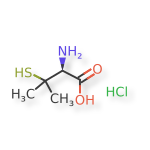
Details
| Stereochemistry | ABSOLUTE |
| Molecular Formula | C5H11NO2S.ClH |
| Molecular Weight | 185.672 |
| Optical Activity | UNSPECIFIED |
| Defined Stereocenters | 1 / 1 |
| E/Z Centers | 0 |
| Charge | 0 |
SHOW SMILES / InChI
SMILES
Cl.CC(C)(S)[C@@H](N)C(O)=O
InChI
InChIKey=CZDHUFYOXKHLME-DFWYDOINSA-N
InChI=1S/C5H11NO2S.ClH/c1-5(2,9)3(6)4(7)8;/h3,9H,6H2,1-2H3,(H,7,8);1H/t3-;/m0./s1
Penicillamine, sold under the trade names of Cuprimine among others, is a medication primarily used for treatment of Wilson's disease, cystinuria and active rheumatoid arthritis. Penicillamine is a chelating agent recommended for the removal of excess copper in patients with Wilson's disease. From in vitro studies which indicate that one atom of copper combines with two molecules of penicillamine. Penicillamine also reduces excess cystine excretion in cystinuria. This is done, at least in part, by disulfide interchange between penicillamine and cystine, resulting in formation of penicillamine-cysteine disulfide, a substance that is much more soluble than cystine and is excreted readily. Penicillamine interferes with the formation of cross-links between tropocollagen molecules and cleaves them when newly formed. The mechanism of action of penicillamine in rheumatoid arthritis is unknown although it appears to suppress disease activity. Unlike cytotoxic immunosuppressants, penicillamine markedly lowers IgM rheumatoid factor but produces no significant depression in absolute levels of serum immunoglobulins. Also unlike cytotoxic immunosuppressants which act on both, penicillamine in vitro depresses T-cell activity but not B-cell activity.
Approval Year
Targets
| Primary Target | Pharmacology | Condition | Potency |
|---|---|---|---|
Target ID: CHEMBL2363057 |
Conditions
| Condition | Modality | Targets | Highest Phase | Product |
|---|---|---|---|---|
| Primary | CUPRIMINE Approved UseCUPRIMINE is indicated in the treatment of Wilson's disease, cystinuria, and in patients with severe, active
rheumatoid arthritis who have failed to respond to an adequate trial of conventional therapy. Launch Date1970 |
|||
| Primary | CUPRIMINE Approved UseCUPRIMINE is indicated in the treatment of Wilson's disease, cystinuria, and in patients with severe, active
rheumatoid arthritis who have failed to respond to an adequate trial of conventional therapy. Launch Date1970 |
|||
| Primary | CUPRIMINE Approved UseCUPRIMINE is indicated in the treatment of Wilson's disease, cystinuria, and in patients with severe, active
rheumatoid arthritis who have failed to respond to an adequate trial of conventional therapy. Launch Date1970 |
Cmax
| Value | Dose | Co-administered | Analyte | Population |
|---|---|---|---|---|
8.04 μg/mL |
500 mg single, oral dose: 500 mg route of administration: Oral experiment type: SINGLE co-administered: |
PENICILLAMINE plasma | Homo sapiens population: HEALTHY age: ADULT sex: FEMALE / MALE food status: FASTED |
|
5.36 μg/mL |
500 mg single, oral dose: 500 mg route of administration: Oral experiment type: SINGLE co-administered: |
PENICILLAMINE plasma | Homo sapiens population: HEALTHY age: ADULT sex: FEMALE / MALE food status: FED |
AUC
| Value | Dose | Co-administered | Analyte | Population |
|---|---|---|---|---|
83.97 μg × h/mL |
500 mg single, oral dose: 500 mg route of administration: Oral experiment type: SINGLE co-administered: |
PENICILLAMINE plasma | Homo sapiens population: HEALTHY age: ADULT sex: FEMALE / MALE food status: FASTED |
|
73.19 μg × h/mL |
500 mg single, oral dose: 500 mg route of administration: Oral experiment type: SINGLE co-administered: |
PENICILLAMINE plasma | Homo sapiens population: HEALTHY age: ADULT sex: FEMALE / MALE food status: FED |
T1/2
| Value | Dose | Co-administered | Analyte | Population |
|---|---|---|---|---|
5.01 h |
500 mg single, oral dose: 500 mg route of administration: Oral experiment type: SINGLE co-administered: |
PENICILLAMINE plasma | Homo sapiens population: HEALTHY age: ADULT sex: FEMALE / MALE food status: FASTED |
|
5.37 h |
500 mg single, oral dose: 500 mg route of administration: Oral experiment type: SINGLE co-administered: |
PENICILLAMINE plasma | Homo sapiens population: HEALTHY age: ADULT sex: FEMALE / MALE food status: FED |
Doses
| Dose | Population | Adverse events |
|---|---|---|
1 g 1 times / day multiple, oral Recommended Dose: 1 g, 1 times / day Route: oral Route: multiple Dose: 1 g, 1 times / day Sources: |
unhealthy, 45+/-12 |
Disc. AE: Proteinuria, Rash... AEs leading to discontinuation/dose reduction: Proteinuria (10.6%) Sources: Rash Myasthenia gravis (1.5%) Thrombocytopenia Flu-like illness Stomatitis |
4 g 1 times / day multiple, oral Recommended Dose: 4 g, 1 times / day Route: oral Route: multiple Dose: 4 g, 1 times / day Sources: |
unhealthy Health Status: unhealthy Sources: |
Disc. AE: Leukopenia, Thrombocytopenia... AEs leading to discontinuation/dose reduction: Leukopenia (5%) Sources: Thrombocytopenia (5%) Proteinuria Hematuria Glomerulonephritis membranous Nephrotic syndrome Goodpasture's syndrome (rare) Obliterative bronchiolitis (rare) Myasthenia gravis Pemphigus vulgaris Pemphigus foliaceus |
AEs
| AE | Significance | Dose | Population |
|---|---|---|---|
| Myasthenia gravis | 1.5% Disc. AE |
1 g 1 times / day multiple, oral Recommended Dose: 1 g, 1 times / day Route: oral Route: multiple Dose: 1 g, 1 times / day Sources: |
unhealthy, 45+/-12 |
| Proteinuria | 10.6% Disc. AE |
1 g 1 times / day multiple, oral Recommended Dose: 1 g, 1 times / day Route: oral Route: multiple Dose: 1 g, 1 times / day Sources: |
unhealthy, 45+/-12 |
| Flu-like illness | Disc. AE | 1 g 1 times / day multiple, oral Recommended Dose: 1 g, 1 times / day Route: oral Route: multiple Dose: 1 g, 1 times / day Sources: |
unhealthy, 45+/-12 |
| Rash | Disc. AE | 1 g 1 times / day multiple, oral Recommended Dose: 1 g, 1 times / day Route: oral Route: multiple Dose: 1 g, 1 times / day Sources: |
unhealthy, 45+/-12 |
| Stomatitis | Disc. AE | 1 g 1 times / day multiple, oral Recommended Dose: 1 g, 1 times / day Route: oral Route: multiple Dose: 1 g, 1 times / day Sources: |
unhealthy, 45+/-12 |
| Thrombocytopenia | Disc. AE | 1 g 1 times / day multiple, oral Recommended Dose: 1 g, 1 times / day Route: oral Route: multiple Dose: 1 g, 1 times / day Sources: |
unhealthy, 45+/-12 |
| Leukopenia | 5% Disc. AE |
4 g 1 times / day multiple, oral Recommended Dose: 4 g, 1 times / day Route: oral Route: multiple Dose: 4 g, 1 times / day Sources: |
unhealthy Health Status: unhealthy Sources: |
| Thrombocytopenia | 5% Disc. AE |
4 g 1 times / day multiple, oral Recommended Dose: 4 g, 1 times / day Route: oral Route: multiple Dose: 4 g, 1 times / day Sources: |
unhealthy Health Status: unhealthy Sources: |
| Glomerulonephritis membranous | Disc. AE | 4 g 1 times / day multiple, oral Recommended Dose: 4 g, 1 times / day Route: oral Route: multiple Dose: 4 g, 1 times / day Sources: |
unhealthy Health Status: unhealthy Sources: |
| Hematuria | Disc. AE | 4 g 1 times / day multiple, oral Recommended Dose: 4 g, 1 times / day Route: oral Route: multiple Dose: 4 g, 1 times / day Sources: |
unhealthy Health Status: unhealthy Sources: |
| Myasthenia gravis | Disc. AE | 4 g 1 times / day multiple, oral Recommended Dose: 4 g, 1 times / day Route: oral Route: multiple Dose: 4 g, 1 times / day Sources: |
unhealthy Health Status: unhealthy Sources: |
| Nephrotic syndrome | Disc. AE | 4 g 1 times / day multiple, oral Recommended Dose: 4 g, 1 times / day Route: oral Route: multiple Dose: 4 g, 1 times / day Sources: |
unhealthy Health Status: unhealthy Sources: |
| Pemphigus foliaceus | Disc. AE | 4 g 1 times / day multiple, oral Recommended Dose: 4 g, 1 times / day Route: oral Route: multiple Dose: 4 g, 1 times / day Sources: |
unhealthy Health Status: unhealthy Sources: |
| Pemphigus vulgaris | Disc. AE | 4 g 1 times / day multiple, oral Recommended Dose: 4 g, 1 times / day Route: oral Route: multiple Dose: 4 g, 1 times / day Sources: |
unhealthy Health Status: unhealthy Sources: |
| Proteinuria | Disc. AE | 4 g 1 times / day multiple, oral Recommended Dose: 4 g, 1 times / day Route: oral Route: multiple Dose: 4 g, 1 times / day Sources: |
unhealthy Health Status: unhealthy Sources: |
| Goodpasture's syndrome | rare Disc. AE |
4 g 1 times / day multiple, oral Recommended Dose: 4 g, 1 times / day Route: oral Route: multiple Dose: 4 g, 1 times / day Sources: |
unhealthy Health Status: unhealthy Sources: |
| Obliterative bronchiolitis | rare Disc. AE |
4 g 1 times / day multiple, oral Recommended Dose: 4 g, 1 times / day Route: oral Route: multiple Dose: 4 g, 1 times / day Sources: |
unhealthy Health Status: unhealthy Sources: |
PubMed
| Title | Date | PubMed |
|---|---|---|
| Scleroderma in a child after chemotherapy for cancer. | 2001-05-01 |
|
| Nitric oxide reduces energy supply by direct action on the respiratory chain in isolated cardiomyocytes. | 2001-05 |
|
| Glutamate release via NO production evoked by NMDA in the NTS enhances hypotension and bradycardia in vivo. | 2001-05 |
|
| Endothelial nitric oxide synthase plays an essential role in regulation of renal oxygen consumption by NO. | 2001-05 |
|
| [Drug-induced taste disorders: analysis of the French Pharmacovigilance Database and literature review]. | 2001-04-27 |
|
| Effect of nitric oxide on basal and stretch-induced release of atrial natriuretic factor (ANF) from isolated perfused rat atria. | 2001-04-20 |
|
| Old and new drugs used in rheumatoid arthritis: a historical perspective. Part 1: the older drugs. | 2001-04-17 |
|
| Enantiomeric analysis of pharmaceutical compounds by ion/molecule reactions. | 2001-04-15 |
|
| Cyclooxygenase-2 protein and prostaglandin E(2) production are up-regulated in a rat bladder inflammation model. | 2001-04-13 |
|
| Uptake and efflux of the peptidic delta-opioid receptor agonist. | 2001-04-06 |
|
| Direct autocrine inhibition and cAMP-dependent potentiation of single L-type Ca2+ channels in bovine chromaffin cells. | 2001-04-01 |
|
| Nitric oxide differentially regulates induction of type II nitric oxide synthase in rat vascular smooth muscle cells versus macrophages. | 2001-04 |
|
| Divergent effects of ischemia/reperfusion and nitric oxide donor on TNFalpha mRNA accumulation in rat organs. | 2001-04 |
|
| Modulation of human platelet aggregation by the phosphodiesterase type 5 inhibitor sildenafil. | 2001-04 |
|
| NMDA-induced phosphorylation of the microtubule-associated protein MAP-2 is mediated by activation of nitric oxide synthase and MAP kinase. | 2001-04 |
|
| Effects of nitrovasodilators on the human fetal-placental circulation in vitro. | 2001-04 |
|
| NF-kappaB stimulates inducible nitric oxide synthase to protect mouse hepatocytes from TNF-alpha- and Fas-mediated apoptosis. | 2001-04 |
|
| Activity of mu- and delta-opioid agonists in vas deferens from mice deficient in MOR gene. | 2001-04 |
|
| Galpha(14) links a variety of G(i)- and G(s)-coupled receptors to the stimulation of phospholipase C. | 2001-04 |
|
| Interaction of co-expressed mu- and delta-opioid receptors in transfected rat pituitary GH(3) cells. | 2001-04 |
|
| Opposing actions of nitric oxide on synaptic inputs of identified interneurones in the central nervous system of the crayfish. | 2001-04 |
|
| Induction of a non-rhythmic motor pattern by nitric oxide in hatchling Rana temporaria embryos. | 2001-04 |
|
| Nitric oxide increases fluid extravasation from the splenic circulation of the rat. | 2001-04 |
|
| Effect of NO donors on protein phosphorylation in intact vascular and nonvascular smooth muscles. | 2001-04 |
|
| Cyclooxygenase-1 participates in selected vasodilator responses of the cerebral circulation. | 2001-03-30 |
|
| The metabolic evidence of synergistic interaction between DAMGO and DPDPE on undifferentiated SH-SY5Y cells. | 2001-03-26 |
|
| Nitric oxide augments voltage-activated calcium currents of crustacea (Idotea baltica) skeletal muscle. | 2001-03-16 |
|
| L-arginine effects on Na+ transport in M-1 mouse cortical collecting duct cells--a cationic amino acid absorbing epithelium. | 2001-03-15 |
|
| Effect of redox modulation on xenogeneic target cells: the combination of nitric oxide and thiol deprivation protects porcine endothelial cells from lysis by IL-2-activated human NK cells. | 2001-03-15 |
|
| The role of delta-opioid receptor subtypes in neuropathic pain. | 2001-03-09 |
|
| Evidence for an endocannabinoid system in the central nervous system of the leech Hirudo medicinalis. | 2001-03-05 |
|
| Expression of functional mu-opioid receptors during T cell development. | 2001-03-01 |
|
| Tissue plasminogen activator protects hippocampal neurons from oxygen-glucose deprivation injury. | 2001-03-01 |
|
| Stimulation by nitric oxide of gastric acid secretion in bullfrog fundic mucosa in vitro. | 2001-03 |
|
| Involvement of cyclooxygenase-derived prostaglandin E2 and nitric oxide in the protection of rat pancreas afforded by low dose of lipopolysaccharide. | 2001-03 |
|
| The Disability Index of the Health Assessment Questionnaire is a predictor and correlate of outcome in the high-dose versus low-dose penicillamine in systemic sclerosis trial. | 2001-03 |
|
| Coincident signalling between the Gi/Go-coupled delta-opioid receptor and the Gq-coupled m3 muscarinic receptor at the level of intracellular free calcium in SH-SY5Y cells. | 2001-03 |
|
| Transport of opioids from the brain to the periphery by P-glycoprotein: peripheral actions of central drugs. | 2001-03 |
|
| Ligand binding profiles of delta-opioid receptor in human cerebral cortex membranes: evidence of delta-opioid receptor heterogeneity. | 2001-02-23 |
|
| Ionophoretic studies on mixed metal--nitrilotriacetate--penicillamine complexes. | 2001-02-23 |
|
| Pharmacological effects of naltriben as a ligand for opioid mu and kappa receptors in rat cerebral cortex. | 2001-02-02 |
|
| The effect of various capacitation active compounds and capacitation time on the in vitro fertility and protein tyrosine phosphorylation profiles of bovine sperm. | 2001-02 |
|
| Nitric oxide inhibits norepinephrine stimulated contraction of human internal thoracic artery and rat aorta. | 2001-02 |
|
| Superoxide inhibits neuronal nitric oxide synthase influences on afferent arterioles in spontaneously hypertensive rats. | 2001-02 |
|
| Metabolic regulation of aldose reductase activity by nitric oxide donors. | 2001-01-30 |
|
| [Induction of nitric oxide synthesis in mononuclear cells in culture using peritoneal fluid from women with endometriosis, in relation to the percentage of T lymphocytes and NK cells identified in an such environment]. | 2001-01 |
|
| Drug treatment of scleroderma. | 2001 |
|
| D-Penicillamine for preventing retinopathy of prematurity in preterm infants. | 2001 |
|
| Nitric oxide in the afferent synaptic transmission of the axolotl vestibular system. | 2001 |
|
| Myasthenia gravis associated with penicillamine treatment for rheumatoid arthritis. | 1975-03-15 |
Sample Use Guides
In all patients receiving penicillamine, it is important that CUPRIMINE be given on an empty stomach, at least one hour before meals or two hours after meals, and at least one hour apart from any other drug, food, or milk.
Wilson's Disease: In the absence of any drug reaction, a dose between 0.75 and 1.5 g that results in an initial
24-hour cupriuresis of over 2 mg should be continued for about three months, by which time the most reliable
method of monitoring maintenance treatment is the determination of free copper in the serum. In patients who cannot tolerate as much as 1 g/day initially, initiating dosage with 250 mg/day, and
increasing gradually to the requisite amount, gives closer control of the effects of the drug and may help to
reduce the incidence of adverse reactions.
Cystinuria:The usual dosage of CUPRIMINE in the treatment of cystinuria is 2 g/day for adults, with a range of 1 to
4 g/day. For pediatric patients, dosage can be based on 30 mg/kg/day. The total daily amount should be divided
into four doses. If four equal doses are not feasible, give the larger portion at bedtime. If adverse reactions
necessitate a reduction in dosage, it is important to retain the bedtime dose.
Route of Administration:
Oral
| Name | Type | Language | ||
|---|---|---|---|---|
|
Systematic Name | English | ||
|
Preferred Name | English | ||
|
Systematic Name | English | ||
|
Systematic Name | English | ||
|
Common Name | English | ||
|
Common Name | English |
| Code System | Code | Type | Description | ||
|---|---|---|---|---|---|
|
92173
Created by
admin on Mon Mar 31 18:02:27 GMT 2025 , Edited by admin on Mon Mar 31 18:02:27 GMT 2025
|
PRIMARY | |||
|
100000085524
Created by
admin on Mon Mar 31 18:02:27 GMT 2025 , Edited by admin on Mon Mar 31 18:02:27 GMT 2025
|
PRIMARY | |||
|
5N9JK529ZJ
Created by
admin on Mon Mar 31 18:02:27 GMT 2025 , Edited by admin on Mon Mar 31 18:02:27 GMT 2025
|
PRIMARY | |||
|
2219-30-9
Created by
admin on Mon Mar 31 18:02:27 GMT 2025 , Edited by admin on Mon Mar 31 18:02:27 GMT 2025
|
PRIMARY | |||
|
m8467
Created by
admin on Mon Mar 31 18:02:27 GMT 2025 , Edited by admin on Mon Mar 31 18:02:27 GMT 2025
|
PRIMARY | Merck Index | ||
|
DTXSID50944844
Created by
admin on Mon Mar 31 18:02:27 GMT 2025 , Edited by admin on Mon Mar 31 18:02:27 GMT 2025
|
PRIMARY | |||
|
218-727-9
Created by
admin on Mon Mar 31 18:02:27 GMT 2025 , Edited by admin on Mon Mar 31 18:02:27 GMT 2025
|
PRIMARY | |||
|
SUB03676MIG
Created by
admin on Mon Mar 31 18:02:27 GMT 2025 , Edited by admin on Mon Mar 31 18:02:27 GMT 2025
|
PRIMARY |
ACTIVE MOIETY
SUBSTANCE RECORD