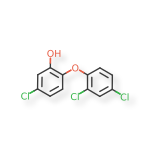
Details
| Stereochemistry | ACHIRAL |
| Molecular Formula | C12H7Cl3O2 |
| Molecular Weight | 289.542 |
| Optical Activity | NONE |
| Defined Stereocenters | 0 / 0 |
| E/Z Centers | 0 |
| Charge | 0 |
SHOW SMILES / InChI
SMILES
OC1=CC(Cl)=CC=C1OC2=CC=C(Cl)C=C2Cl
InChI
InChIKey=XEFQLINVKFYRCS-UHFFFAOYSA-N
InChI=1S/C12H7Cl3O2/c13-7-1-3-11(9(15)5-7)17-12-4-2-8(14)6-10(12)16/h1-6,16H
DescriptionSources: http://www.drugbank.ca/drugs/DB08604Curator's Comment: description was created based on several sources, including:
https://en.wikipedia.org/wiki/Triclosan
https://dailymed.nlm.nih.gov/dailymed/drugInfo.cfm?setid=64cdbe15-3355-40f8-8dfd-61f7d6f64dc8
Sources: http://www.drugbank.ca/drugs/DB08604
Curator's Comment: description was created based on several sources, including:
https://en.wikipedia.org/wiki/Triclosan
https://dailymed.nlm.nih.gov/dailymed/drugInfo.cfm?setid=64cdbe15-3355-40f8-8dfd-61f7d6f64dc8
Triclosan was used as a hospital scrub in the 1970s. Since then, it has expanded commercially and is now prevalent in soaps (0.10-1.00%), shampoos, deodorants, toothpastes, mouth washes, cleaning supplies and pesticides. It is part of consumer products, including kitchen utensils, toys, bedding, socks and trash bags. In healthcare, triclosan is used in surgical scrubs and hand washes. Use in surgical units is effective with a minimum contact time of approximately two minutes. More recently, showering with 2% triclosan has become a recommended regimen in surgical units for the decolonization of patients whose skin carries methicillin-resistant Staphylococcus aureus (MRSA). Triclosan is also used in the coatings for some surgical sutures. Triclosan has been employed as a selective agent in molecular cloning. At high concentrations, triclosan acts as a biocide with multiple cytoplasmic and membrane targets. However, at the lower concentrations seen in commercial products, triclosan appears bacteriostatic, and it targets bacteria primarily by inhibiting fatty acid synthesis. Triclosan binds to bacterial enoyl-acyl carrier protein reductase (ENR) enzyme, which is encoded by the gene FabI. This binding increases the enzyme's affinity for nicotinamide adenine dinucleotide (NAD+). This results in the formation of a stable, ternary complex of ENR-NAD+-triclosan, which is unable to participate in fatty acid synthesis. Fatty acids are necessary for building and reproducing cell membranes. Humans do not have an ENR enzyme and thus are not affected.
CNS Activity
Approval Year
Targets
| Primary Target | Pharmacology | Condition | Potency |
|---|---|---|---|
Target ID: CHEMBL2364678 Sources: http://www.drugbank.ca/drugs/DB08604 |
Conditions
| Condition | Modality | Targets | Highest Phase | Product |
|---|---|---|---|---|
| Preventing | MOIST SURE Approved UseUsed as a Surgical Scrub and Healthcare Personnel Handwash in patient care or other high risk settings to reduce transient
bacteria and the risk of cross contamination. Used when hands are physically clean. Launch Date1997 |
Cmax
| Value | Dose | Co-administered | Analyte | Population |
|---|---|---|---|---|
218 ng/mL EXPERIMENT https://pubmed.ncbi.nlm.nih.gov/16952905/ |
4 mg single, oral dose: 4 mg route of administration: Oral experiment type: SINGLE co-administered: |
TRICLOSAN plasma | Homo sapiens population: HEALTHY age: ADULT sex: FEMALE / MALE food status: FASTED |
AUC
| Value | Dose | Co-administered | Analyte | Population |
|---|---|---|---|---|
2.6 ng × h/mL EXPERIMENT https://pubmed.ncbi.nlm.nih.gov/16952905/ |
4 mg single, oral dose: 4 mg route of administration: Oral experiment type: SINGLE co-administered: |
TRICLOSAN plasma | Homo sapiens population: HEALTHY age: ADULT sex: FEMALE / MALE food status: FASTED |
T1/2
| Value | Dose | Co-administered | Analyte | Population |
|---|---|---|---|---|
21 h EXPERIMENT https://pubmed.ncbi.nlm.nih.gov/16952905/ |
4 mg single, oral dose: 4 mg route of administration: Oral experiment type: SINGLE co-administered: |
TRICLOSAN plasma | Homo sapiens population: HEALTHY age: ADULT sex: FEMALE / MALE food status: FASTED |
Overview
| CYP3A4 | CYP2C9 | CYP2D6 | hERG |
|---|---|---|---|
OverviewOther
Drug as perpetrator
| Target | Modality | Activity | Metabolite | Clinical evidence |
|---|---|---|---|---|
| yes [IC50 15.81 uM] |
Drug as victim
| Target | Modality | Activity | Metabolite | Clinical evidence |
|---|---|---|---|---|
| little or no | ||||
| little or no | ||||
| little or no | ||||
| little or no | ||||
| little or no | ||||
| little or no | ||||
| little or no | ||||
| little or no | ||||
| little or no | ||||
| major | ||||
| major | ||||
| major | ||||
| major | ||||
| major | ||||
| minor | ||||
| minor | ||||
| minor | ||||
| minor | ||||
| minor | ||||
| yes | ||||
| yes | ||||
| yes | ||||
| yes | ||||
| yes | ||||
| yes | ||||
| yes |
PubMed
| Title | Date | PubMed |
|---|---|---|
| A dynamic mechanical method for determining the silicone elastomer solubility of drugs and pharmaceutical excipients in silicone intravaginal drug delivery rings. | 2002-09 |
|
| Aquatic toxicity of triclosan. | 2002-07 |
|
| Fate and effects of triclosan in activated sludge. | 2002-07 |
|
| Measurement of triclosan in wastewater treatment systems. | 2002-07 |
|
| Occurrence and environmental behavior of the bactericide triclosan and its methyl derivative in surface waters and in wastewater. | 2002-06-01 |
|
| Methyl triclosan found in Swiss lakes. | 2002-06-01 |
|
| Crystallization and preliminary X-ray crystallographic analysis of enoyl-acyl carrier protein reductase from Helicobacter pylori. | 2002-06 |
|
| An in vitro oral biofilm model for comparing the efficacy of antimicrobial mouthrinses. | 2002-05-31 |
|
| The antimicrobial properties of a urea-based handwash lotion with triclosan. | 2002-05-25 |
|
| In vitro antioxidant activities of mouthrinses and their components. | 2002-05 |
|
| Determination of triclosan in personal health care products by liquid chromatography (HPLC). | 2002-05 |
|
| Inhibitors of fatty acid synthesis as antimicrobial chemotherapeutics. | 2002-05 |
|
| Effect of a triclosan-containing toothpaste supplemented with 10% xylitol on mutans streptococci in saliva and dental plaque. A 6-month clinical study. | 2002-04-19 |
|
| Structural elucidation of the specificity of the antibacterial agent triclosan for malarial enoyl acyl carrier protein reductase. | 2002-04-12 |
|
| Effect of an amine-fluoride-triclosan mouthrinse on plaque regrowth and biofilm vitality. | 2002-04 |
|
| Evaluation of the effectiveness of a pre-brushing rinse in plaque removal: a meta-analysis. | 2002-04 |
|
| Pseudomonas aeruginosa cells adapted to benzalkonium chloride show resistance to other membrane-active agents but not to clinically relevant antibiotics. | 2002-04 |
|
| Triclosan: release from transdermal adhesive formulations and in vitro permeation across human epidermal membranes. | 2002-03-20 |
|
| Pharmaceuticals, hormones, and other organic wastewater contaminants in U.S. streams, 1999-2000: a national reconnaissance. | 2002-03-15 |
|
| Efficacy of two antiplaque and antigingivitis treatments in a group of young mentally retarded patients. | 2002-03-12 |
|
| Triclosan, a commonly used bactericide found in human milk and in the aquatic environment in Sweden. | 2002-03 |
|
| Triclosan inhibits enoyl-reductase of type I fatty acid synthase in vitro and is cytotoxic to MCF-7 and SKBr-3 breast cancer cells. | 2002-03 |
|
| Clinical effect of a new liquid dentifrice containing triclosan/copolymer on existing plaque and gingivitis. | 2002-02 |
|
| Paradigm shifts in malaria parasite biochemistry and anti-malarial chemotherapy. | 2002-02 |
|
| Comparative analysis of some mouthrinses on the production of volatile sulfur-containing compounds. | 2002-01 |
|
| Evaluation of an antimicrobial-impregnated continuous ambulatory peritoneal dialysis catheter for infection control in rats. | 2002-01 |
|
| The antibacterial activity of triclosan-impregnated storage boxes against Staphylococcus aureus, Escherichia coli, Pseudomonas aeruginosa, Bacillus cereus and Shewanella putrefaciens in conditions simulating domestic use. | 2002-01 |
|
| Experimental gingivitis studies: effects of triclosan and triclosan-containing dentifrices on dental plaque and gingivitis in three-week randomized controlled clinical trials. | 2002 |
|
| Triclosan/pyrophosphate dentifrice: dental plaque and gingivitis effects in a 6-month randomized controlled clinical study. | 2002 |
|
| Susceptibility of antibiotic-resistant cocci to biocides. | 2002 |
|
| Quantitative assessment of risk reduction from hand washing with antibacterial soaps. | 2002 |
|
| Introduction of biocides into clinical practice and the impact on antibiotic-resistant bacteria. | 2002 |
|
| Biofilms in vitro and in vivo: do singular mechanisms imply cross-resistance? | 2002 |
|
| Active efflux, a common mechanism for biocide and antibiotic resistance. | 2002 |
|
| Mechanisms of bacterial biocide and antibiotic resistance. | 2002 |
|
| Effectiveness of some recent antimicrobial packaging concepts. | 2002 |
|
| A six-week clinical study to compare the stain removal efficacy of three dentifrices. | 2002 |
|
| The clinical efficacy of a new tooth whitening dentifrice formulation: a six-month study in adults. | 2002 |
|
| Clinical efficacy of a new tooth whitening dentifrice. | 2002 |
|
| A study to assess the tooth whitening efficacy of a new dentifrice formulation variant containing a special grade of silica: a six-week study on adults. | 2002 |
|
| The clinical efficacy of Colgate Total Plus Whitening Toothpaste containing a special grade of silica and Colgate Total Toothpaste for controlling breath odor twelve hours after toothbrushing: a single-use clinical study. | 2002 |
|
| A clinical study to compare the anticalculus efficacy of three dentifrice formulations. | 2002 |
|
| A clinical study to assess the anticalculus efficacy of a new dentifrice containing a special grade of silica (Colgate Total Plus Whitening Toothpaste): a clinical trial on adults. | 2002 |
|
| Kinetic determinants of the interaction of enoyl-ACP reductase from Plasmodium falciparum with its substrates and inhibitors. | 2001-12-14 |
|
| Antibacterial efficacy of polymers containing triclosan and other antimicrobial additives. | 2001-12 |
|
| Bacterial adaptation to biocides: the possible role of 'alarmones'. | 2001-12 |
|
| [Can disinfectants contribute to antibiotic resistance?]. | 2001-11-10 |
|
| Allergic contact dermatitis from triclosan in antibacterial handwashes. | 2001-11 |
|
| [Effect of a new triclosan-containing mouth rinse on oral infection]. | 2001-07 |
|
| The benefits of toothpaste--real or imagined? The effectiveness of toothpaste in the control of plaque, gingivitis, periodontitis, calculus and oral malodour. | 2001-04 |
Sample Use Guides
Twenty bacterial strains (proposed by the FDA) were exposed to plain and antibacterial soaps (the same formulation as plain soap, but containing 0.3% triclosan) for 20 s at 22°C (room temperature) and 40°C (warm temperature). The temperature and time were selected to simulate the hand washing conditions and procedures used by consumers. The triclosan concentration of 0.3% is the maximum allowed by law. Antibacterial soap containing triclosan (0.3%) was no more effective than plain soap at reducing bacterial contamination when used under 'real-life' conditions.
| Name | Type | Language | ||
|---|---|---|---|---|
|
Preferred Name | English | ||
|
Official Name | English | ||
|
Code | English | ||
|
Common Name | English | ||
|
Common Name | English | ||
|
Common Name | English | ||
|
Common Name | English | ||
|
Code | English | ||
|
Common Name | English | ||
|
Common Name | English | ||
|
Systematic Name | English | ||
|
Code | English | ||
|
Common Name | English | ||
|
Common Name | English | ||
|
Common Name | English | ||
|
Common Name | English | ||
|
Code | English | ||
|
Common Name | English | ||
|
Common Name | English |
| Classification Tree | Code System | Code | ||
|---|---|---|---|---|
|
WHO-ATC |
D09AA06
Created by
admin on Wed Apr 02 09:49:53 GMT 2025 , Edited by admin on Wed Apr 02 09:49:53 GMT 2025
|
||
|
WHO-VATC |
QD09AA06
Created by
admin on Wed Apr 02 09:49:53 GMT 2025 , Edited by admin on Wed Apr 02 09:49:53 GMT 2025
|
||
|
CFR |
21 CFR 310.531
Created by
admin on Wed Apr 02 09:49:53 GMT 2025 , Edited by admin on Wed Apr 02 09:49:53 GMT 2025
|
||
|
EPA PESTICIDE CODE |
54901
Created by
admin on Wed Apr 02 09:49:53 GMT 2025 , Edited by admin on Wed Apr 02 09:49:53 GMT 2025
|
||
|
WHO-VATC |
QD08AE04
Created by
admin on Wed Apr 02 09:49:53 GMT 2025 , Edited by admin on Wed Apr 02 09:49:53 GMT 2025
|
||
|
WHO-ATC |
D08AE04
Created by
admin on Wed Apr 02 09:49:53 GMT 2025 , Edited by admin on Wed Apr 02 09:49:53 GMT 2025
|
||
|
NCI_THESAURUS |
C254
Created by
admin on Wed Apr 02 09:49:53 GMT 2025 , Edited by admin on Wed Apr 02 09:49:53 GMT 2025
|
| Code System | Code | Type | Description | ||
|---|---|---|---|---|---|
|
7194
Created by
admin on Wed Apr 02 09:49:53 GMT 2025 , Edited by admin on Wed Apr 02 09:49:53 GMT 2025
|
PRIMARY | |||
|
759151
Created by
admin on Wed Apr 02 09:49:53 GMT 2025 , Edited by admin on Wed Apr 02 09:49:53 GMT 2025
|
PRIMARY | |||
|
3631
Created by
admin on Wed Apr 02 09:49:53 GMT 2025 , Edited by admin on Wed Apr 02 09:49:53 GMT 2025
|
PRIMARY | |||
|
100000077719
Created by
admin on Wed Apr 02 09:49:53 GMT 2025 , Edited by admin on Wed Apr 02 09:49:53 GMT 2025
|
PRIMARY | |||
|
DTXSID5032498
Created by
admin on Wed Apr 02 09:49:53 GMT 2025 , Edited by admin on Wed Apr 02 09:49:53 GMT 2025
|
PRIMARY | |||
|
2988
Created by
admin on Wed Apr 02 09:49:53 GMT 2025 , Edited by admin on Wed Apr 02 09:49:53 GMT 2025
|
PRIMARY | |||
|
C112022
Created by
admin on Wed Apr 02 09:49:53 GMT 2025 , Edited by admin on Wed Apr 02 09:49:53 GMT 2025
|
PRIMARY | |||
|
10795
Created by
admin on Wed Apr 02 09:49:53 GMT 2025 , Edited by admin on Wed Apr 02 09:49:53 GMT 2025
|
PRIMARY | RxNorm | ||
|
CHEMBL849
Created by
admin on Wed Apr 02 09:49:53 GMT 2025 , Edited by admin on Wed Apr 02 09:49:53 GMT 2025
|
PRIMARY | |||
|
DB08604
Created by
admin on Wed Apr 02 09:49:53 GMT 2025 , Edited by admin on Wed Apr 02 09:49:53 GMT 2025
|
PRIMARY | |||
|
1682206
Created by
admin on Wed Apr 02 09:49:53 GMT 2025 , Edited by admin on Wed Apr 02 09:49:53 GMT 2025
|
PRIMARY | |||
|
3380-34-5
Created by
admin on Wed Apr 02 09:49:53 GMT 2025 , Edited by admin on Wed Apr 02 09:49:53 GMT 2025
|
PRIMARY | |||
|
SUB11277MIG
Created by
admin on Wed Apr 02 09:49:53 GMT 2025 , Edited by admin on Wed Apr 02 09:49:53 GMT 2025
|
PRIMARY | |||
|
m11092
Created by
admin on Wed Apr 02 09:49:53 GMT 2025 , Edited by admin on Wed Apr 02 09:49:53 GMT 2025
|
PRIMARY | Merck Index | ||
|
164200
Created by
admin on Wed Apr 02 09:49:53 GMT 2025 , Edited by admin on Wed Apr 02 09:49:53 GMT 2025
|
PRIMARY | |||
|
D014260
Created by
admin on Wed Apr 02 09:49:53 GMT 2025 , Edited by admin on Wed Apr 02 09:49:53 GMT 2025
|
PRIMARY | |||
|
C61986
Created by
admin on Wed Apr 02 09:49:53 GMT 2025 , Edited by admin on Wed Apr 02 09:49:53 GMT 2025
|
PRIMARY | |||
|
TRICLOSAN
Created by
admin on Wed Apr 02 09:49:53 GMT 2025 , Edited by admin on Wed Apr 02 09:49:53 GMT 2025
|
PRIMARY | |||
|
222-182-2
Created by
admin on Wed Apr 02 09:49:53 GMT 2025 , Edited by admin on Wed Apr 02 09:49:53 GMT 2025
|
PRIMARY | |||
|
4NM5039Y5X
Created by
admin on Wed Apr 02 09:49:53 GMT 2025 , Edited by admin on Wed Apr 02 09:49:53 GMT 2025
|
PRIMARY | |||
|
4NM5039Y5X
Created by
admin on Wed Apr 02 09:49:53 GMT 2025 , Edited by admin on Wed Apr 02 09:49:53 GMT 2025
|
PRIMARY | |||
|
5564
Created by
admin on Wed Apr 02 09:49:53 GMT 2025 , Edited by admin on Wed Apr 02 09:49:53 GMT 2025
|
PRIMARY |
ACTIVE MOIETY