Details
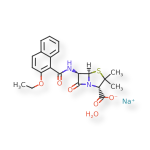
| Stereochemistry | ABSOLUTE |
| Molecular Formula | C21H21N2O5S.Na.H2O |
| Molecular Weight | 454.472 |
| Optical Activity | UNSPECIFIED |
| Defined Stereocenters | 3 / 3 |
| E/Z Centers | 0 |
| Charge | 0 |
SHOW SMILES / InChI
SMILES
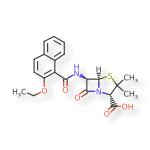
O.[Na+].CCOC1=CC=C2C=CC=CC2=C1C(=O)N[C@H]3[C@H]4SC(C)(C)[C@@H](N4C3=O)C([O-])=O
InChI
InChIKey=OCXSDHJRMYFTMA-KMFBOIRUSA-M
InChI=1S/C21H22N2O5S.Na.H2O/c1-4-28-13-10-9-11-7-5-6-8-12(11)14(13)17(24)22-15-18(25)23-16(20(26)27)21(2,3)29-19(15)23;;/h5-10,15-16,19H,4H2,1-3H3,(H,22,24)(H,26,27);;1H2/q;+1;/p-1/t15-,16+,19-;;/m1../s1
CNS Activity
Approval Year
Targets
| Primary Target | Pharmacology | Condition | Potency |
|---|---|---|---|
Target ID: CHEMBL2362972 |
Conditions
| Condition | Modality | Targets | Highest Phase | Product |
|---|---|---|---|---|
| Curative | UNIPEN Approved UseNafcillin for injection, USP is indicated in the treatment of infections caused by penicillinase-producing staphylococci which have demonstrated susceptibility to the drug. Culture and susceptibility tests should be performed initially to determine the causative organism and its susceptibility to the drug. Nafcillin for injection, USP may be used to initiate therapy in suspected cases of resistant staphylococcal infections prior to the availability of susceptibility test results. Nafcillin for injection, USP should not be used in infections caused by organisms susceptible to penicillin G. If the susceptibility tests indicate that the infection is due to an organism other than a resistant Staphylococcus, therapy should not be continued with nafcillin for injection, USP. To reduce the development of drug-resistant bacteria and maintain the effectiveness of nafcillin for injection, USP and other antibacterial drugs, nafcillin for injection, USP should be used only to treat or prevent infections that are proven or strongly suspected to be caused by susceptible bacteria. When culture and susceptibility information are available, they should be considered in selecting or modifying antibacterial therapy. In the absence of such data, local epidemiology and susceptibility patterns may contribute to the empiric selection of therapy. Launch Date1970 |
Cmax
| Value | Dose | Co-administered | Analyte | Population |
|---|---|---|---|---|
58 μg/mL EXPERIMENT https://pubmed.ncbi.nlm.nih.gov/2311446 |
50 mg/kg 4 times / day multiple, intravenous dose: 50 mg/kg route of administration: Intravenous experiment type: MULTIPLE co-administered: |
NAFCILLIN serum | Homo sapiens population: UNHEALTHY age: CHILD sex: FEMALE / MALE food status: UNKNOWN |
AUC
| Value | Dose | Co-administered | Analyte | Population |
|---|---|---|---|---|
18.06 μg × h/mL |
500 mg single, intravenous dose: 500 mg route of administration: Intravenous experiment type: SINGLE co-administered: |
NAFCILLIN serum | Homo sapiens population: HEALTHY age: ADULT sex: UNKNOWN food status: UNKNOWN |
T1/2
| Value | Dose | Co-administered | Analyte | Population |
|---|---|---|---|---|
31 min EXPERIMENT https://pubmed.ncbi.nlm.nih.gov/2311446 |
50 mg/kg 4 times / day multiple, intravenous dose: 50 mg/kg route of administration: Intravenous experiment type: MULTIPLE co-administered: |
NAFCILLIN serum | Homo sapiens population: UNHEALTHY age: CHILD sex: FEMALE / MALE food status: UNKNOWN |
|
47 min |
500 mg single, intravenous dose: 500 mg route of administration: Intravenous experiment type: SINGLE co-administered: |
NAFCILLIN serum | Homo sapiens population: HEALTHY age: ADULT sex: UNKNOWN food status: UNKNOWN |
Funbound
| Value | Dose | Co-administered | Analyte | Population |
|---|---|---|---|---|
10.1% |
500 mg single, intravenous dose: 500 mg route of administration: Intravenous experiment type: SINGLE co-administered: |
NAFCILLIN serum | Homo sapiens population: HEALTHY age: ADULT sex: UNKNOWN food status: UNKNOWN |
Doses
| Dose | Population | Adverse events |
|---|---|---|
12 g single, intravenous|intramuscular Highest studied dose Dose: 12 g Route: intravenous|intramuscular Route: single Dose: 12 g Sources: |
unhealthy|healthy, 54 years (range: 19–90 years) Health Status: unhealthy|healthy Age Group: 54 years (range: 19–90 years) Sex: M+F Sources: |
Disc. AE: Acute kidney injury... AEs leading to discontinuation/dose reduction: Acute kidney injury (15%) Sources: |
12 g single, intravenous|intramuscular Dose: 12 g Route: intravenous|intramuscular Route: single Dose: 12 g Sources: |
unhealthy|healthy, 54 years (range: 19–90 years) Health Status: unhealthy|healthy Age Group: 54 years (range: 19–90 years) Sex: M+F Sources: |
Disc. AE: Hypokalemia, Leukopenia... AEs leading to discontinuation/dose reduction: Hypokalemia (15%) Sources: Leukopenia (1%) Hypernatremia (1%) Hypersensitivity (3%) |
1 g single, oral Highest studied dose |
healthy |
AEs
| AE | Significance | Dose | Population |
|---|---|---|---|
| Acute kidney injury | 15% Disc. AE |
12 g single, intravenous|intramuscular Highest studied dose Dose: 12 g Route: intravenous|intramuscular Route: single Dose: 12 g Sources: |
unhealthy|healthy, 54 years (range: 19–90 years) Health Status: unhealthy|healthy Age Group: 54 years (range: 19–90 years) Sex: M+F Sources: |
| Hypernatremia | 1% Disc. AE |
12 g single, intravenous|intramuscular Dose: 12 g Route: intravenous|intramuscular Route: single Dose: 12 g Sources: |
unhealthy|healthy, 54 years (range: 19–90 years) Health Status: unhealthy|healthy Age Group: 54 years (range: 19–90 years) Sex: M+F Sources: |
| Leukopenia | 1% Disc. AE |
12 g single, intravenous|intramuscular Dose: 12 g Route: intravenous|intramuscular Route: single Dose: 12 g Sources: |
unhealthy|healthy, 54 years (range: 19–90 years) Health Status: unhealthy|healthy Age Group: 54 years (range: 19–90 years) Sex: M+F Sources: |
| Hypokalemia | 15% Disc. AE |
12 g single, intravenous|intramuscular Dose: 12 g Route: intravenous|intramuscular Route: single Dose: 12 g Sources: |
unhealthy|healthy, 54 years (range: 19–90 years) Health Status: unhealthy|healthy Age Group: 54 years (range: 19–90 years) Sex: M+F Sources: |
| Hypersensitivity | 3% Disc. AE |
12 g single, intravenous|intramuscular Dose: 12 g Route: intravenous|intramuscular Route: single Dose: 12 g Sources: |
unhealthy|healthy, 54 years (range: 19–90 years) Health Status: unhealthy|healthy Age Group: 54 years (range: 19–90 years) Sex: M+F Sources: |
Overview
| CYP3A4 | CYP2C9 | CYP2D6 | hERG |
|---|---|---|---|
OverviewOther
| Other Inhibitor | Other Substrate | Other Inducer |
|---|---|---|
Drug as perpetrator
| Target | Modality | Activity | Metabolite | Clinical evidence |
|---|---|---|---|---|
| yes |
Drug as victim
| Target | Modality | Activity | Metabolite | Clinical evidence |
|---|---|---|---|---|
Page: 6.0 |
likely | |||
| major | ||||
| moderate |
PubMed
| Title | Date | PubMed |
|---|---|---|
| Nafcillin-loaded PLGA nanoparticles for treatment of osteomyelitis. | 2008-09 |
|
| Streamlining methodology for the multiresidue analysis of beta-lactam antibiotics in bovine kidney using liquid chromatography-tandem mass spectrometry. | 2008-08-22 |
|
| A comprehensive in vitro and in silico analysis of antibiotics that activate pregnane X receptor and induce CYP3A4 in liver and intestine. | 2008-08 |
|
| Variability in vancomycin use in newborn intensive care units determined from data in an electronic medical record. | 2008-07 |
|
| Comprehensive screening and quantification of veterinary drugs in milk using UPLC-ToF-MS. | 2008-07 |
|
| Paraspinal abscess complicated by endocarditis following a facet joint injection. | 2008-04 |
|
| Trace determination of beta-lactam antibiotics in environmental aqueous samples using off-line and on-line preconcentration in capillary electrophoresis. | 2008-03-28 |
|
| A prickly situation. | 2008-03 |
|
| Predominant contribution of rat organic anion transporting polypeptide-2 (Oatp2) to hepatic uptake of beta-lactam antibiotics. | 2008-03 |
|
| Role of surface adsorption and porosity features in the molecular recognition ability of imprinted sol-gels. | 2008-02-28 |
|
| The AraC-family regulator GadX enhances multidrug resistance in Escherichia coli by activating expression of mdtEF multidrug efflux genes. | 2008-02 |
|
| Efficacy of telavancin in a murine model of pneumonia induced by methicillin-susceptible Staphylococcus aureus. | 2008-01 |
|
| An overview of harms associated with beta-lactam antimicrobials: where do the carbapenems fit in? | 2008 |
|
| Large-volume sample stacking for the analysis of seven beta-lactam antibiotics in milk samples of different origins by CZE. | 2007-11 |
|
| Treatment of acute salmonella epiphyseal osteomyelitis using computed tomography-guided drainage in a child without sickle cell disease. | 2007-11 |
|
| Interaction between warfarin and nafcillin: case report and review of the literature. | 2007-10 |
|
| Necrotizing fasciitis: strategies for diagnosis and management. | 2007-08-07 |
|
| Bacteremia and endocarditis due to methicillin-resistant Staphylococcus aureus: the potential role of daptomycin. | 2007-08 |
|
| Four cases of nafcillin-associated acute interstitial nephritis in one institution. | 2007-08 |
|
| Molecularly imprinted polymers as antibody mimics in automated on-line fluorescent competitive assays. | 2007-07-01 |
|
| Case report: diabetic myonecrosis of the neck complicated by infection in an islet transplanted patient. | 2007-06-13 |
|
| Streptobacillus moniliformis septic arthritis: a clinical entity distinct from rat-bite fever? | 2007-06-11 |
|
| Stable competitive enzyme-linked immunosorbent assay kit for rapid measurement of 11 active beta-lactams in milk, tissue, urine, and serum. | 2007-03-22 |
|
| [Sensitivity to various antibiotics of coagulase-negative staphylococci isolated from samples of milk from Dutch dairy cattle]. | 2007-03-15 |
|
| Molecularly imprinted sol-gels for nafcillin determination in milk-based products. | 2007-02-07 |
|
| Pericardial tamponade masquerading as septic shock. | 2007-02 |
|
| Analysis of different beta-lactams antibiotics in pharmaceutical preparations using micellar electrokinetic capillary chromatography. | 2007-01-17 |
|
| Direct extraction of penicillin G and derivatives from aqueous samples using a stoichiometrically imprinted polymer. | 2007-01-15 |
|
| Impact of antibiotics on expression of virulence-associated exotoxin genes in methicillin-sensitive and methicillin-resistant Staphylococcus aureus. | 2007-01-15 |
|
| Sure signs. | 2007-01 |
|
| Rapid identification of P-glycoprotein substrates and inhibitors. | 2006-12 |
|
| A framework toward restoration of writing order from single-stroked handwriting image. | 2006-11 |
|
| Determination of antimicrobials in sludge from infiltration basins at two artificial recharge plants by pressurized liquid extraction-liquid chromatography-tandem mass spectrometry. | 2006-10-13 |
|
| In vitro activity effects of combinations of cephalothin, dicloxacillin, imipenem, vancomycin and amikacin against methicillin-resistant Staphylococcus spp. strains. | 2006-10-12 |
|
| Staphylococcal septic synovitis of the sternoclavicular joint with retrosternal extension. | 2006-08 |
|
| A review of daptomycin for injection (Cubicin) in the treatment of complicated skin and skin structure infections. | 2006-06 |
|
| A passage to injury. | 2006-06 |
|
| In vitro evaluation of the antibiotic lock technique (ALT) for the treatment of catheter-related infections caused by staphylococci. | 2006-06 |
|
| Invasive nontypeable Haemophilus influenzae infection in an adult with laryngeal cancer. | 2006-05 |
|
| Molecular engineering of fluorescent penicillins for molecularly imprinted polymer assays. | 2006-03-15 |
|
| Molecular imprinted ormosils for nafcillin recognition by room temperature phosphorescence optosensing. | 2006-03-15 |
|
| The role of vancomycin in the treatment paradigm. | 2006-01-01 |
|
| Tricuspid valve endocarditis with Group B Streptococcus after an elective abortion: the need for new data. | 2006 |
|
| High-throughput analysis of tetracycline and penicillin antibiotics in animal tissues using electrospray tandem mass spectrometry with selected reaction monitoring transition. | 2005-12-30 |
|
| Antibiotic dosing in critically ill adult patients receiving continuous renal replacement therapy. | 2005-10-15 |
|
| Pharmaceutical liquid crystals: the relevance of partially ordered systems. | 2005-09 |
|
| Pseudomonas aeruginosa, Staphylococcus aureus, and fluoroquinolone use. | 2005-08 |
|
| Influence of temperature and drug concentration on nafcillin precipitation. | 2005-07-01 |
|
| Evaluation of the efficacy and safety of outpatient parenteral antimicrobial therapy for infections with methicillin-sensitive Staphylococcus aureus. | 2005-06 |
|
| Continuous antibiotic prophylaxis and cerebral spinal fluid infection in patients with intracranial pressure monitors. | 2004 |
Patents
Sample Use Guides
Nafcillin for Injection ADD-Vantage® Vial is to be administered intravenously. The usual I.V. dosage for adults is 500 mg every 4 hours. For severe infections, 1 gram every 4 hours is recommended. Administer slowly over at least 30 to 60 minutes to minimize the risk of vein irritation and extravasation. Bacteriologic studies to determine the causative organisms and their susceptibility to Nafcillin should always be performed. Duration of therapy varies with the type and severity of infection as well as the overall condition of the patient; therefore, it should be determined by the clinical and bacteriological response of the patient. In severe staphylococcal infections, therapy with Nafcillin should be continued for at least 14 days. Therapy should be continued for at least 48 hours after the patient has become afebrile, asymptomatic, and cultures are negative. The treatment of endocarditis and osteomyelitis may require a longer duration of therapy.
Route of Administration:
Other
MICs and minimum bactericidal concentrations (MBCs) were determined for in triplicate by microdilution techniques using an inoculum of 5 × 10⁵ CFU/ml according to Clinical and Laboratory Standards Institute guidelines. For MBC determinations, aliquots (5 μl) from clear wells were plated onto tryptic soy agar drug-free plates followed by incubation at 37°C for 24 and 48 h. MIC data were reported as median values from at least three independent experiments for each antibiotic. MIC for nafcillin-sensitive S.aureli strains was determined to be 1 ug/ml.
| Name | Type | Language | ||
|---|---|---|---|---|
|
Official Name | English | ||
|
Preferred Name | English | ||
|
Common Name | English | ||
|
Common Name | English | ||
|
Common Name | English | ||
|
Brand Name | English | ||
|
Common Name | English | ||
|
Code | English | ||
|
Common Name | English | ||
|
Common Name | English | ||
|
Common Name | English | ||
|
Code | English | ||
|
Brand Name | English | ||
|
Common Name | English | ||
|
Common Name | English | ||
|
Common Name | English | ||
|
Brand Name | English | ||
|
Common Name | English | ||
|
Common Name | English | ||
|
Common Name | English | ||
|
Systematic Name | English |
| Classification Tree | Code System | Code | ||
|---|---|---|---|---|
|
NCI_THESAURUS |
C260
Created by
admin on Mon Mar 31 17:36:02 GMT 2025 , Edited by admin on Mon Mar 31 17:36:02 GMT 2025
|
| Code System | Code | Type | Description | ||
|---|---|---|---|---|---|
|
300000031152
Created by
admin on Mon Mar 31 17:36:02 GMT 2025 , Edited by admin on Mon Mar 31 17:36:02 GMT 2025
|
PRIMARY | |||
|
1450007
Created by
admin on Mon Mar 31 17:36:02 GMT 2025 , Edited by admin on Mon Mar 31 17:36:02 GMT 2025
|
PRIMARY | |||
|
7177-50-6
Created by
admin on Mon Mar 31 17:36:02 GMT 2025 , Edited by admin on Mon Mar 31 17:36:02 GMT 2025
|
PRIMARY | |||
|
51919
Created by
admin on Mon Mar 31 17:36:02 GMT 2025 , Edited by admin on Mon Mar 31 17:36:02 GMT 2025
|
PRIMARY | |||
|
DBSALT000497
Created by
admin on Mon Mar 31 17:36:02 GMT 2025 , Edited by admin on Mon Mar 31 17:36:02 GMT 2025
|
PRIMARY | |||
|
757108
Created by
admin on Mon Mar 31 17:36:02 GMT 2025 , Edited by admin on Mon Mar 31 17:36:02 GMT 2025
|
PRIMARY | |||
|
7448
Created by
admin on Mon Mar 31 17:36:02 GMT 2025 , Edited by admin on Mon Mar 31 17:36:02 GMT 2025
|
PRIMARY | |||
|
C29281
Created by
admin on Mon Mar 31 17:36:02 GMT 2025 , Edited by admin on Mon Mar 31 17:36:02 GMT 2025
|
PRIMARY | |||
|
DTXSID7045570
Created by
admin on Mon Mar 31 17:36:02 GMT 2025 , Edited by admin on Mon Mar 31 17:36:02 GMT 2025
|
PRIMARY | |||
|
49G3001BCK
Created by
admin on Mon Mar 31 17:36:02 GMT 2025 , Edited by admin on Mon Mar 31 17:36:02 GMT 2025
|
PRIMARY | |||
|
49G3001BCK
Created by
admin on Mon Mar 31 17:36:02 GMT 2025 , Edited by admin on Mon Mar 31 17:36:02 GMT 2025
|
PRIMARY | |||
|
SUB03375MIG
Created by
admin on Mon Mar 31 17:36:02 GMT 2025 , Edited by admin on Mon Mar 31 17:36:02 GMT 2025
|
PRIMARY | |||
|
23704143
Created by
admin on Mon Mar 31 17:36:02 GMT 2025 , Edited by admin on Mon Mar 31 17:36:02 GMT 2025
|
PRIMARY | |||
|
485026
Created by
admin on Mon Mar 31 17:36:02 GMT 2025 , Edited by admin on Mon Mar 31 17:36:02 GMT 2025
|
PRIMARY | |||
|
9893
Created by
admin on Mon Mar 31 17:36:02 GMT 2025 , Edited by admin on Mon Mar 31 17:36:02 GMT 2025
|
ALTERNATIVE | |||
|
CHEMBL1443
Created by
admin on Mon Mar 31 17:36:02 GMT 2025 , Edited by admin on Mon Mar 31 17:36:02 GMT 2025
|
PRIMARY | |||
|
m7706
Created by
admin on Mon Mar 31 17:36:02 GMT 2025 , Edited by admin on Mon Mar 31 17:36:02 GMT 2025
|
PRIMARY | Merck Index |
ACTIVE MOIETY
SUBSTANCE RECORD